Code diagrams you can use
One drawing for each section in the library: the clearances, depths, distances and decisions the National Electrical Code sets, as adopted by the 2025 California Electrical Code. Use them on your site, in a class or in a bid package. Just credit CK Electric and Sons.
How to credit a diagram
The diagrams are licensed under Creative Commons Attribution 4.0 (CC BY 4.0). You can copy, share and adapt them, including for commercial work, as long as you give credit, link to the license and say if you changed anything.
Credit line: Diagram: CK Electric and Sons (ckelectricandsons.com), CC BY 4.0
Link the credit to the diagram’s page in this library, for example ckelectricandsons.com/code/300-5.
They are simplified drawings. The official code text and your building department govern.
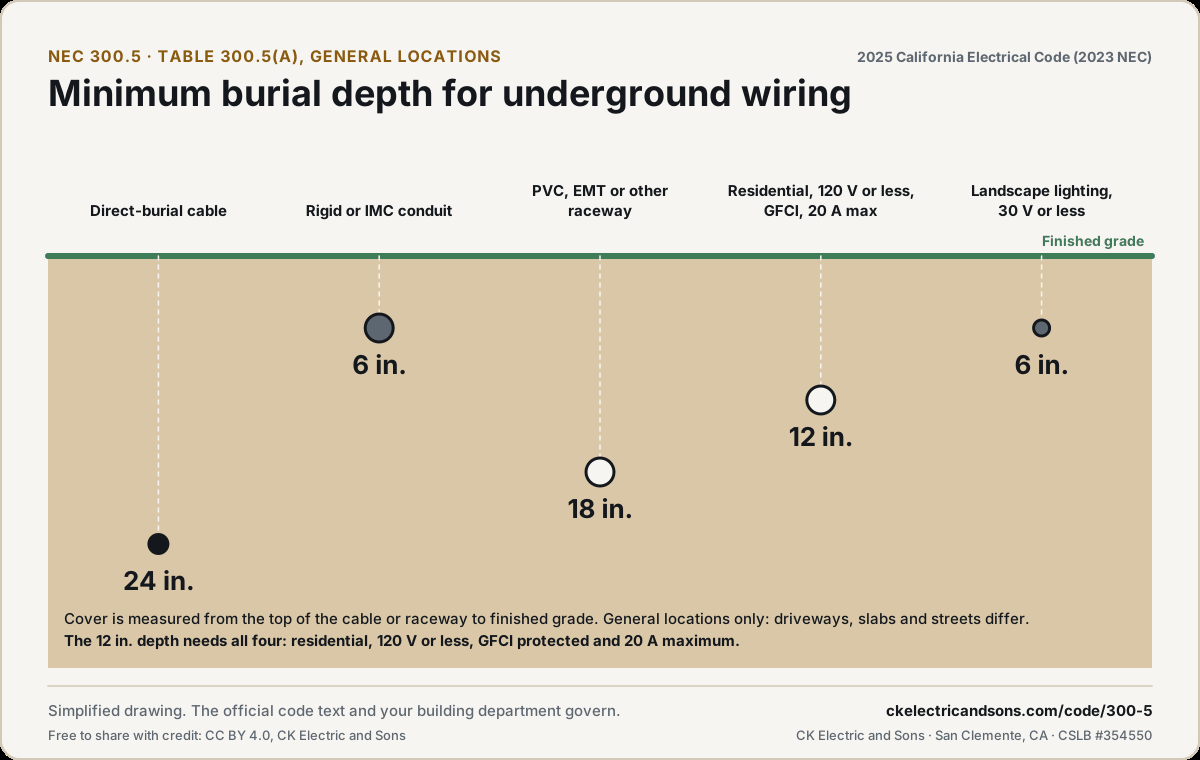
<a href="https://ckelectricandsons.com/code/300-5"><img src="https://ckelectricandsons.com/img/code/diagrams/nec-300-5-underground-burial-depths.svg" alt="Cross-section of burial depths: 24 in. direct-burial cable, 6 in. rigid conduit, 18 in. PVC, 12 in. home GFCI circuit (120 V, 20 A max), 6 in. landscape lights." width="1200" height="760"></a>
Diagram: <a href="https://ckelectricandsons.com/code/300-5">CK Electric and Sons</a>, <a href="https://creativecommons.org/licenses/by/4.0/">CC BY 4.0</a>
All diagrams, by topic
General rules and working space
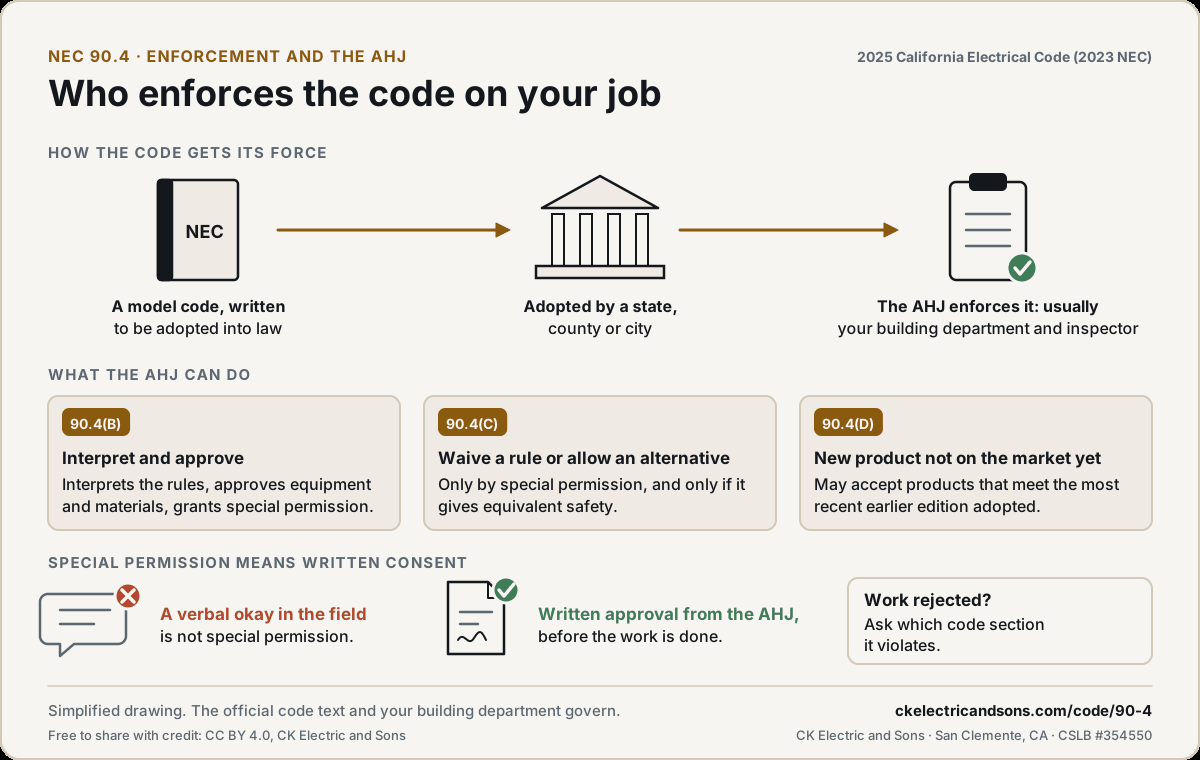
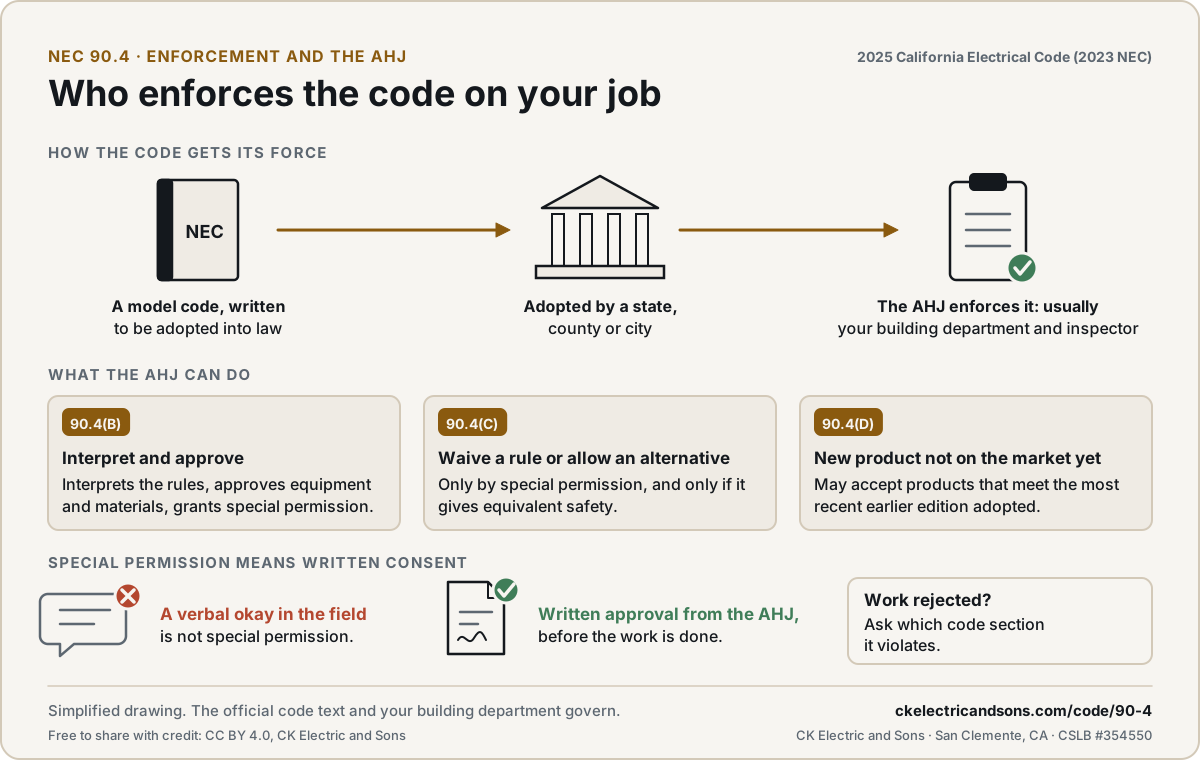 NEC 90.4: Who enforces the code on your jobRead the sectionSVGPNG
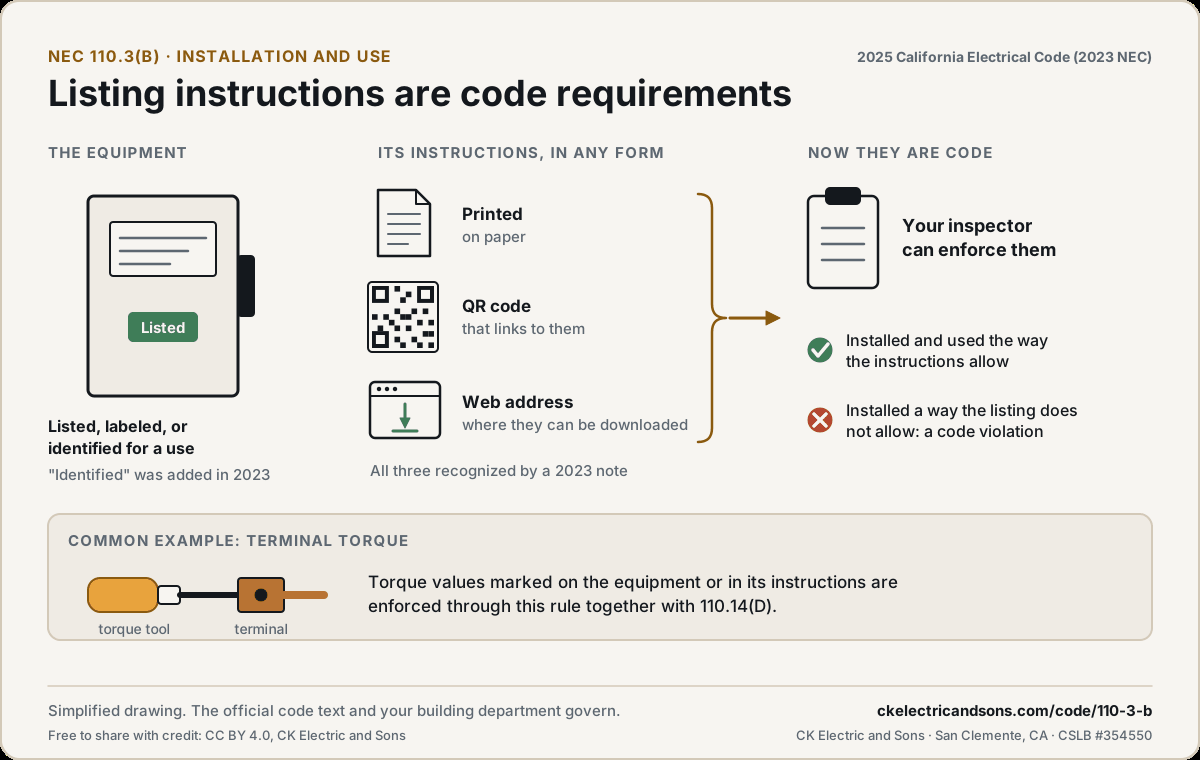
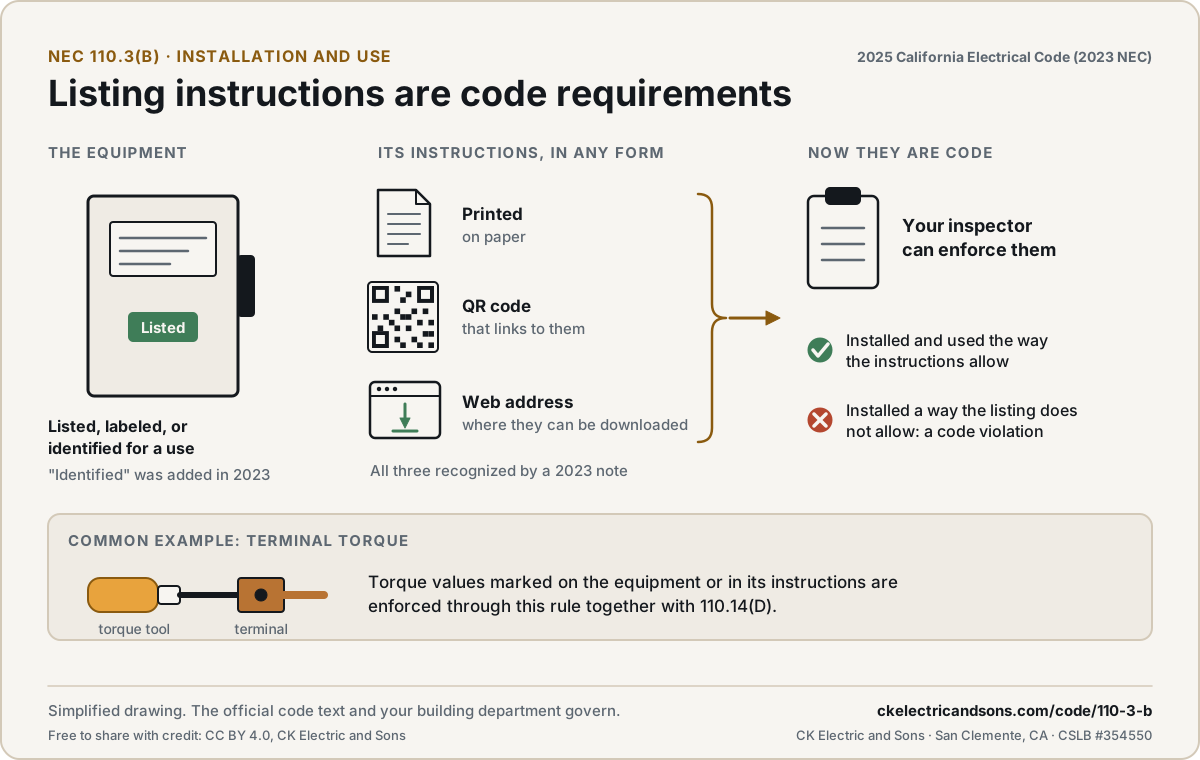 NEC 110.3(B): Listing instructions are code requirementsRead the sectionSVGPNG
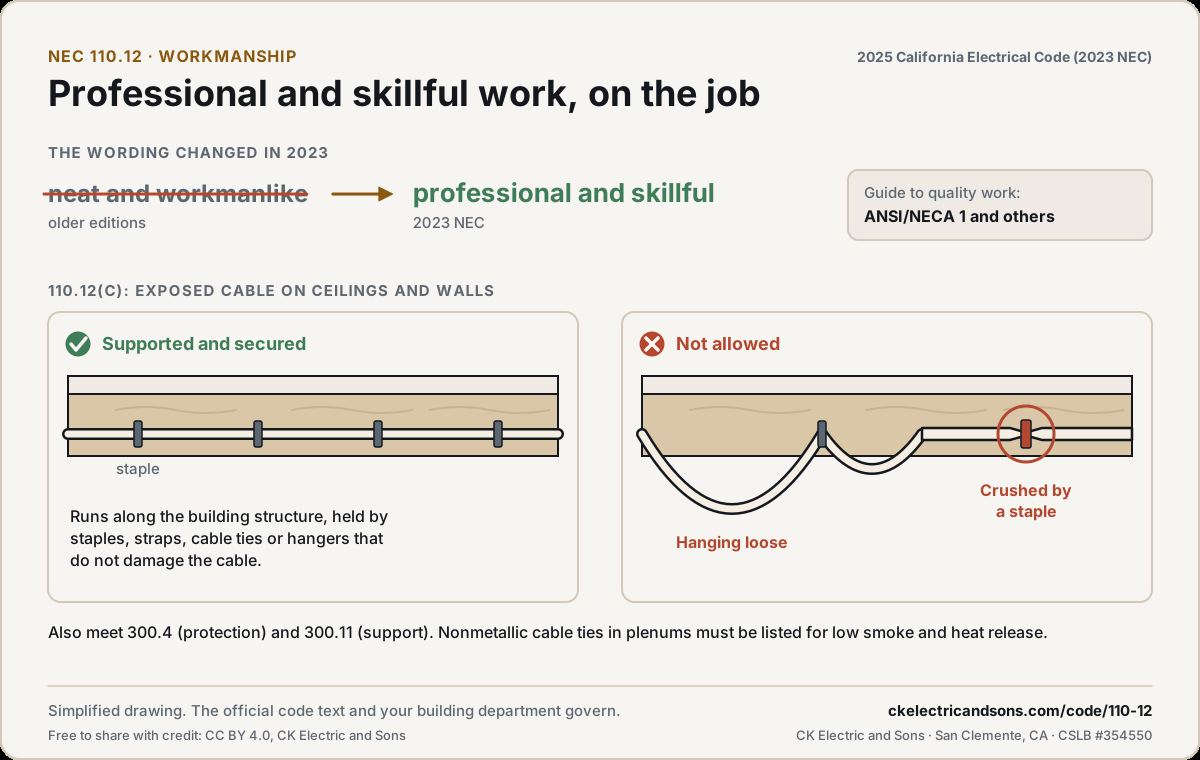
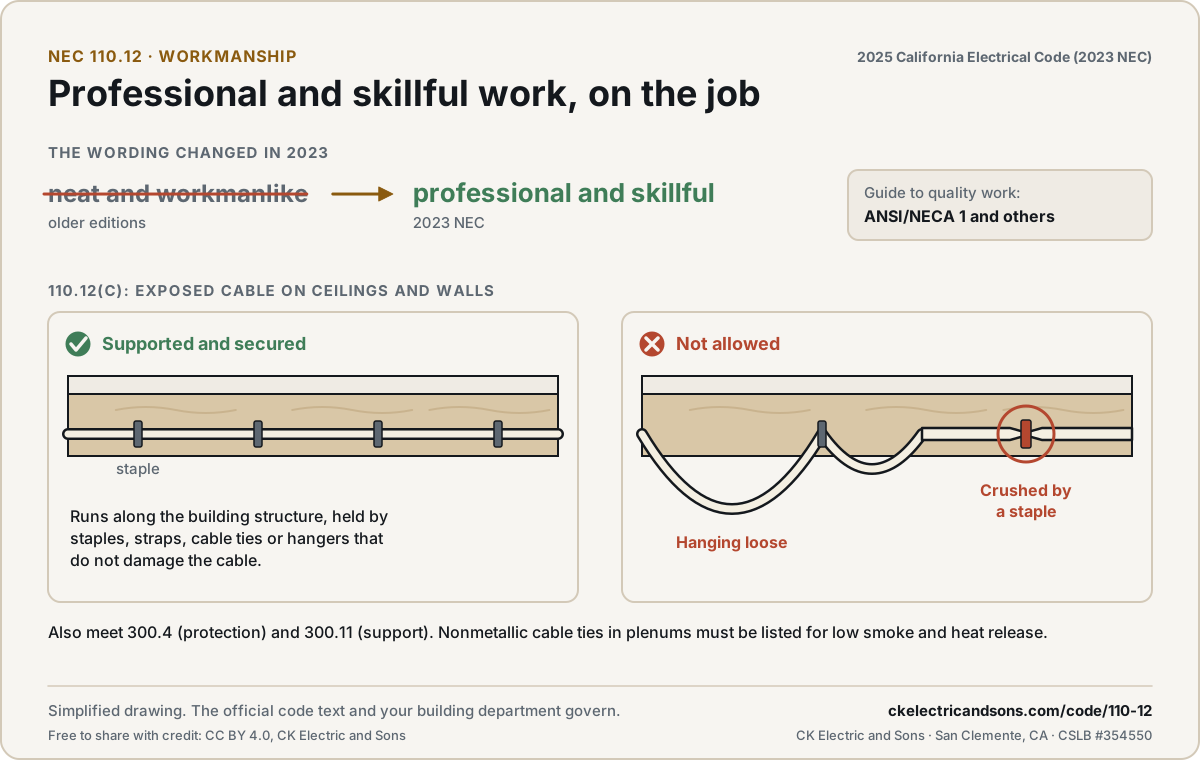 NEC 110.12: Professional and skillful work, on the jobRead the sectionSVGPNG
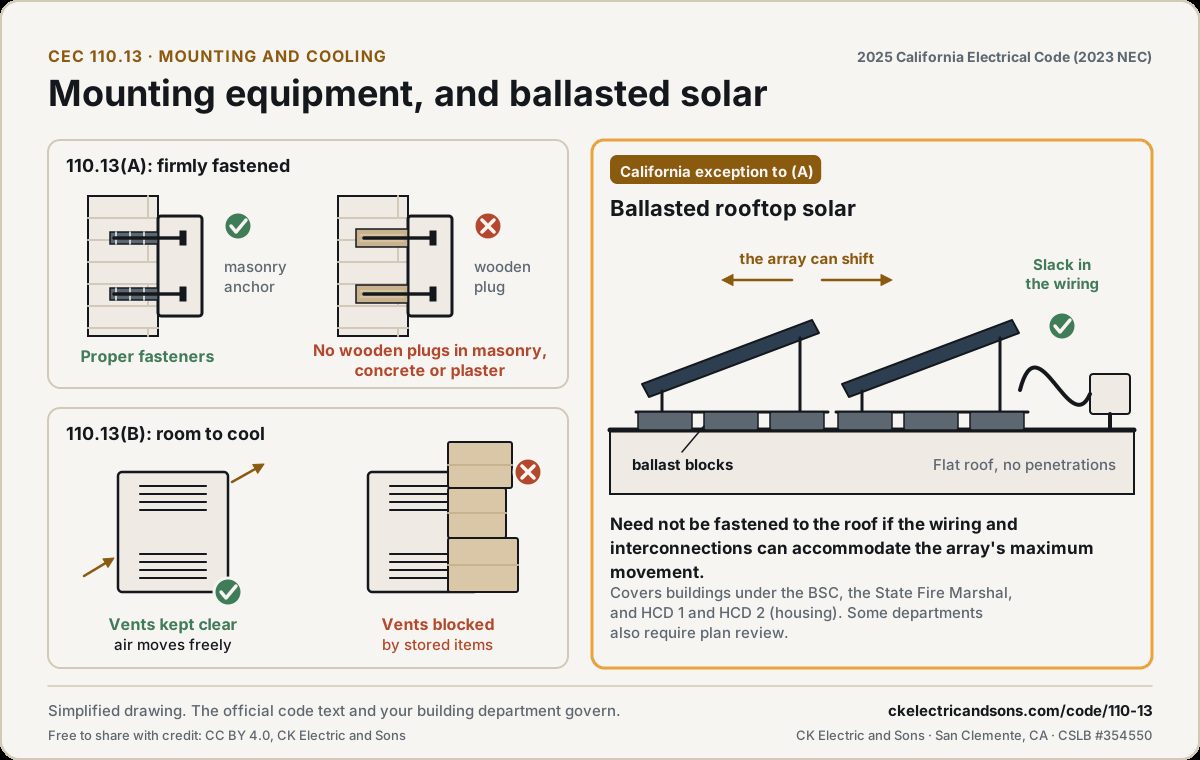
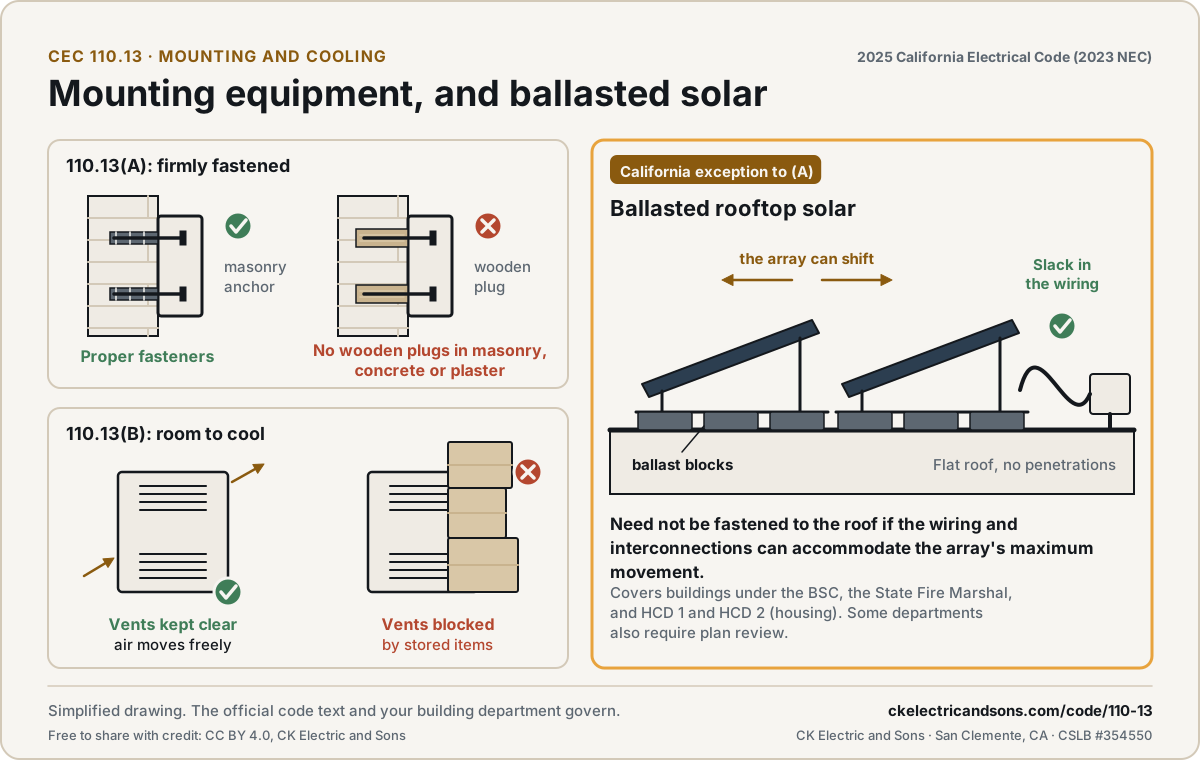 CEC 110.13: Mounting equipment, and ballasted solarRead the sectionSVGPNG
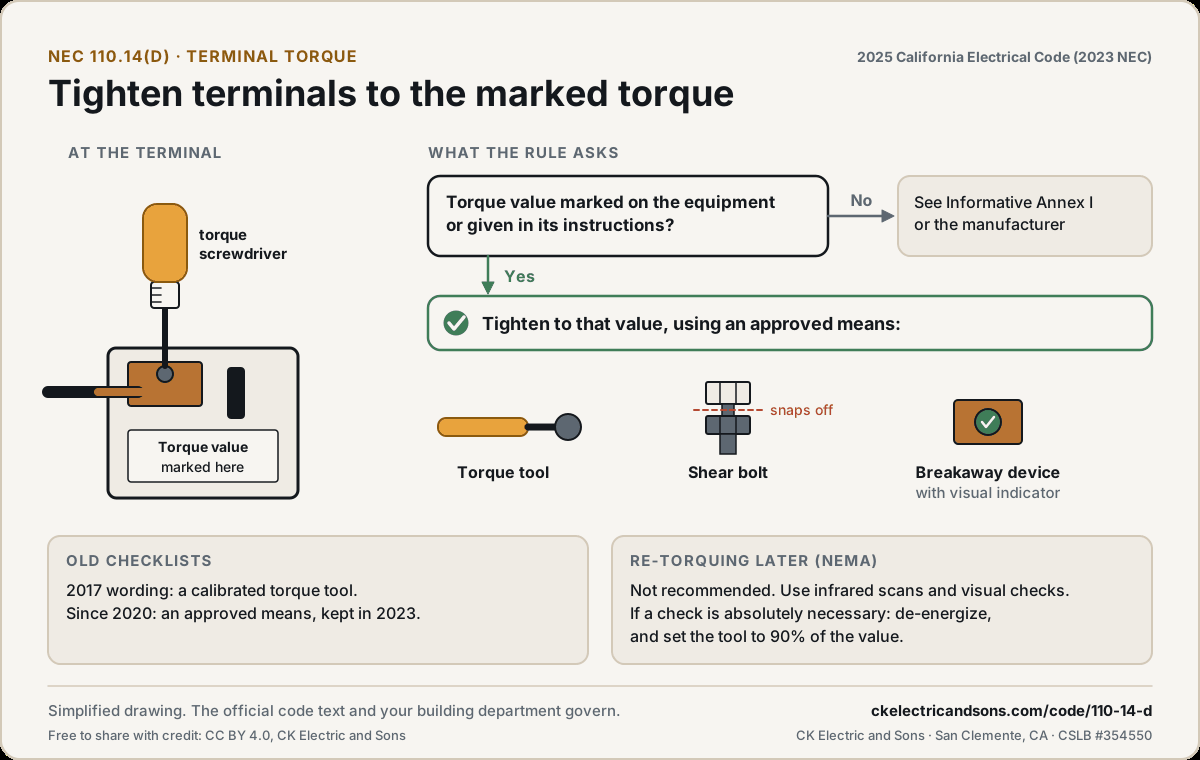
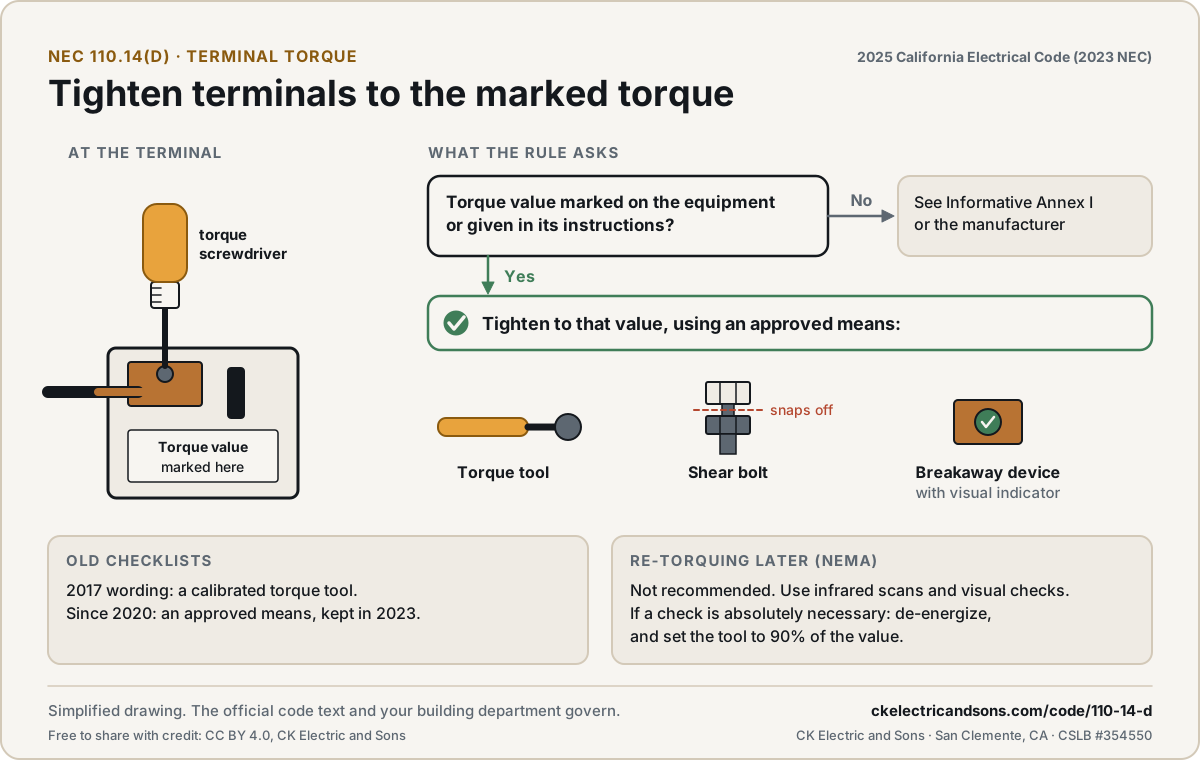 NEC 110.14(D): Tighten terminals to the marked torqueRead the sectionSVGPNG
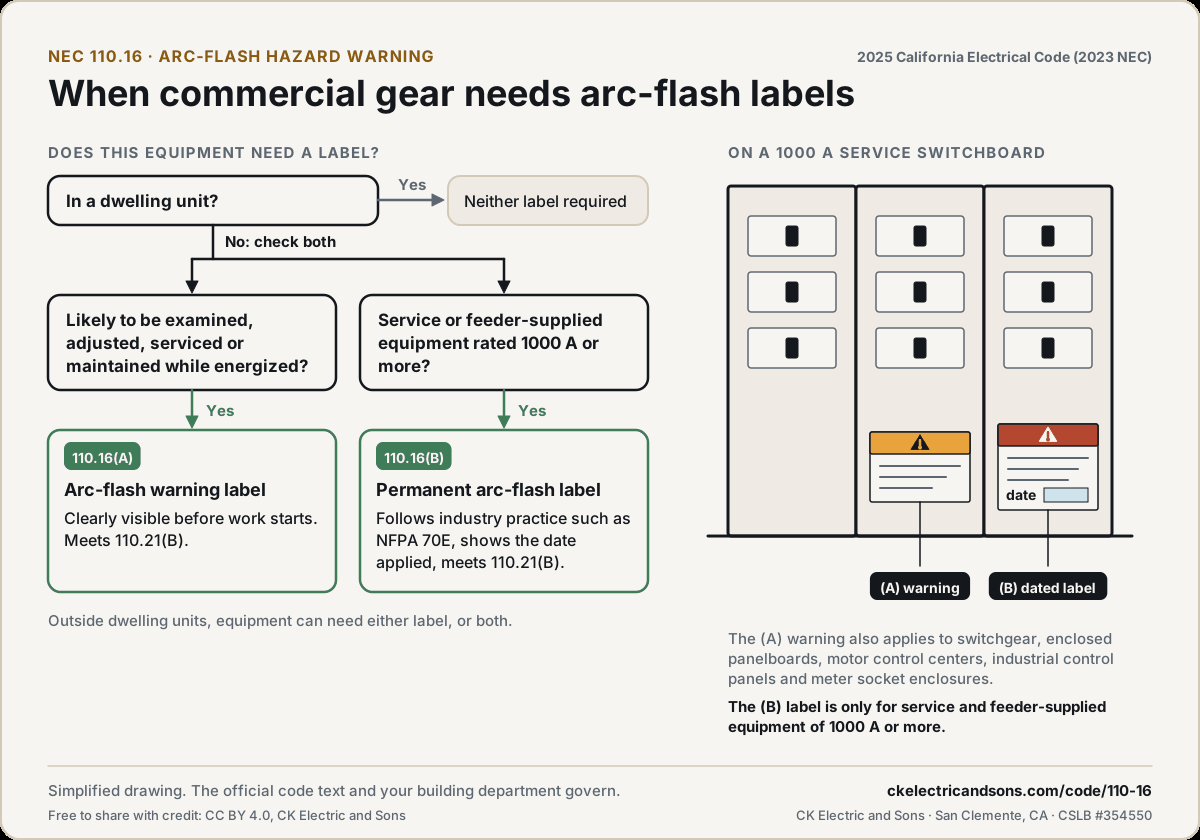
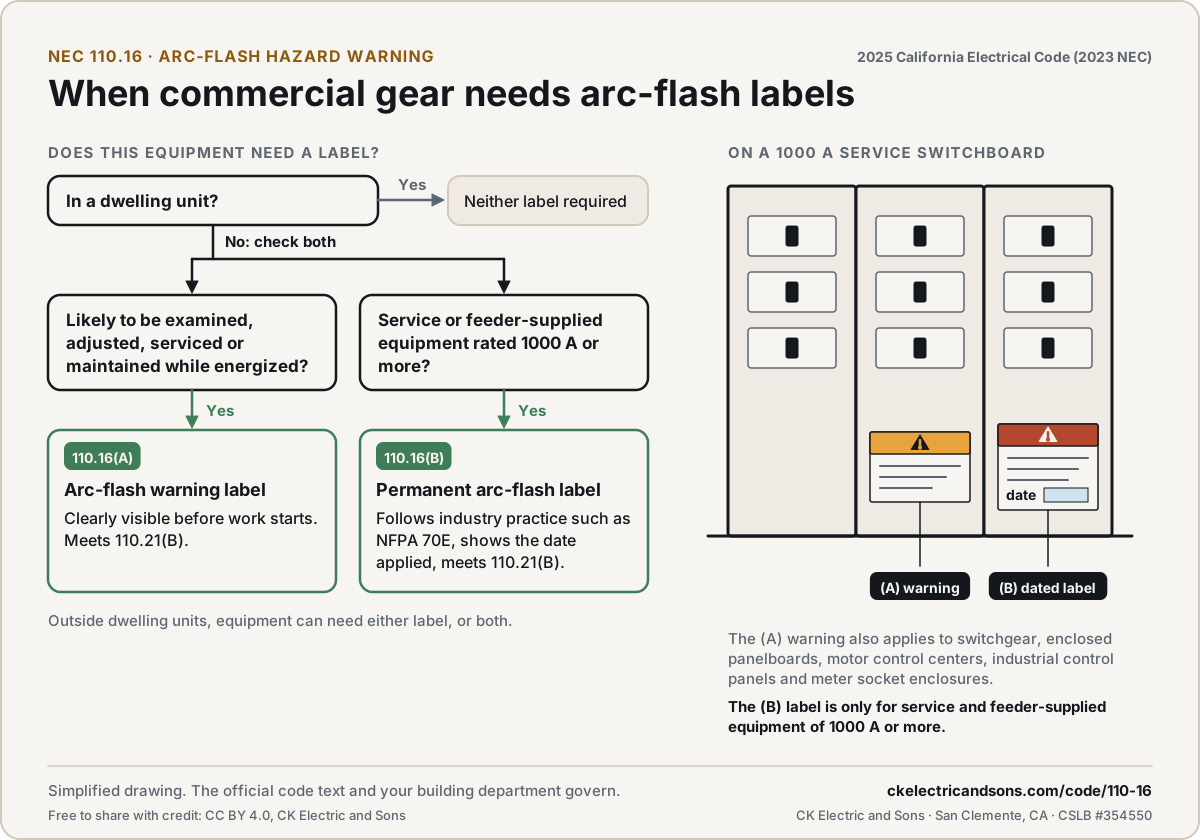 NEC 110.16: When commercial gear needs arc-flash labelsRead the sectionSVGPNG
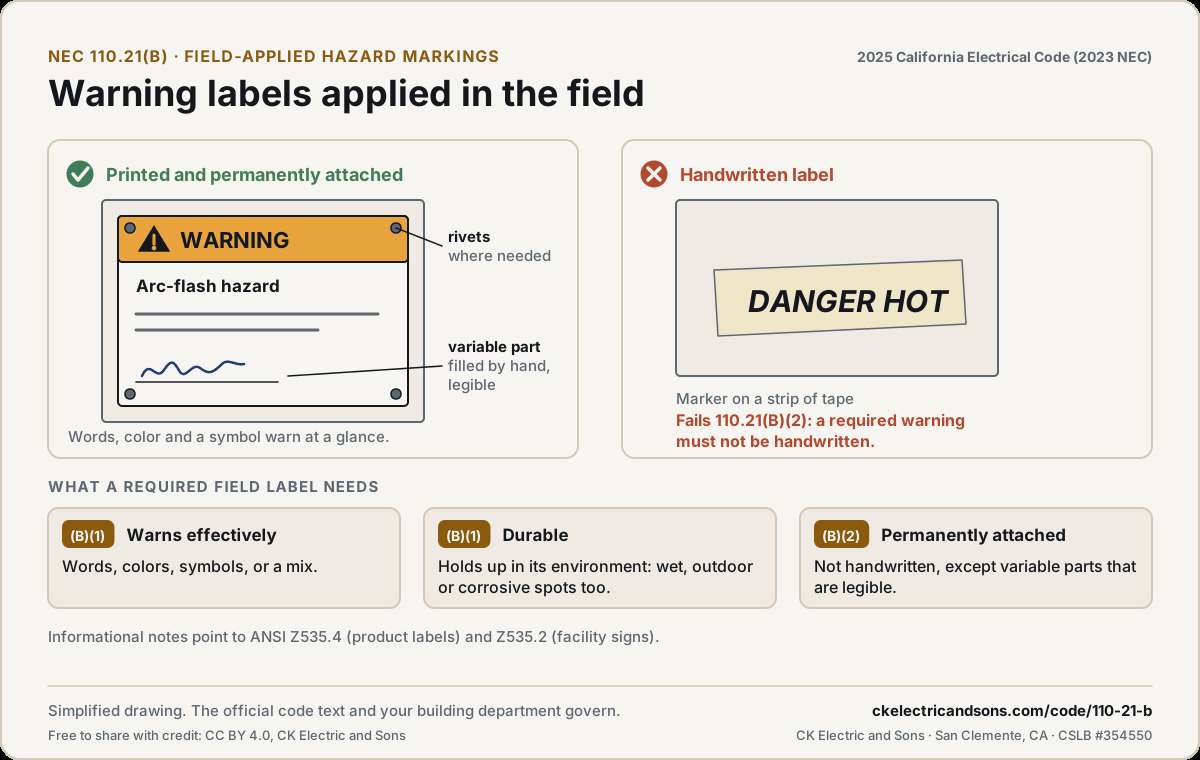
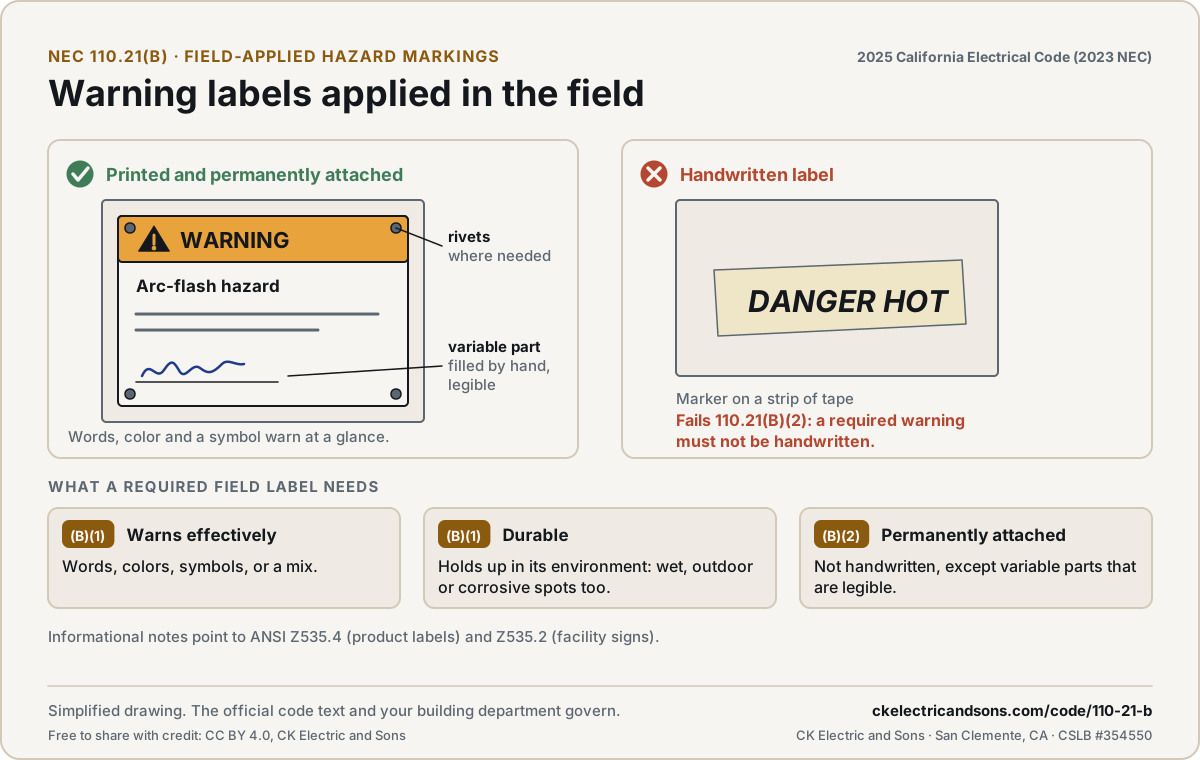 NEC 110.21(B): Warning labels applied in the fieldRead the sectionSVGPNG
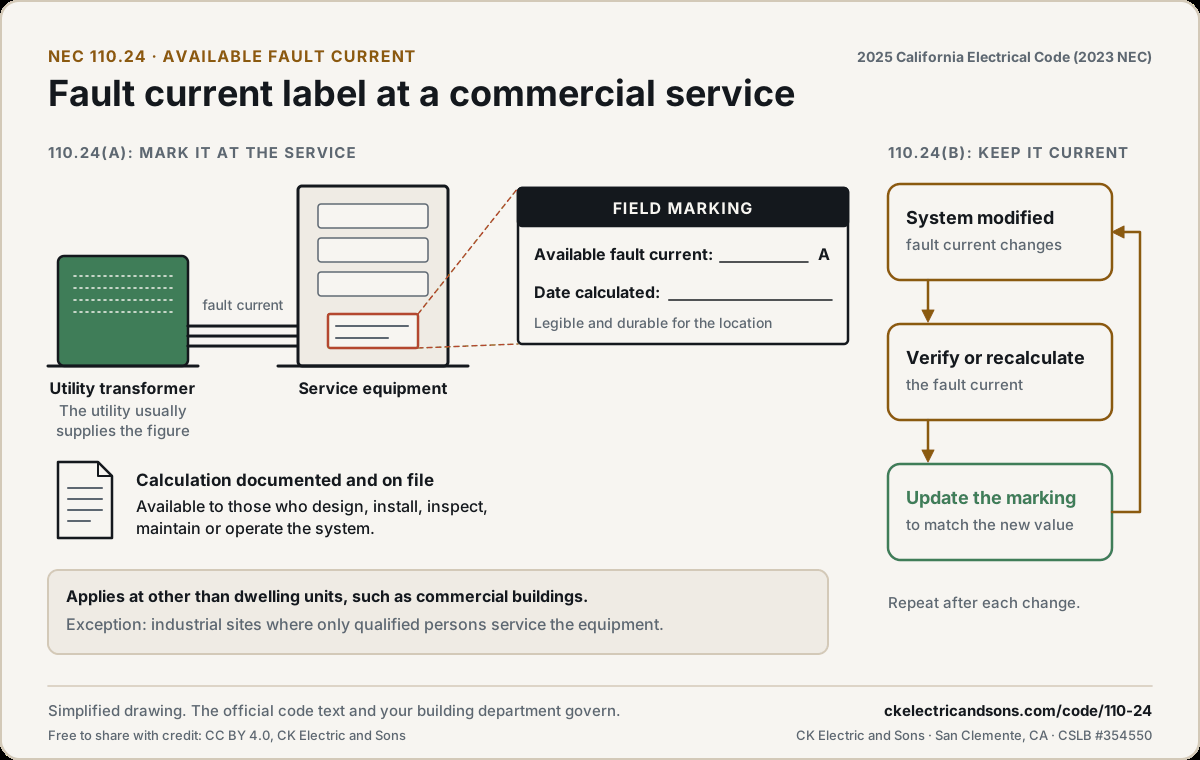
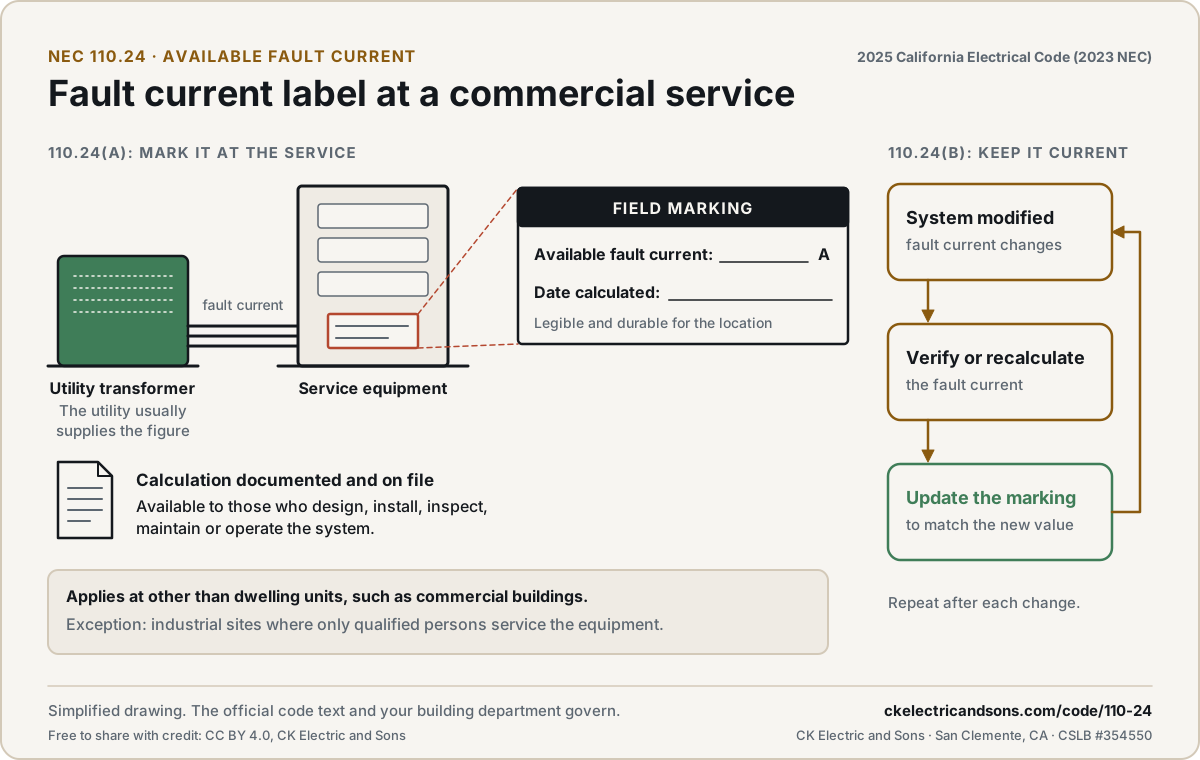 NEC 110.24: Fault current label at a commercial serviceRead the sectionSVGPNG
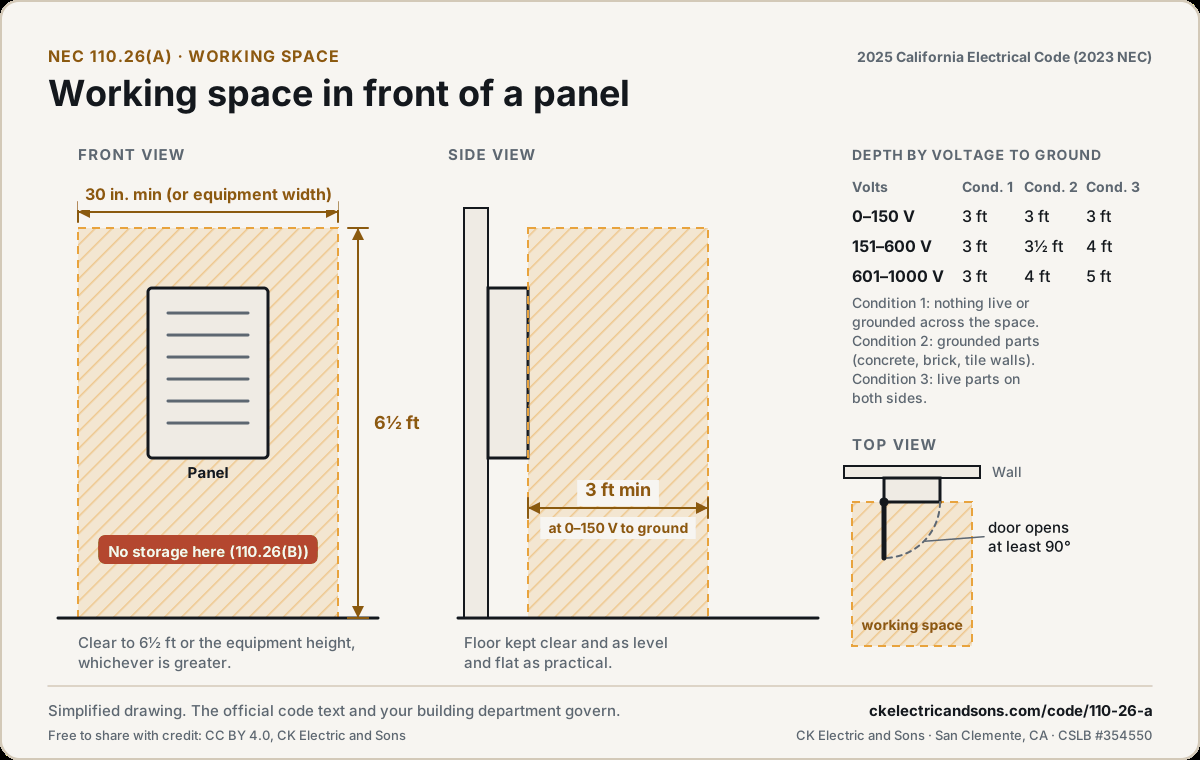
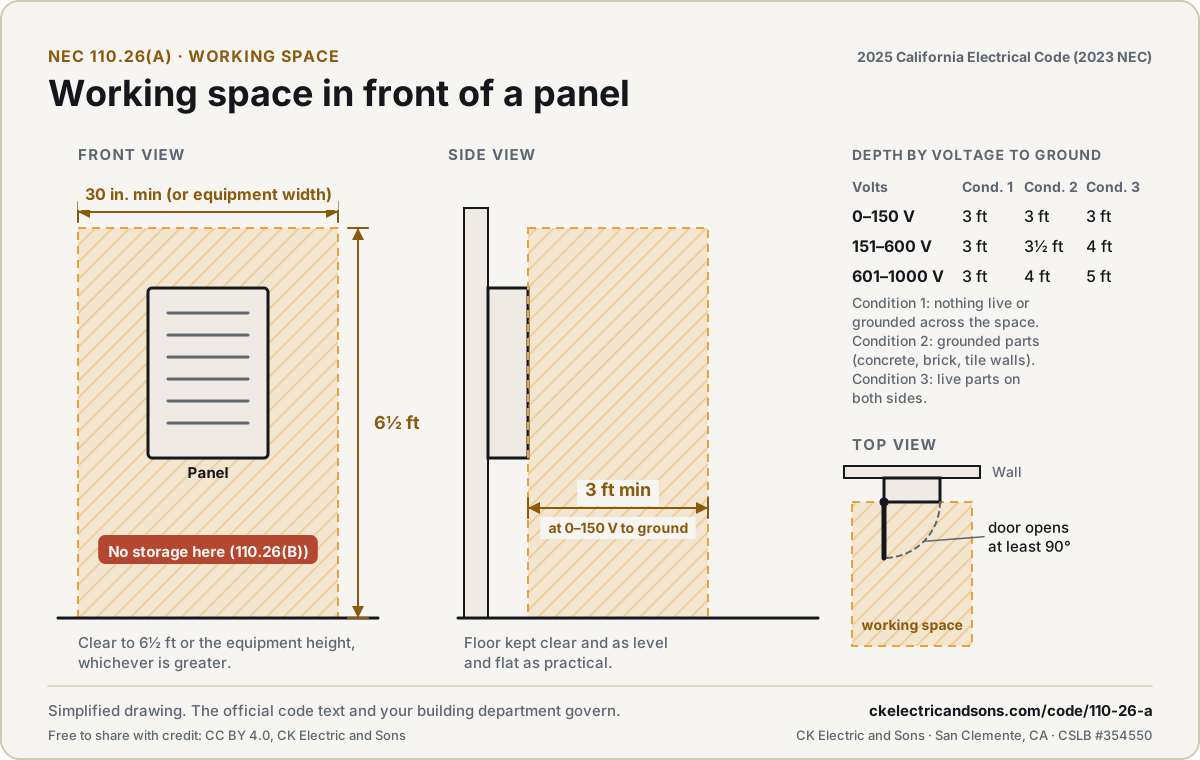 NEC 110.26(A): Working space in front of a panelRead the sectionSVGPNG
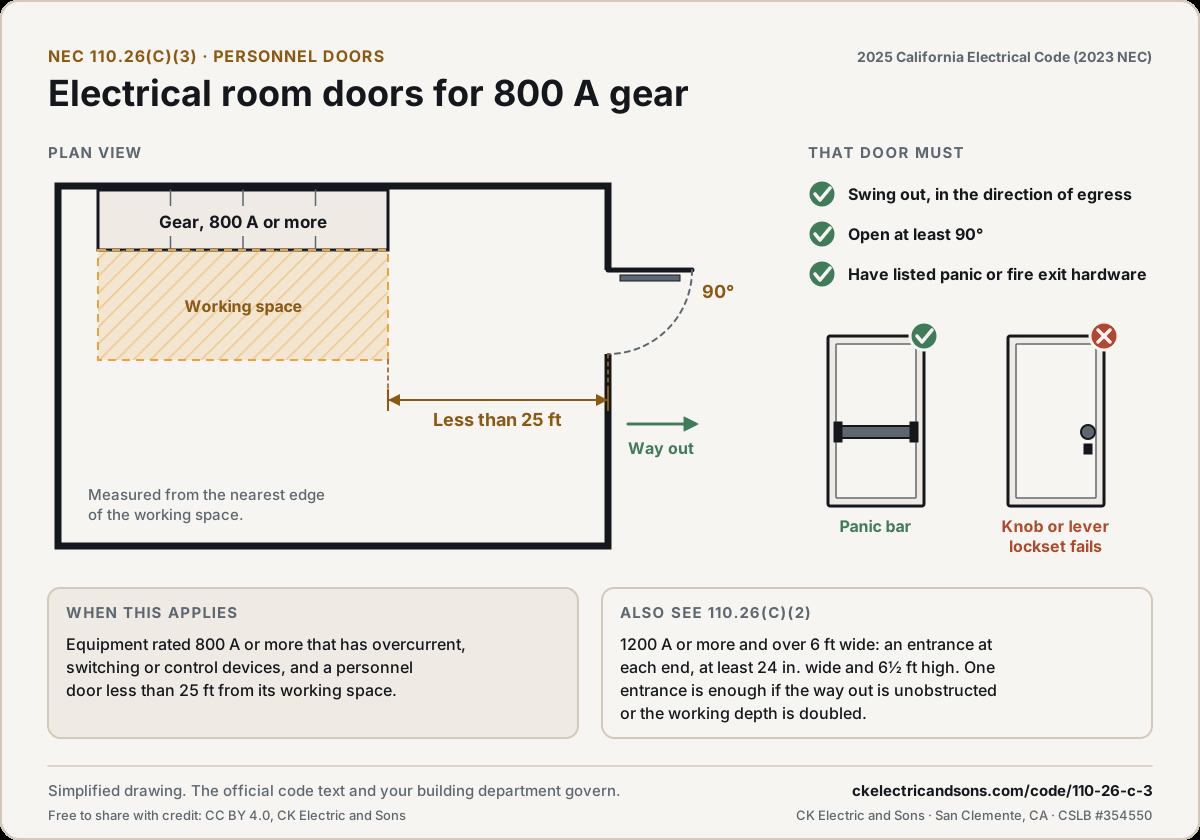
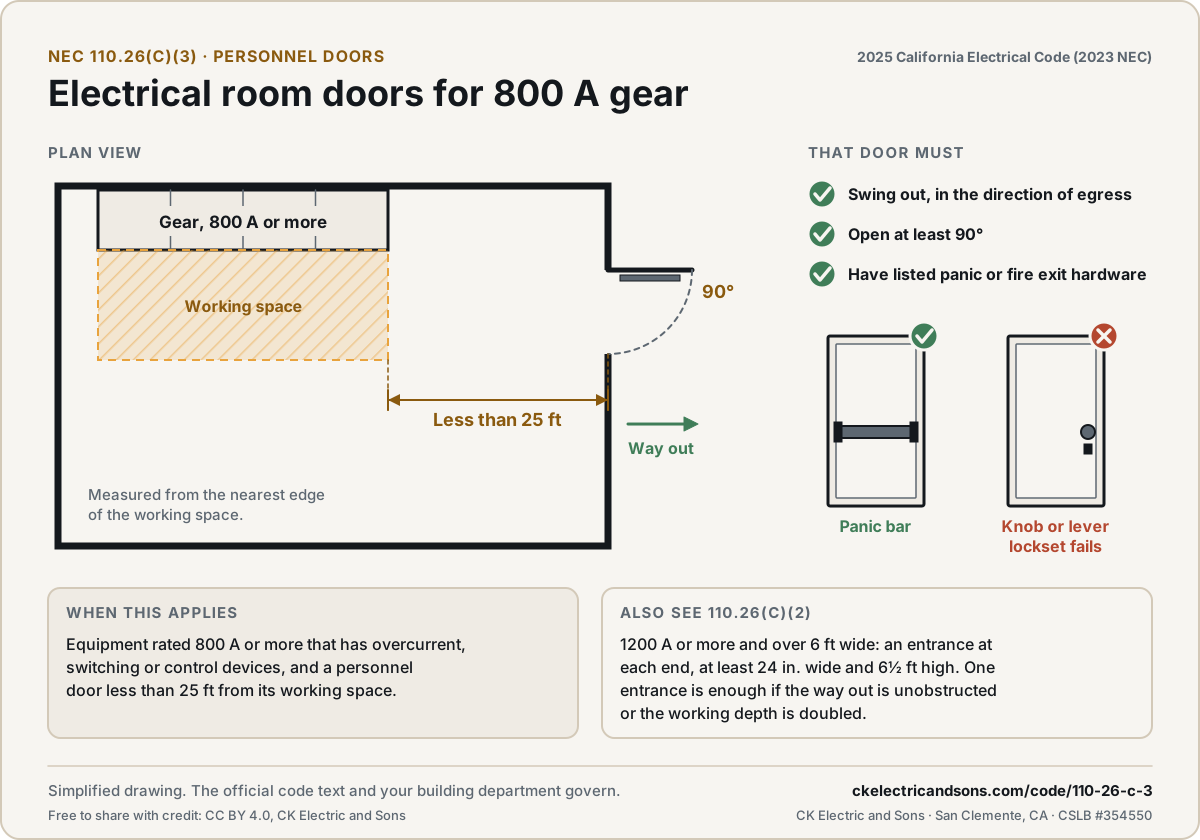 NEC 110.26(C)(3): Electrical room doors for 800 A gearRead the sectionSVGPNG
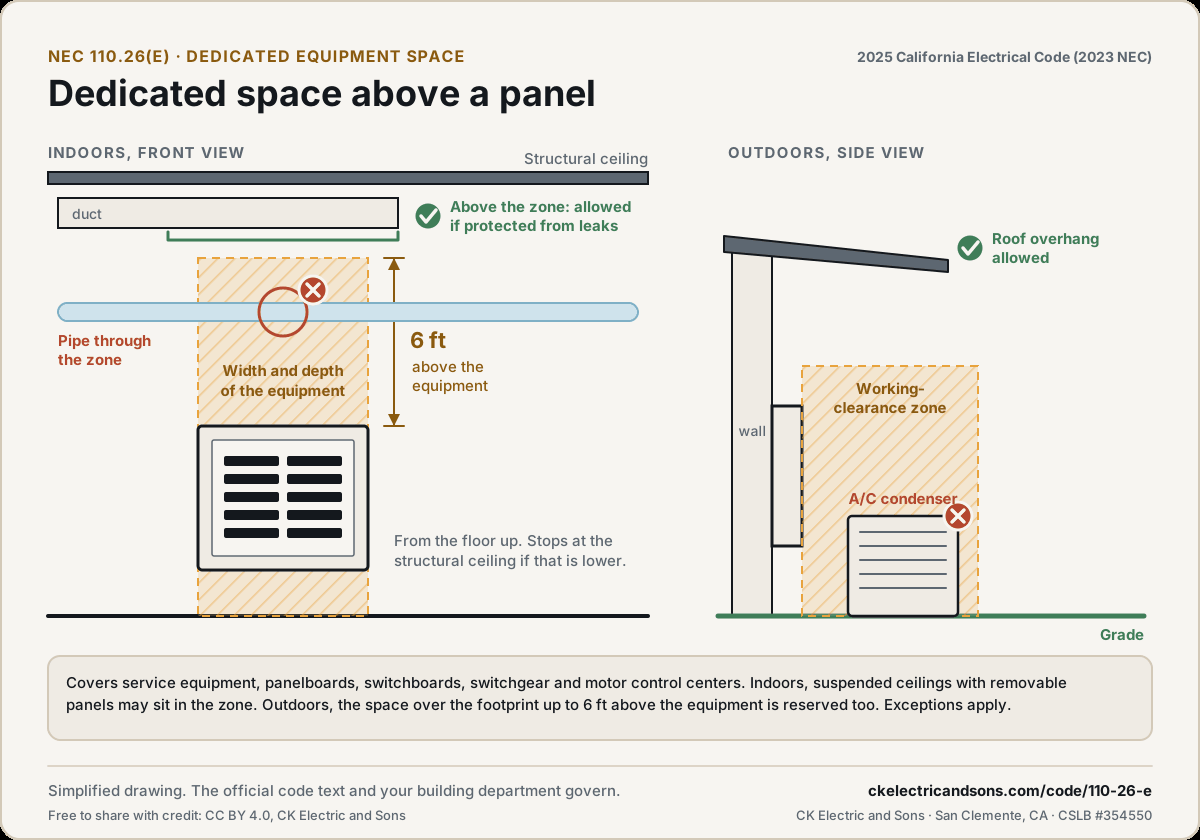
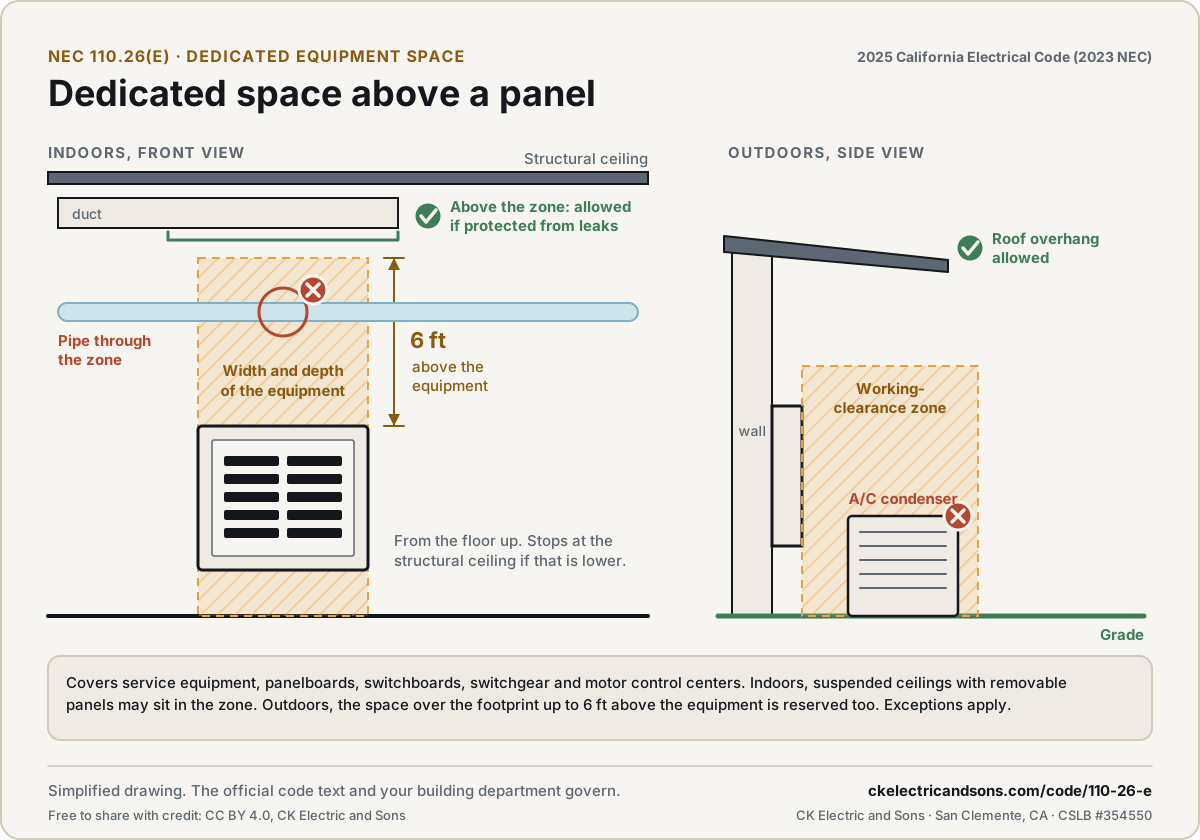 NEC 110.26(E): Dedicated space above a panelRead the sectionSVGPNG
Branch circuits, GFCI and AFCI
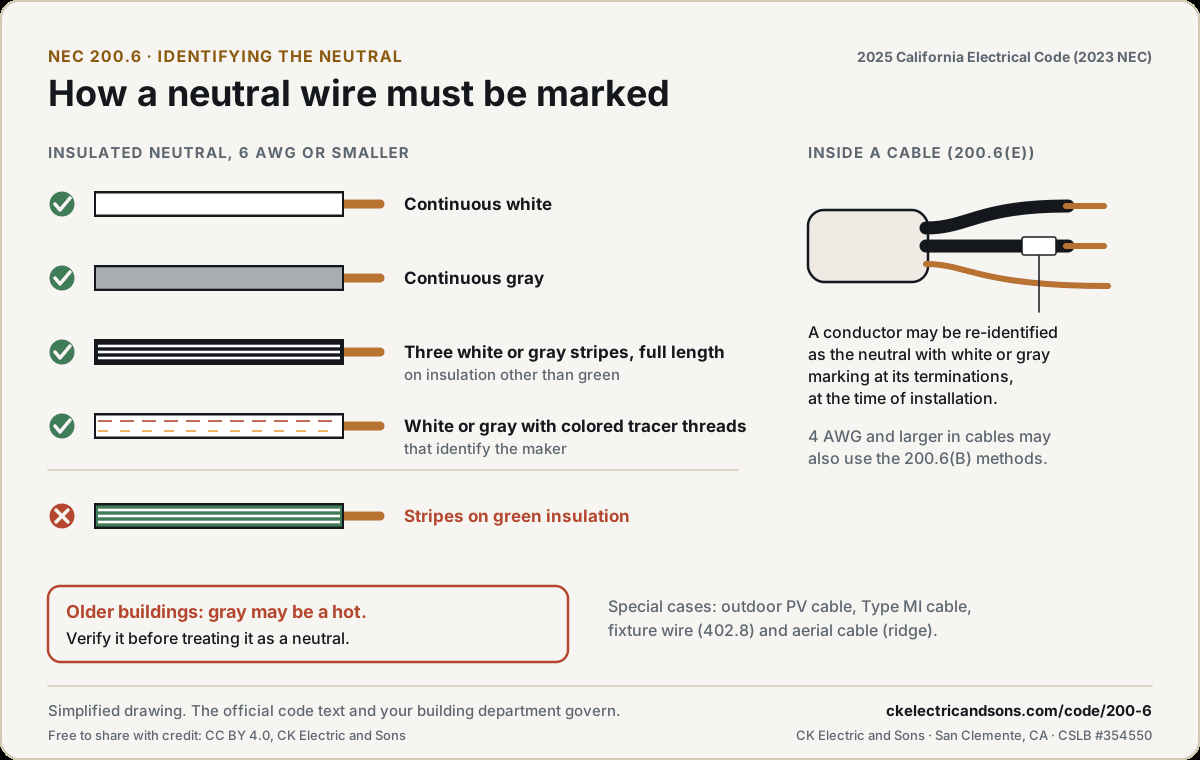
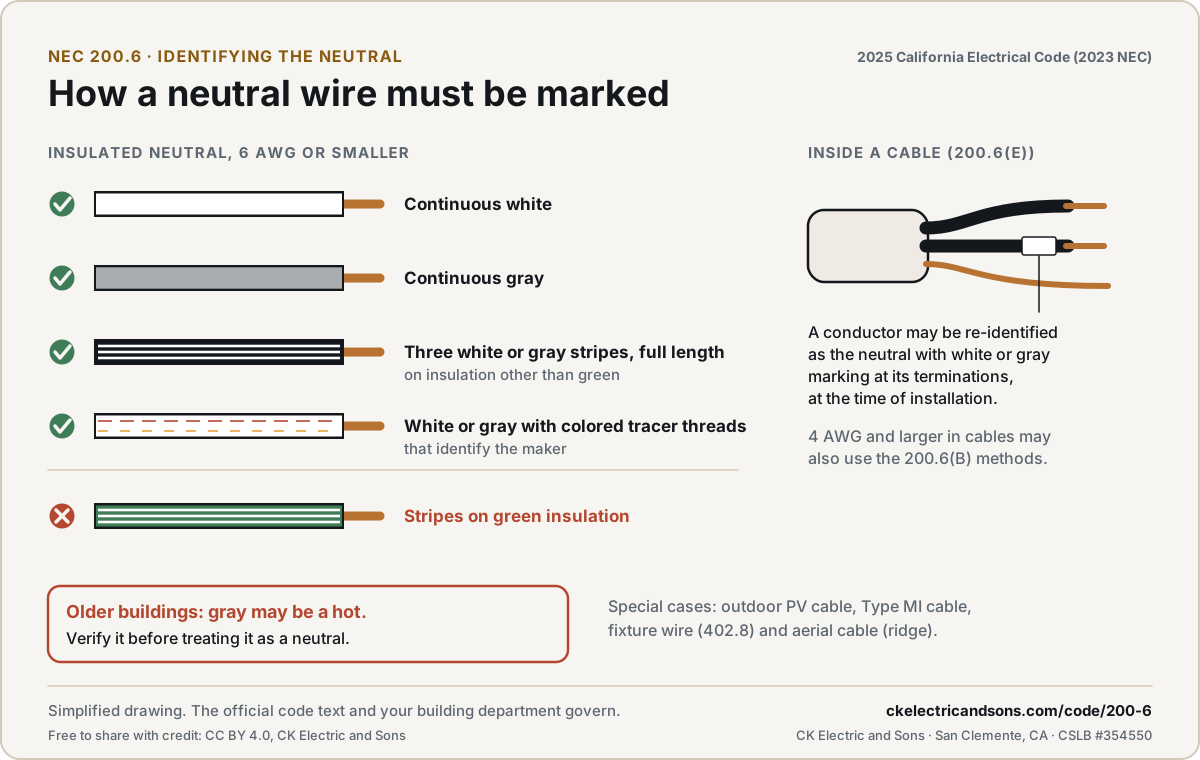 NEC 200.6: How a neutral wire must be markedRead the sectionSVGPNG
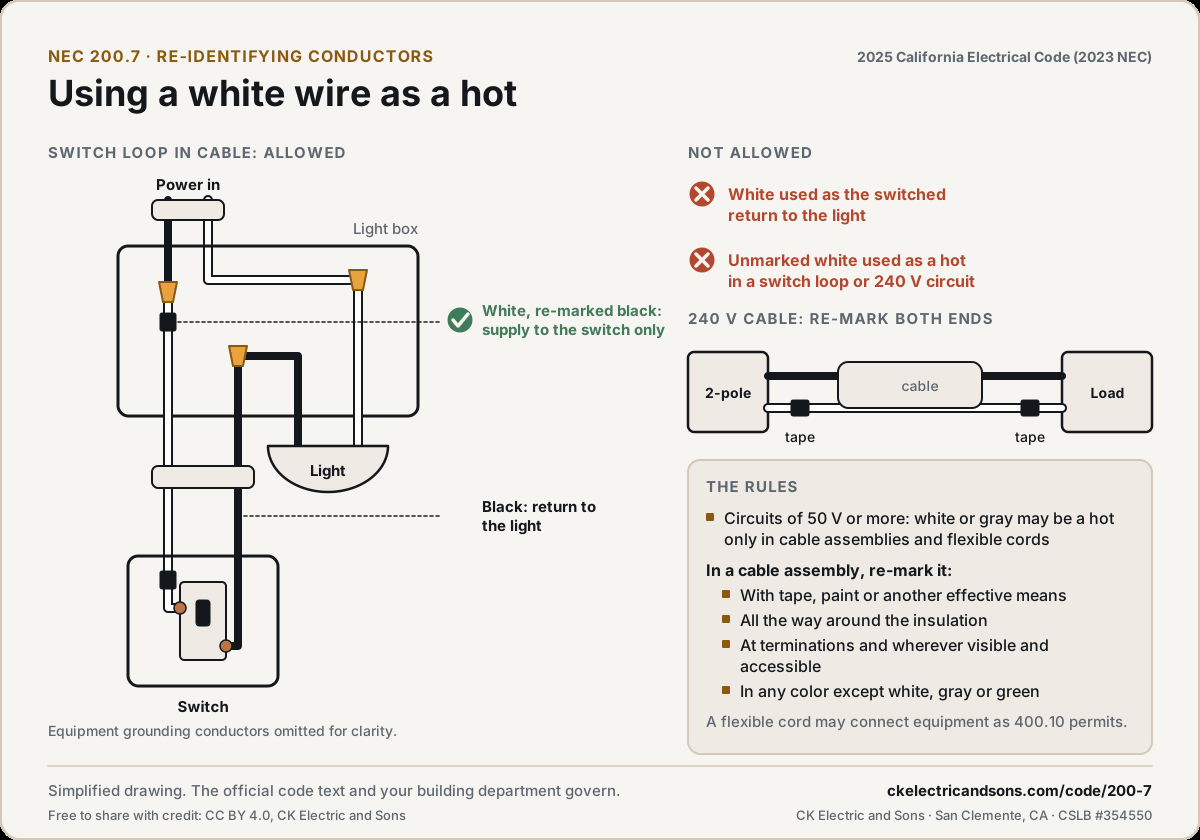
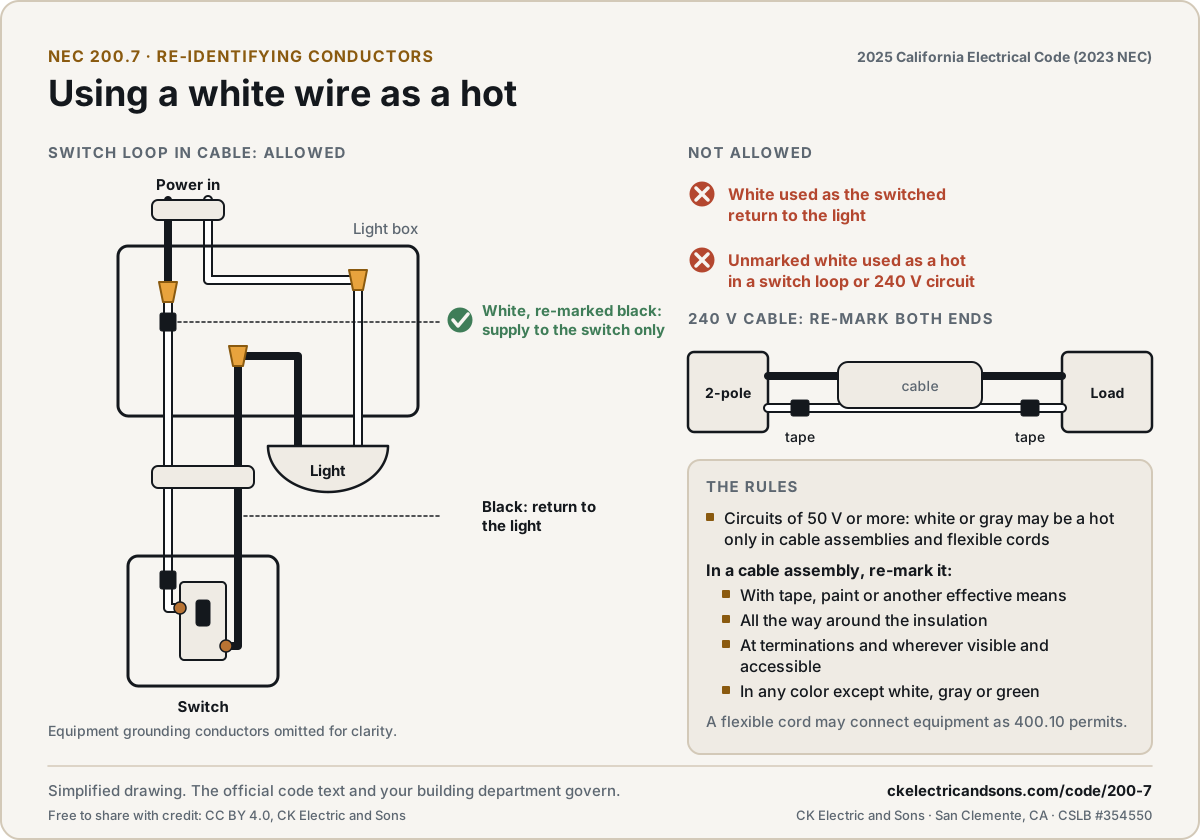 NEC 200.7: Using a white wire as a hotRead the sectionSVGPNG
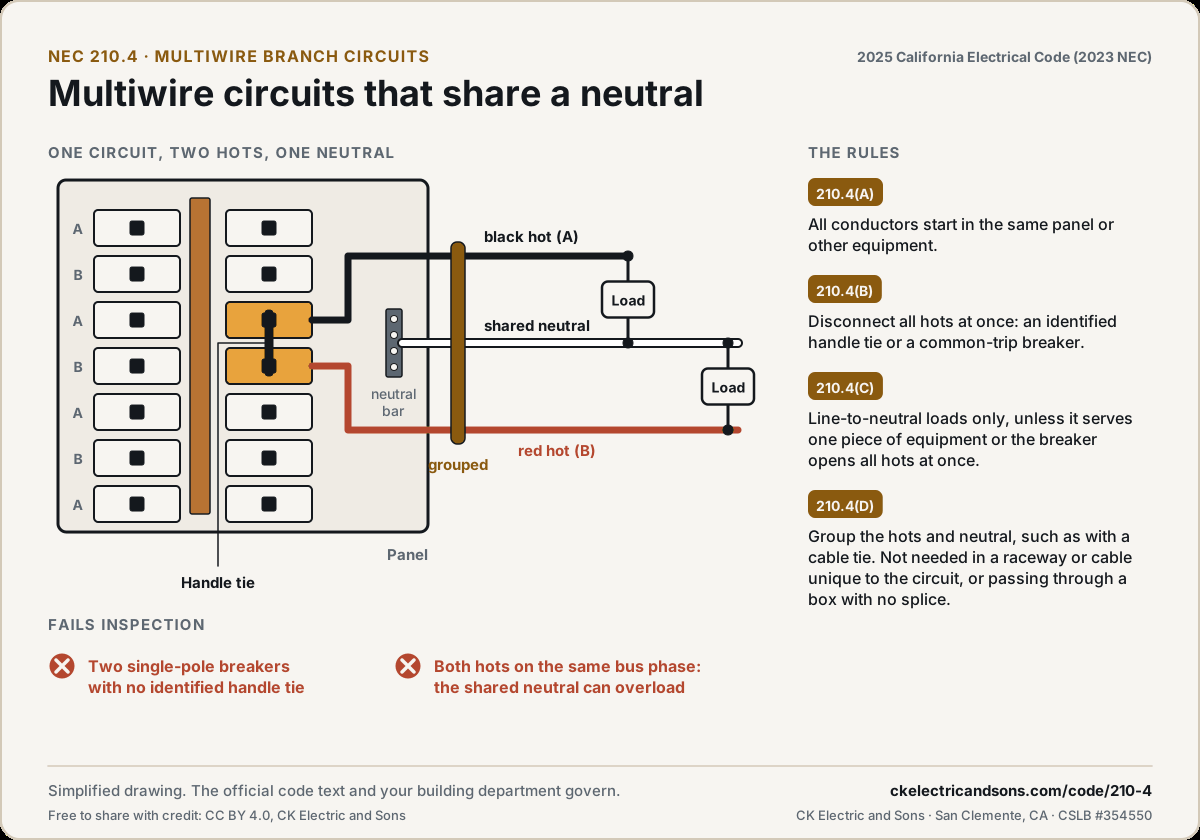
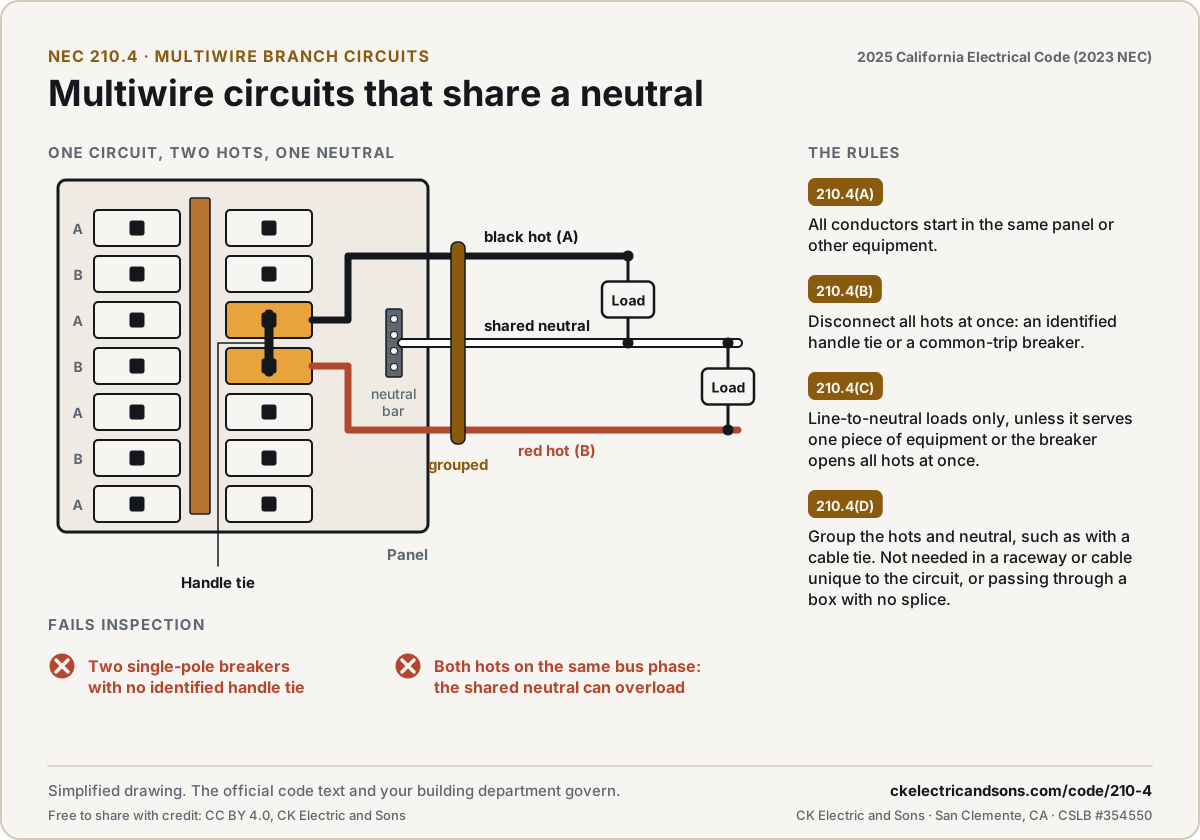 NEC 210.4: Multiwire circuits that share a neutralRead the sectionSVGPNG
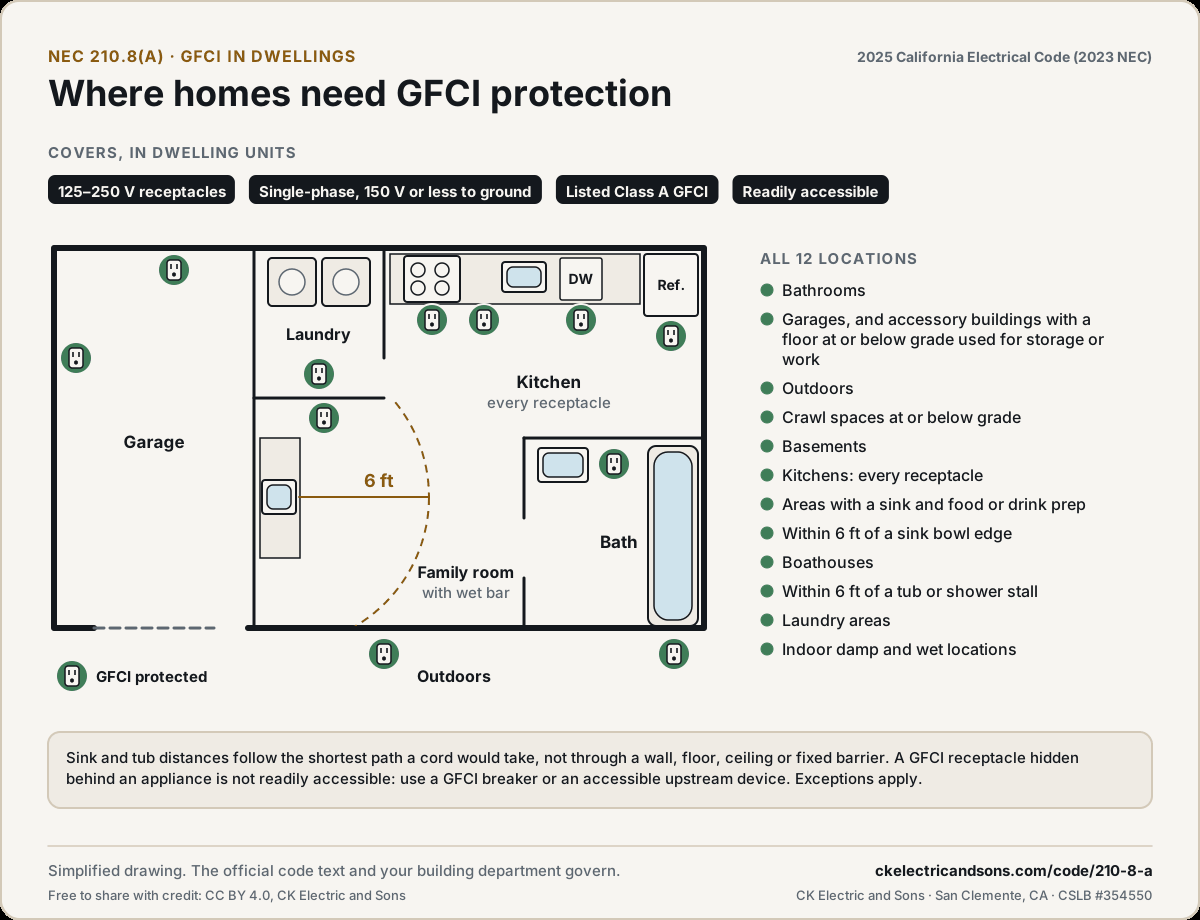
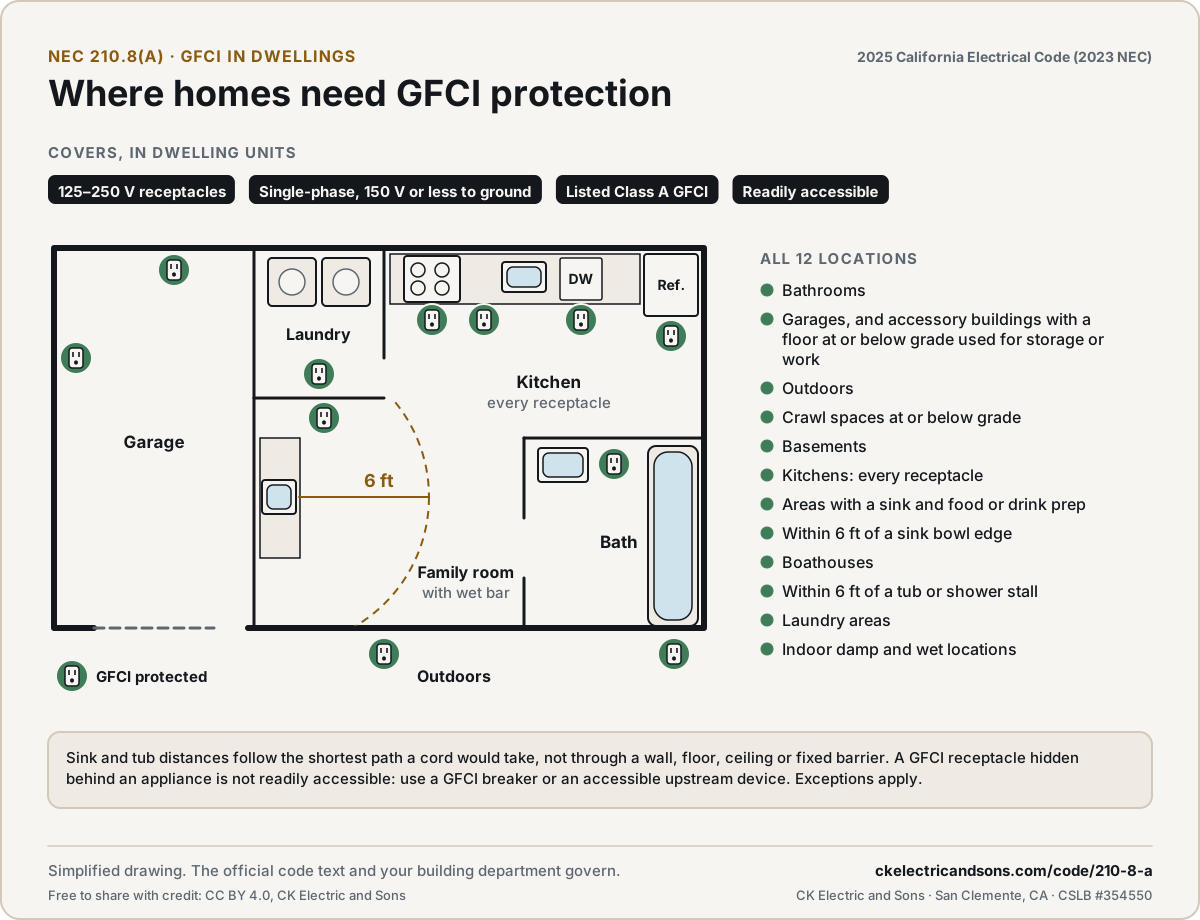 NEC 210.8(A): Where homes need GFCI protectionRead the sectionSVGPNG
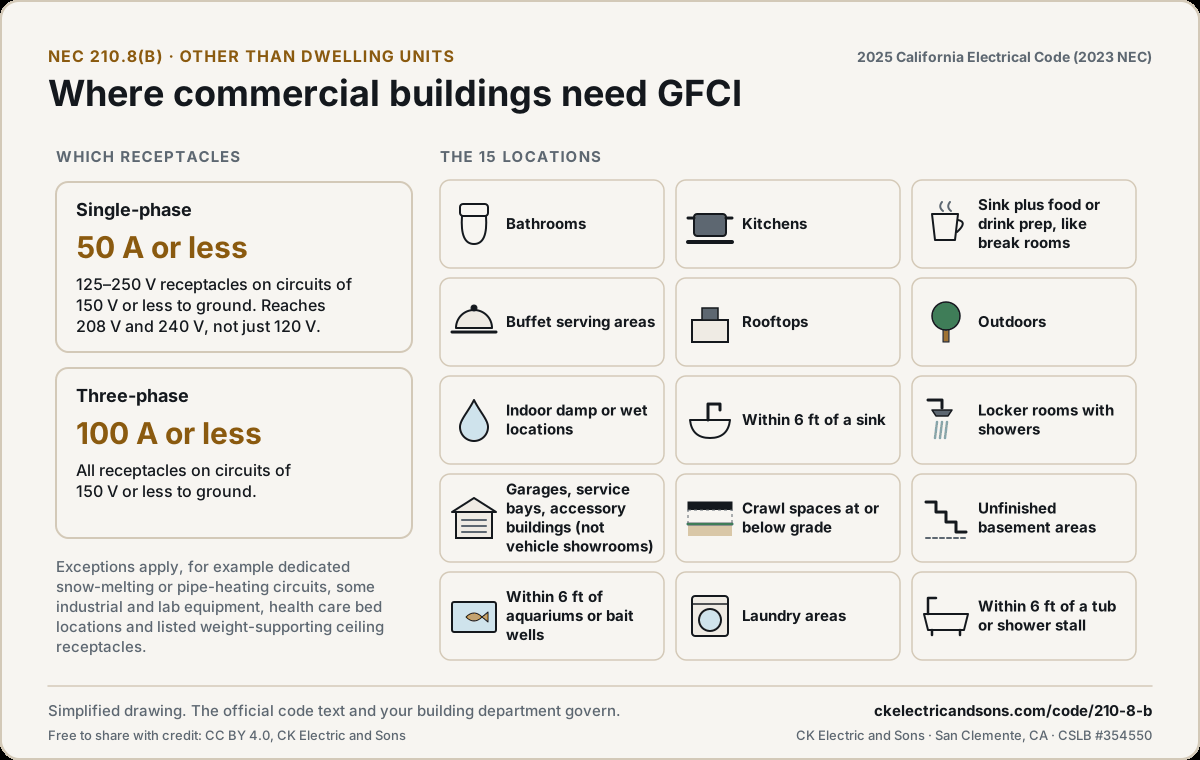
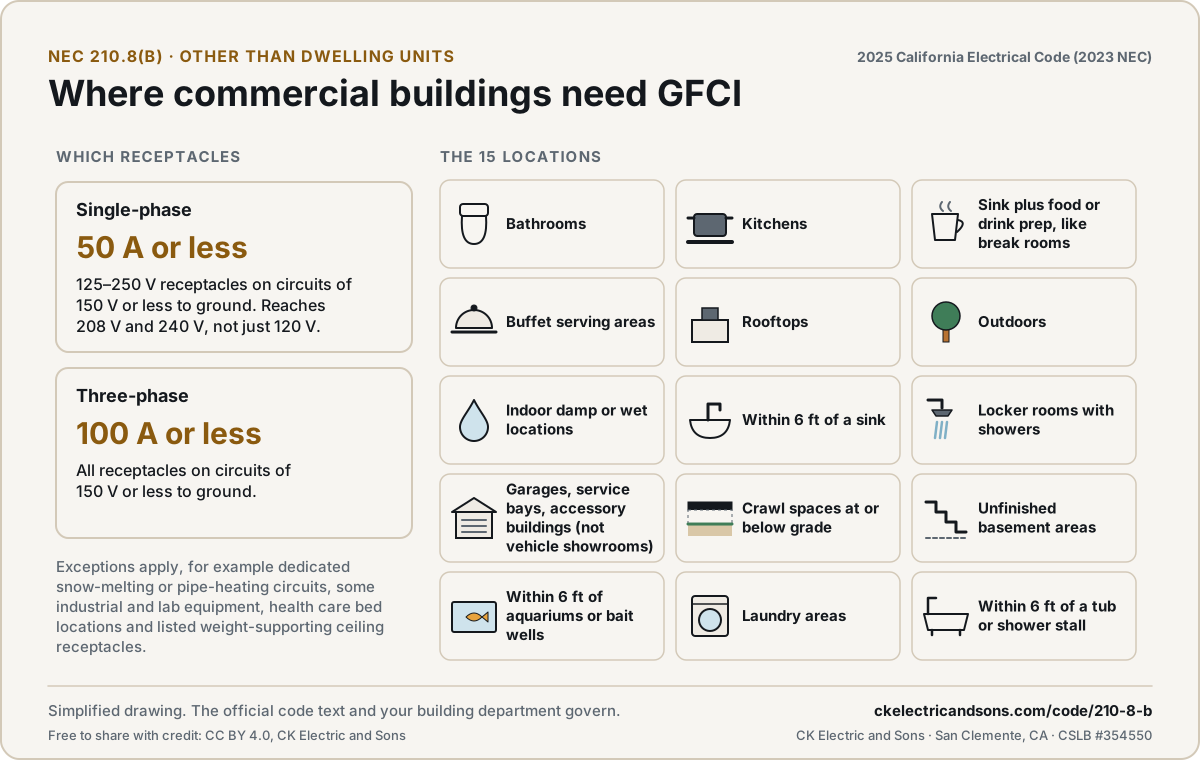 NEC 210.8(B): Where commercial buildings need GFCIRead the sectionSVGPNG
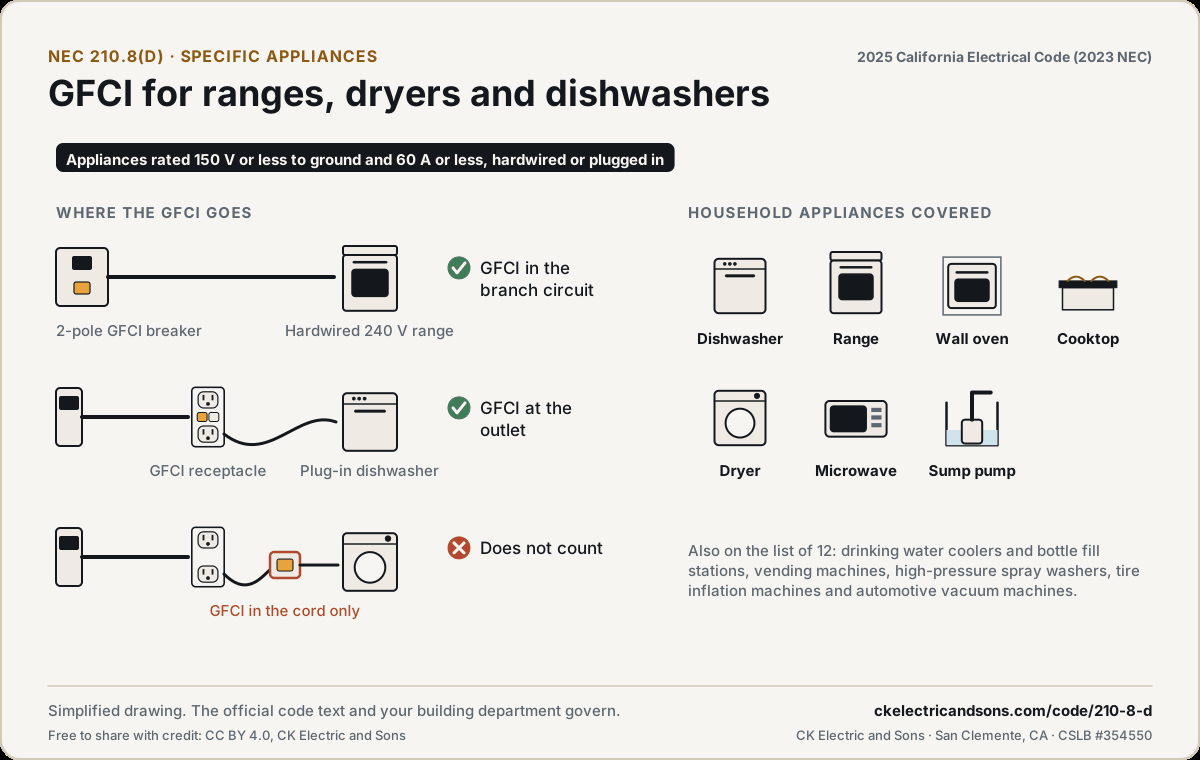
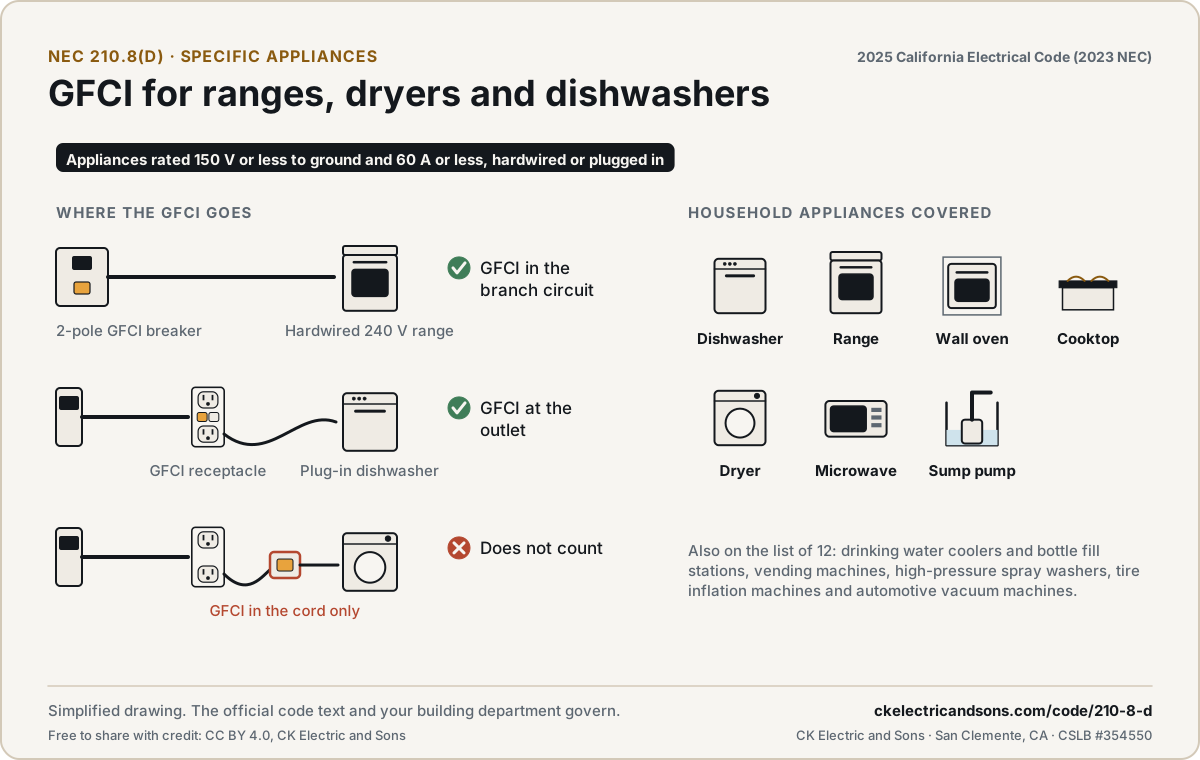 NEC 210.8(D): GFCI for ranges, dryers and dishwashersRead the sectionSVGPNG
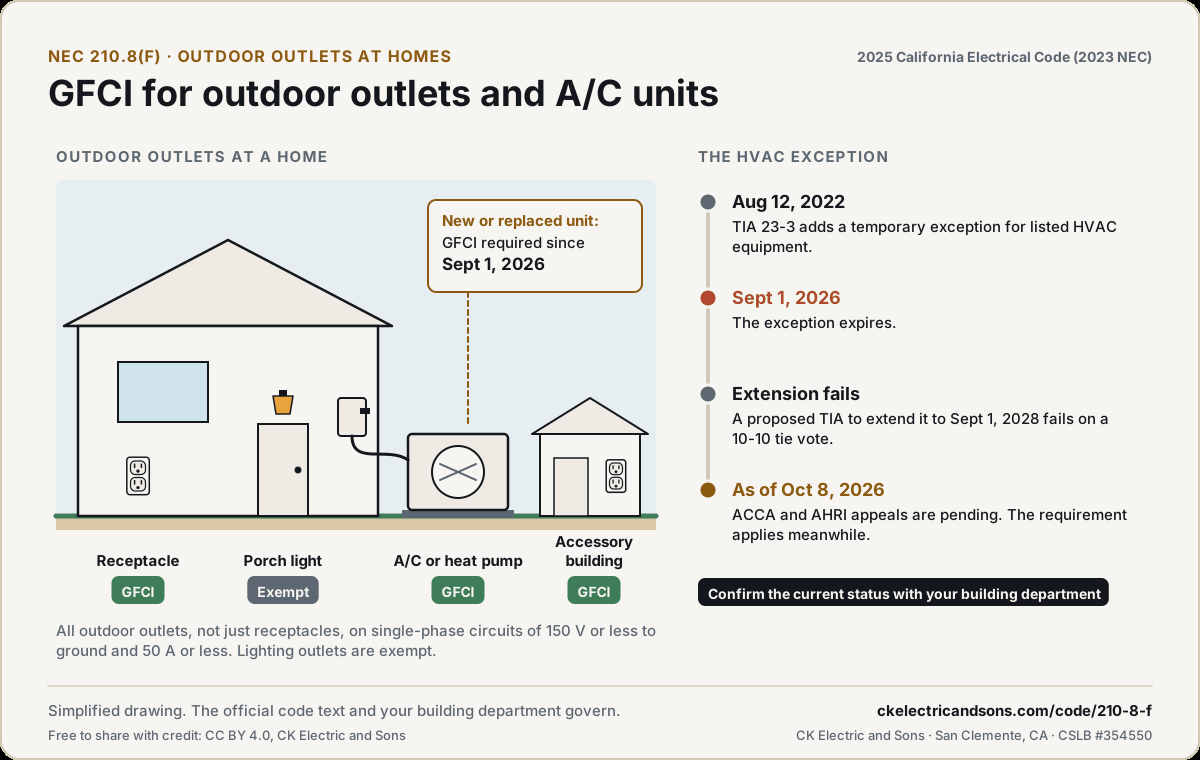
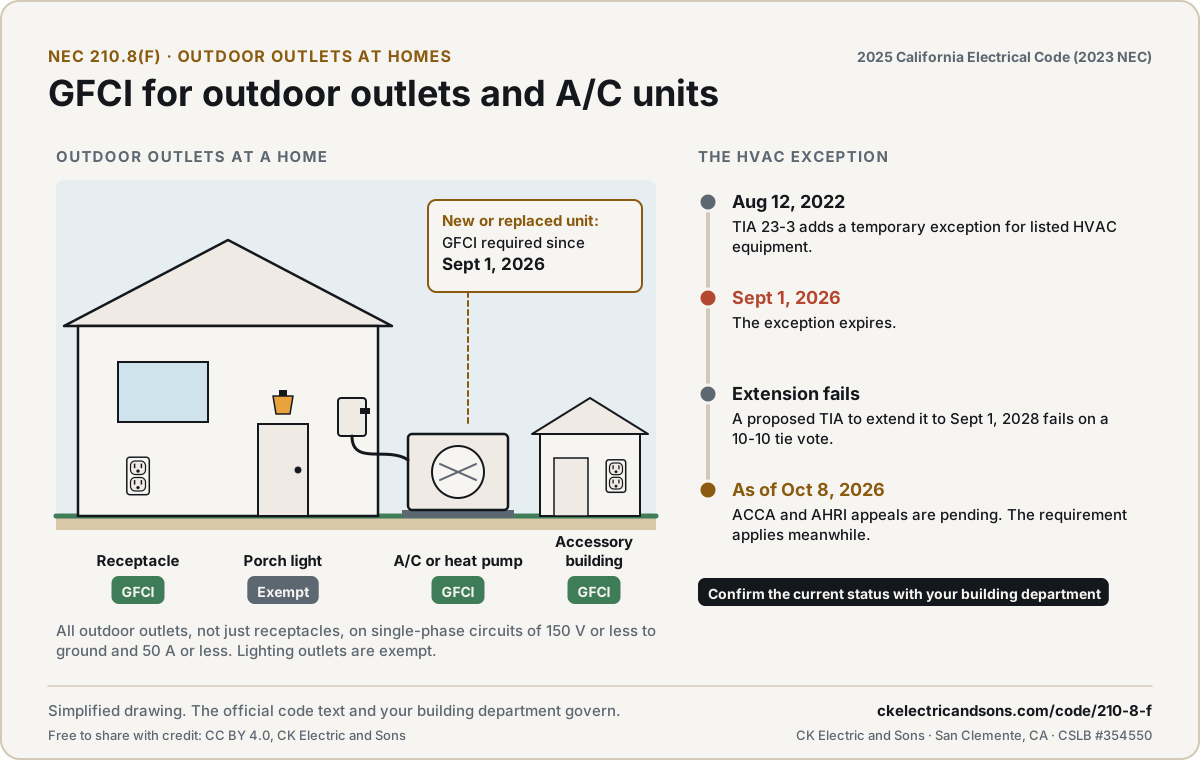 NEC 210.8(F): GFCI for outdoor outlets and A/C unitsRead the sectionSVGPNG
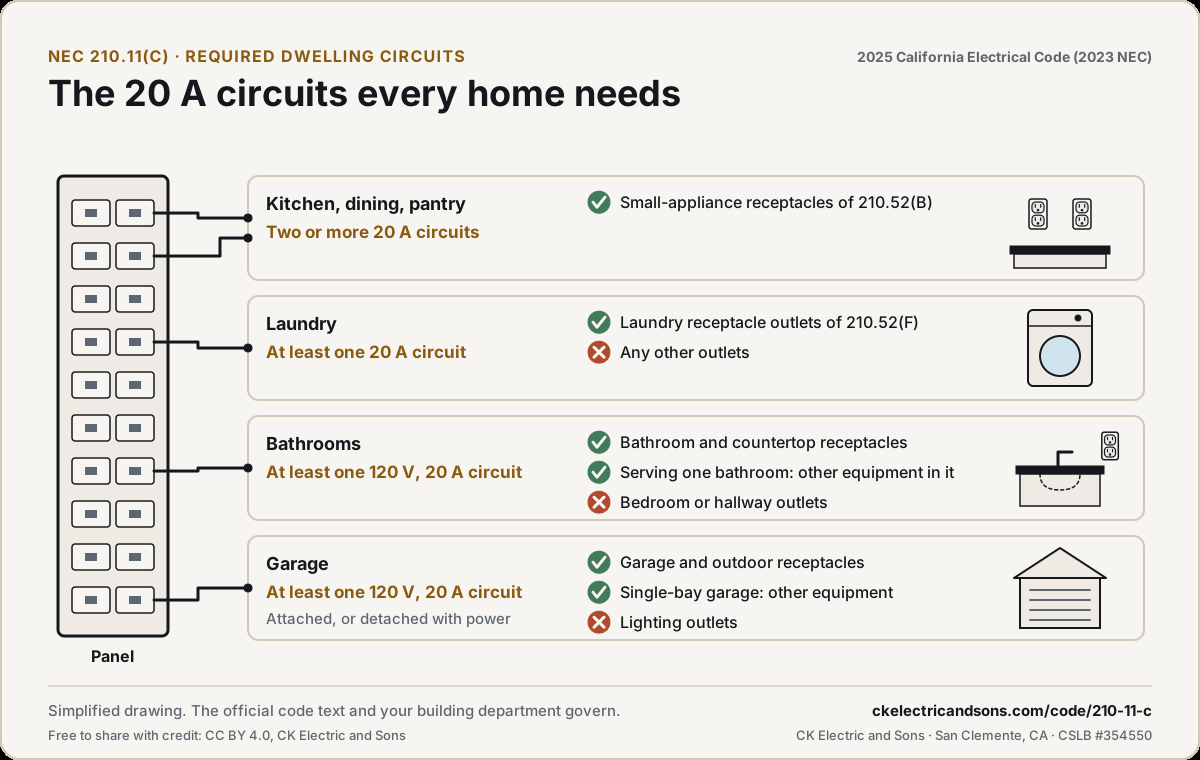
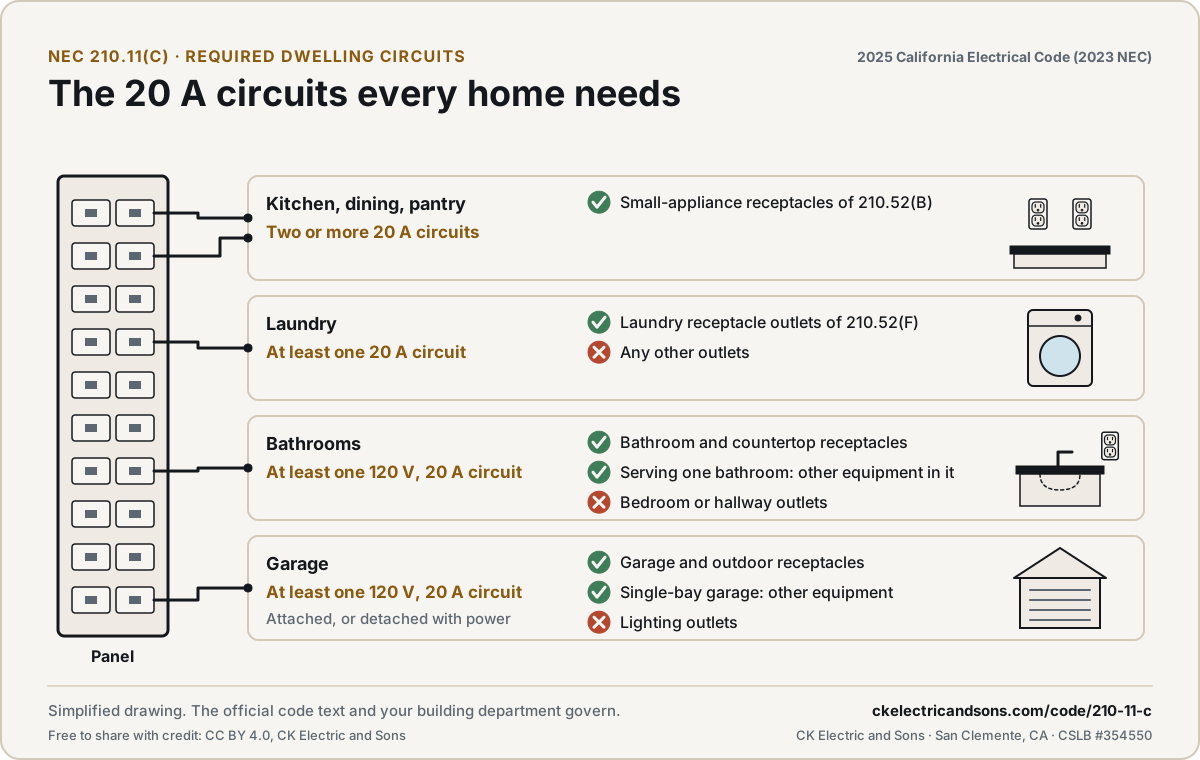 NEC 210.11(C): The 20 A circuits every home needsRead the sectionSVGPNG
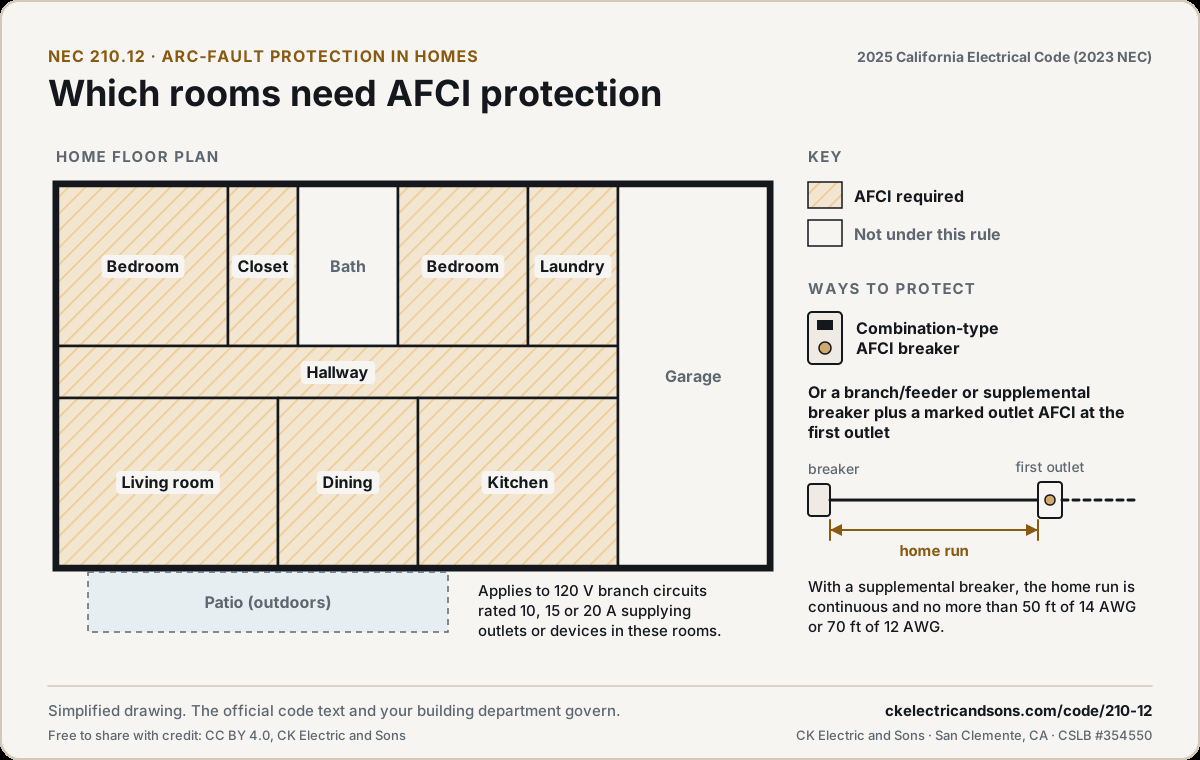
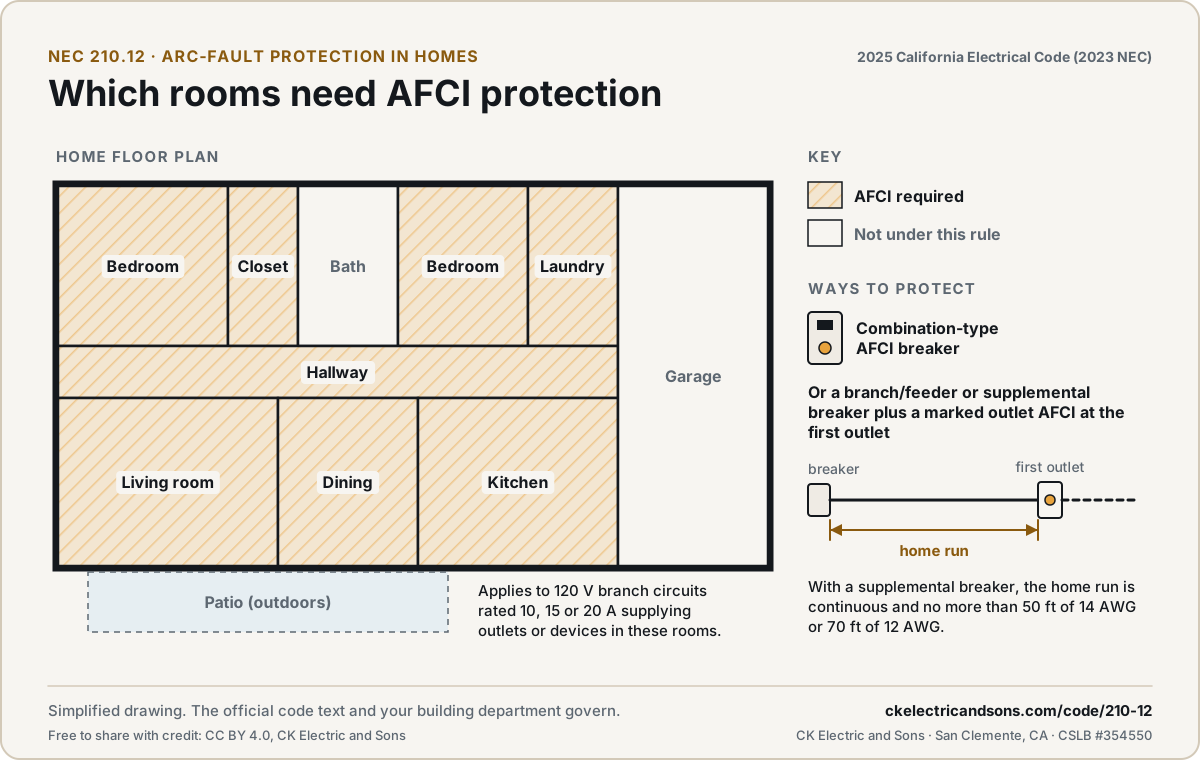 NEC 210.12: Which rooms need AFCI protectionRead the sectionSVGPNG
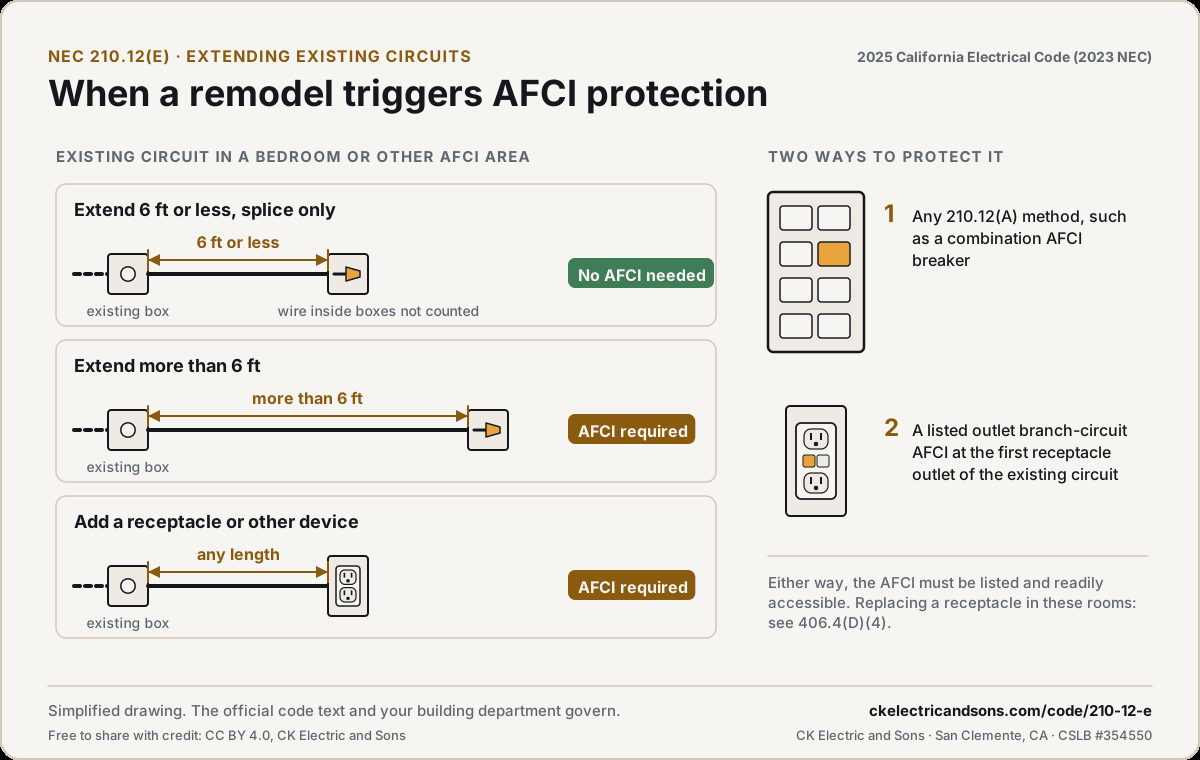
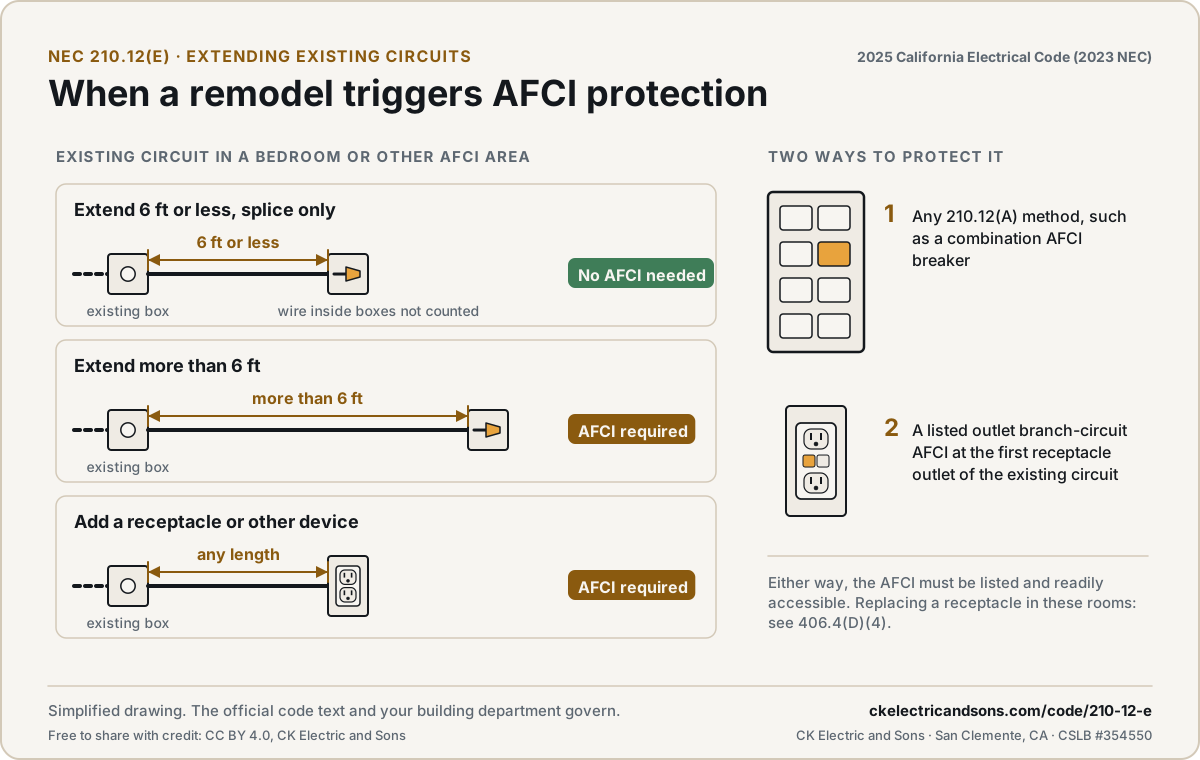 NEC 210.12(E): When a remodel triggers AFCI protectionRead the sectionSVGPNG
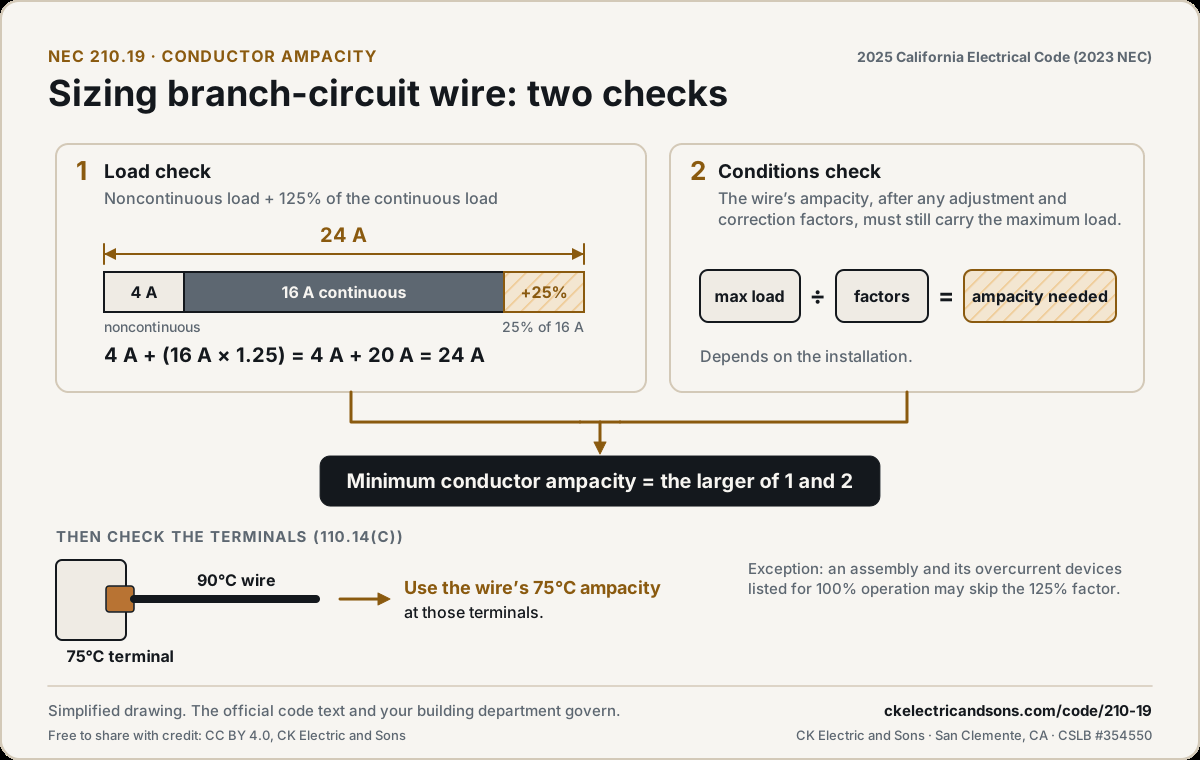
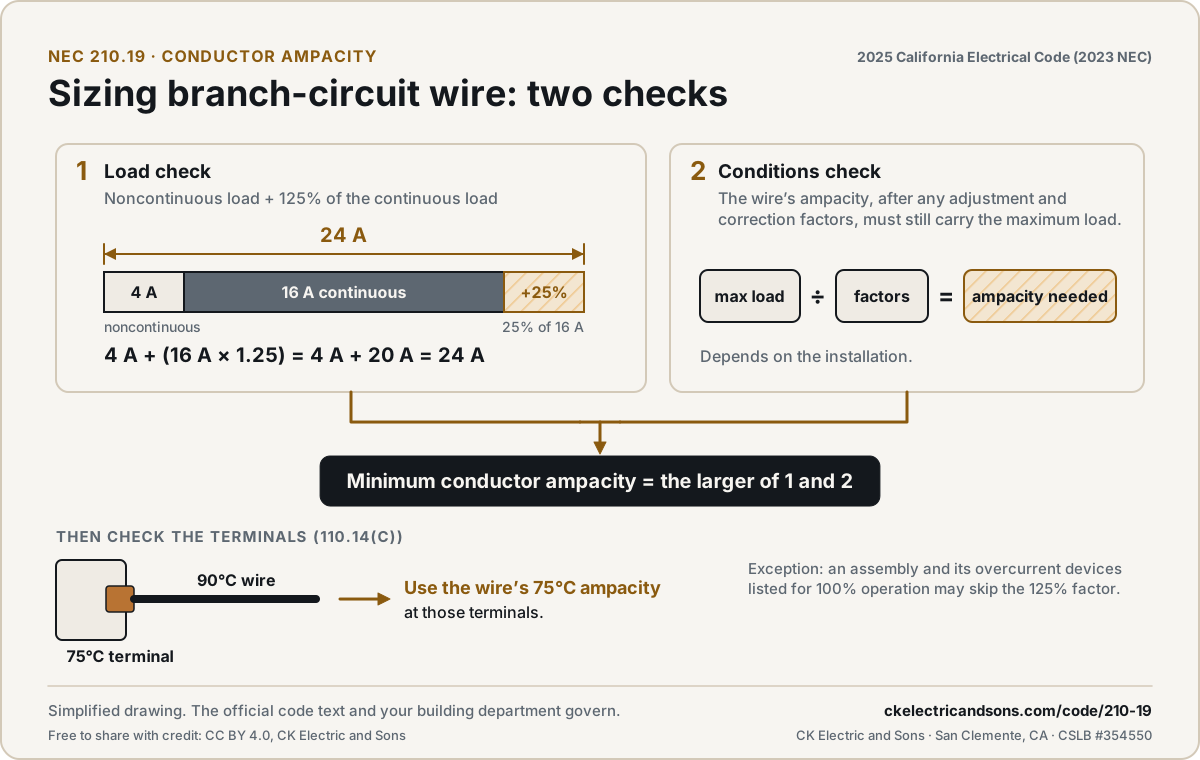 NEC 210.19: Sizing branch-circuit wire: two checksRead the sectionSVGPNG
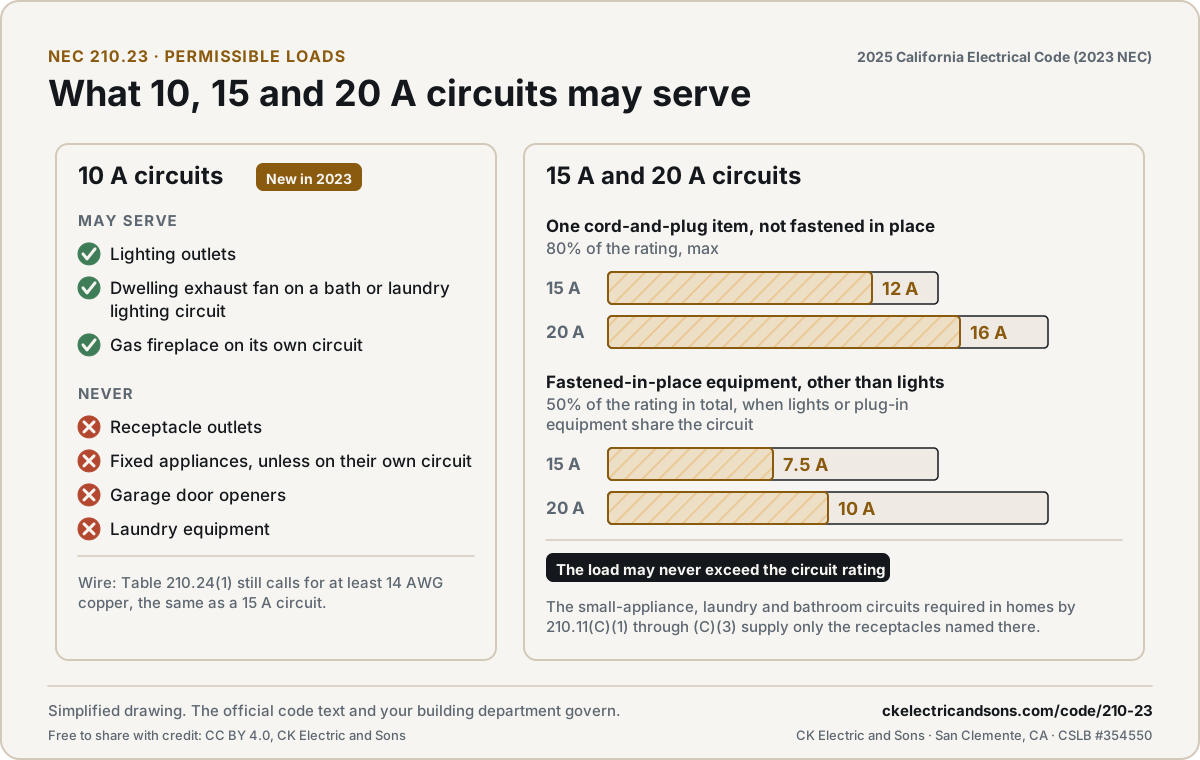 NEC 210.23: What 10, 15 and 20 A circuits may serveRead the sectionSVGPNG
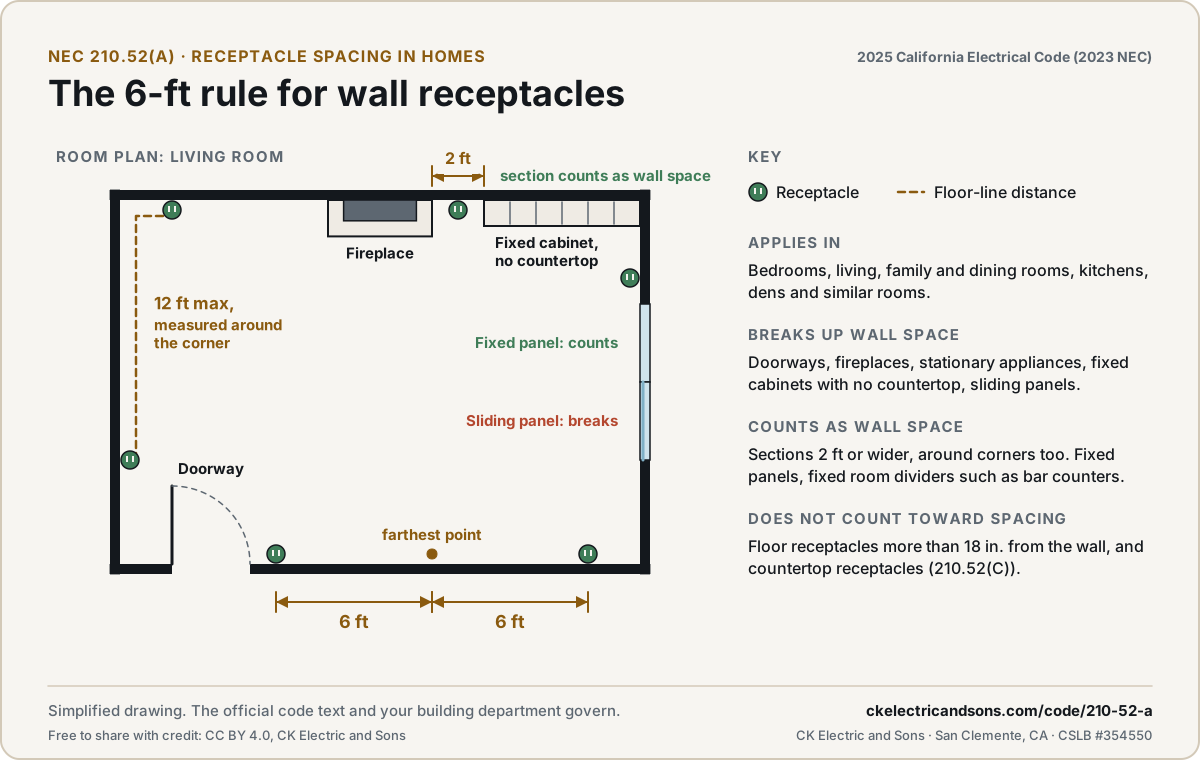 NEC 210.52(A): The 6-ft rule for wall receptaclesRead the sectionSVGPNG
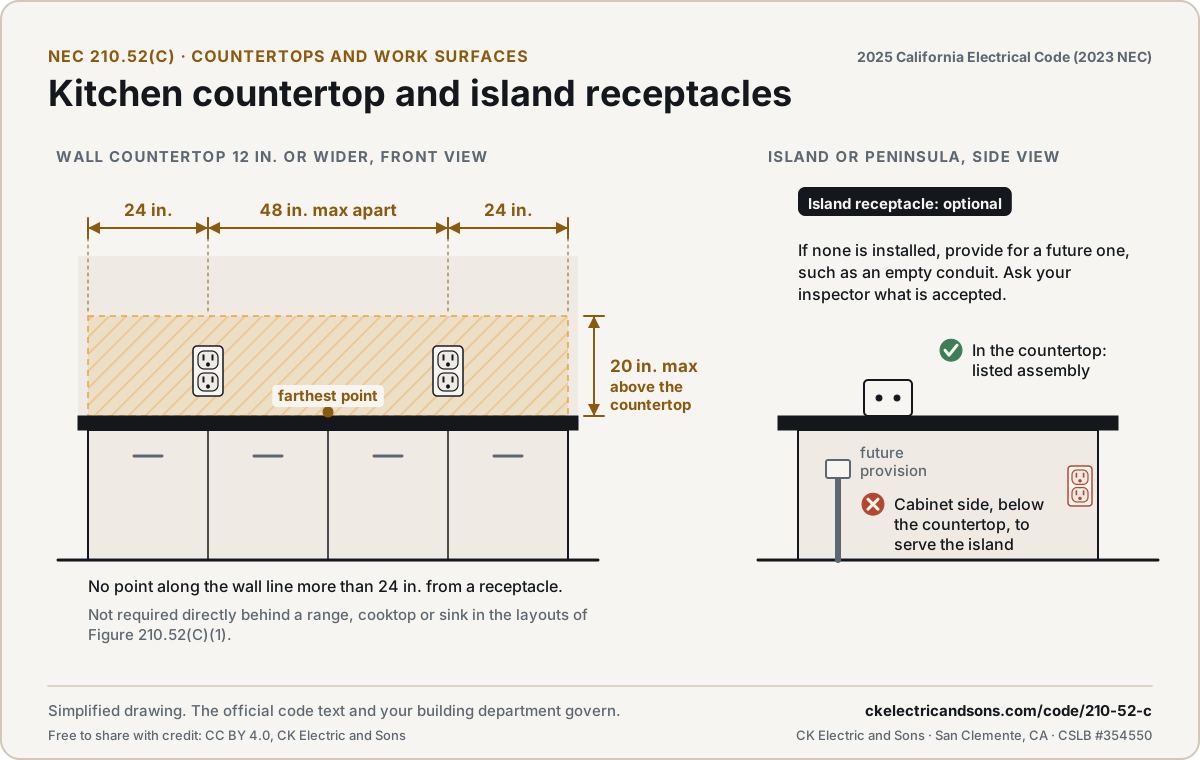 NEC 210.52(C): Kitchen countertop and island receptaclesRead the sectionSVGPNG
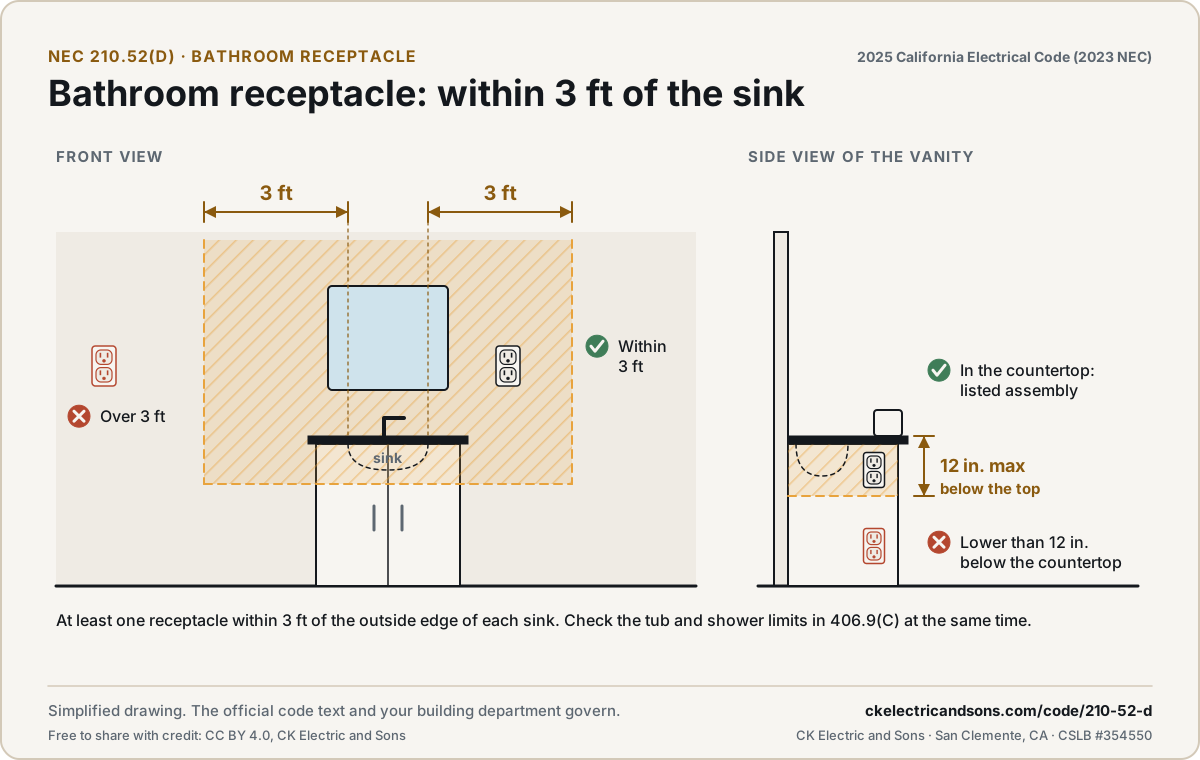 NEC 210.52(D): Bathroom receptacle: within 3 ft of the sinkRead the sectionSVGPNG
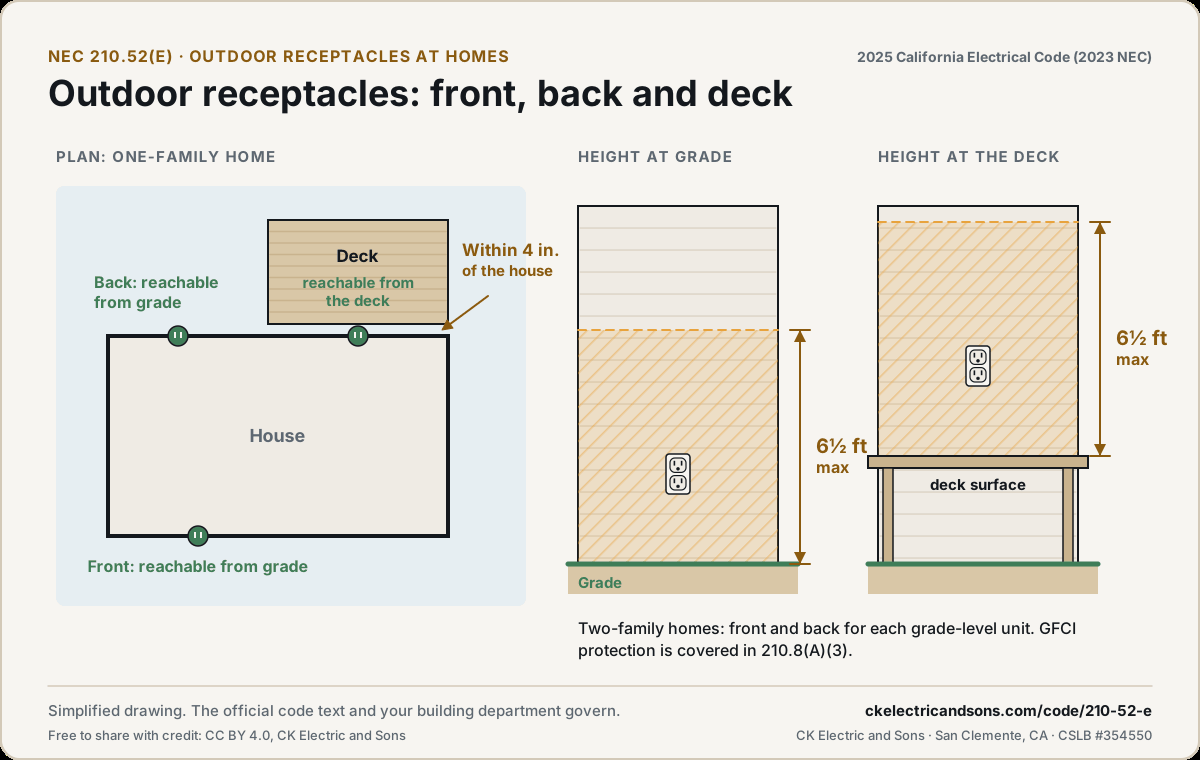
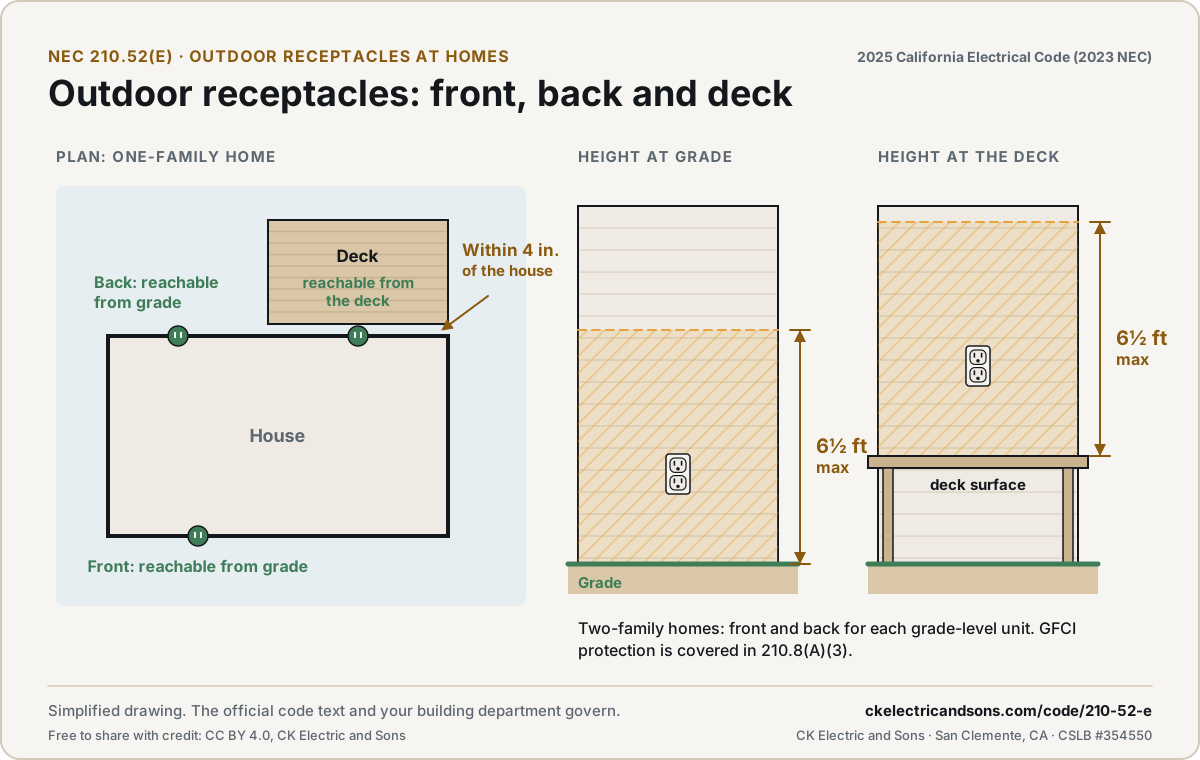 NEC 210.52(E): Outdoor receptacles: front, back and deckRead the sectionSVGPNG
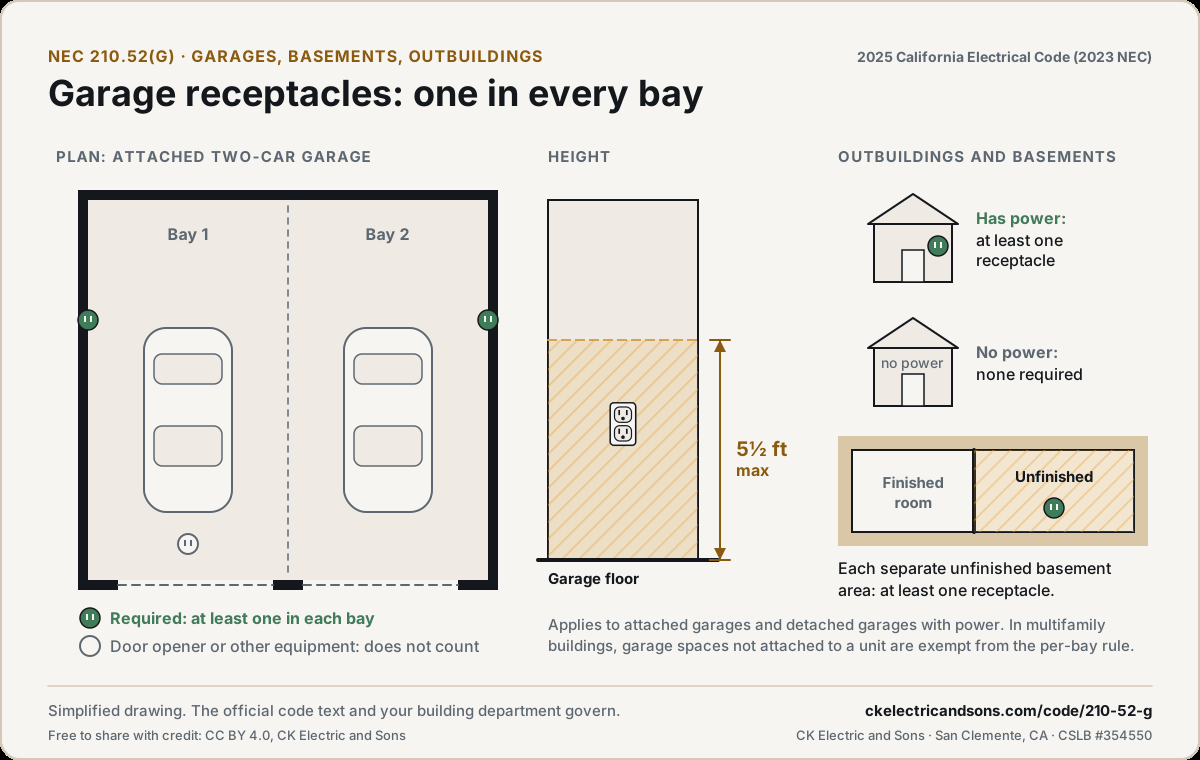
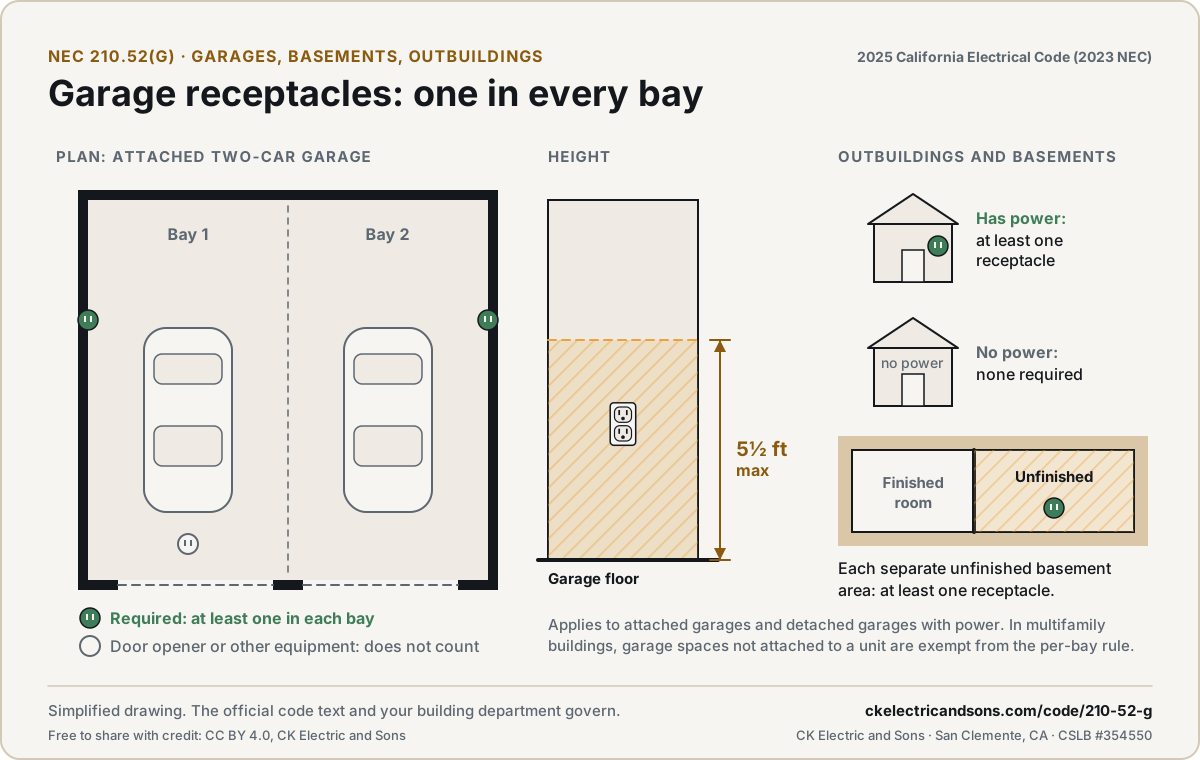 NEC 210.52(G): Garage receptacles: one in every bayRead the sectionSVGPNG
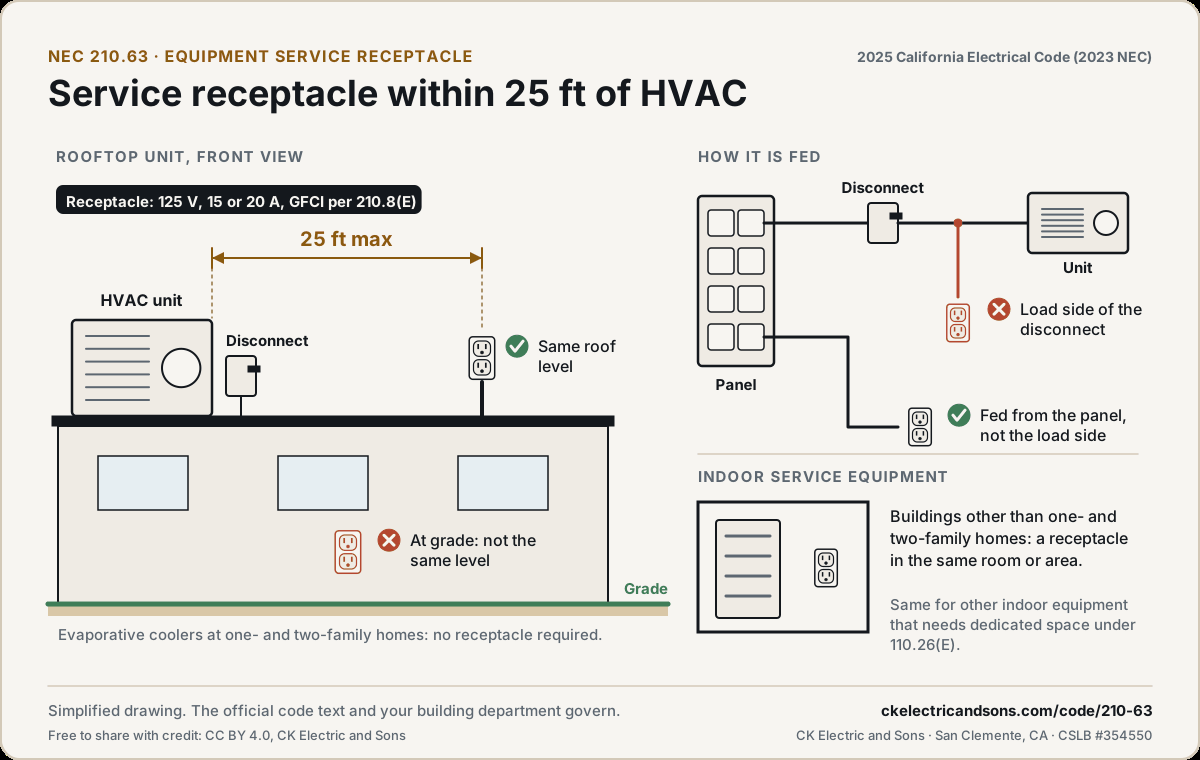
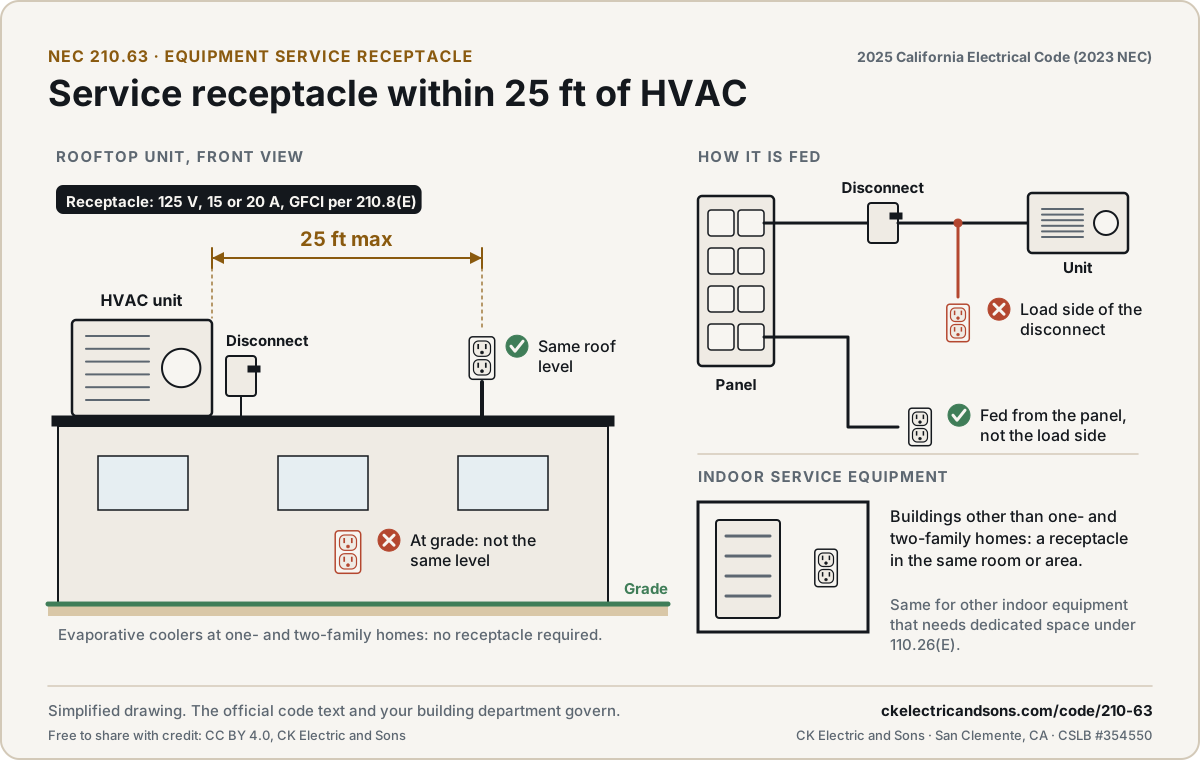 NEC 210.63: Service receptacle within 25 ft of HVACRead the sectionSVGPNG
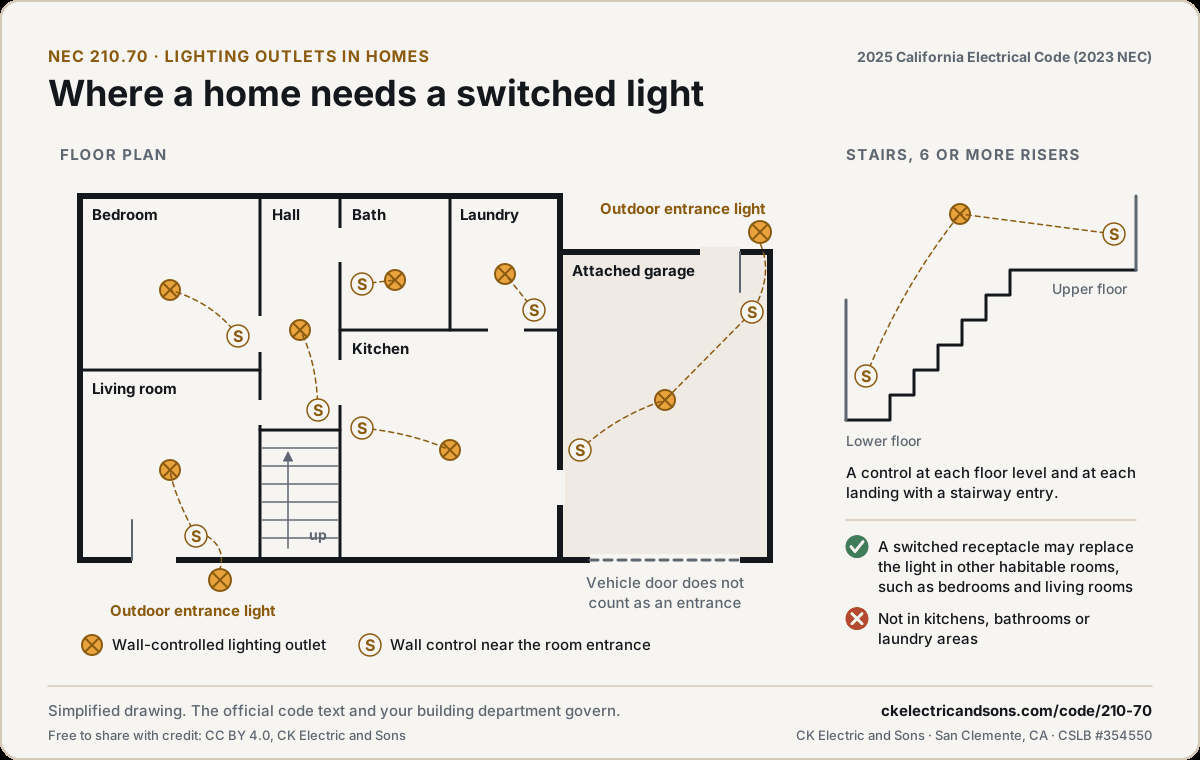
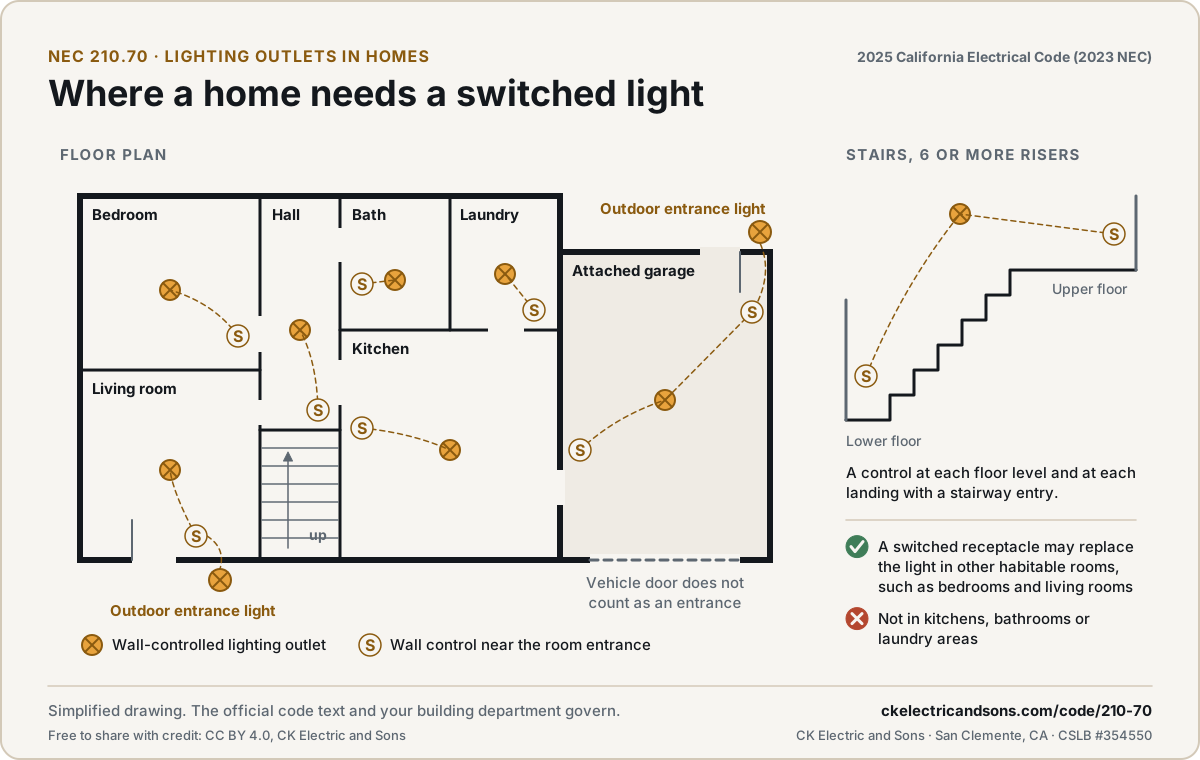 NEC 210.70: Where a home needs a switched lightRead the sectionSVGPNG
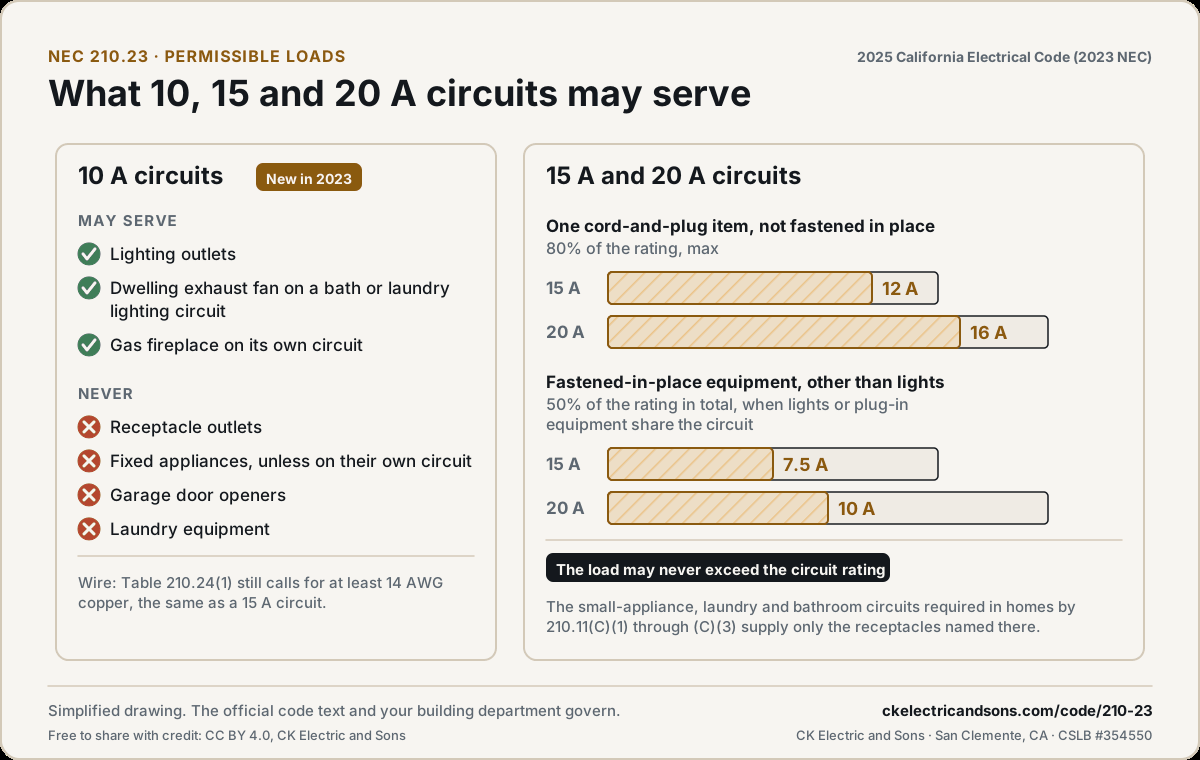
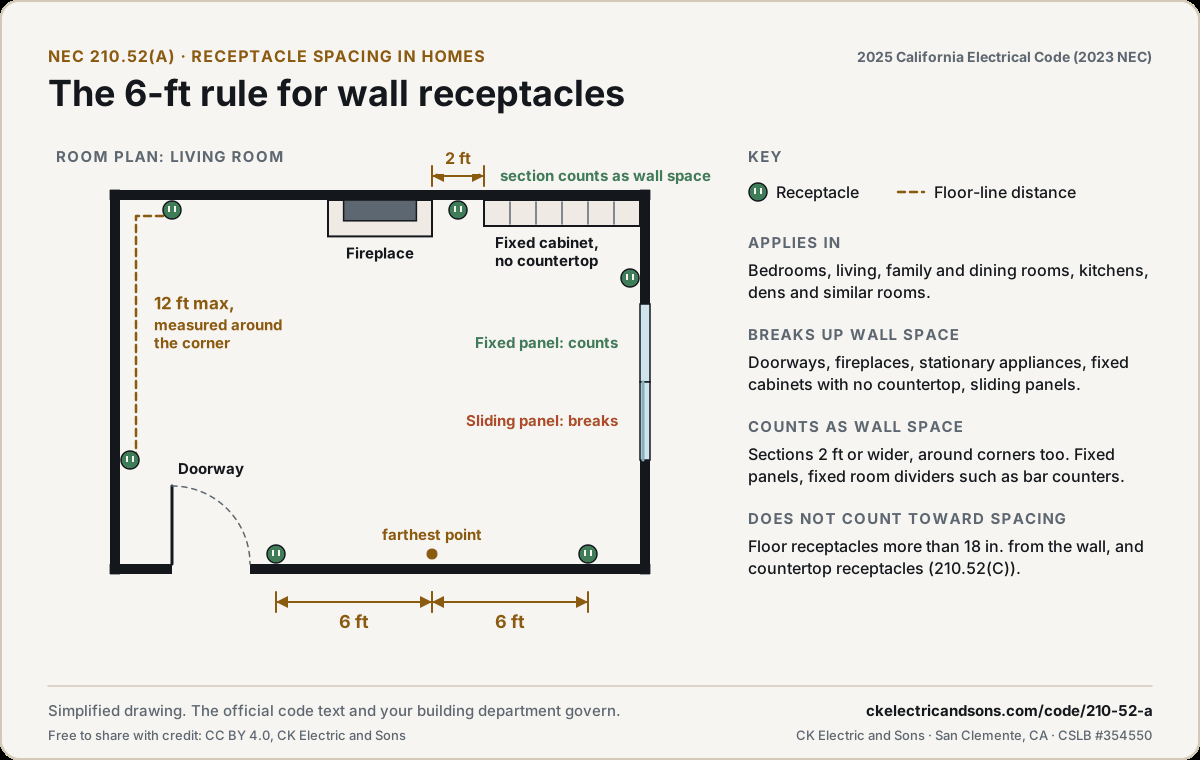
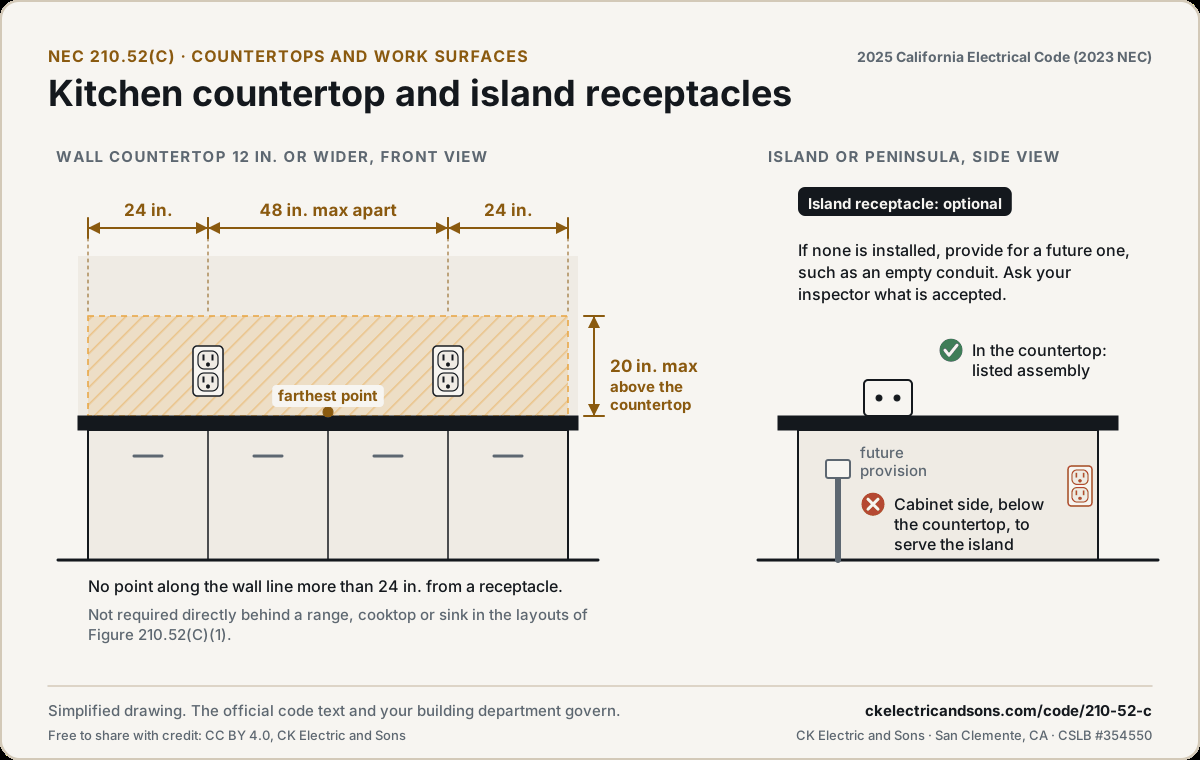
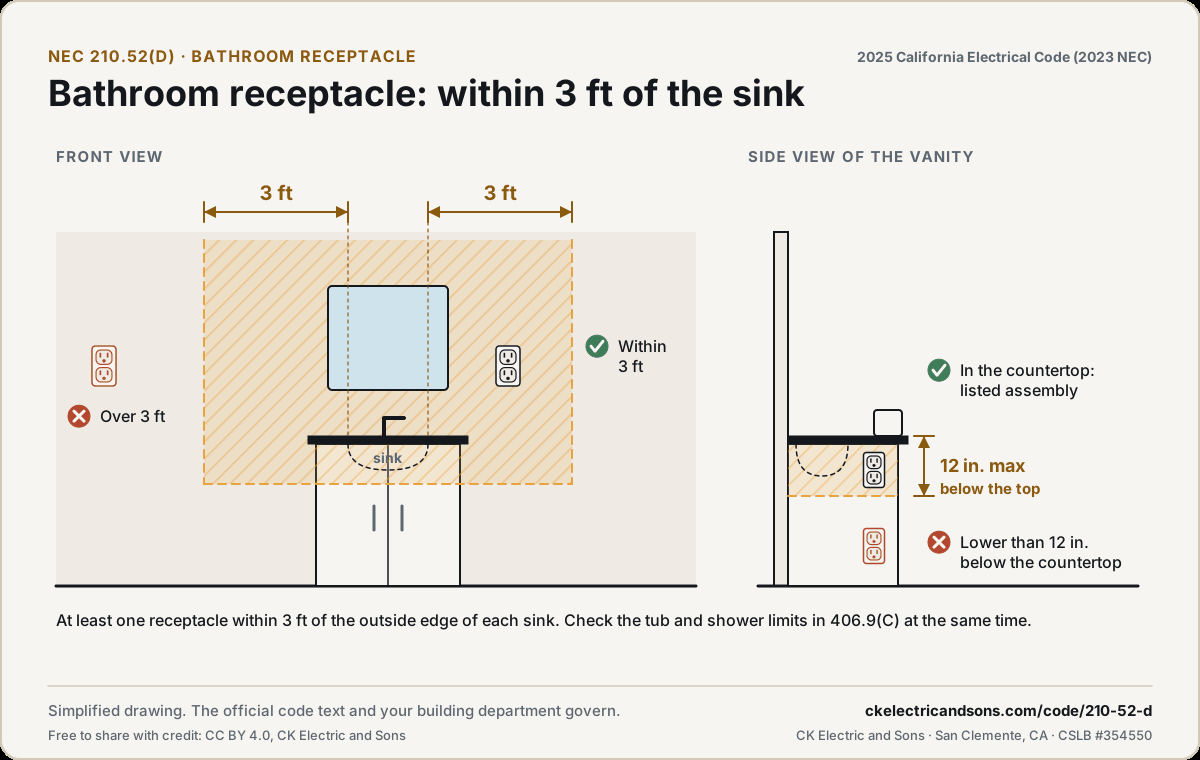
Load calculations
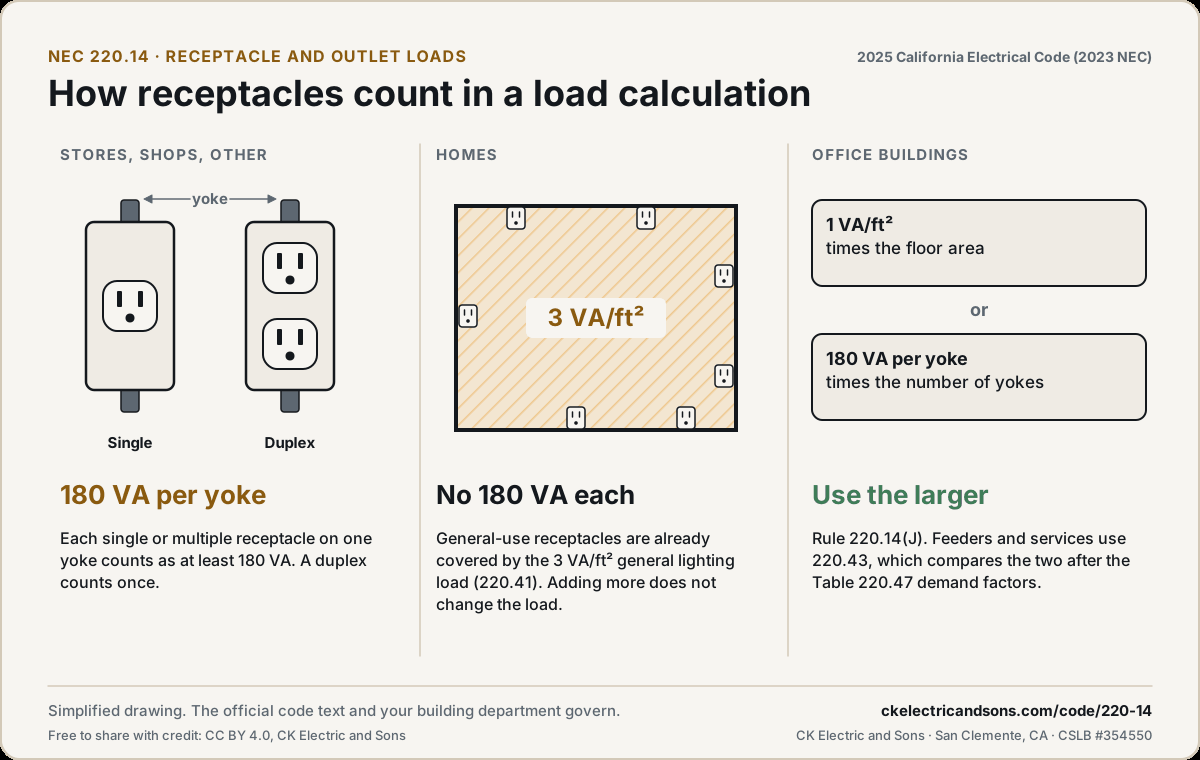
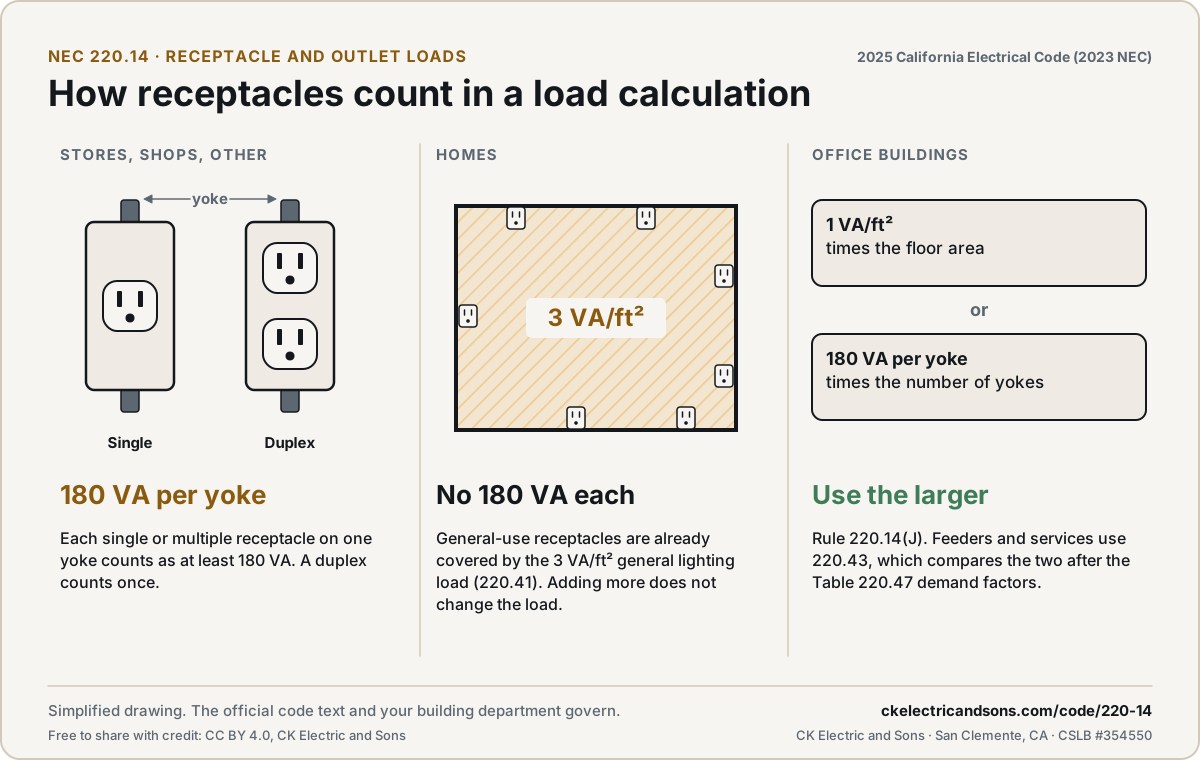 NEC 220.14: How receptacles count in a load calculationRead the sectionSVGPNG
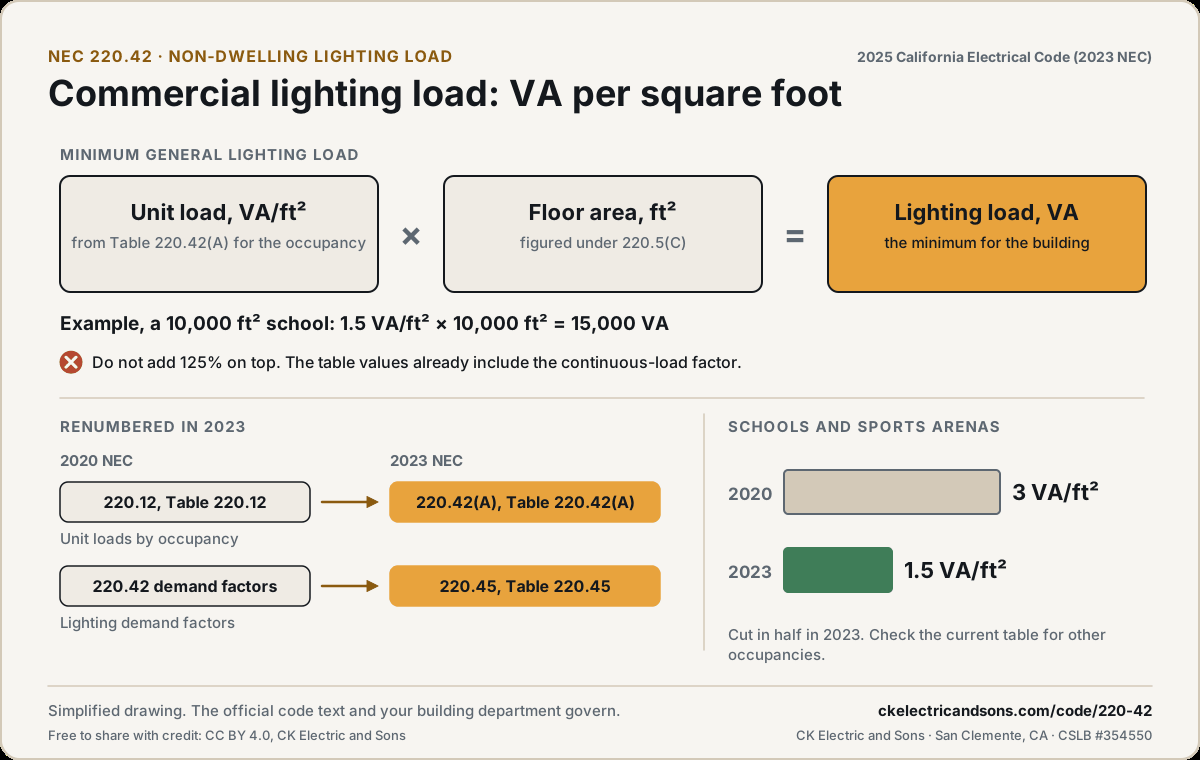
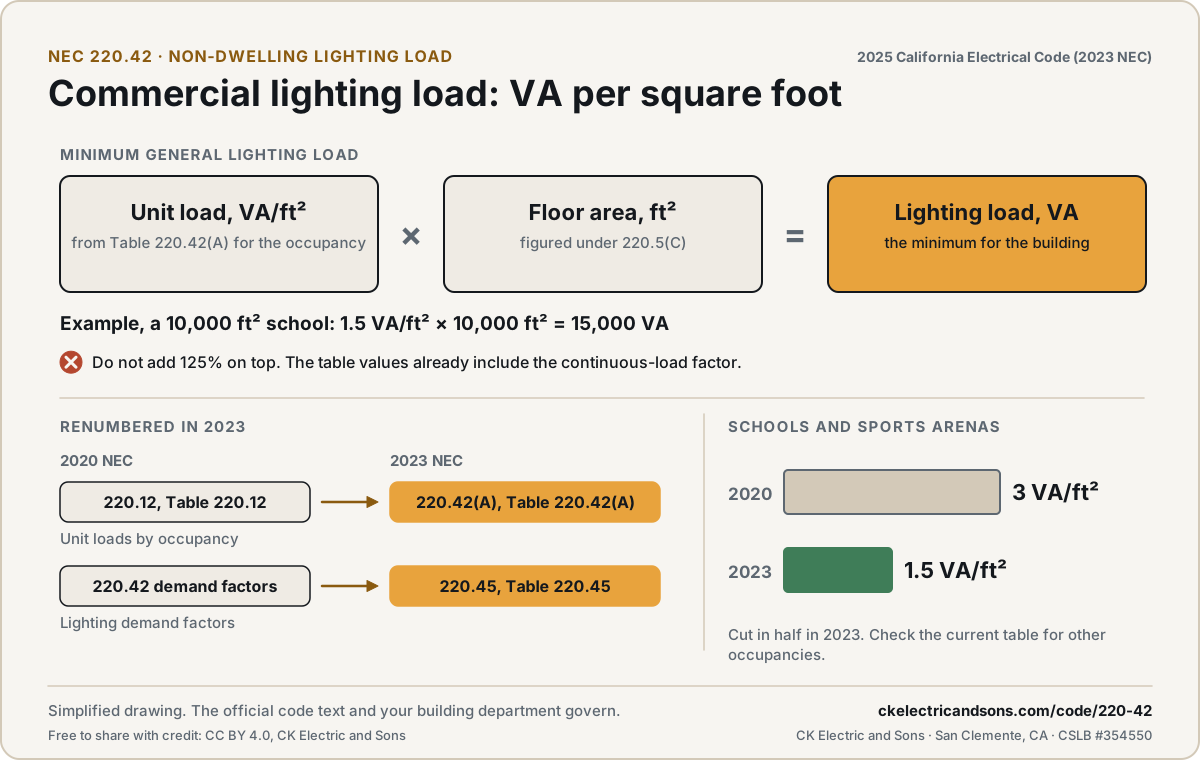 NEC 220.42: Commercial lighting load: VA per square footRead the sectionSVGPNG
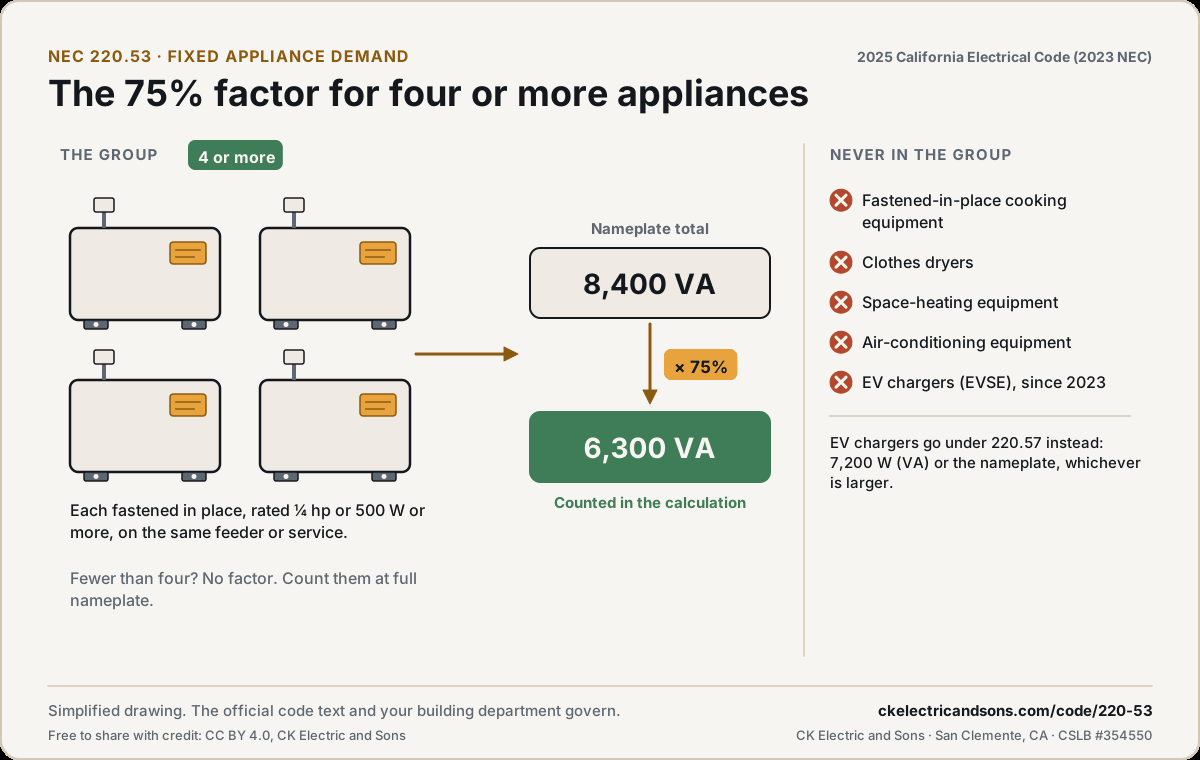
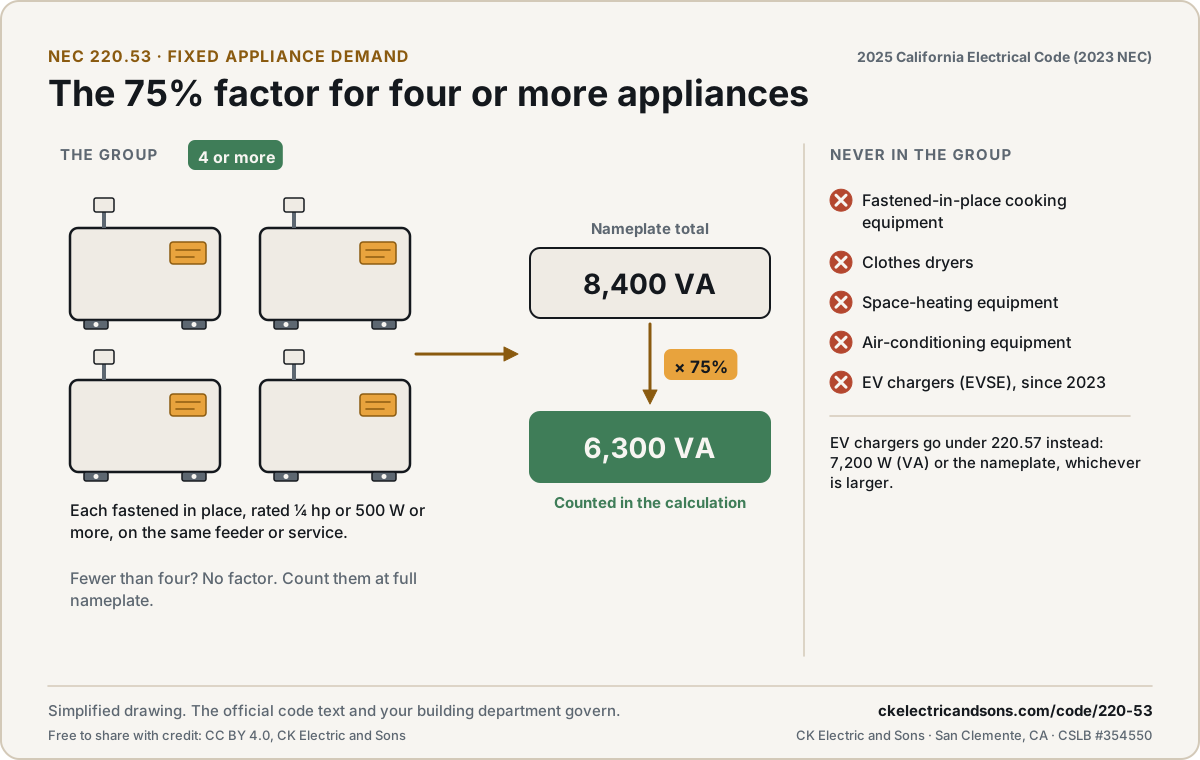 NEC 220.53: The 75% factor for four or more appliancesRead the sectionSVGPNG
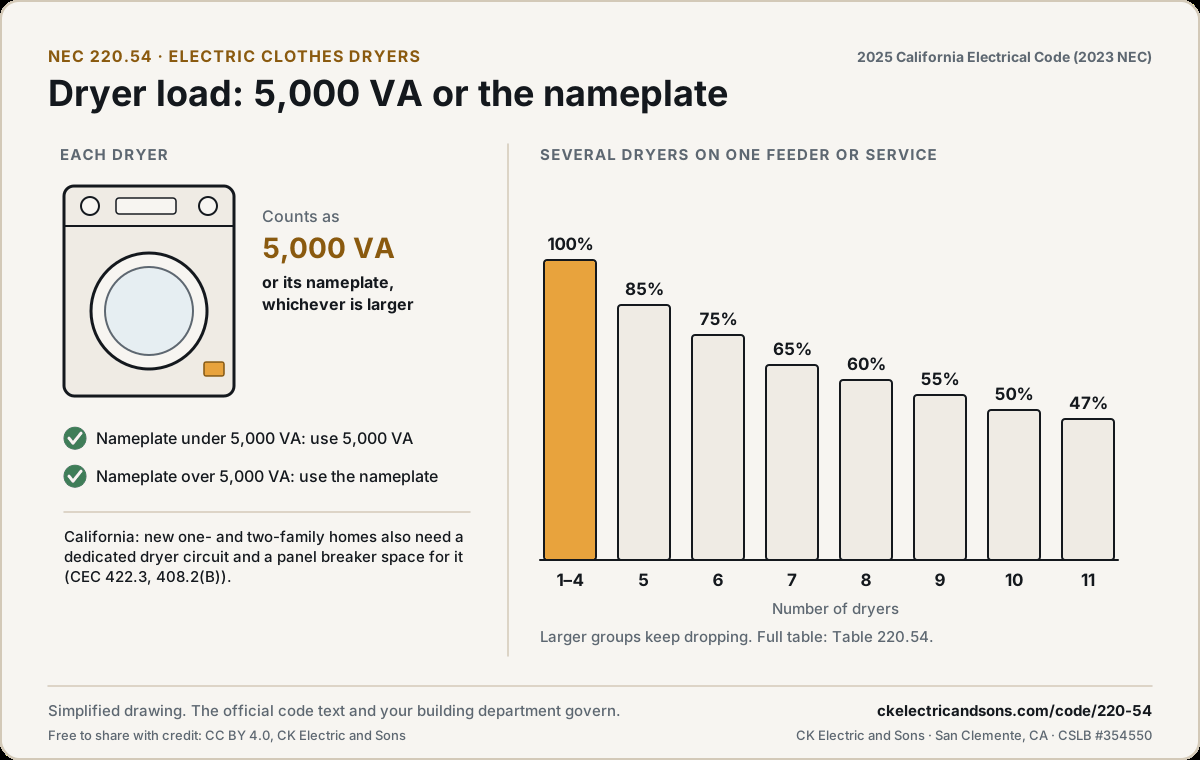
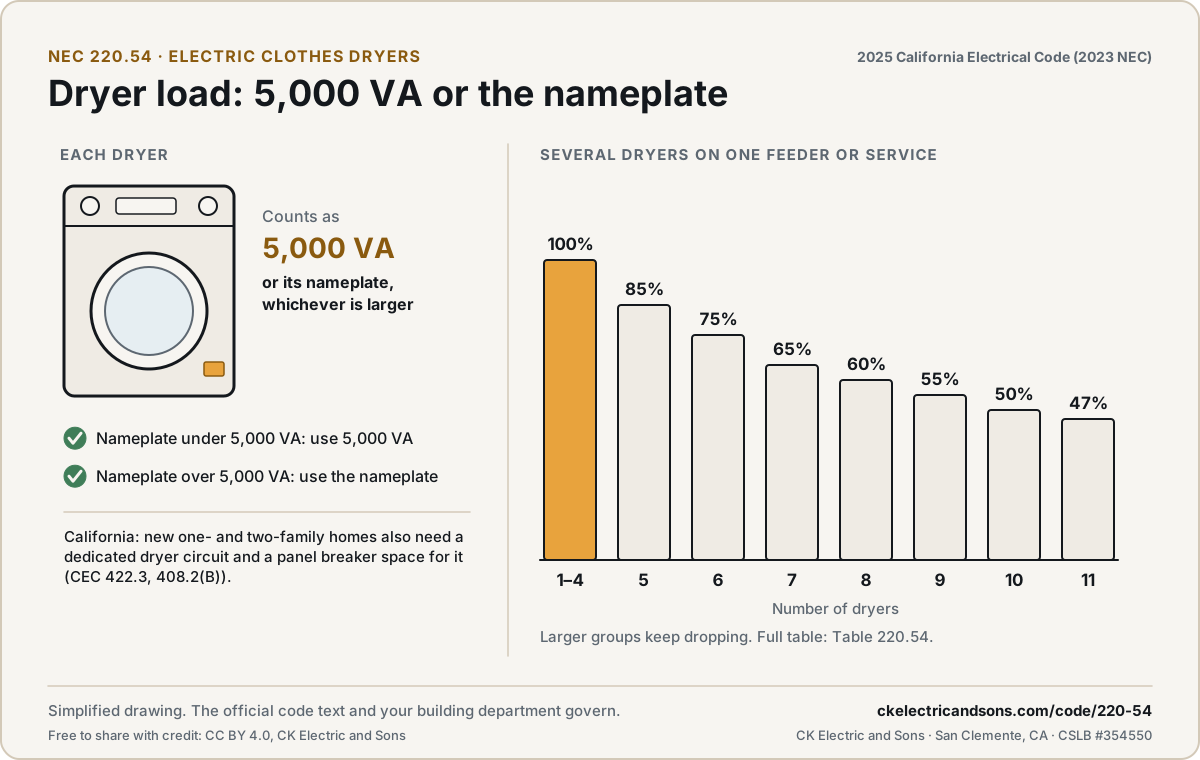 NEC 220.54: Dryer load: 5,000 VA or the nameplateRead the sectionSVGPNG
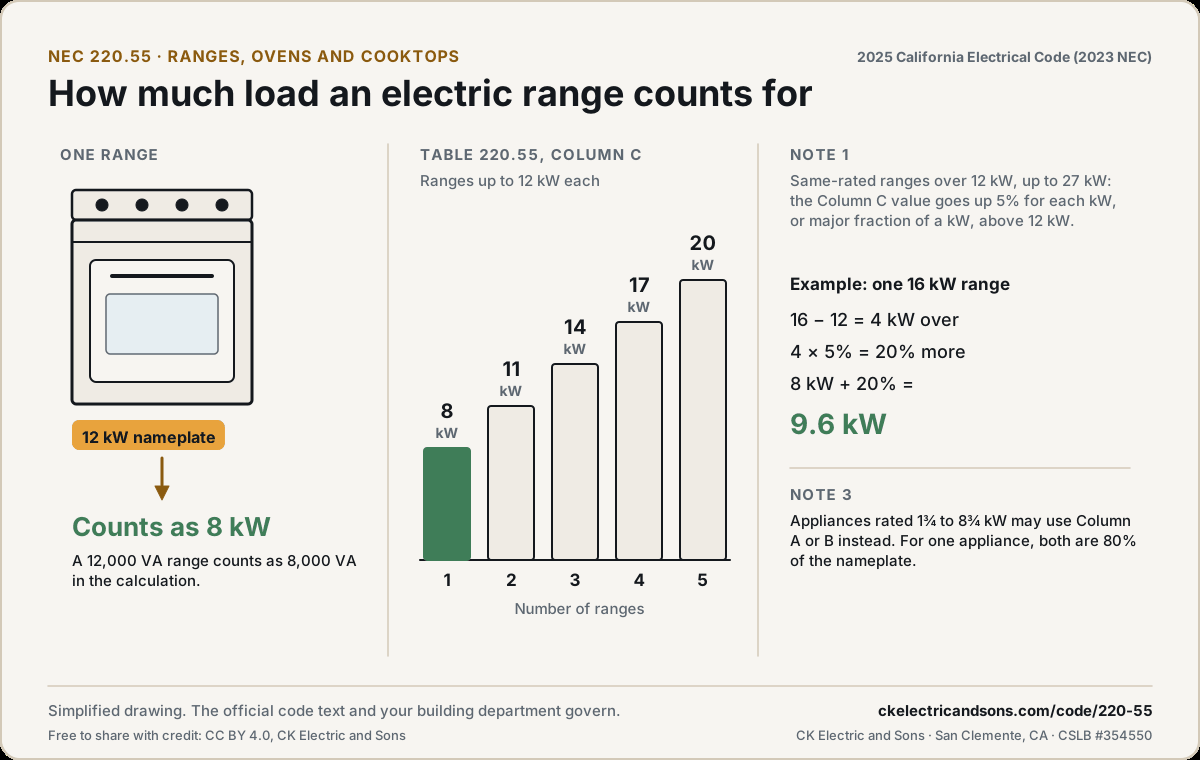
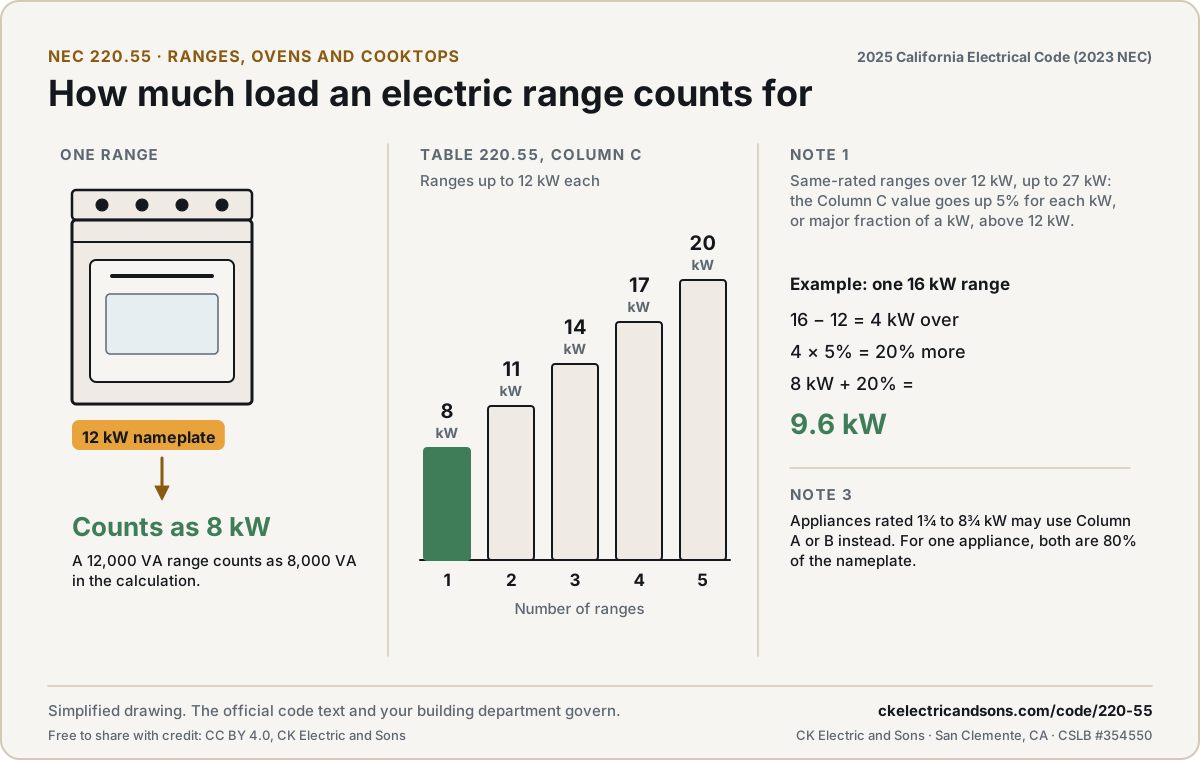 NEC 220.55: How much load an electric range counts forRead the sectionSVGPNG
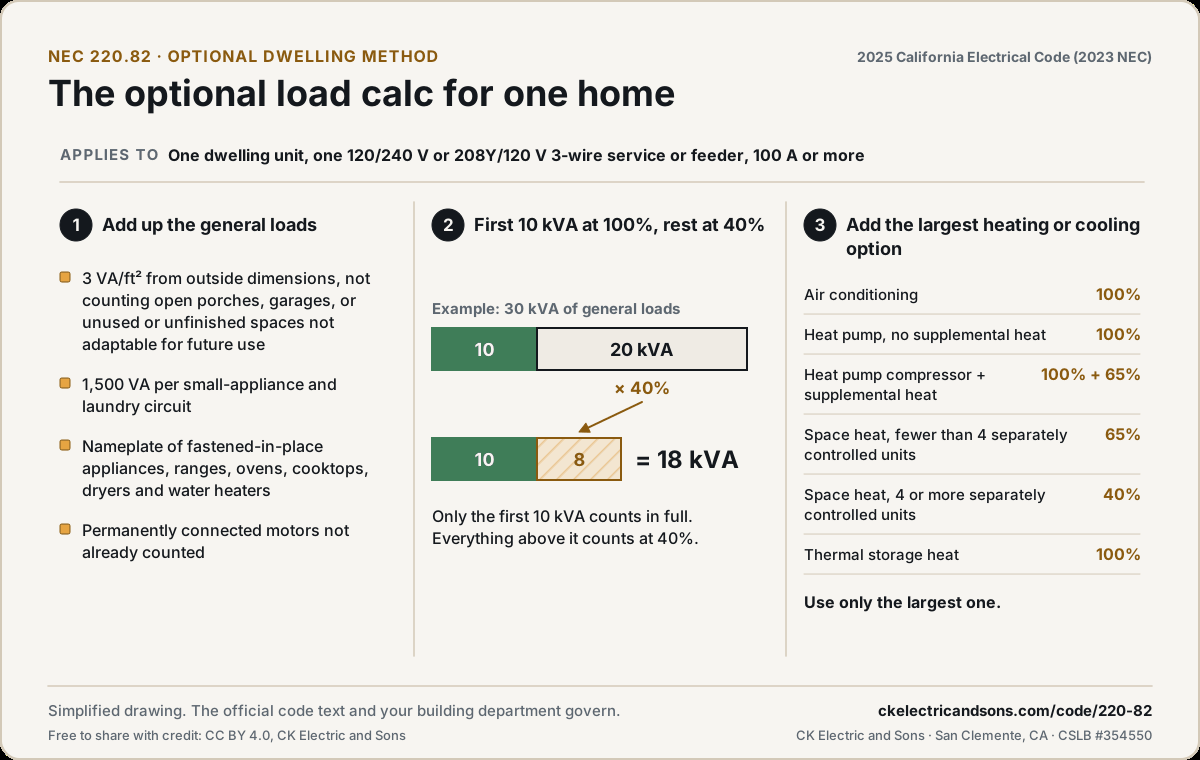
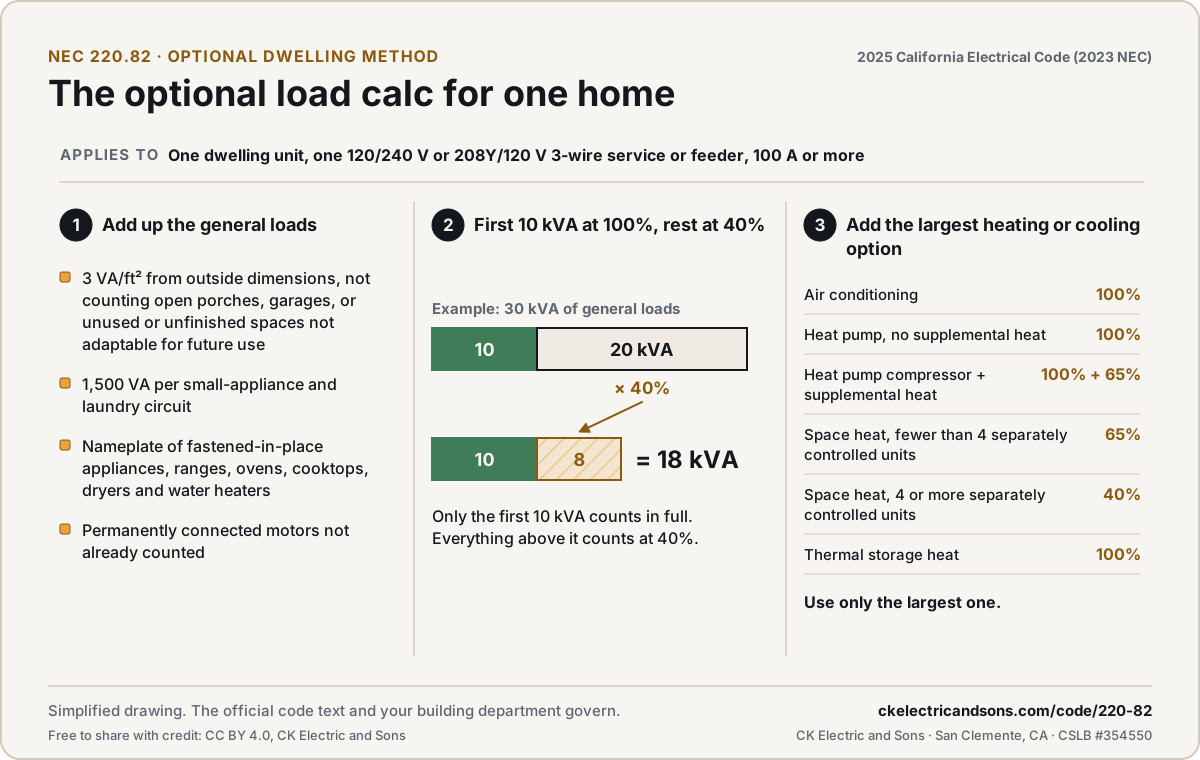 NEC 220.82: The optional load calc for one homeRead the sectionSVGPNG
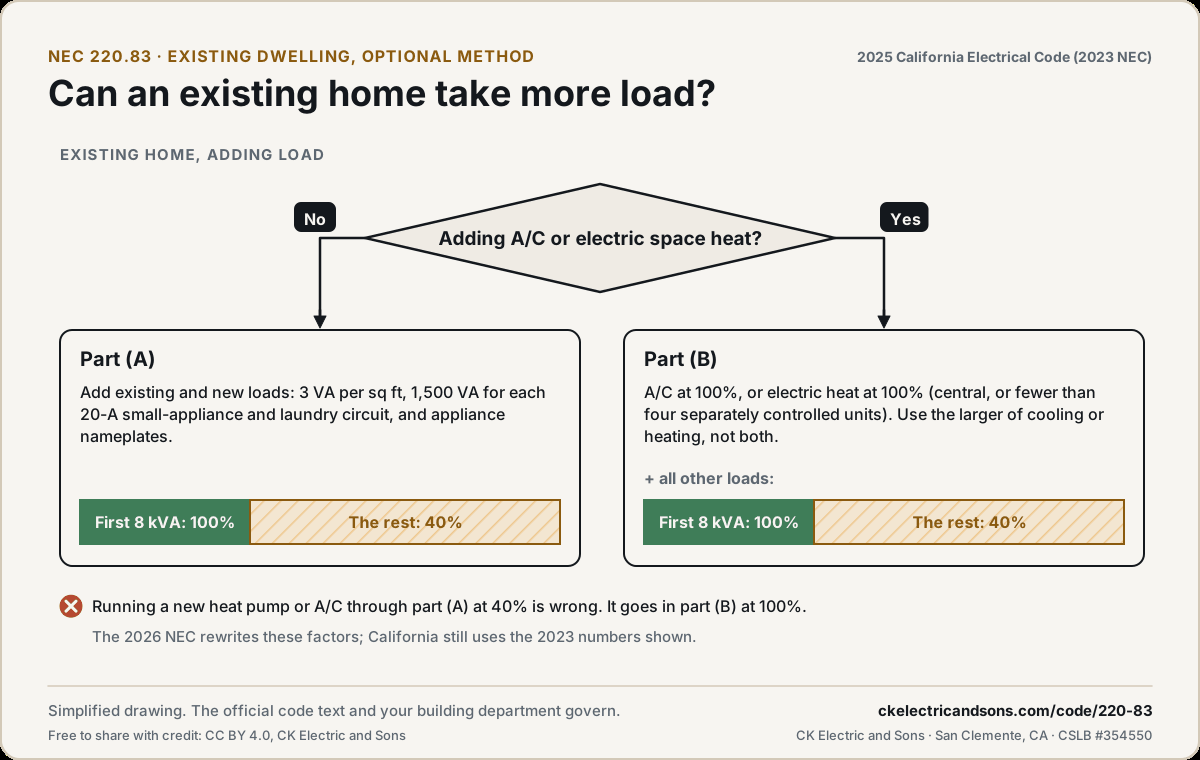
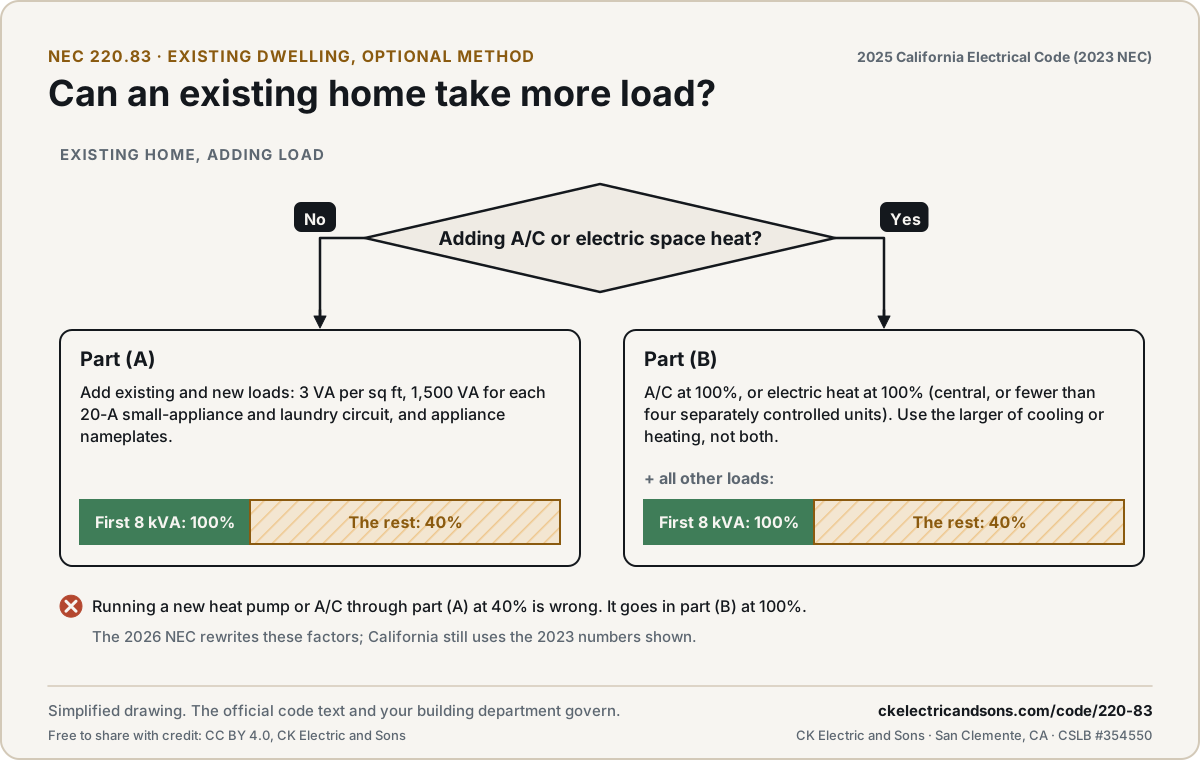 NEC 220.83: Can an existing home take more load?Read the sectionSVGPNG
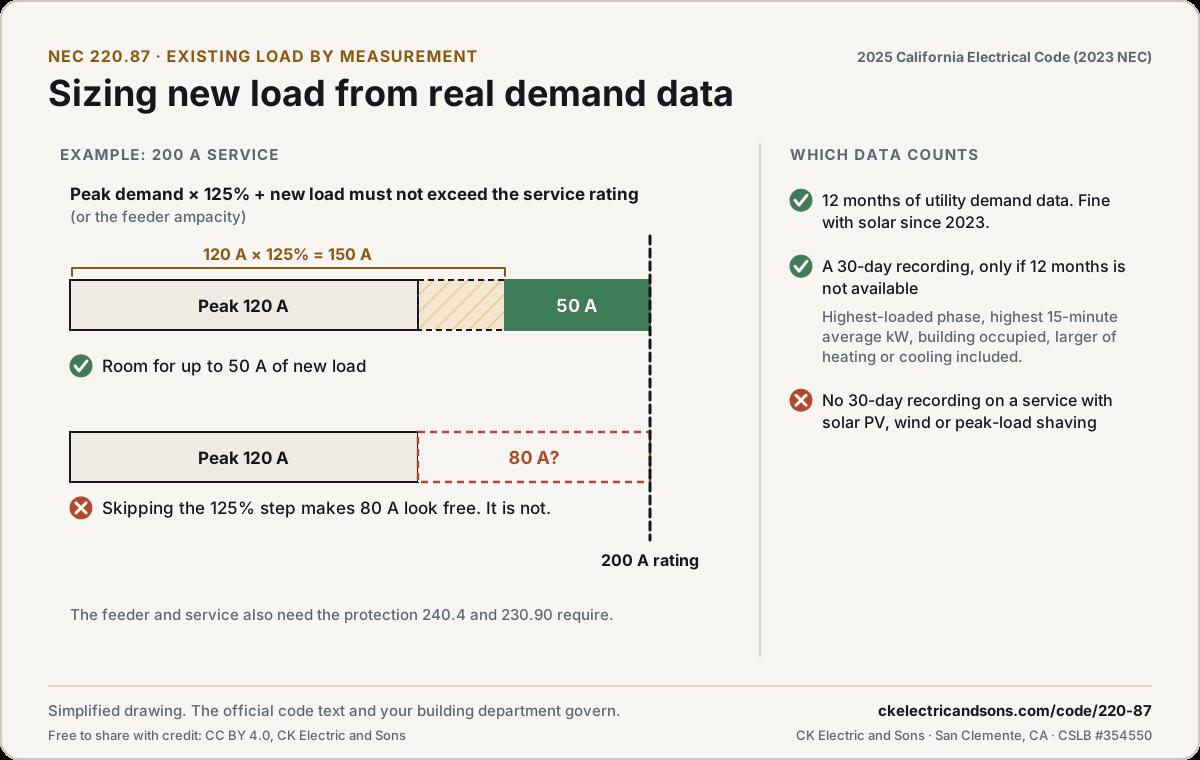
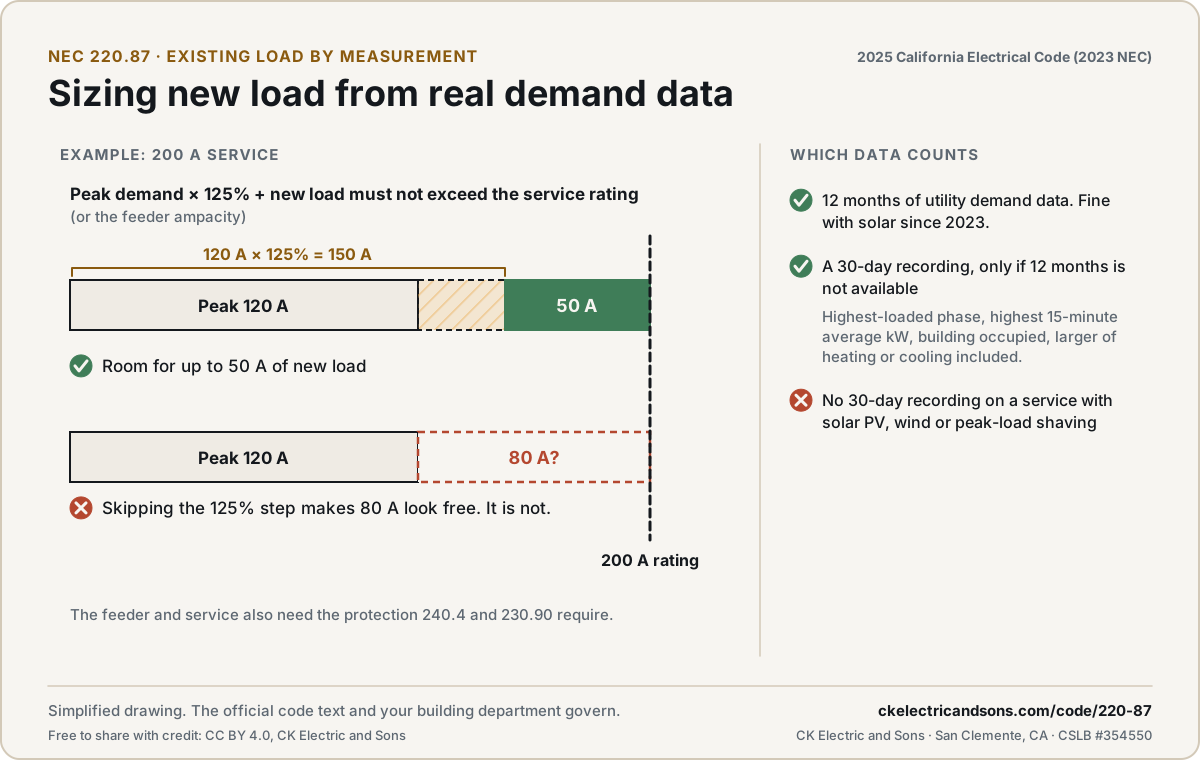 NEC 220.87: Sizing new load from real demand dataRead the sectionSVGPNG
Services, feeders and outbuildings
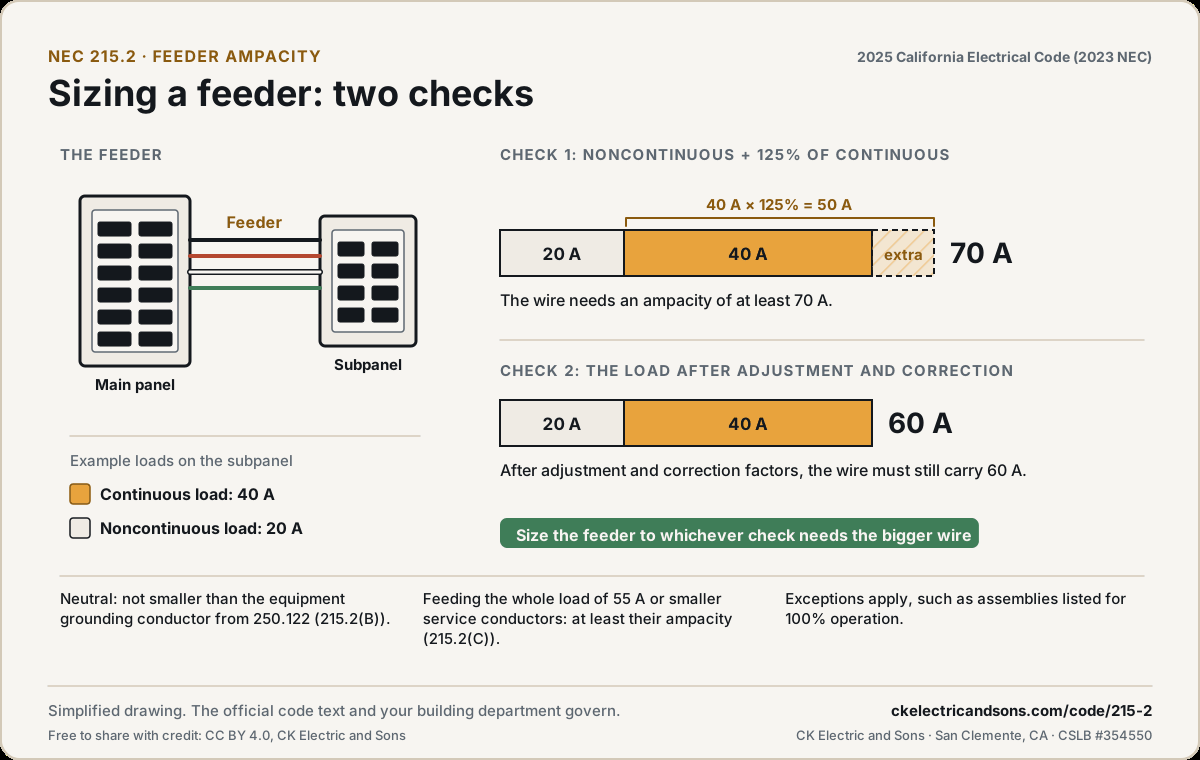
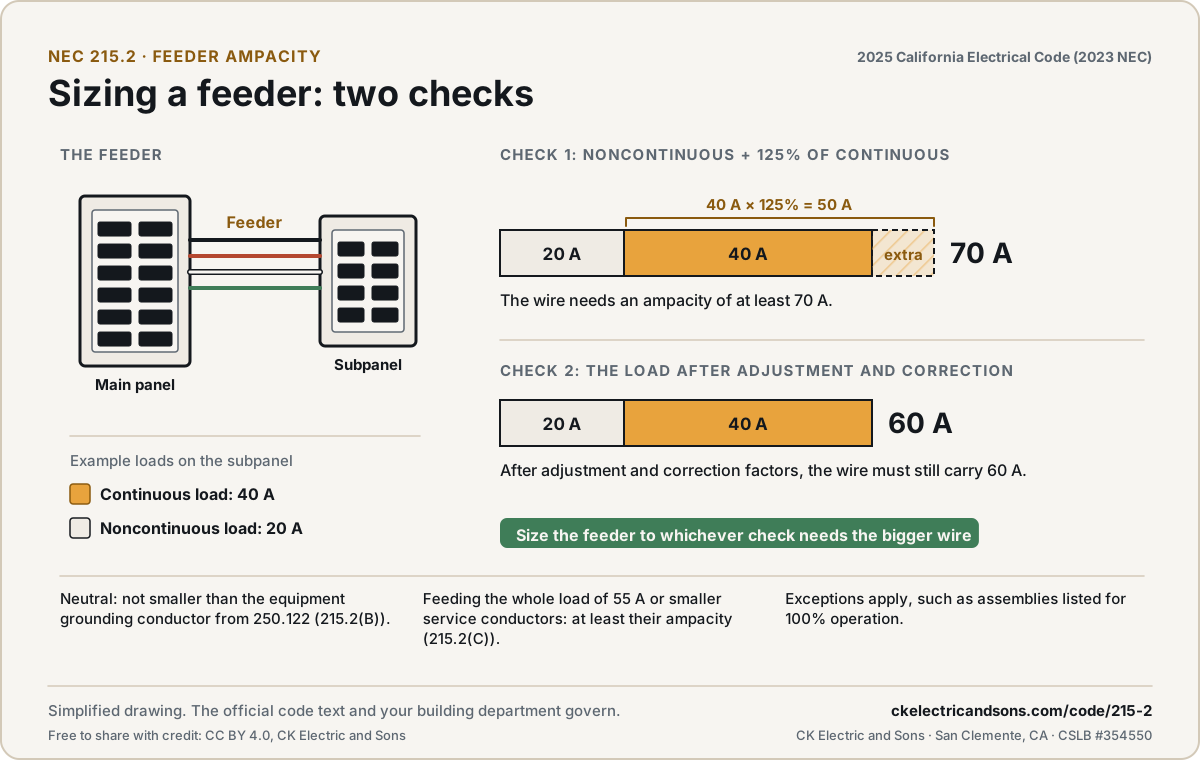 NEC 215.2: Sizing a feeder: two checksRead the sectionSVGPNG
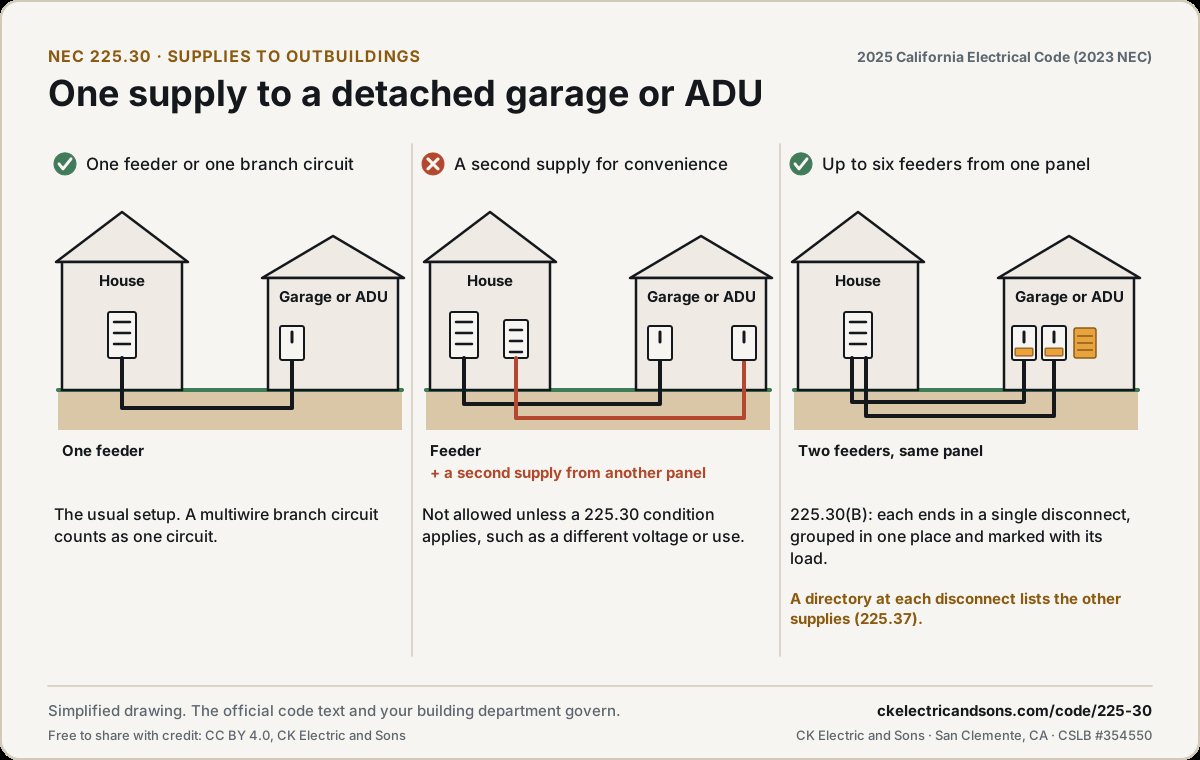
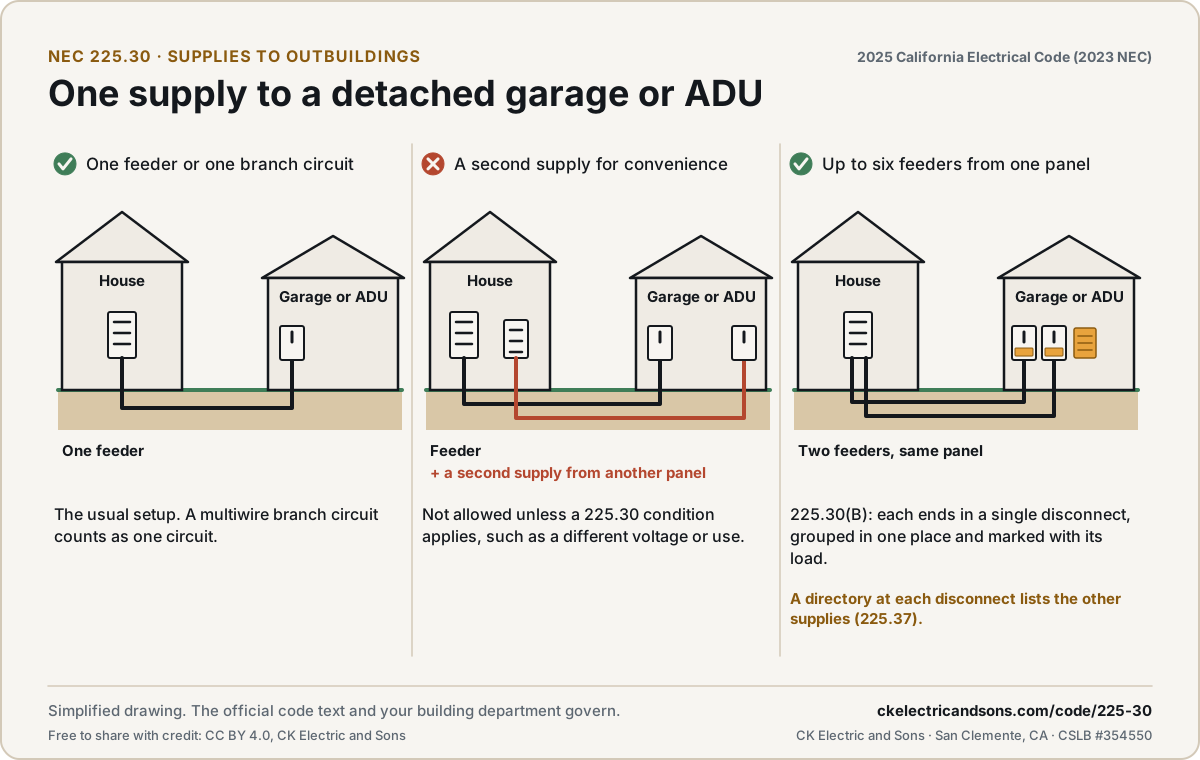 NEC 225.30: One supply to a detached garage or ADURead the sectionSVGPNG
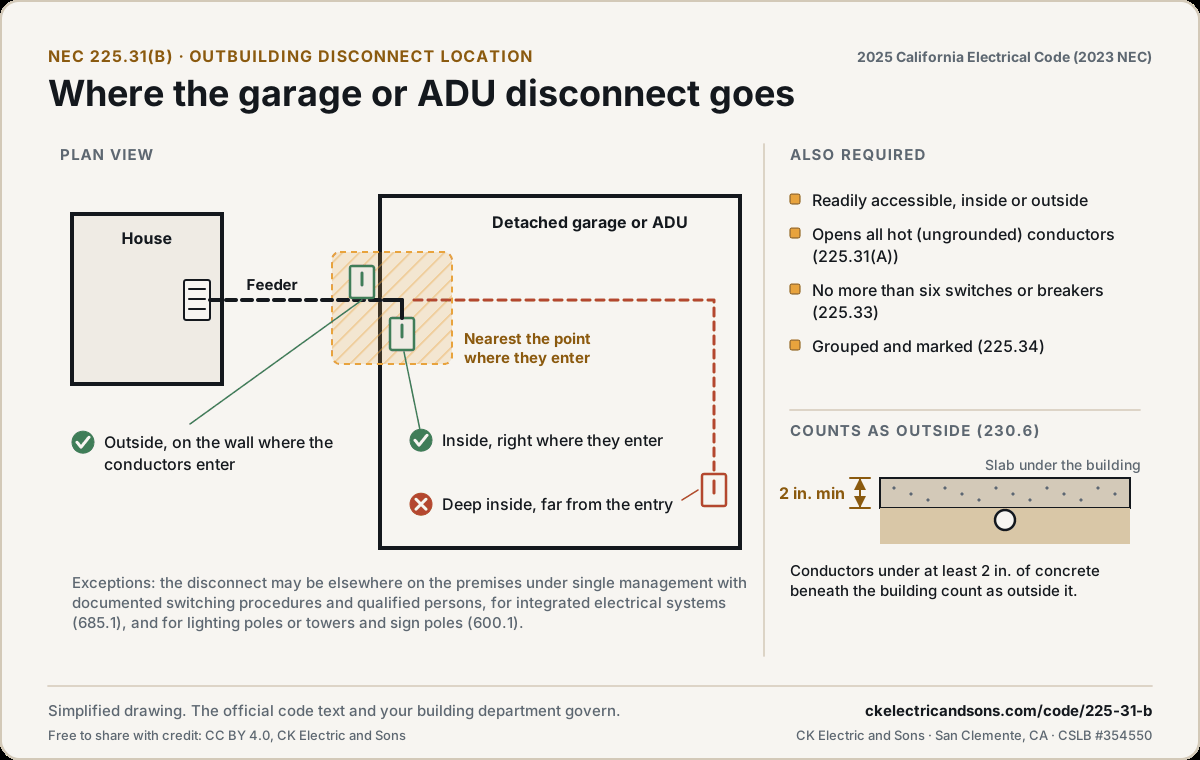
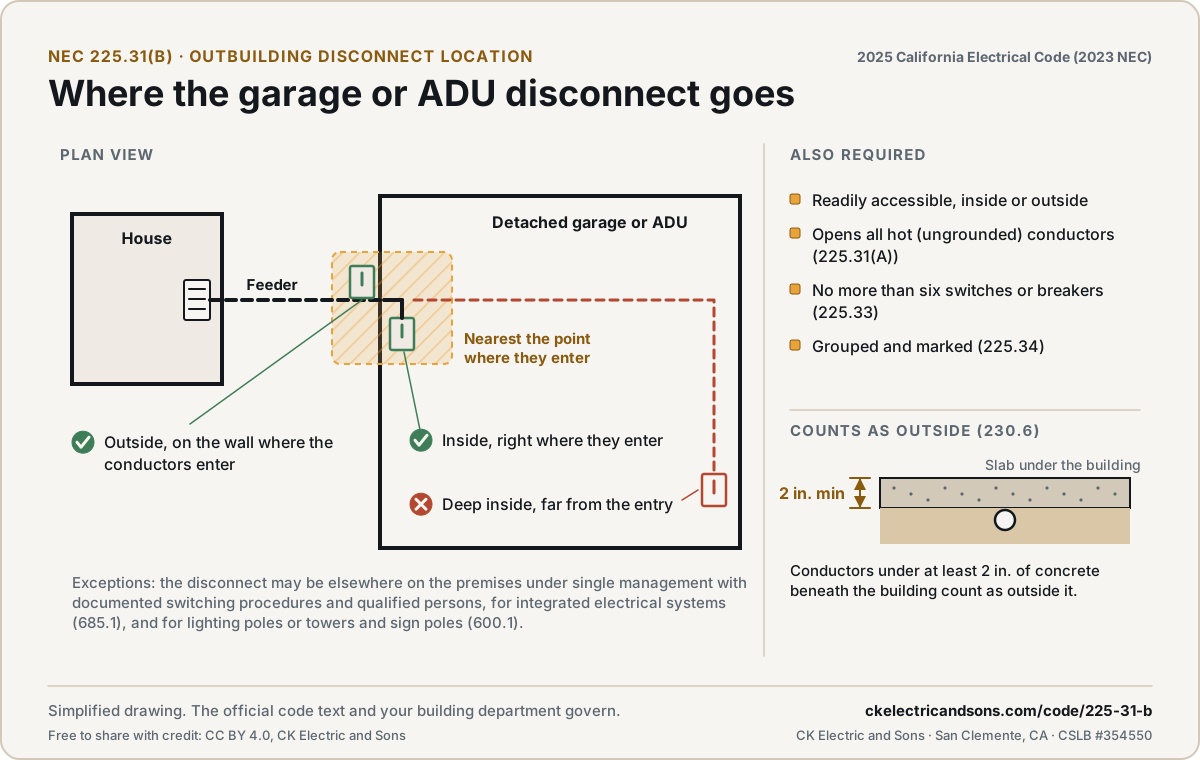 NEC 225.31(B): Where the garage or ADU disconnect goesRead the sectionSVGPNG
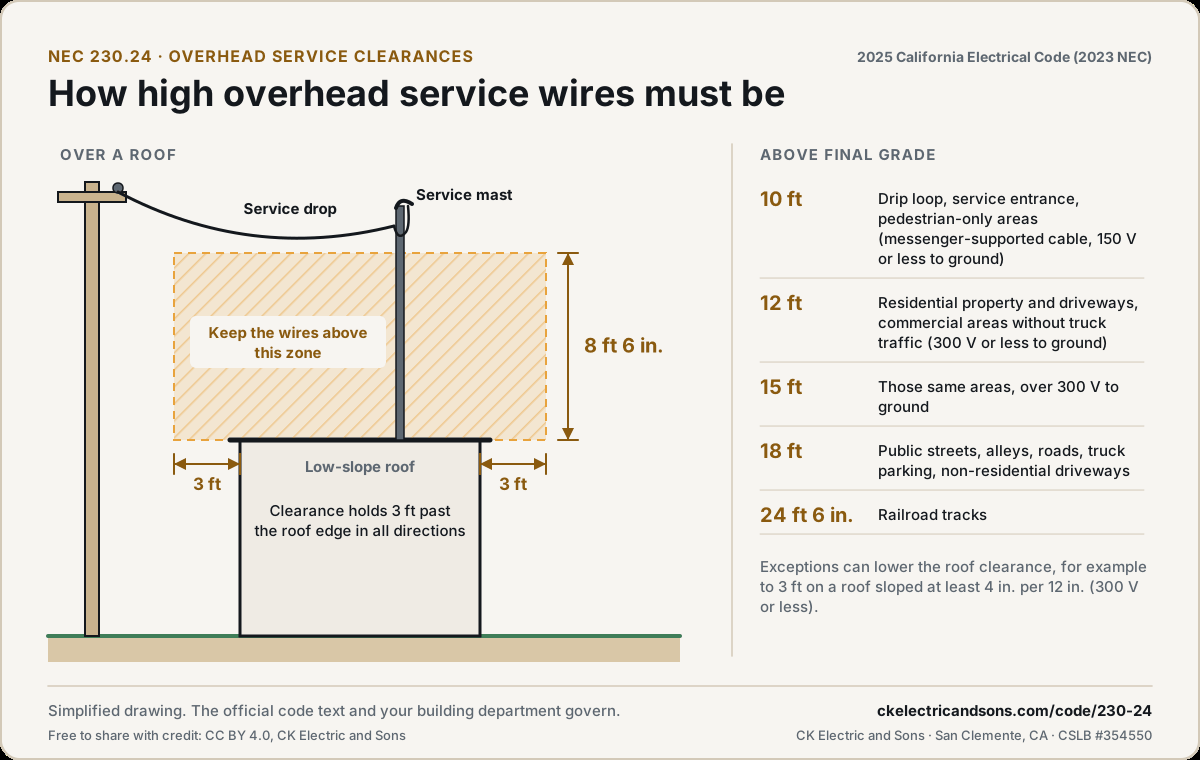
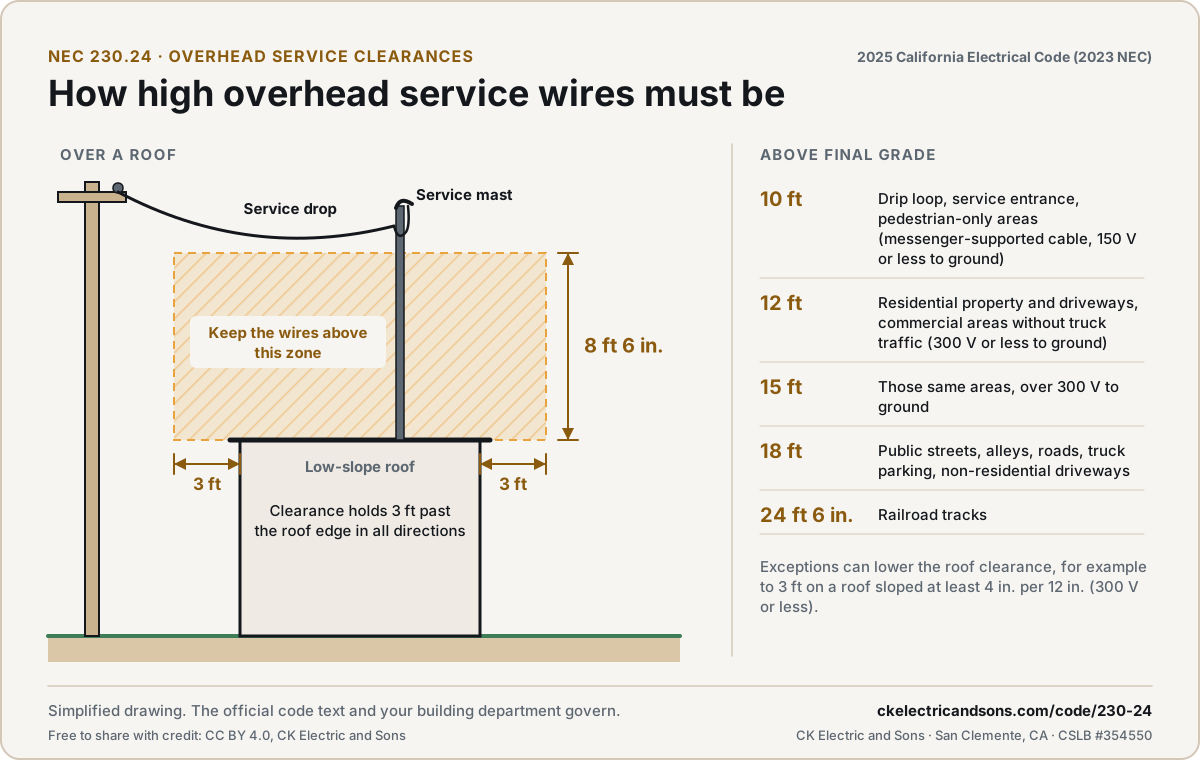 NEC 230.24: How high overhead service wires must beRead the sectionSVGPNG
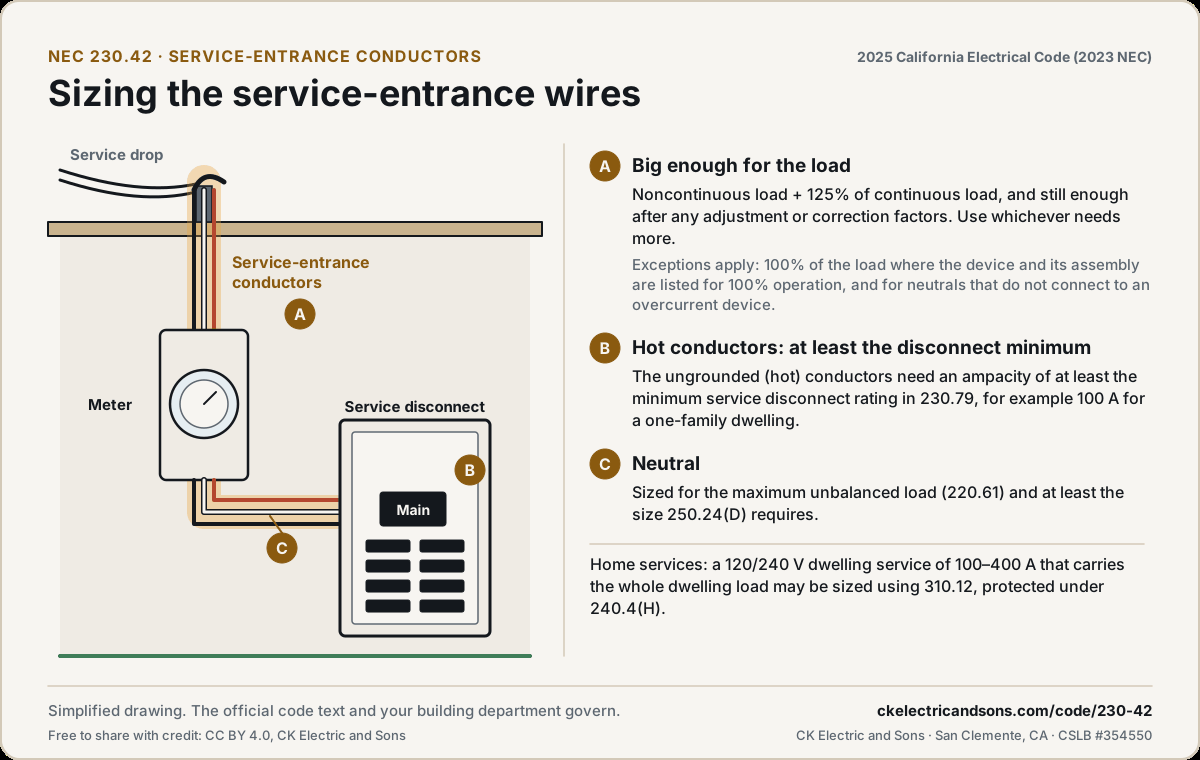
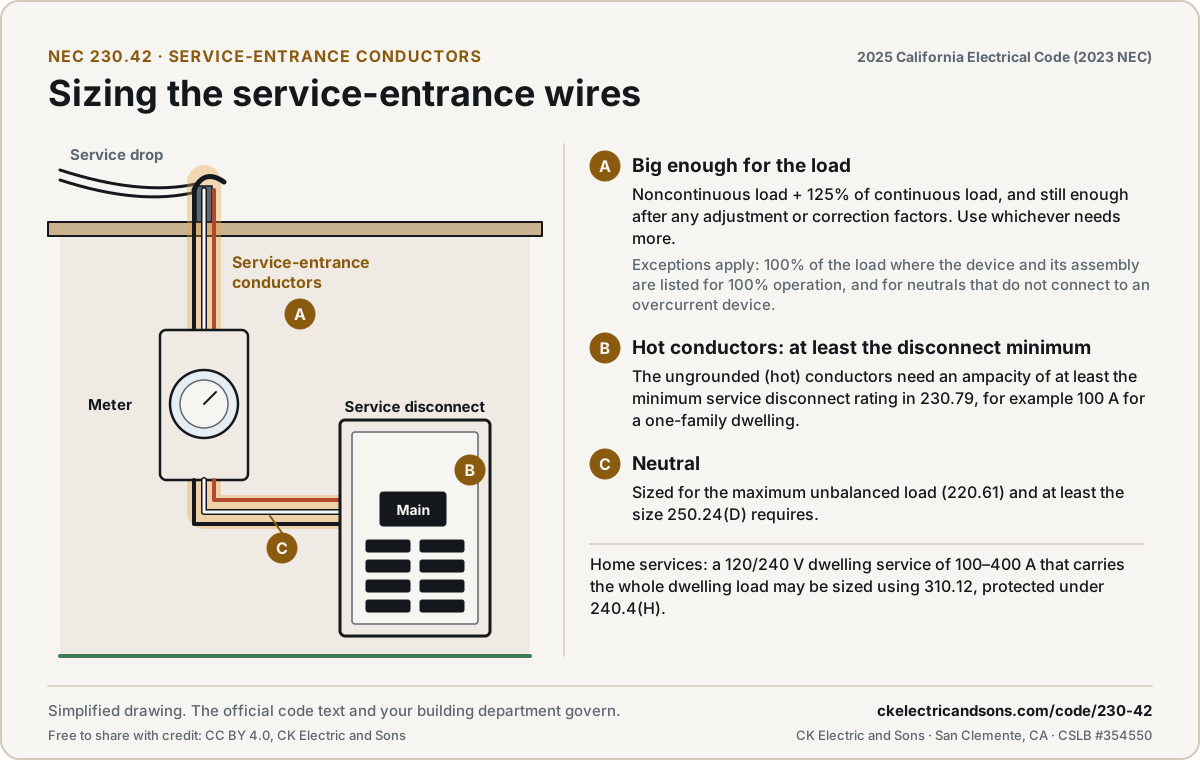 NEC 230.42: Sizing the service-entrance wiresRead the sectionSVGPNG
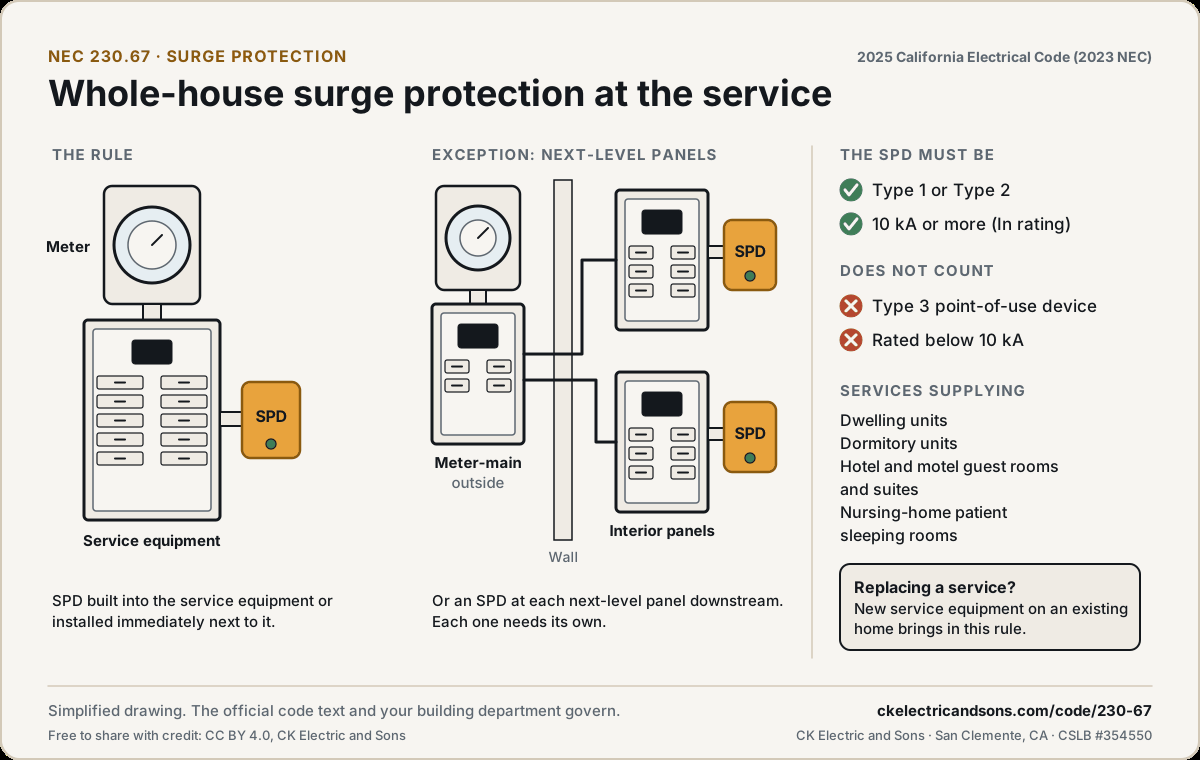
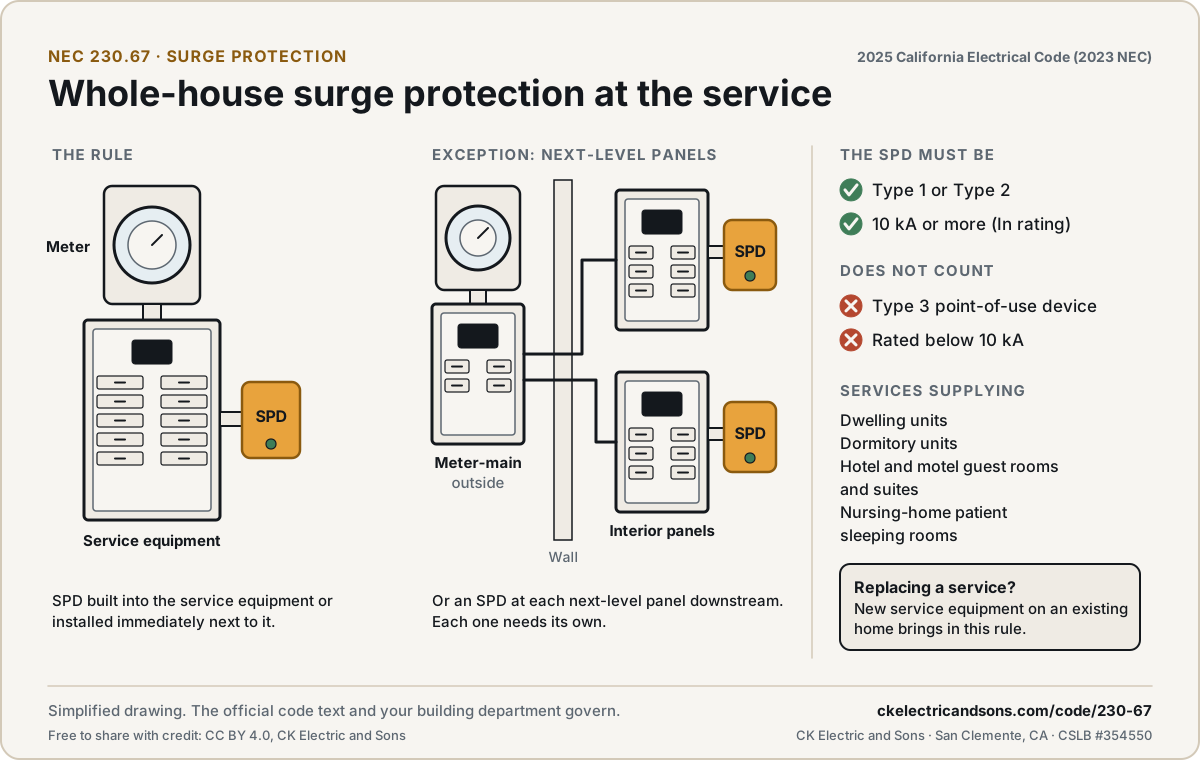 NEC 230.67: Whole-house surge protection at the serviceRead the sectionSVGPNG
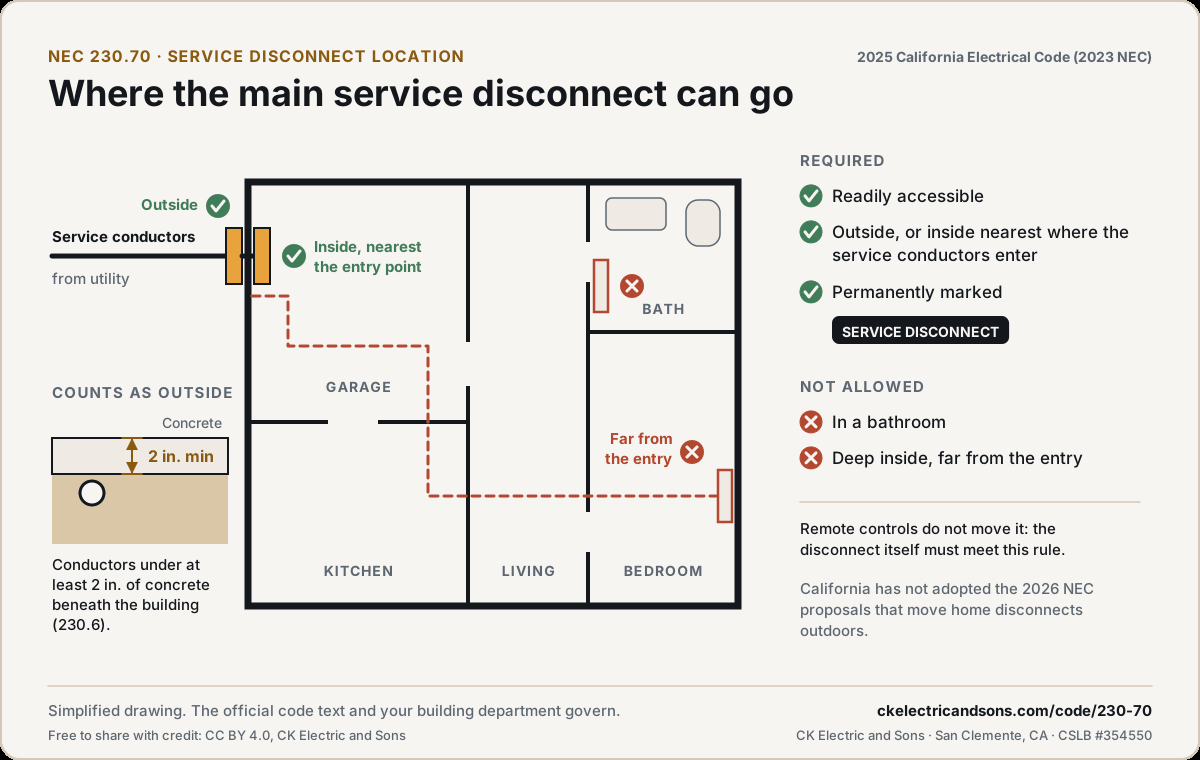
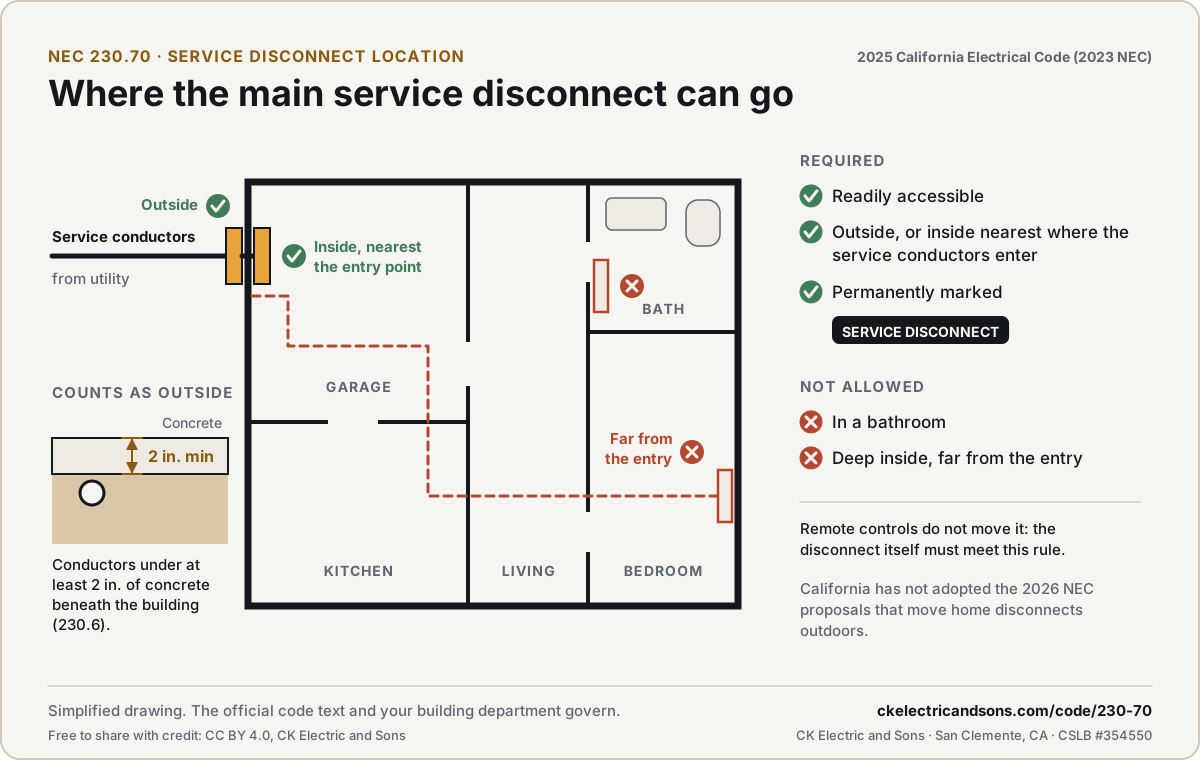 NEC 230.70: Where the main service disconnect can goRead the sectionSVGPNG
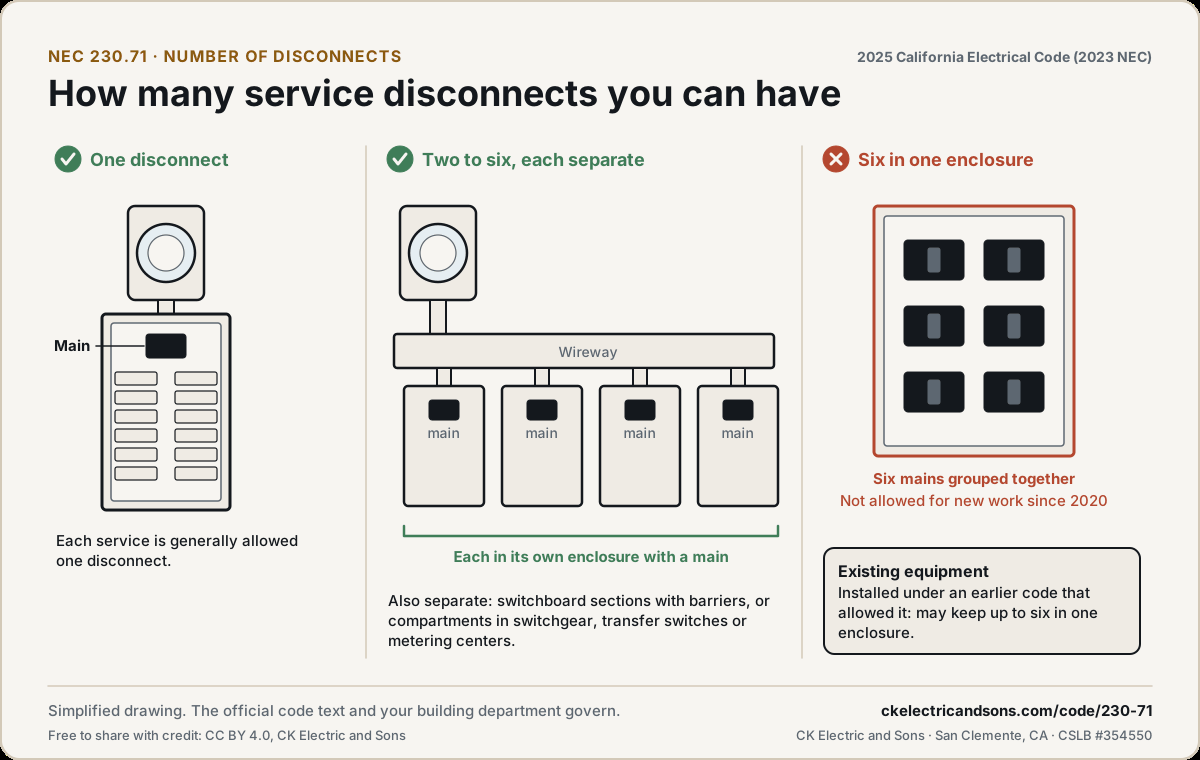
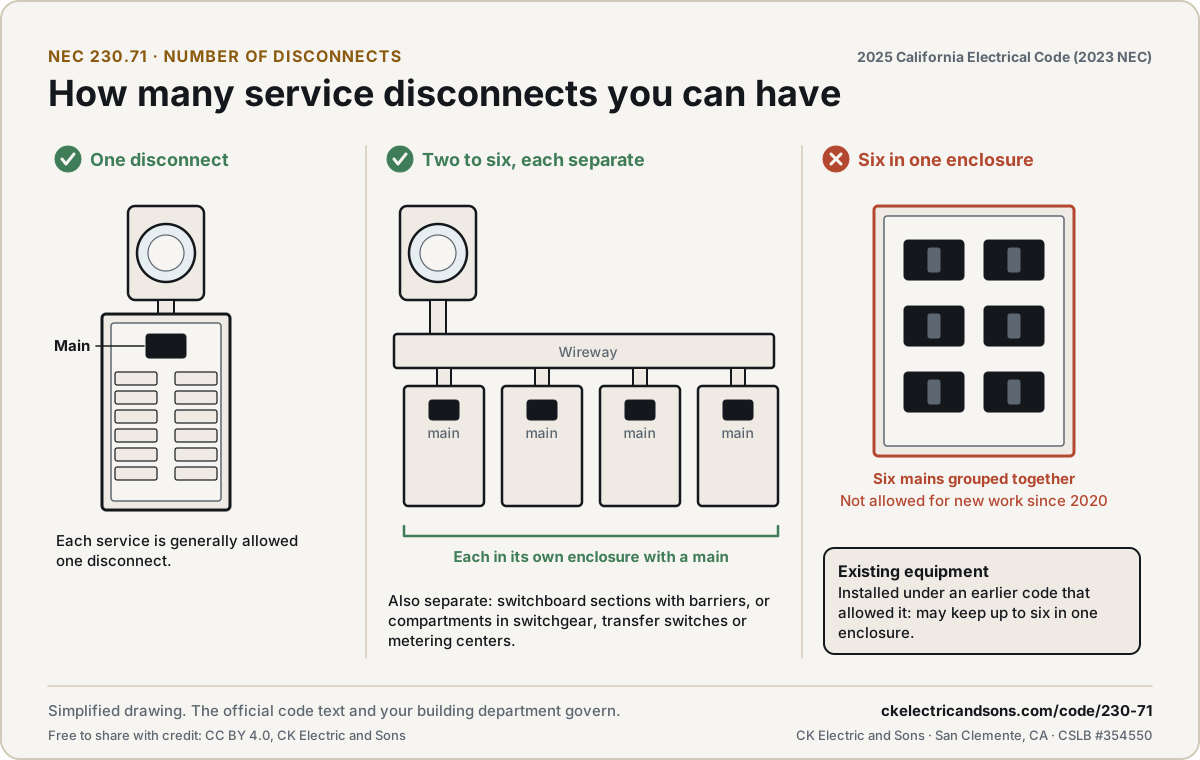 NEC 230.71: How many service disconnects you can haveRead the sectionSVGPNG
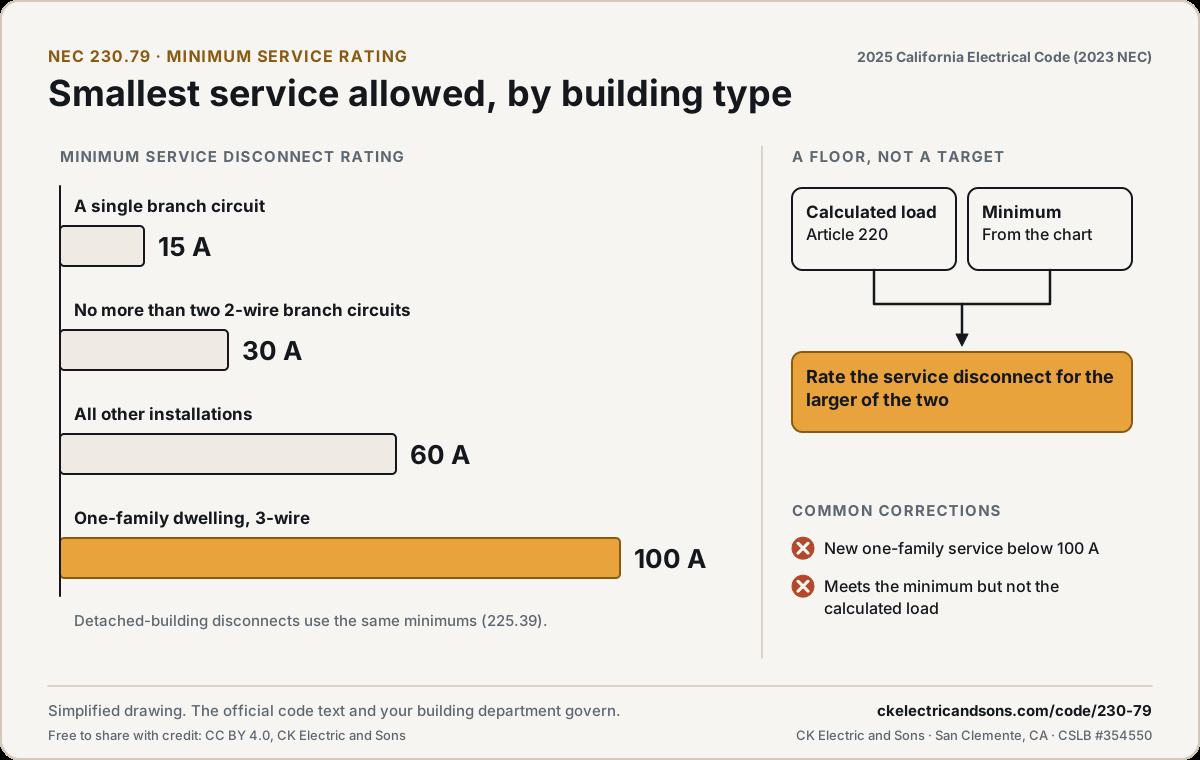
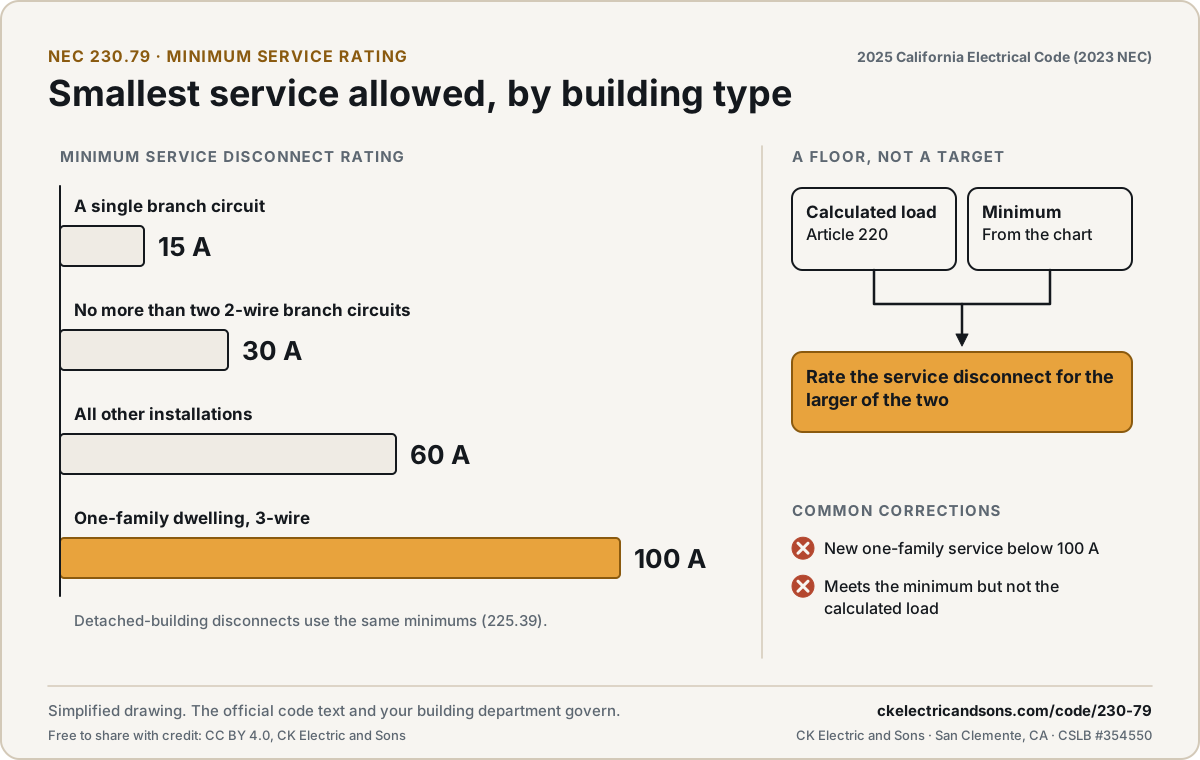 NEC 230.79: Smallest service allowed, by building typeRead the sectionSVGPNG
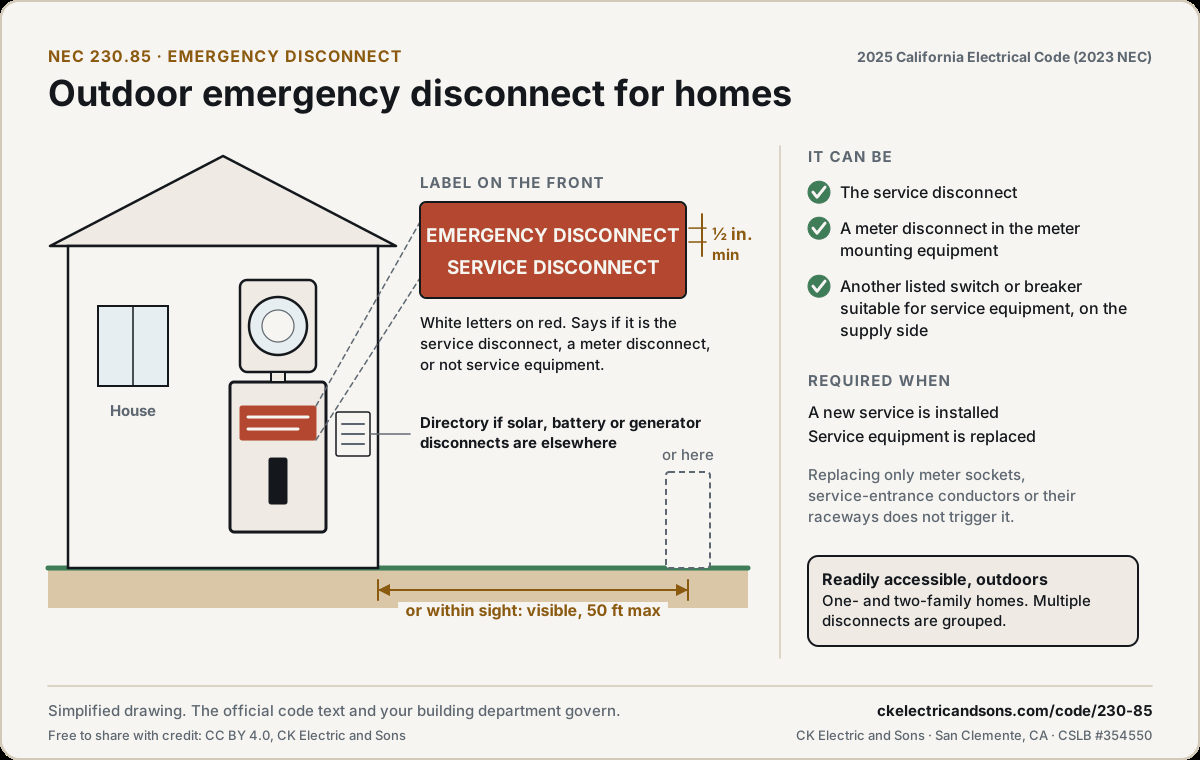
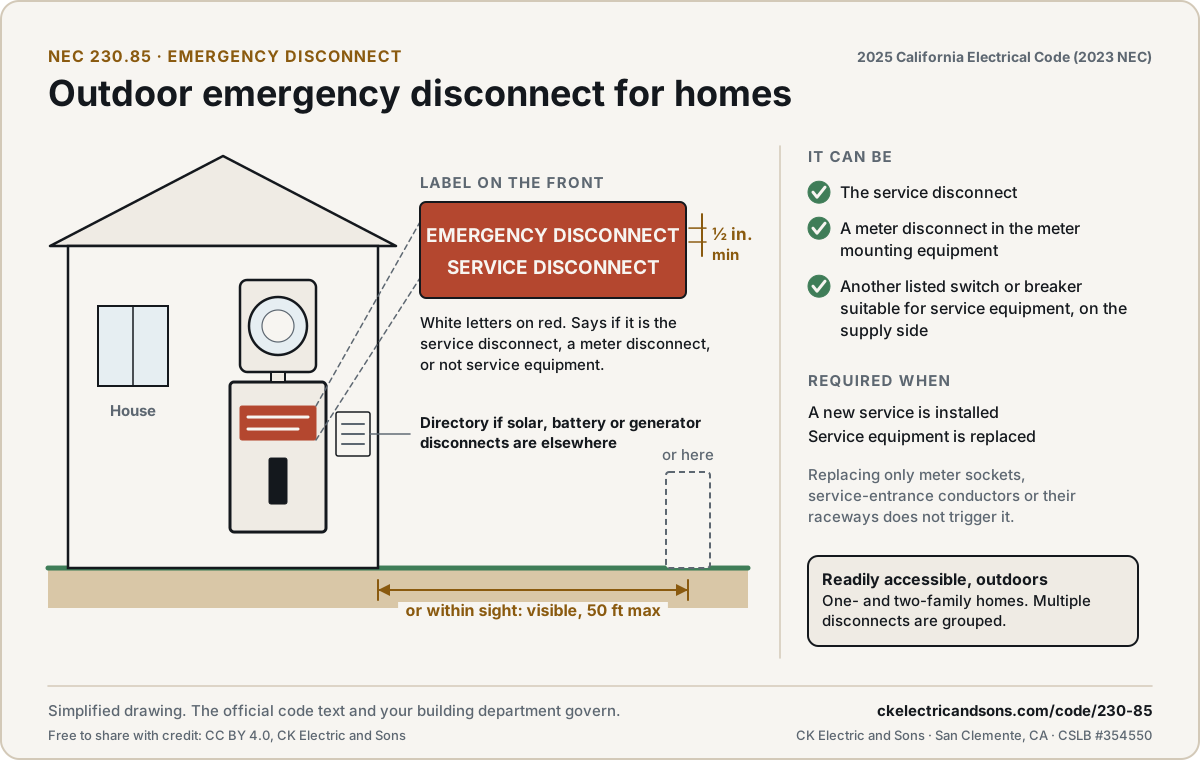 NEC 230.85: Outdoor emergency disconnect for homesRead the sectionSVGPNG
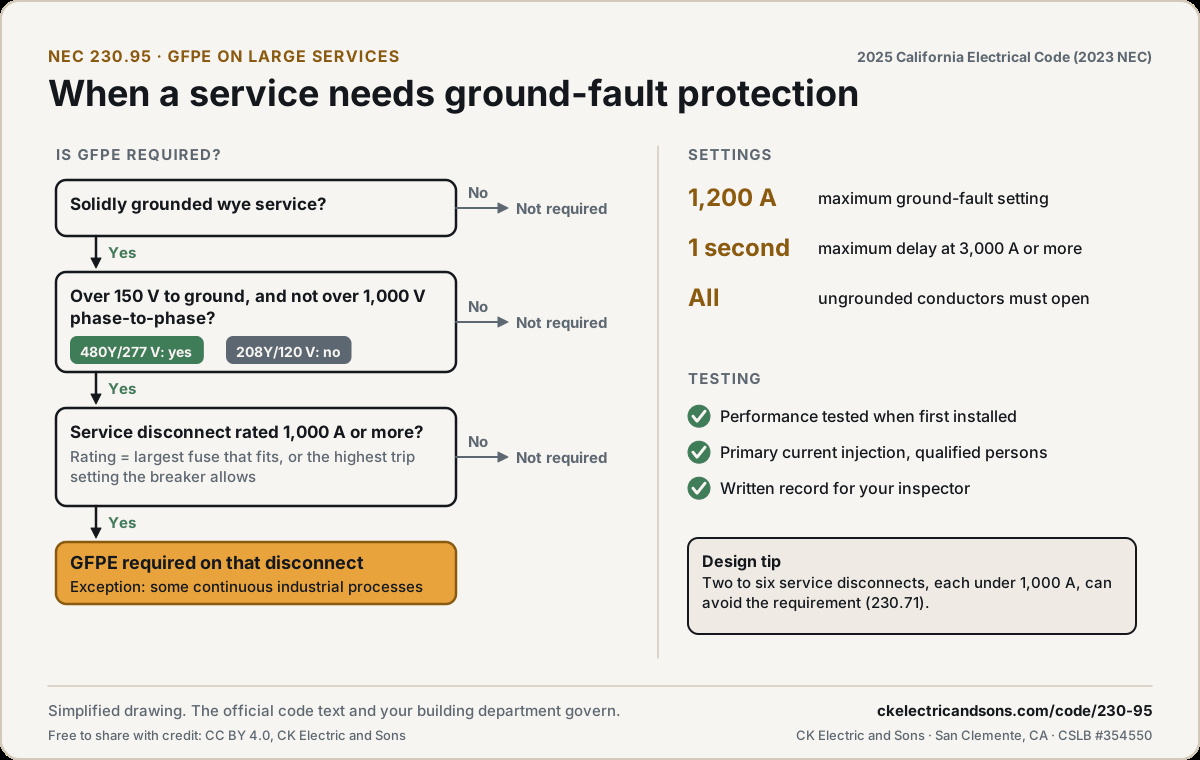
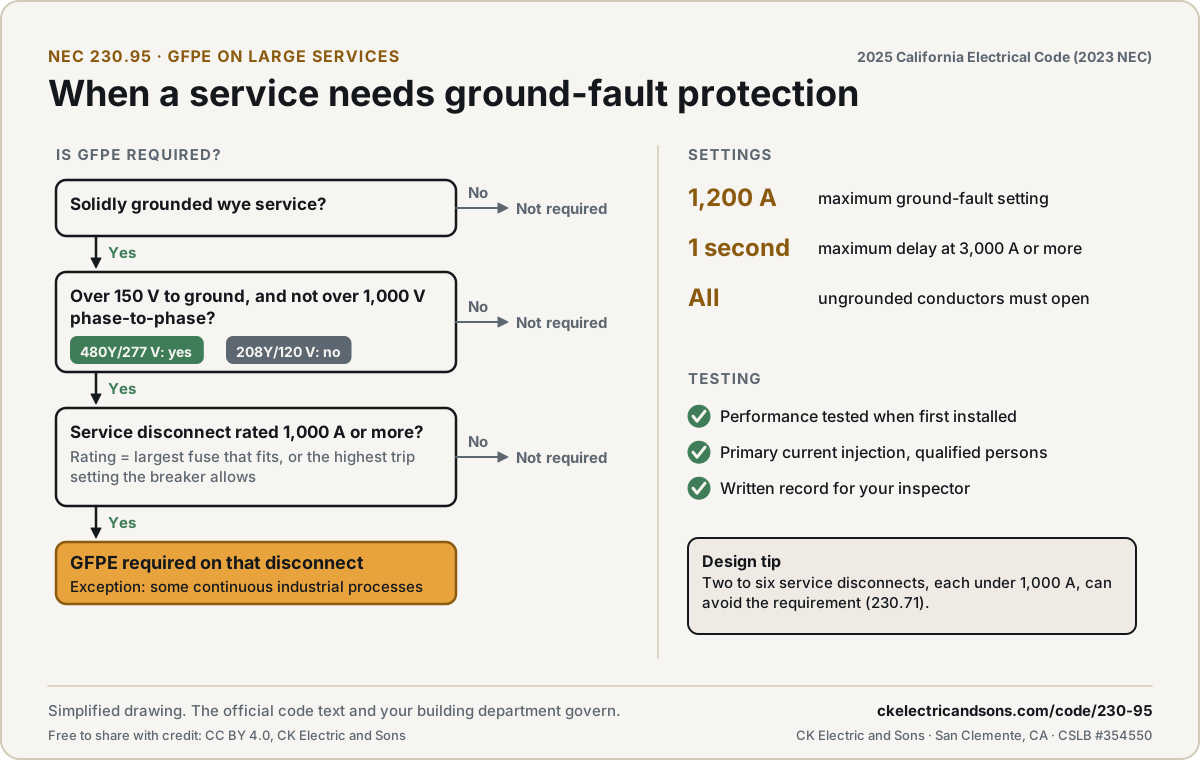 NEC 230.95: When a service needs ground-fault protectionRead the sectionSVGPNG
Overcurrent protection
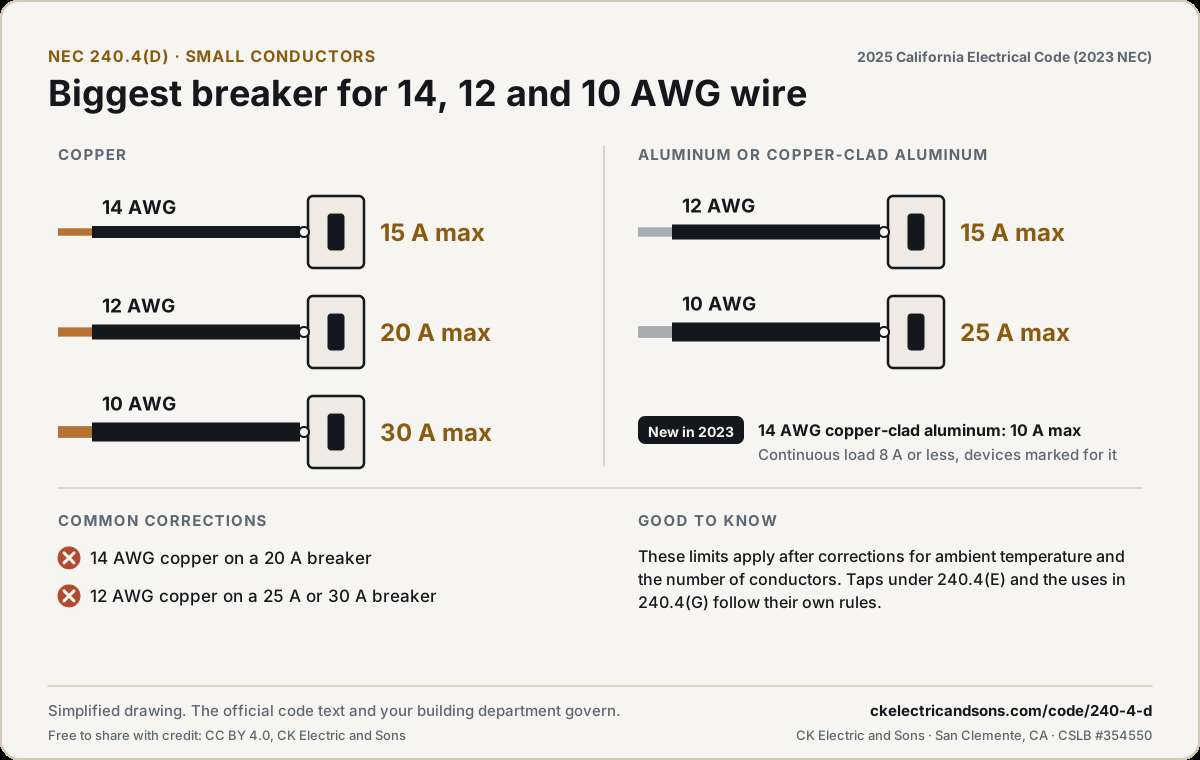
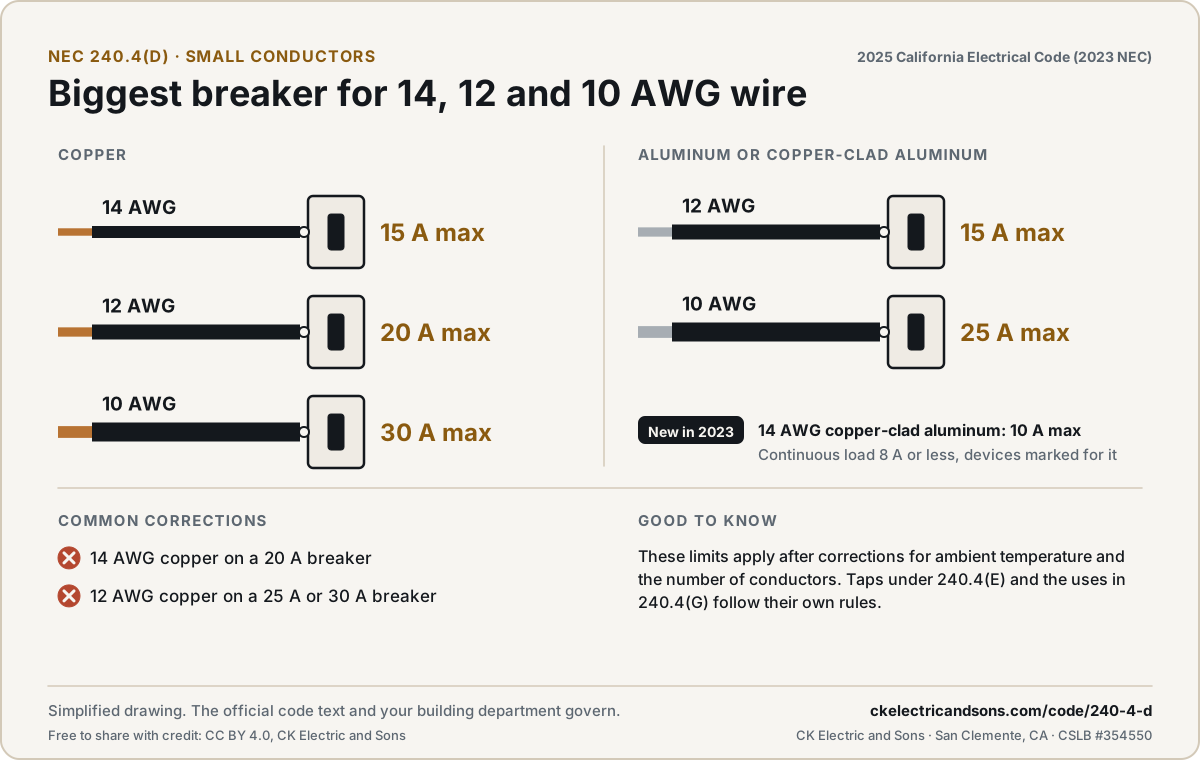 NEC 240.4(D): Biggest breaker for 14, 12 and 10 AWG wireRead the sectionSVGPNG
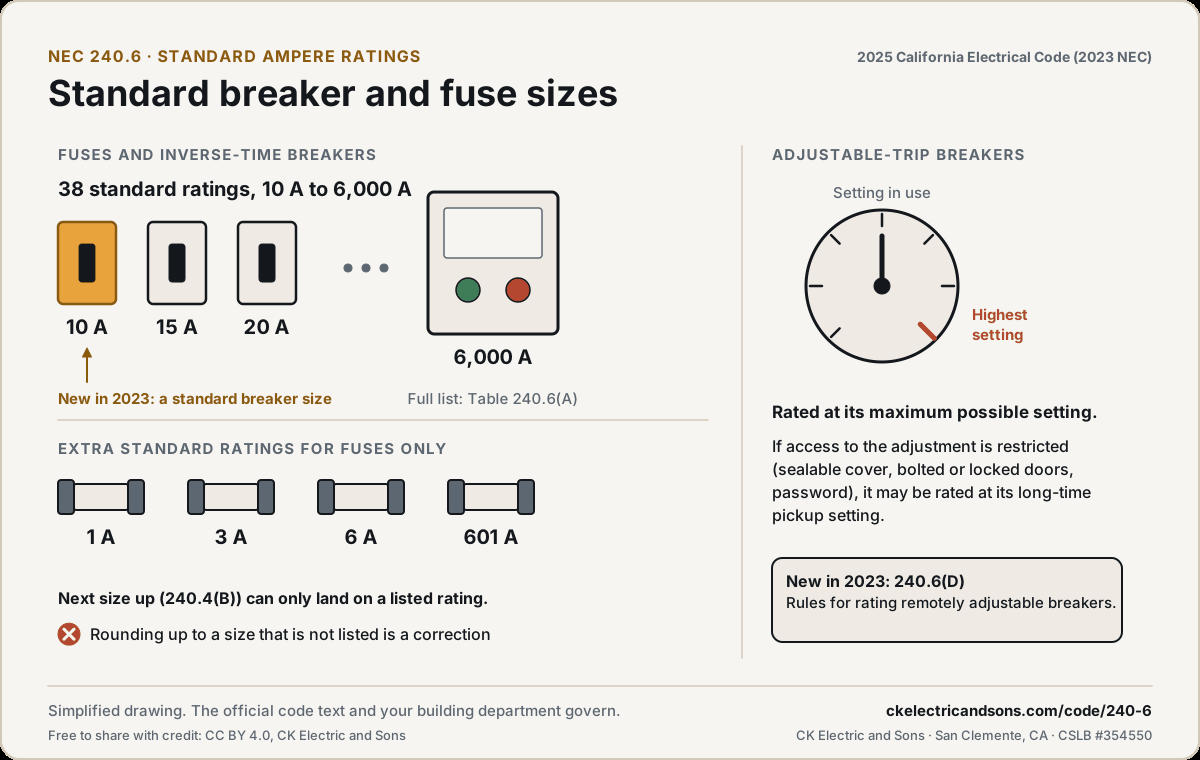
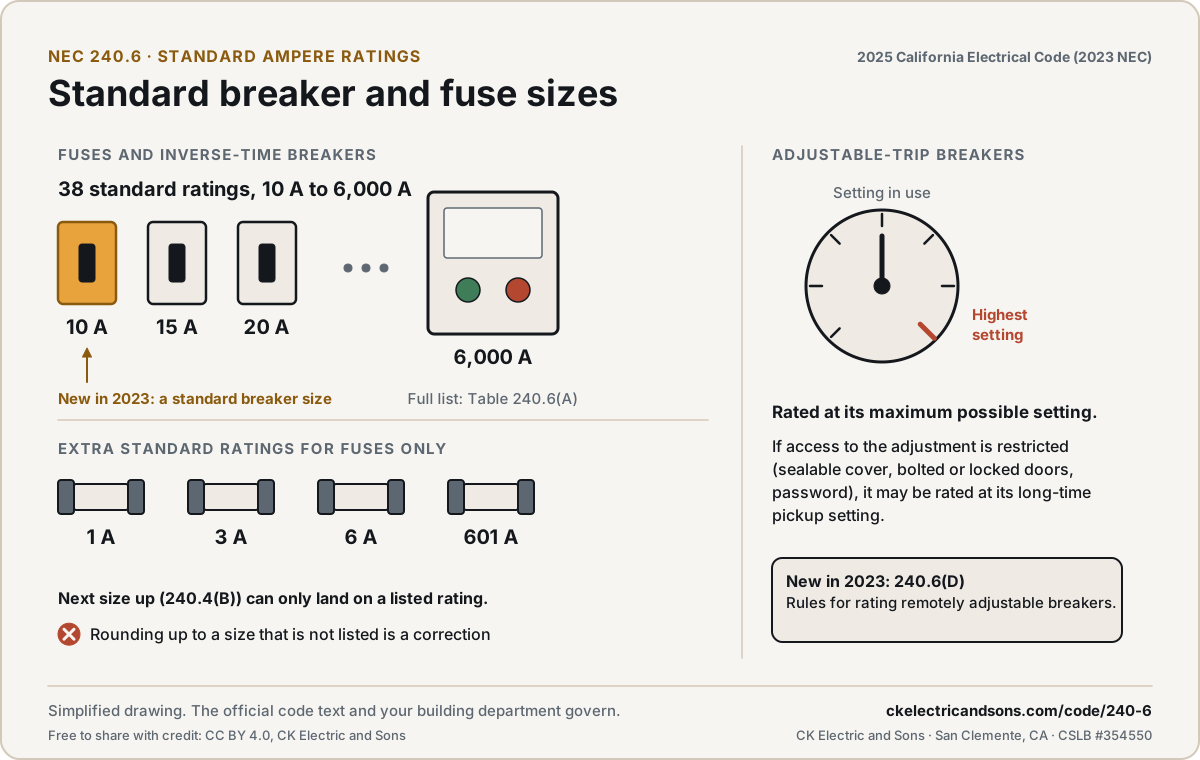 NEC 240.6: Standard breaker and fuse sizesRead the sectionSVGPNG
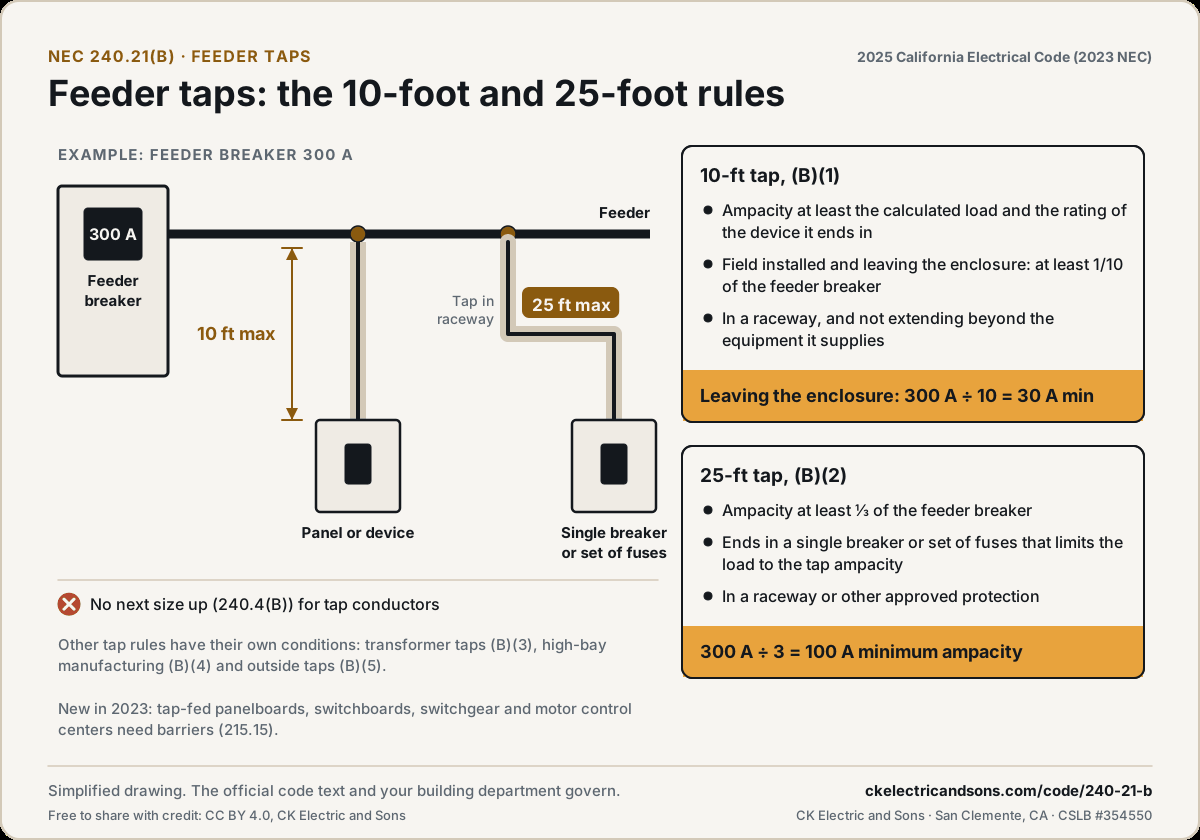
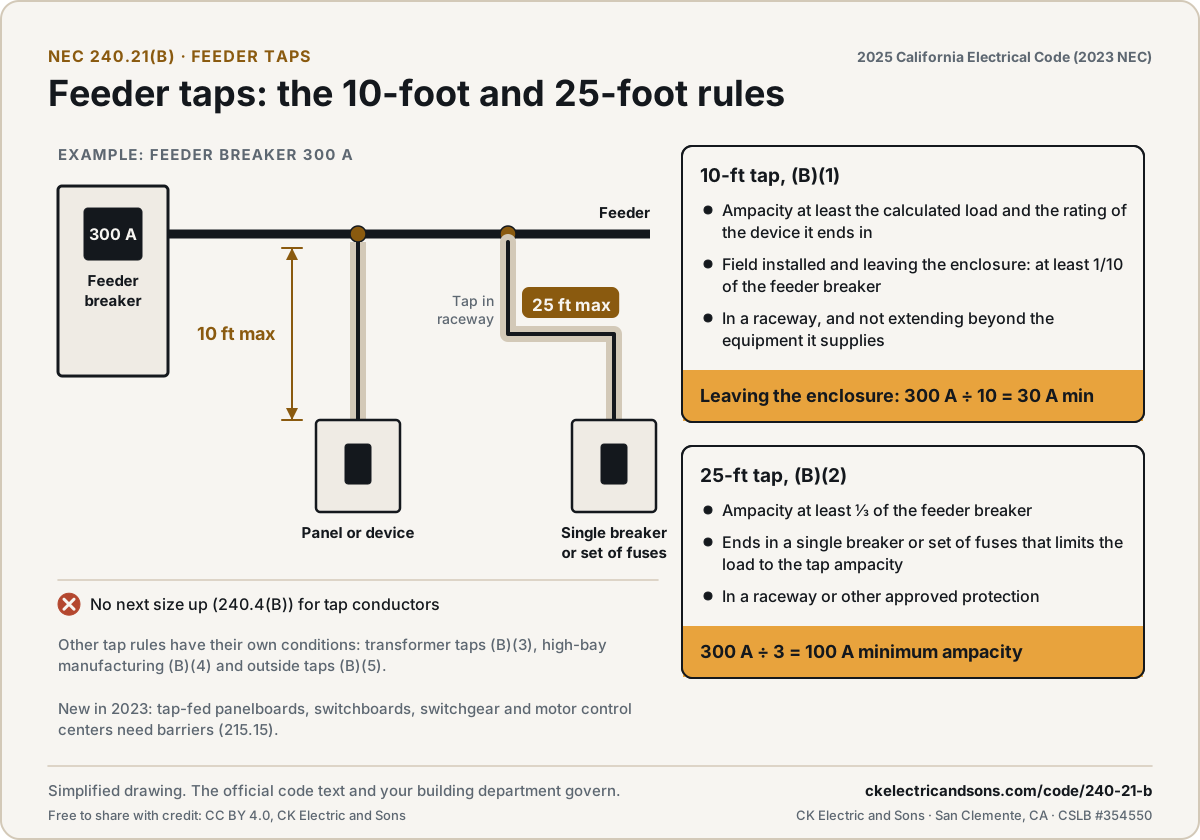 NEC 240.21(B): Feeder taps: the 10-foot and 25-foot rulesRead the sectionSVGPNG
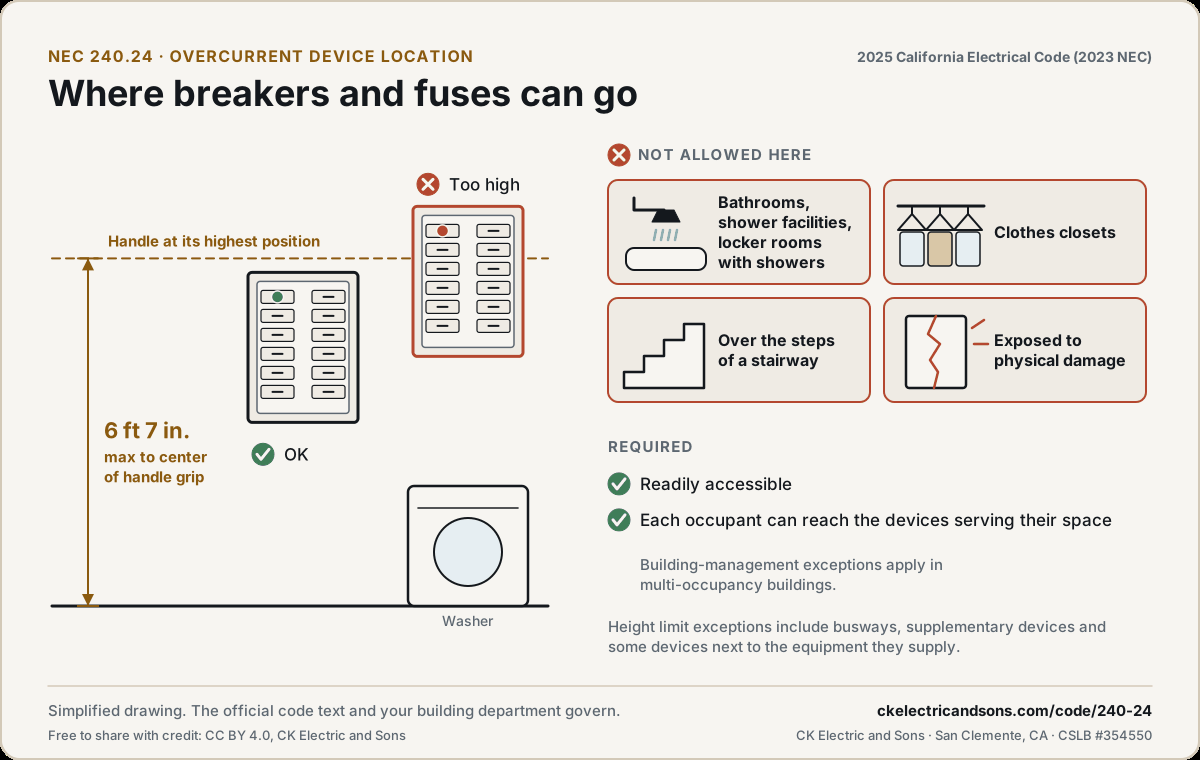
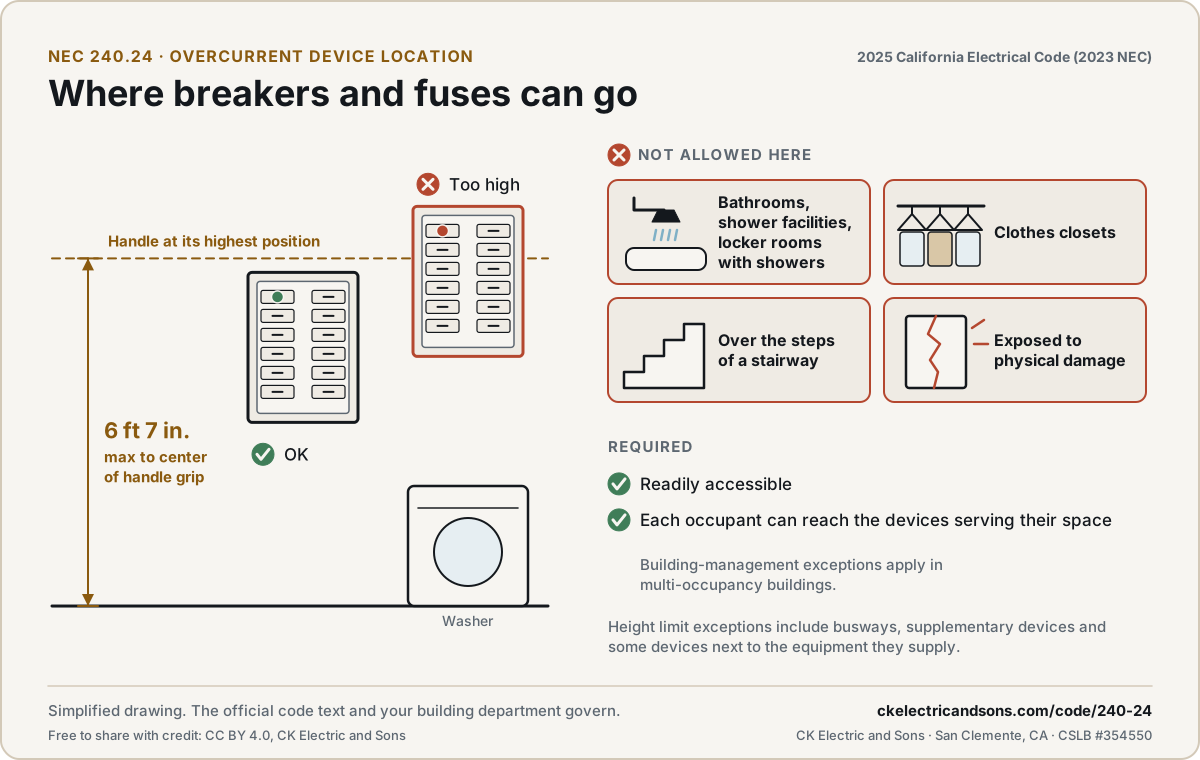 NEC 240.24: Where breakers and fuses can goRead the sectionSVGPNG
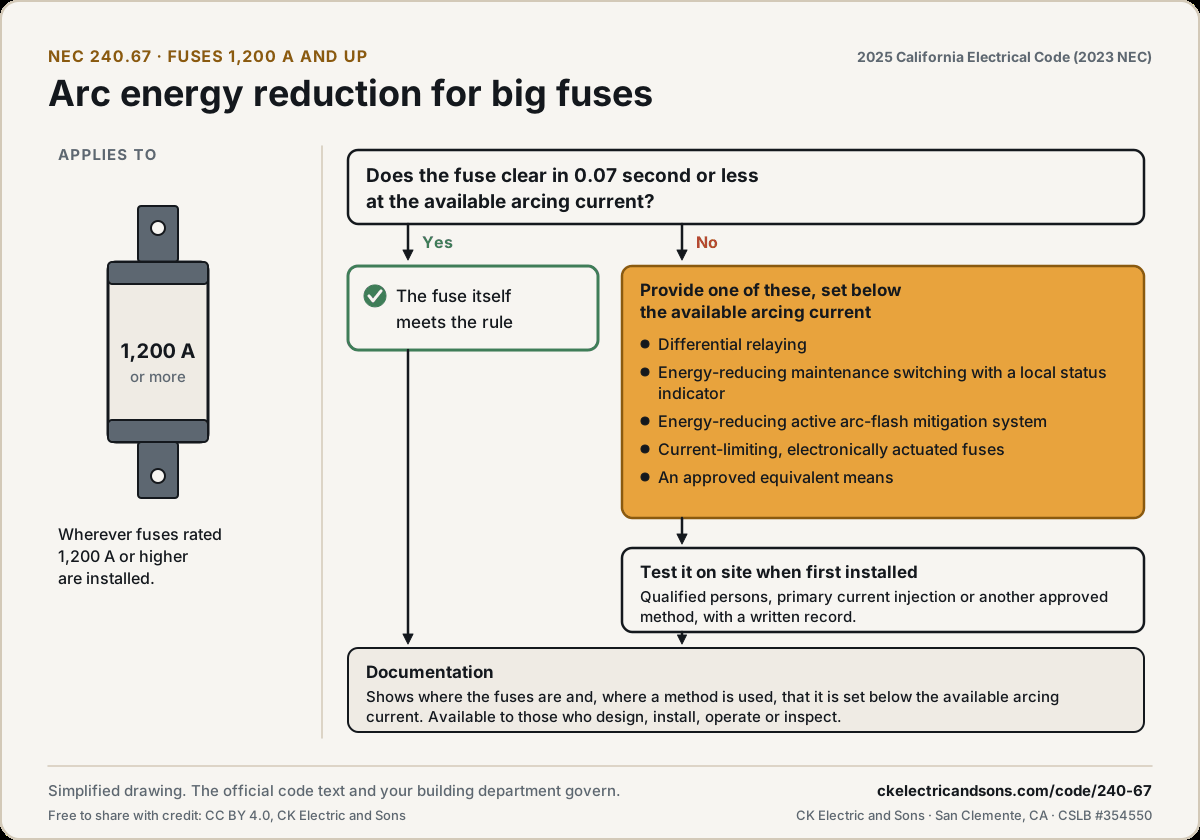
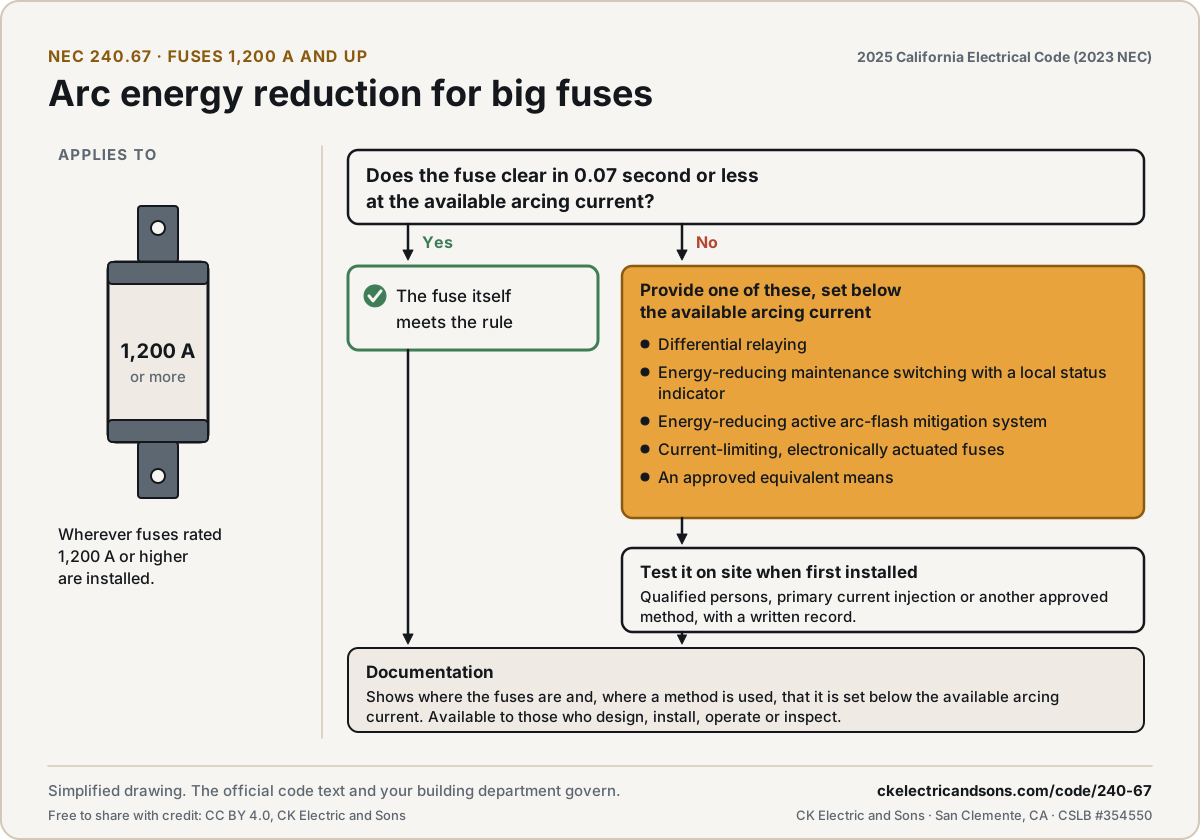 NEC 240.67: Arc energy reduction for big fusesRead the sectionSVGPNG
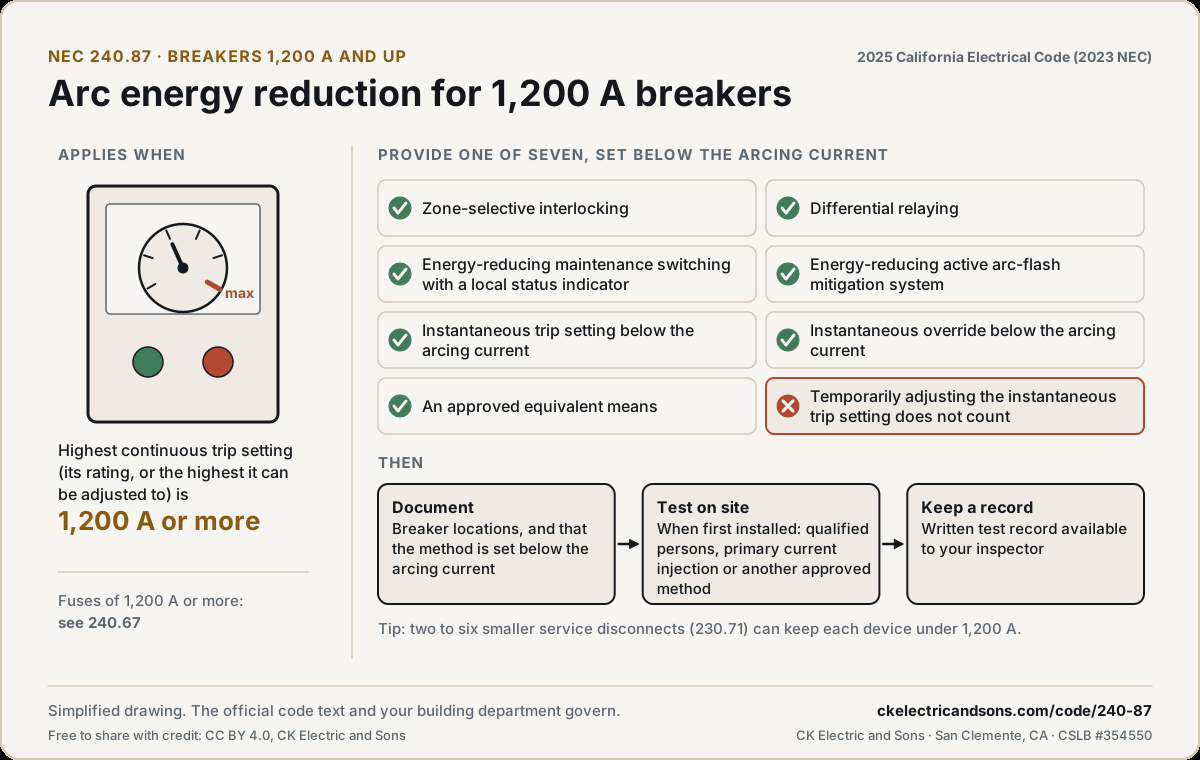
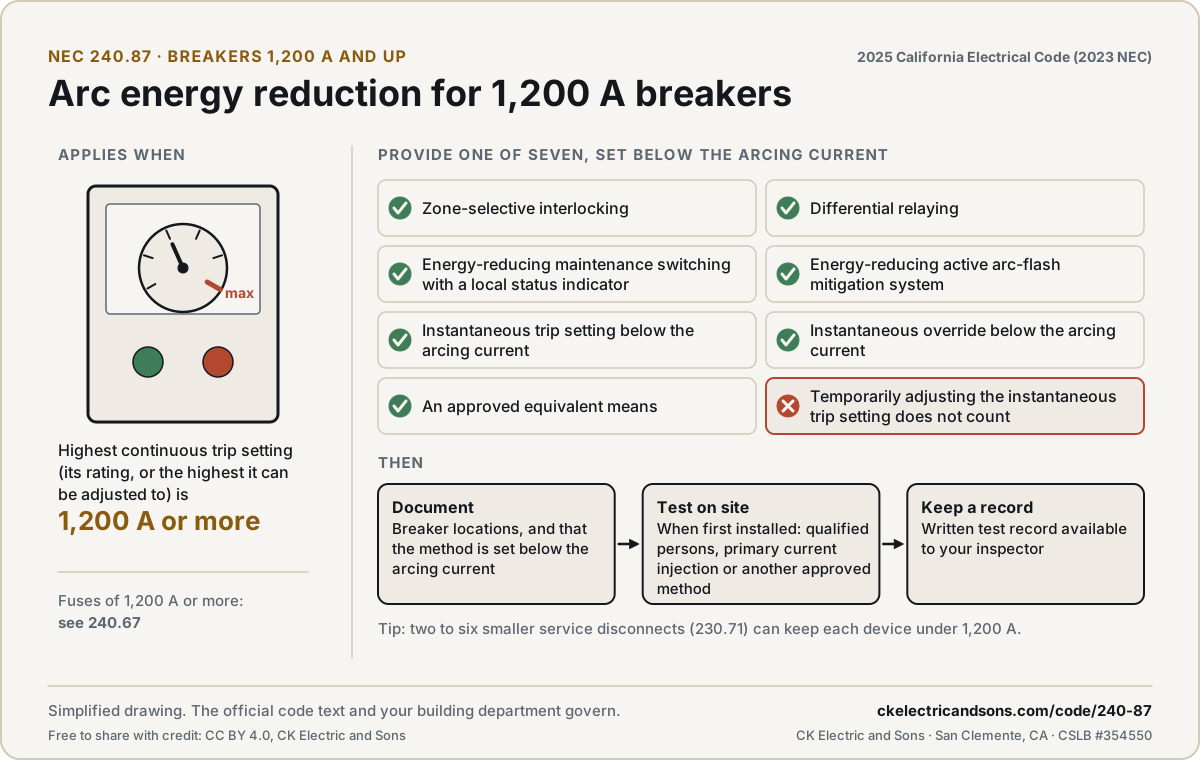 NEC 240.87: Arc energy reduction for 1,200 A breakersRead the sectionSVGPNG
Grounding and bonding
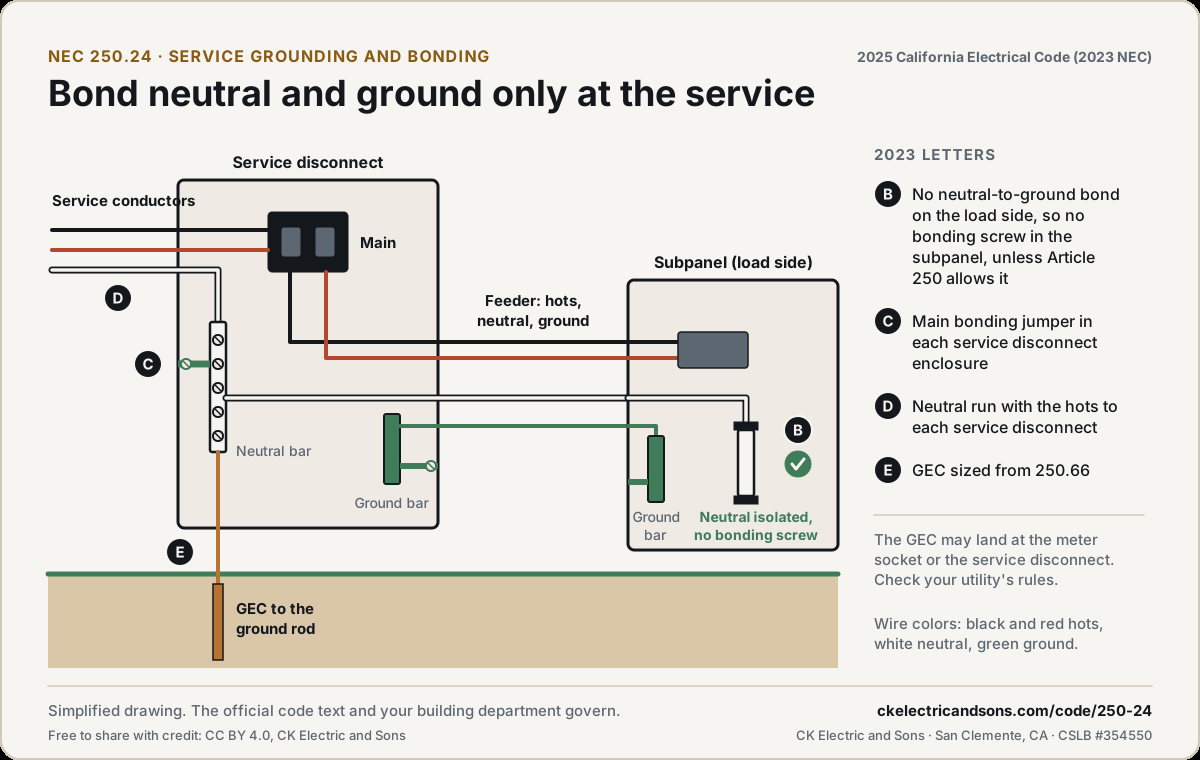
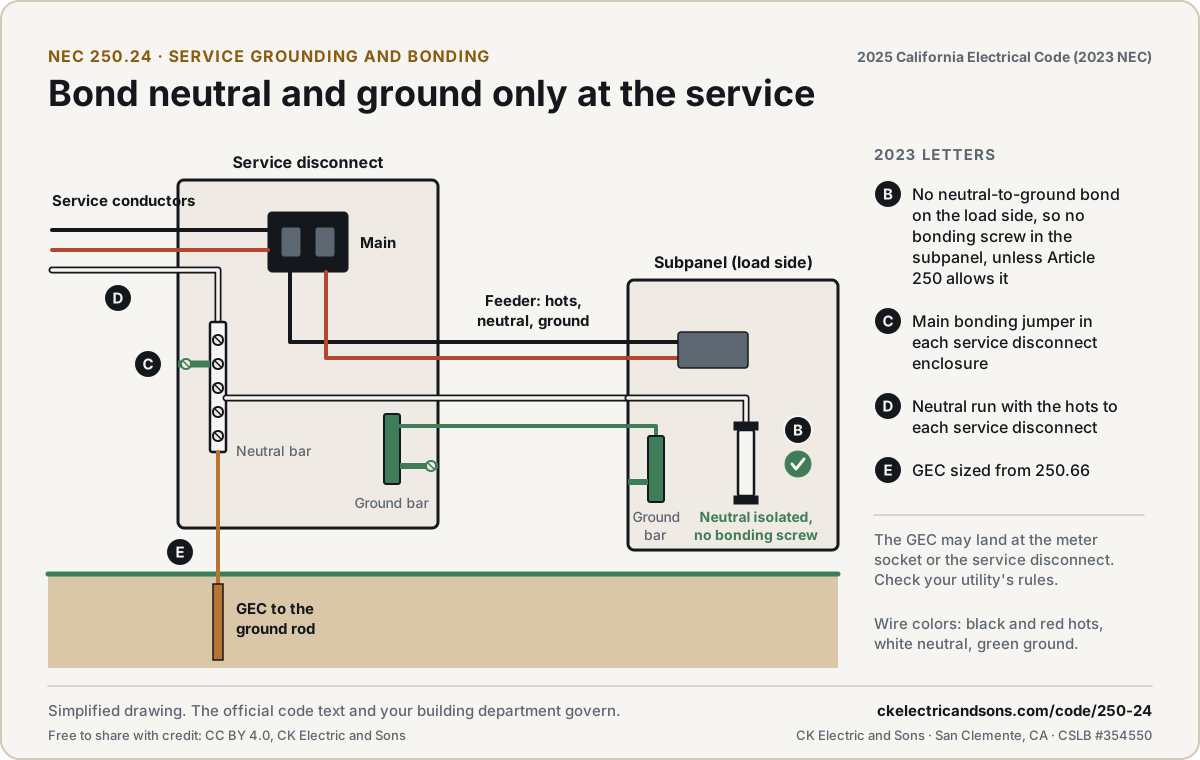 NEC 250.24: Bond neutral and ground only at the serviceRead the sectionSVGPNG
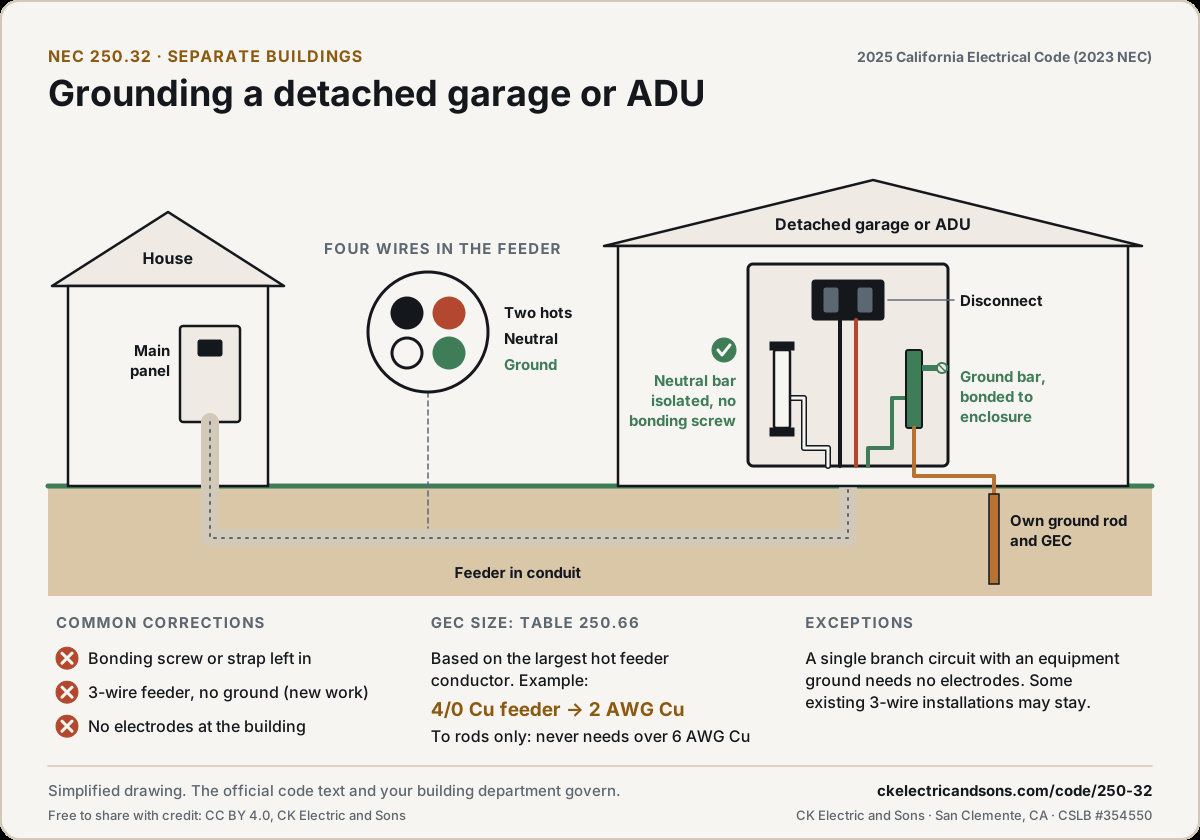
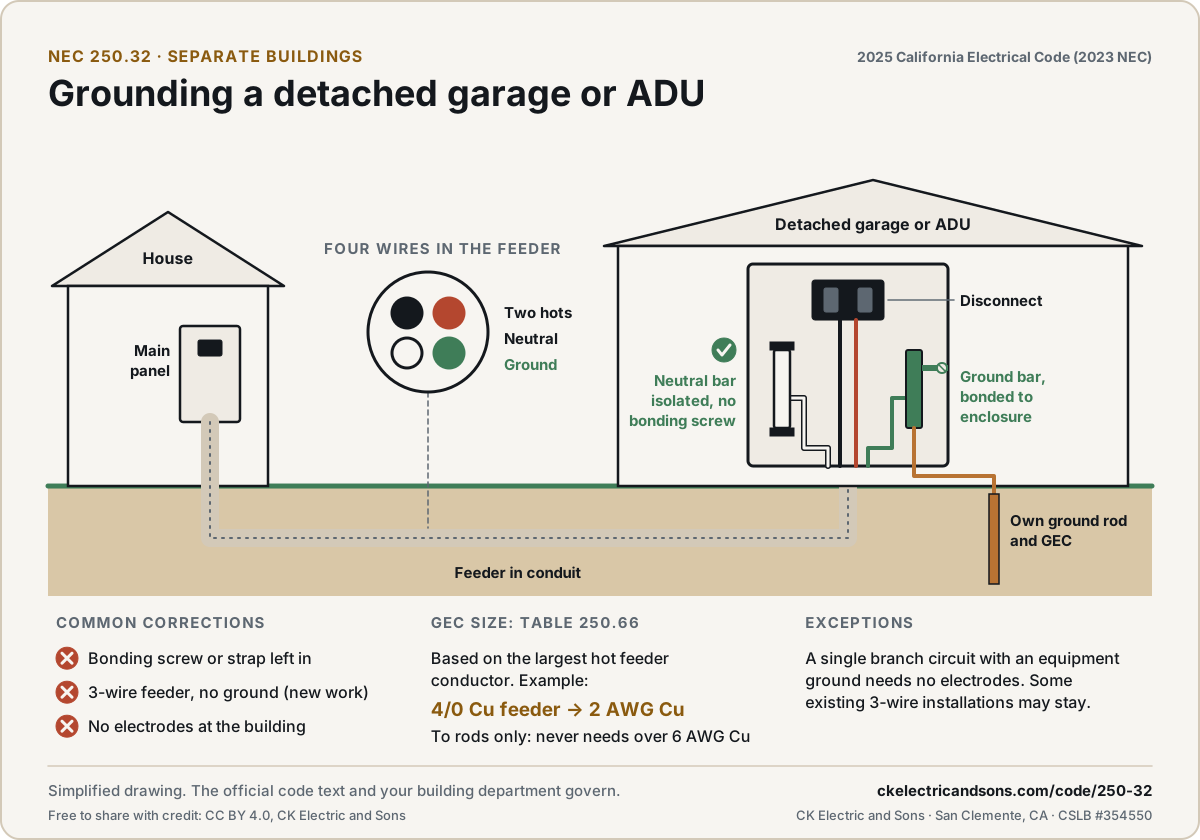 NEC 250.32: Grounding a detached garage or ADURead the sectionSVGPNG
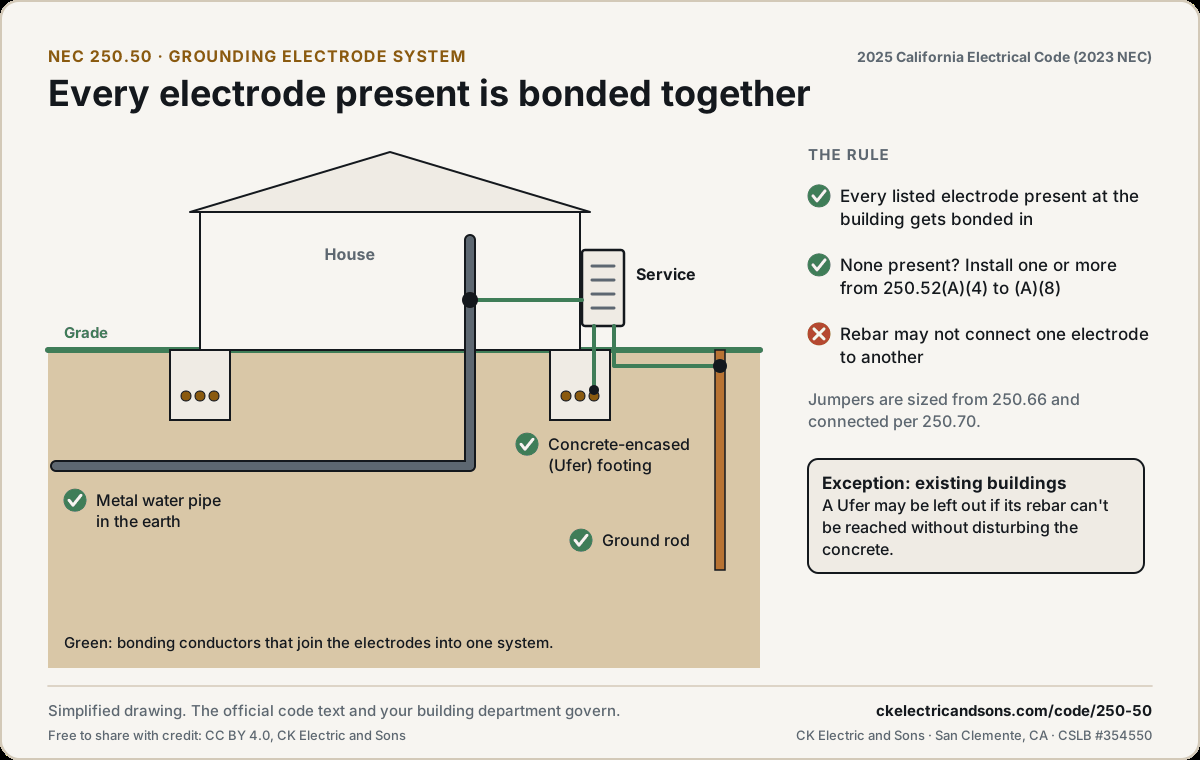
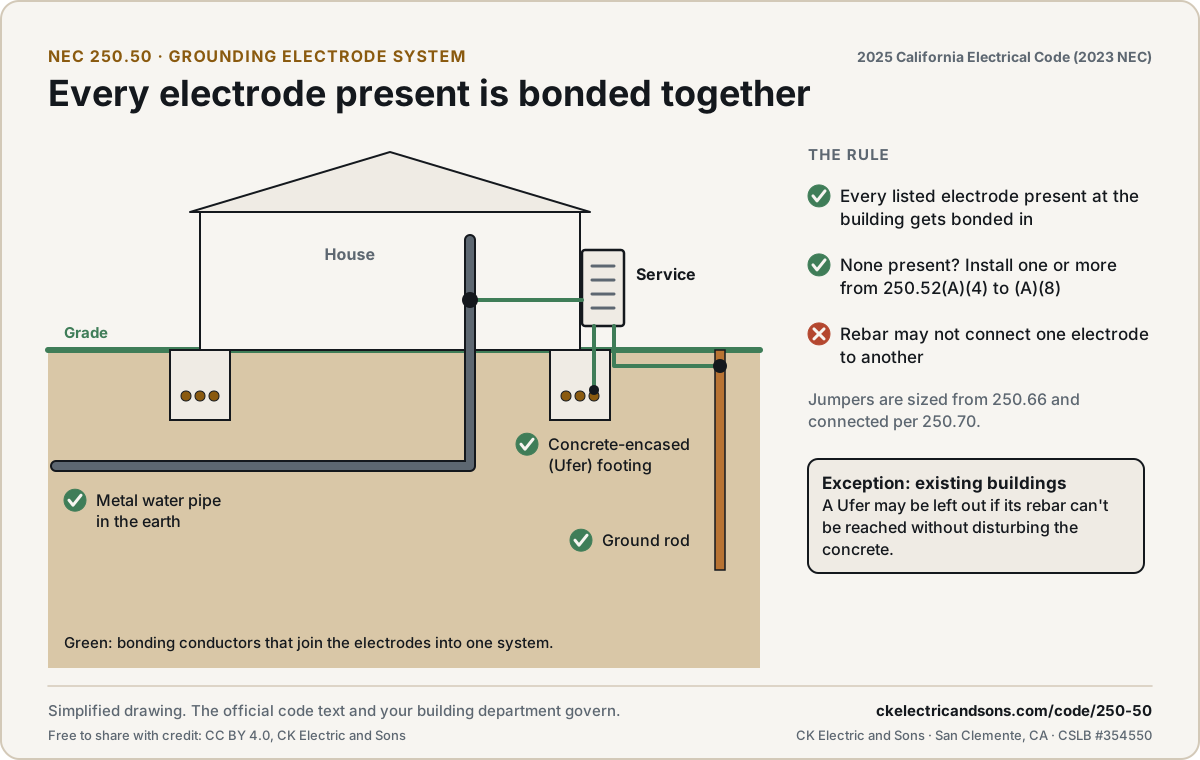 NEC 250.50: Every electrode present is bonded togetherRead the sectionSVGPNG
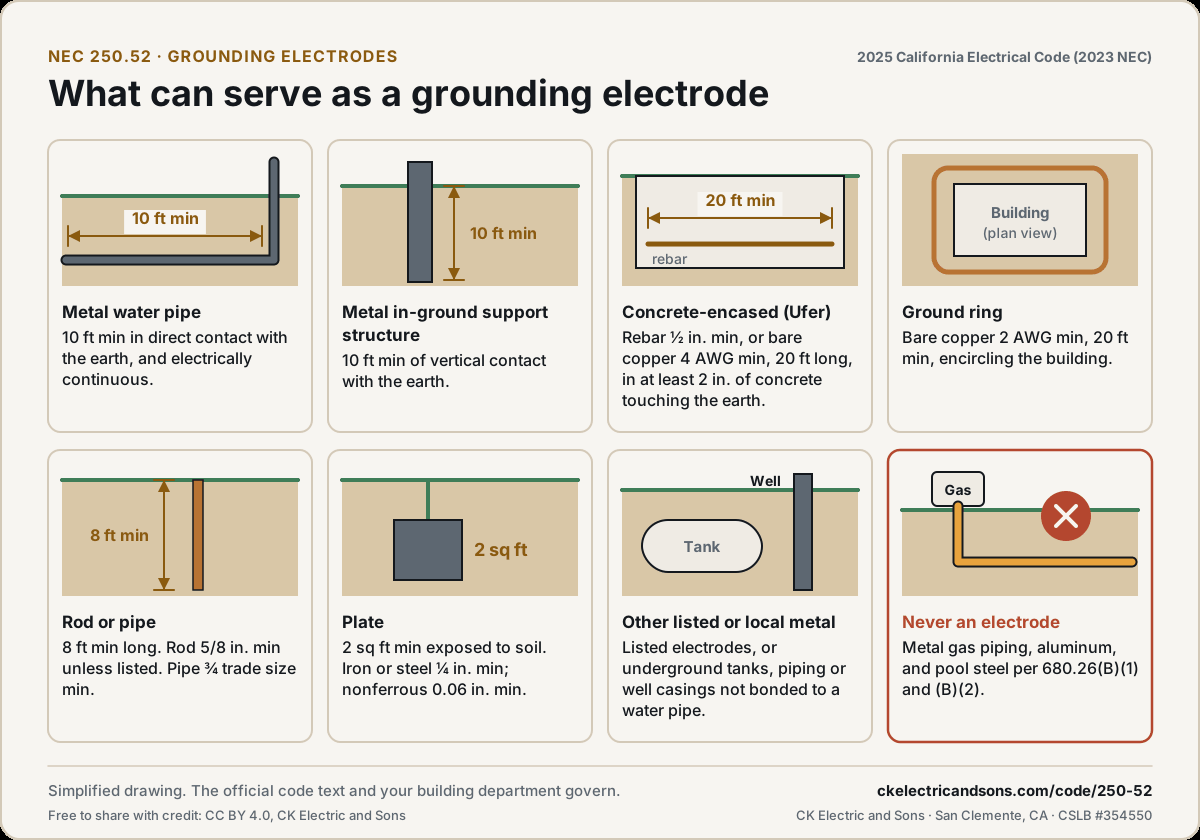
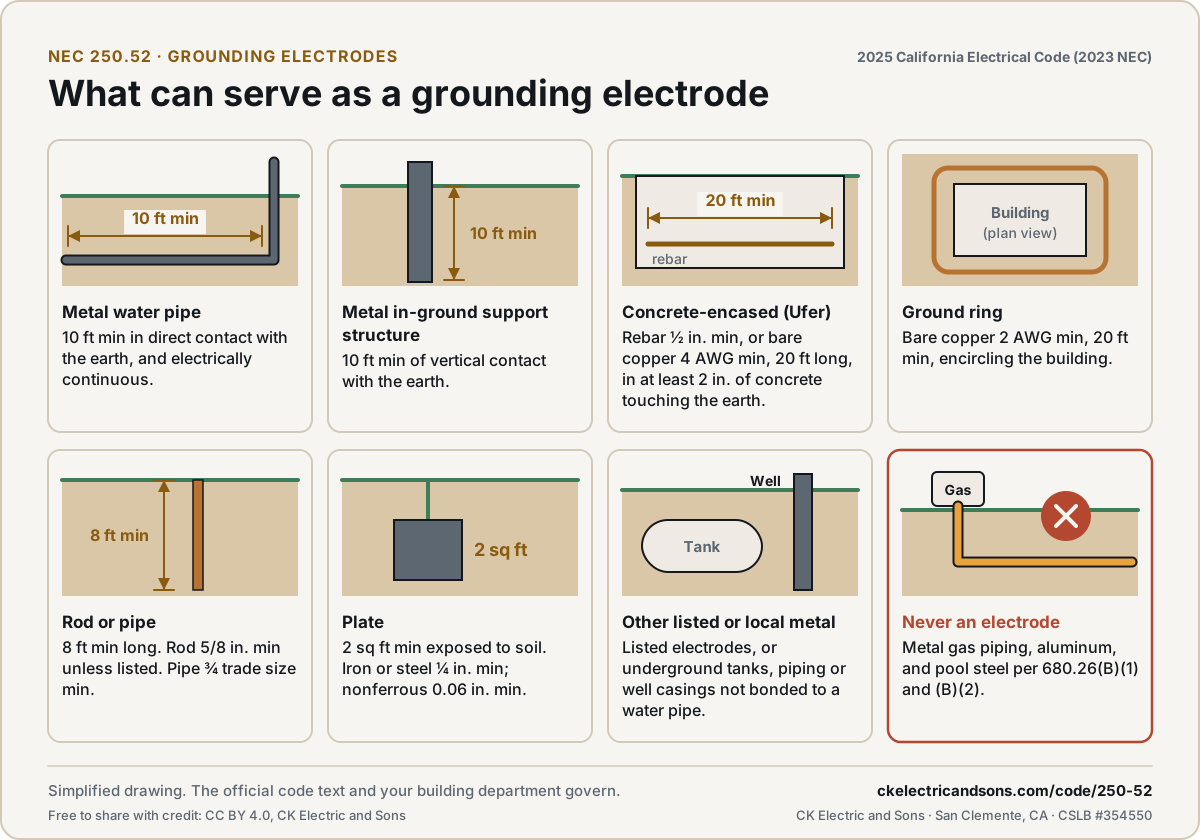 NEC 250.52: What can serve as a grounding electrodeRead the sectionSVGPNG
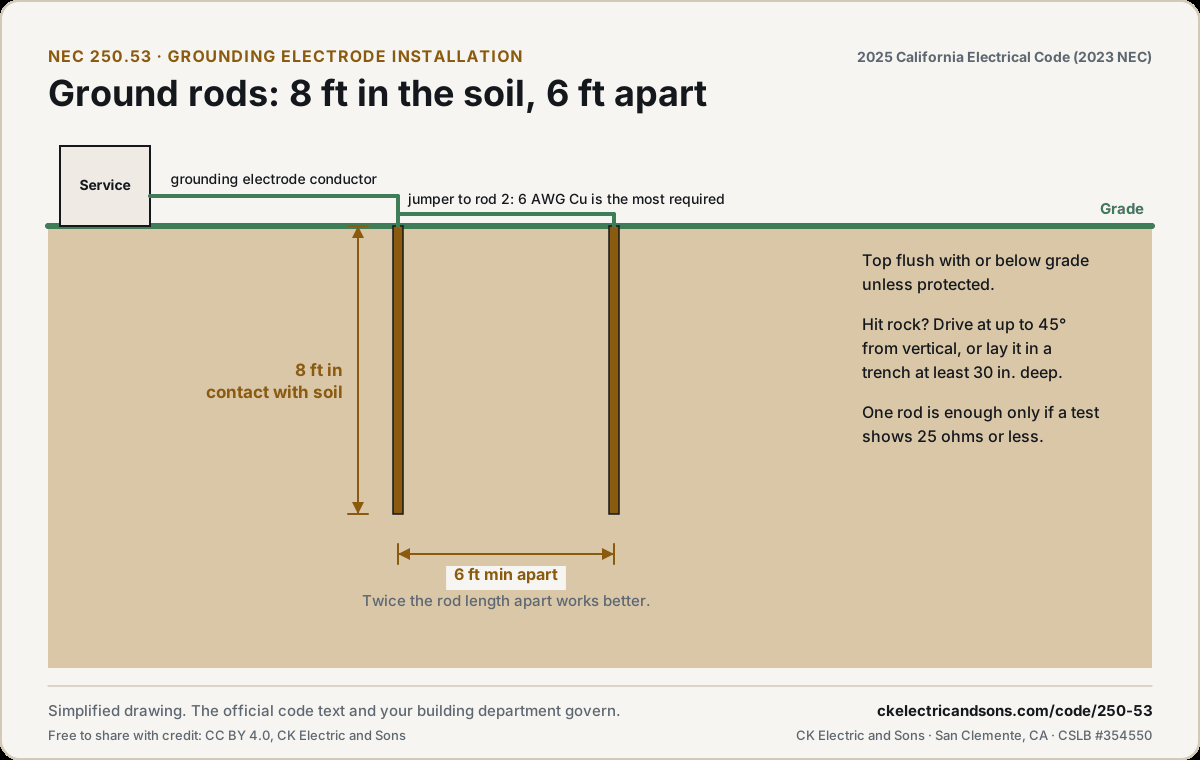
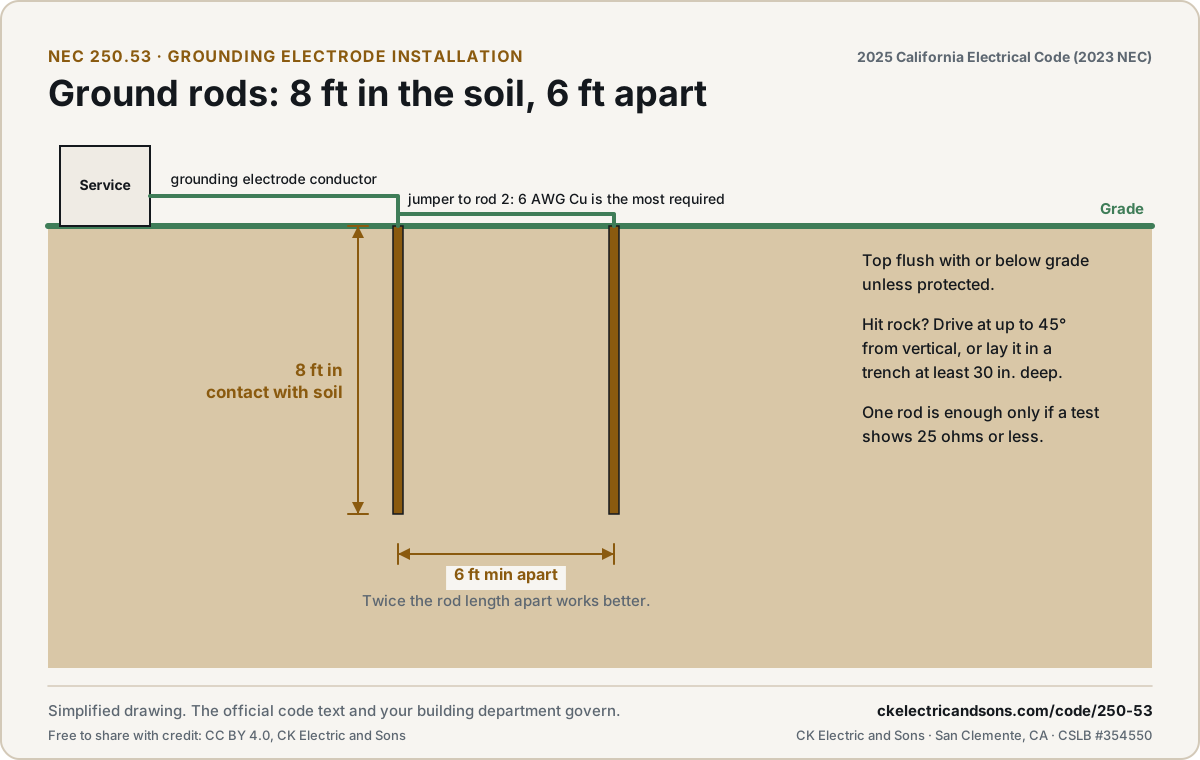 NEC 250.53: Ground rods: 8 ft in the soil, 6 ft apartRead the sectionSVGPNG
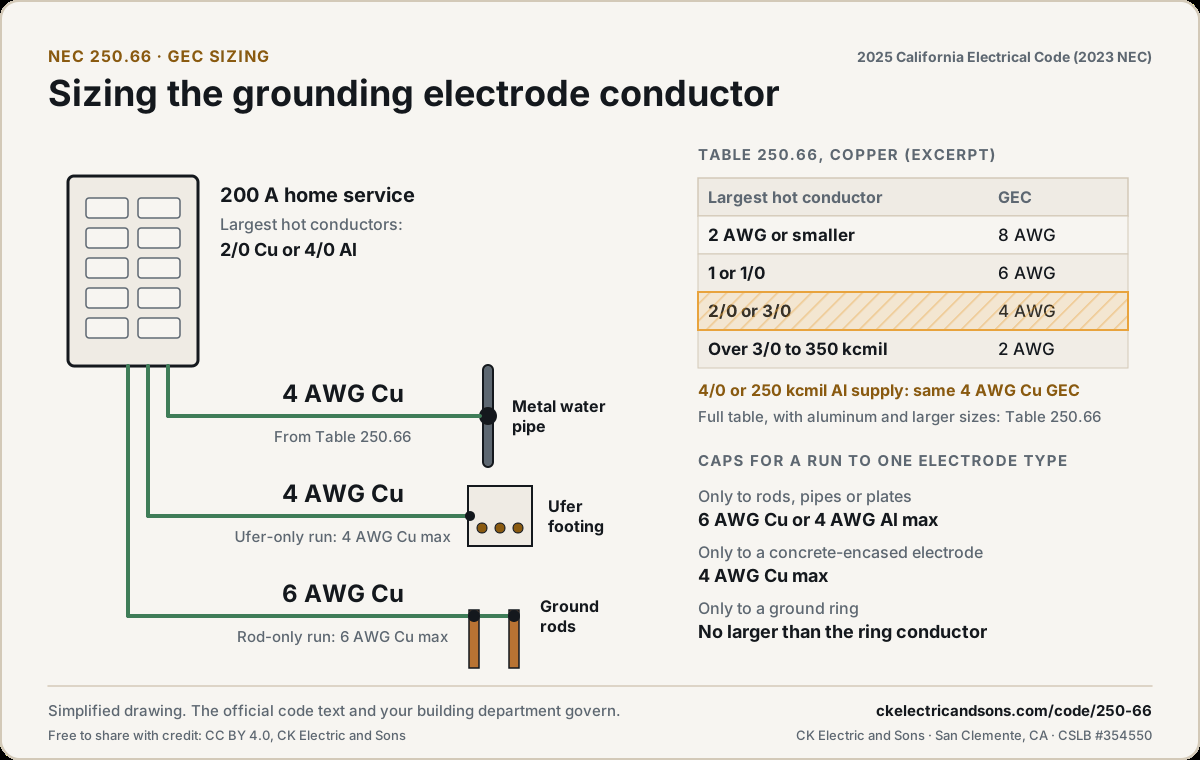
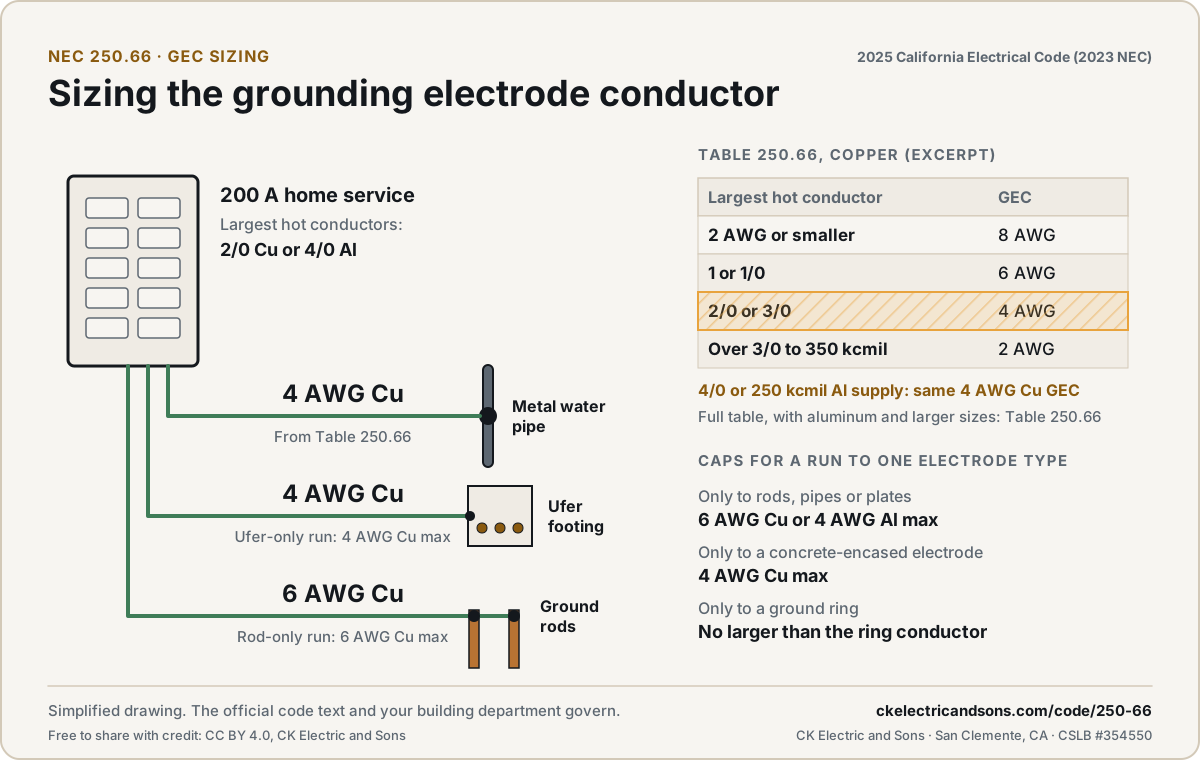 NEC 250.66: Sizing the grounding electrode conductorRead the sectionSVGPNG
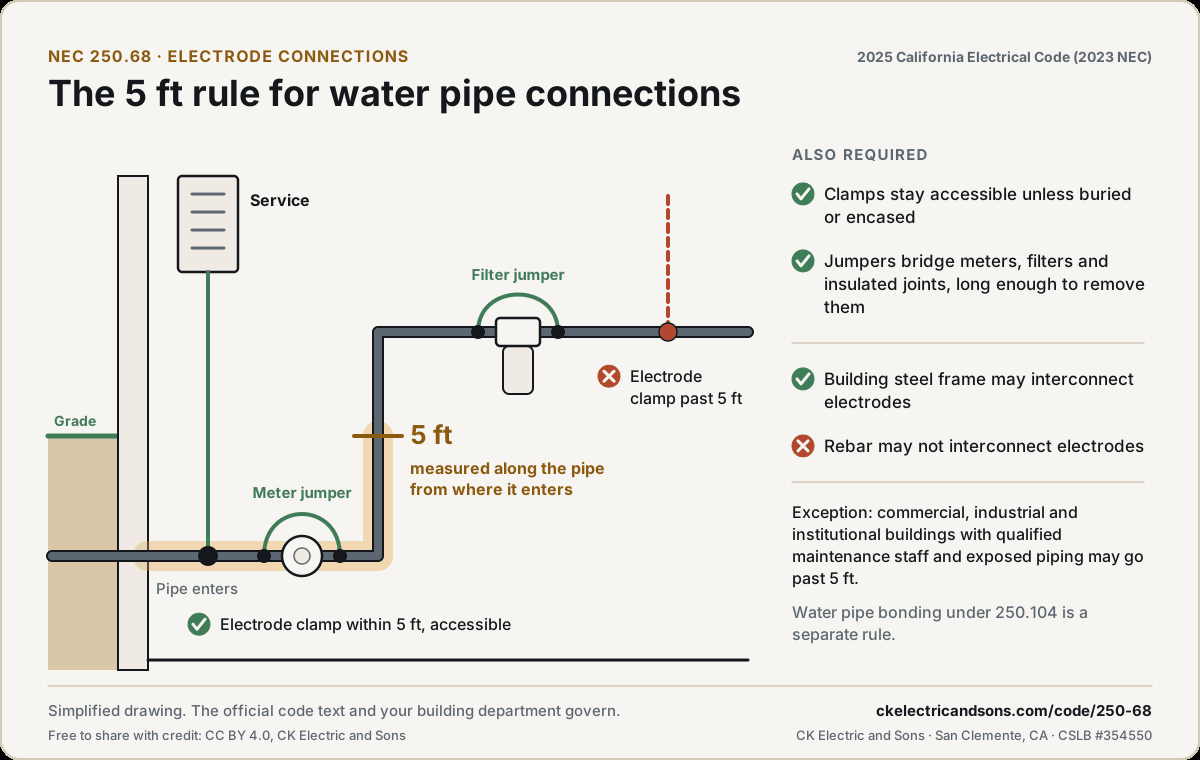
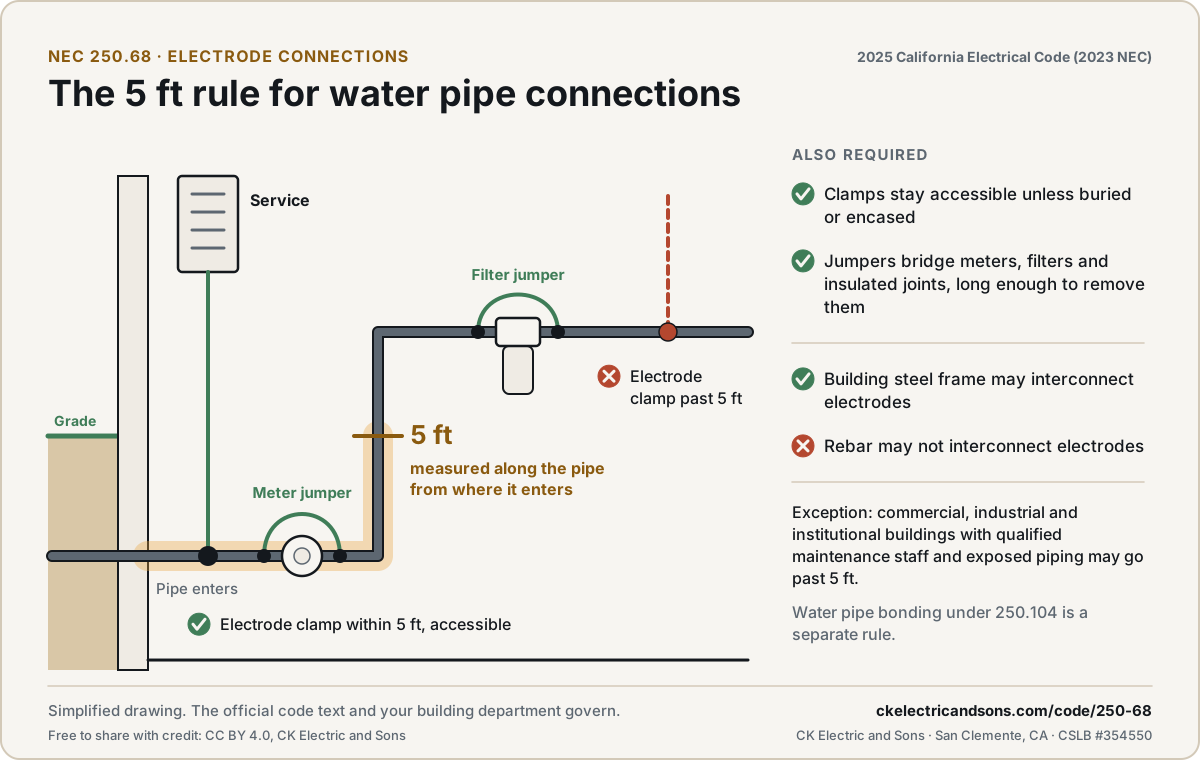 NEC 250.68: The 5 ft rule for water pipe connectionsRead the sectionSVGPNG
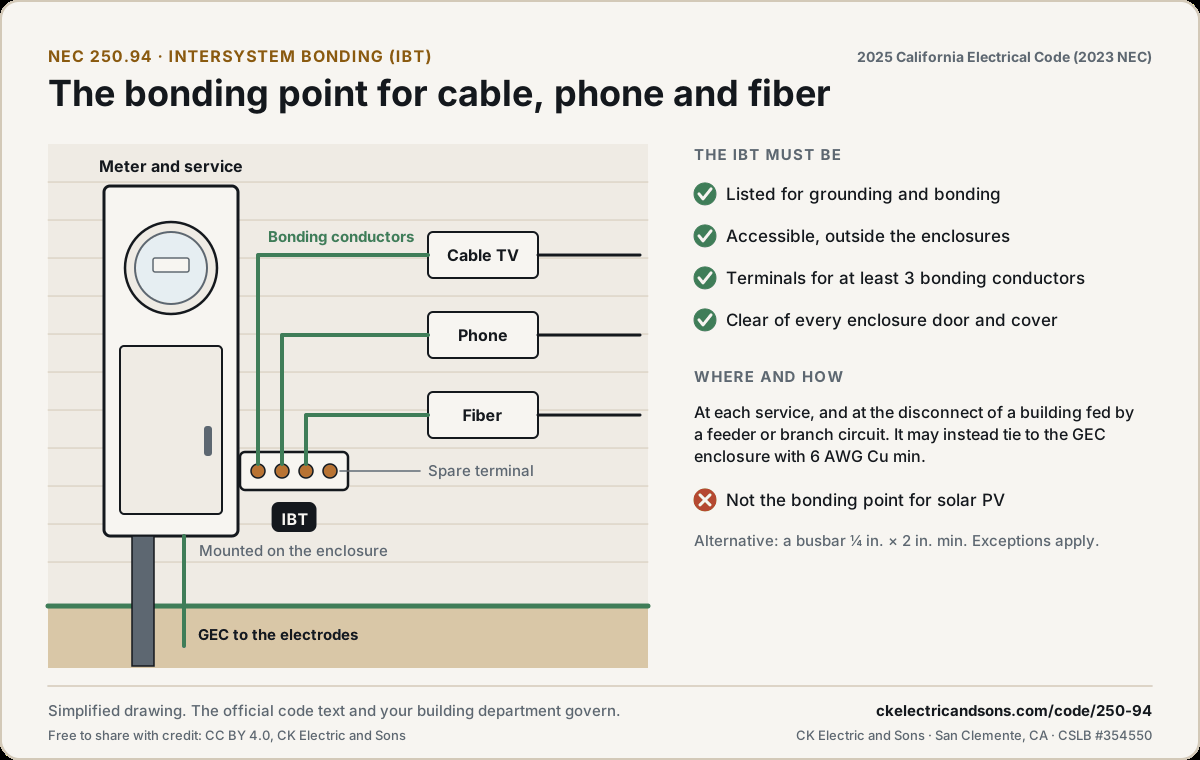
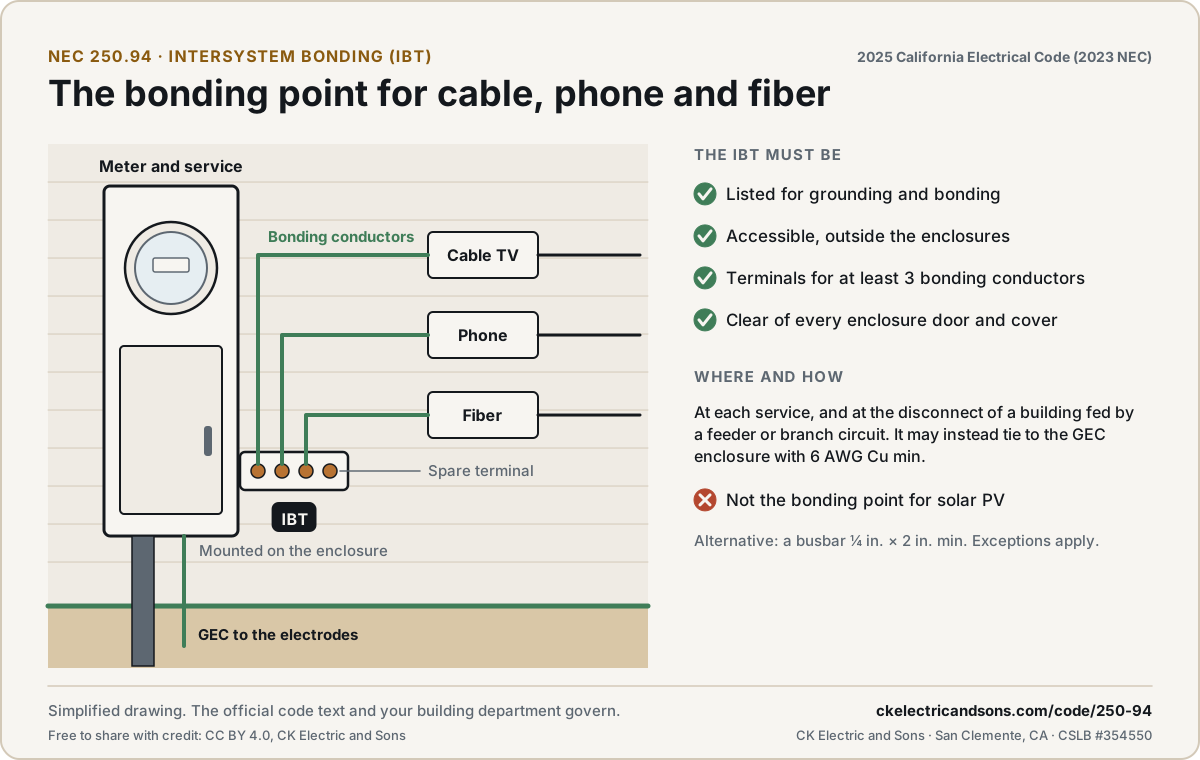 NEC 250.94: The bonding point for cable, phone and fiberRead the sectionSVGPNG
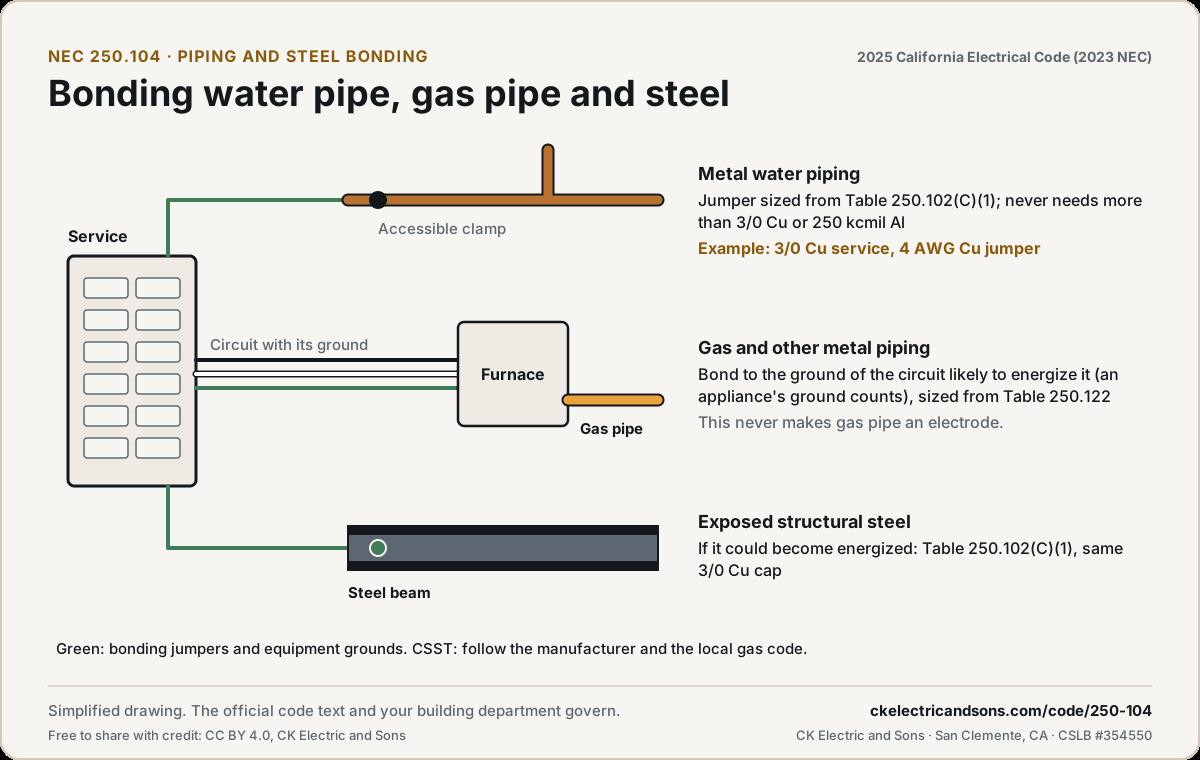
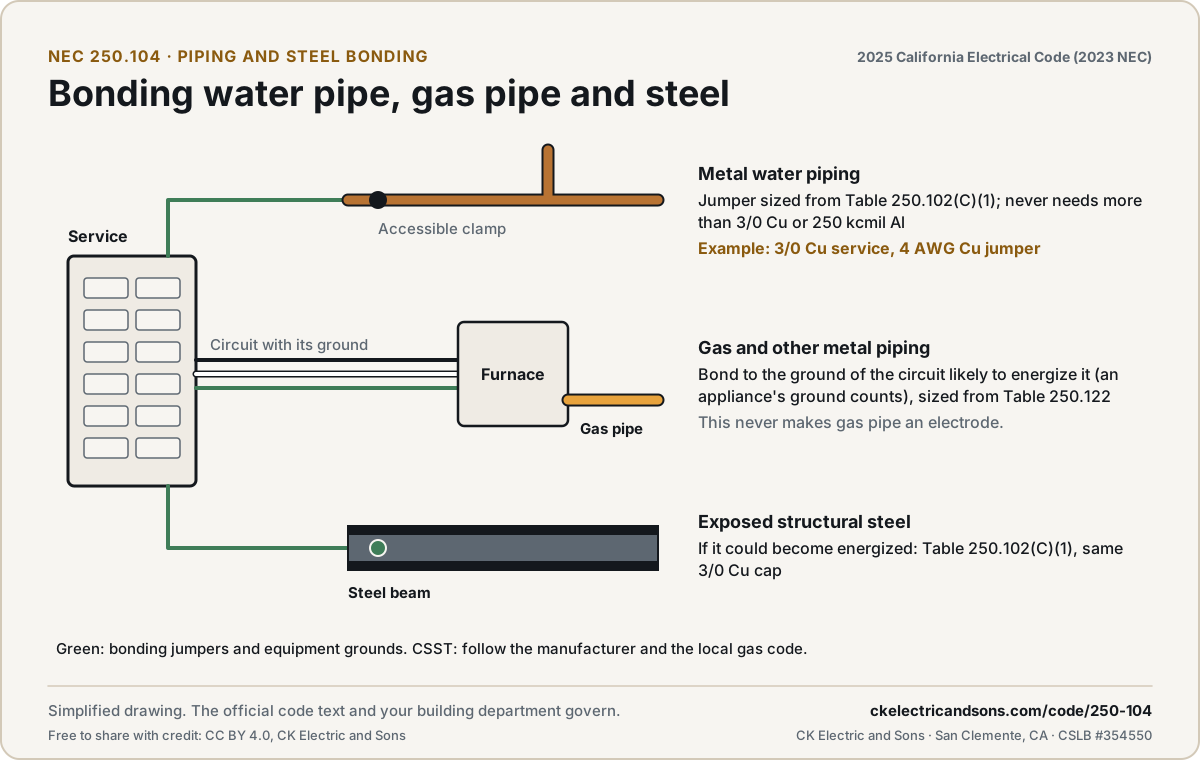 NEC 250.104: Bonding water pipe, gas pipe and steelRead the sectionSVGPNG
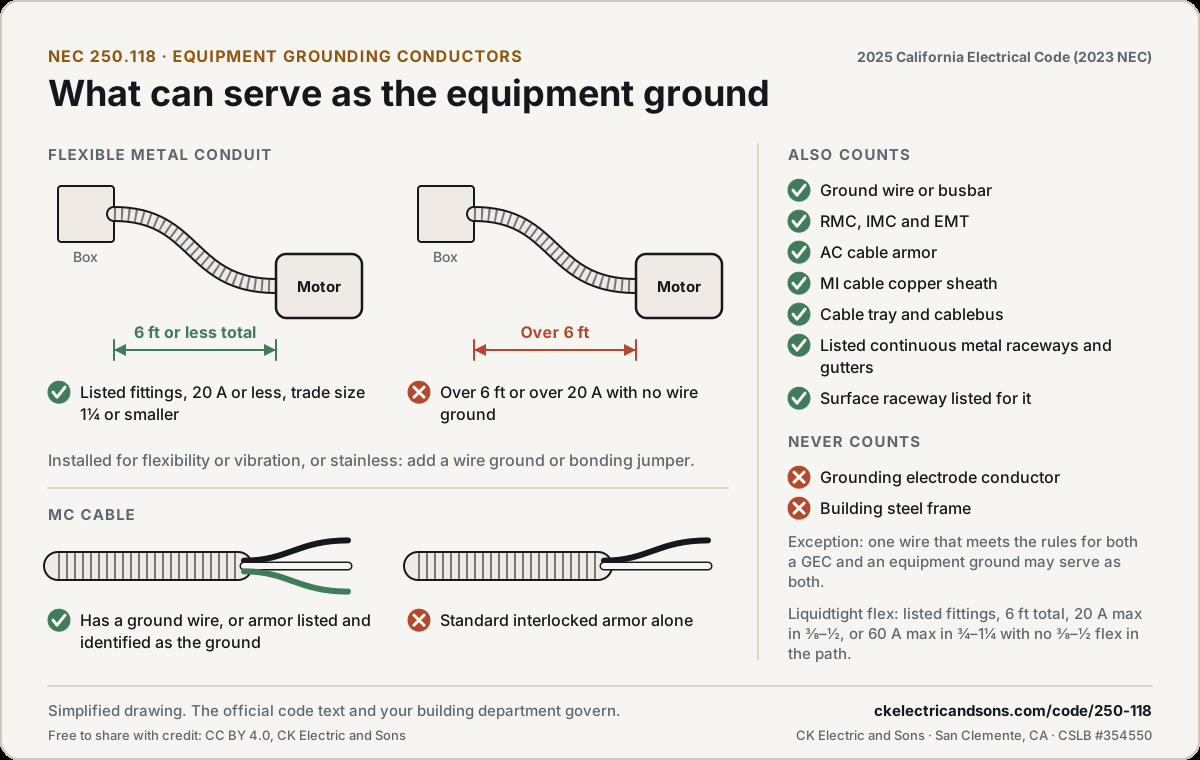
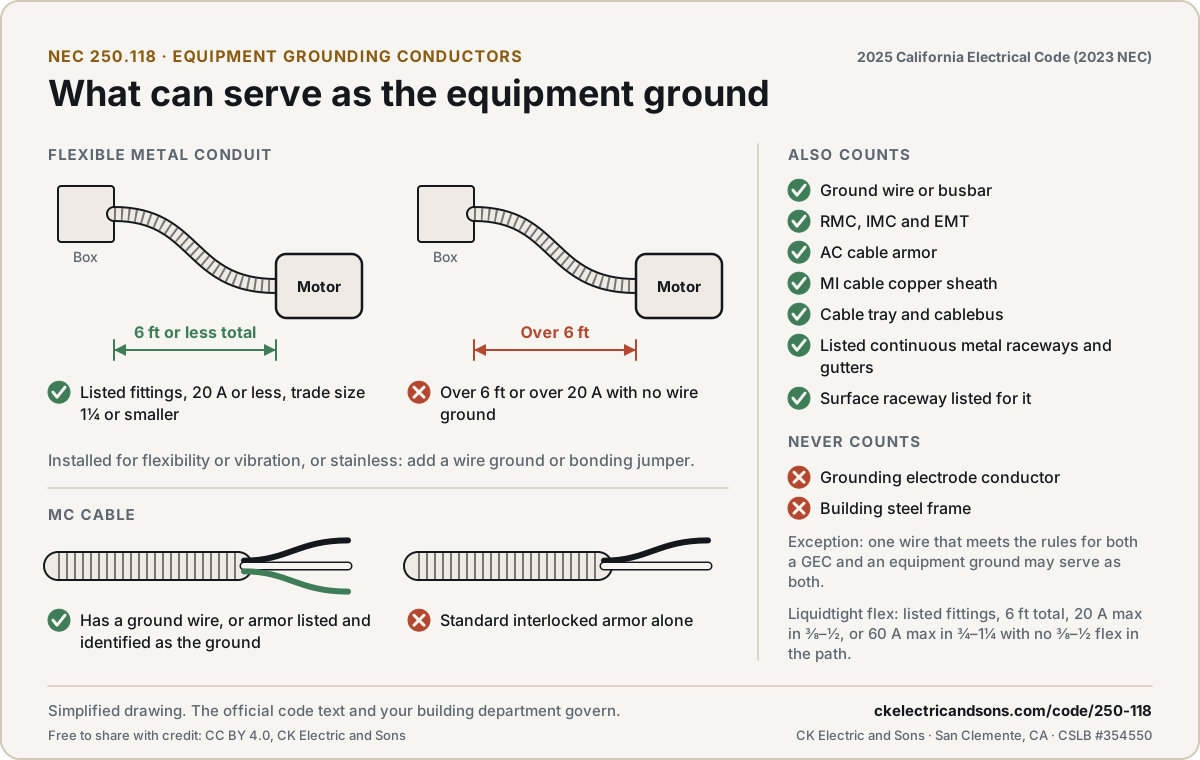 NEC 250.118: What can serve as the equipment groundRead the sectionSVGPNG
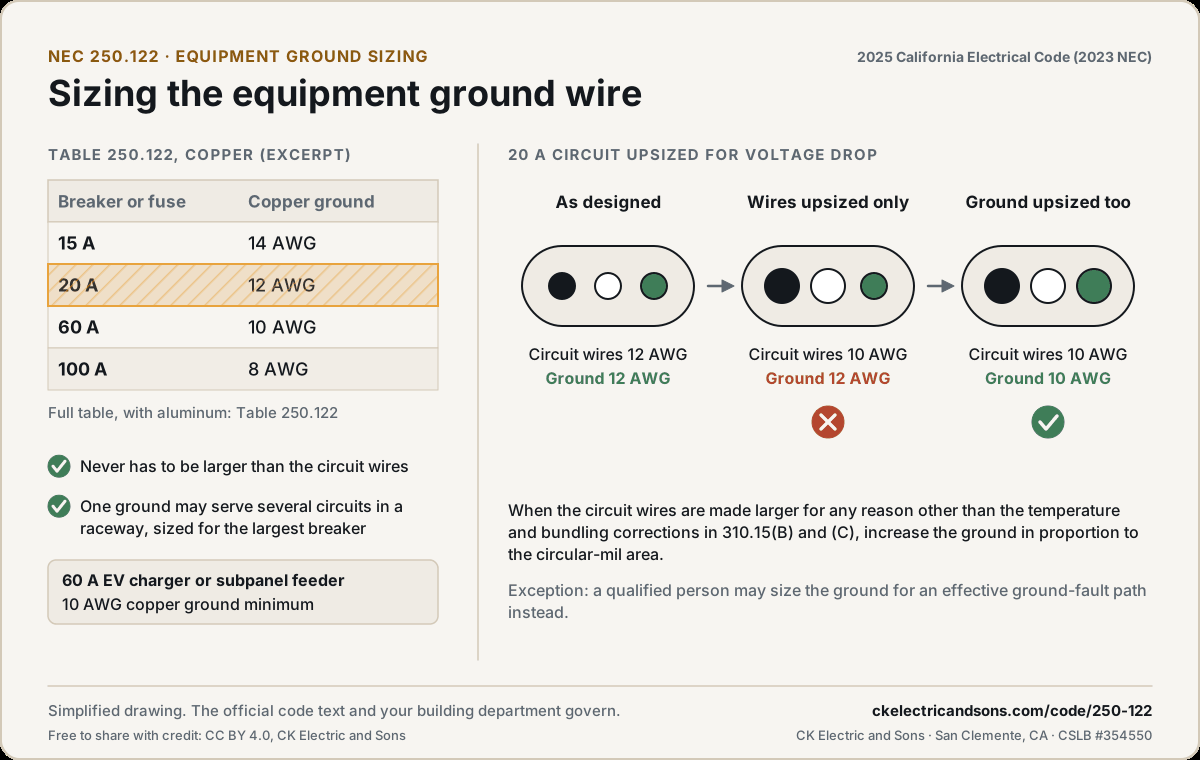
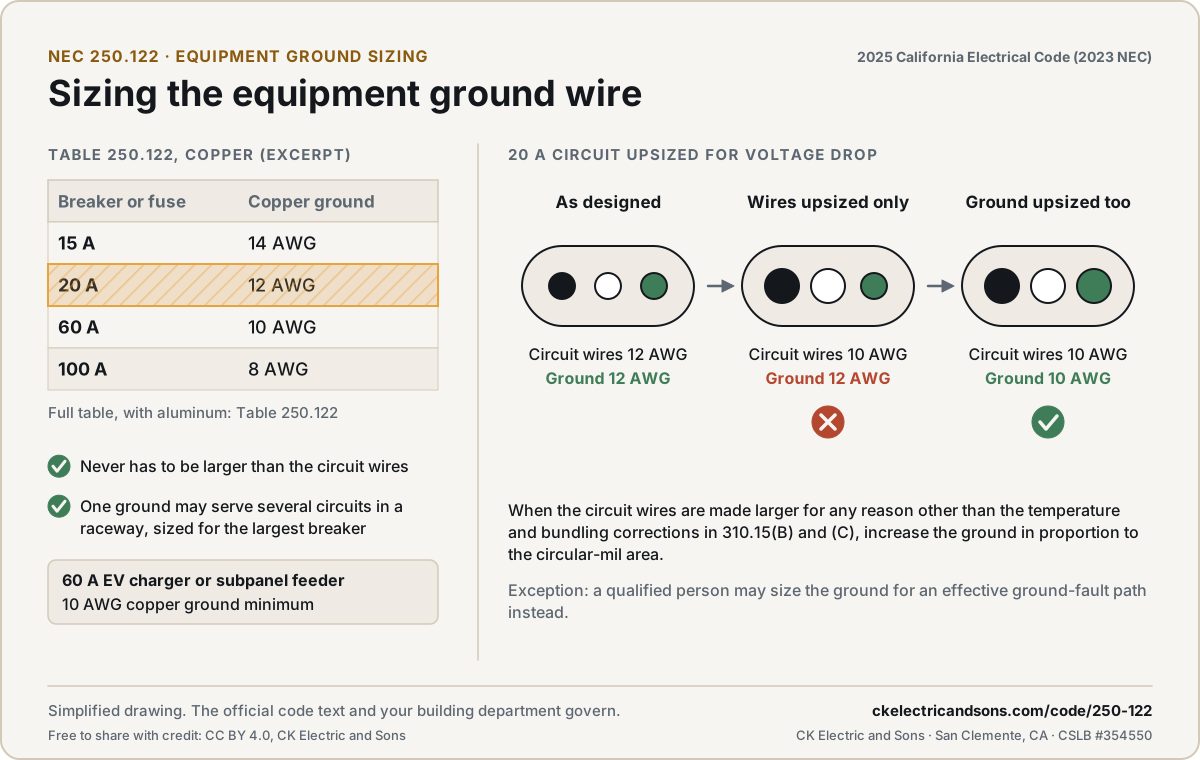 NEC 250.122: Sizing the equipment ground wireRead the sectionSVGPNG
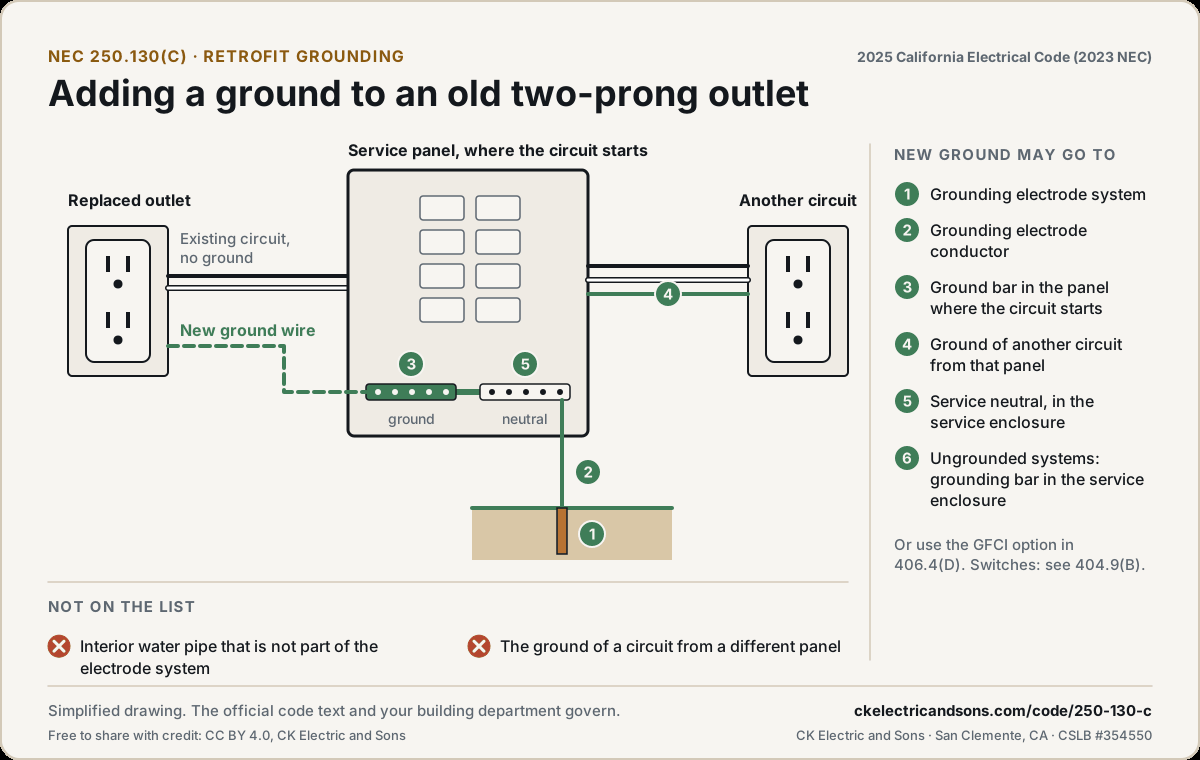
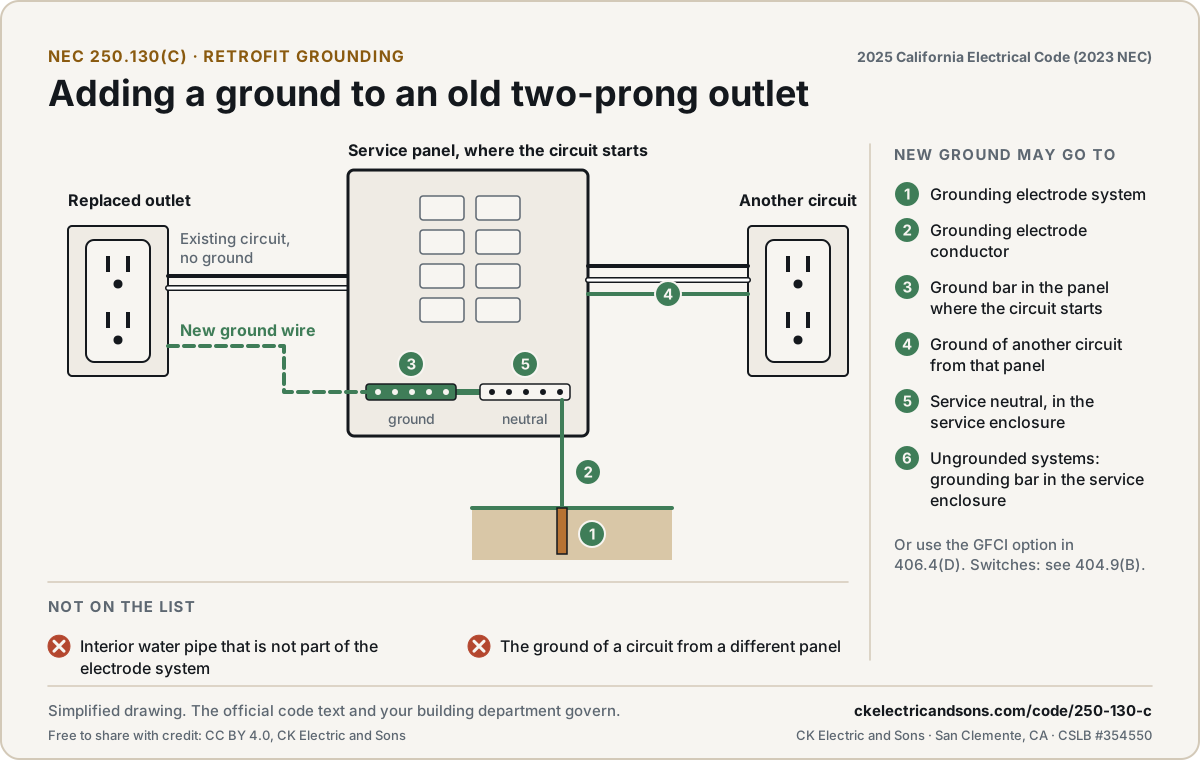 NEC 250.130(C): Adding a ground to an old two-prong outletRead the sectionSVGPNG
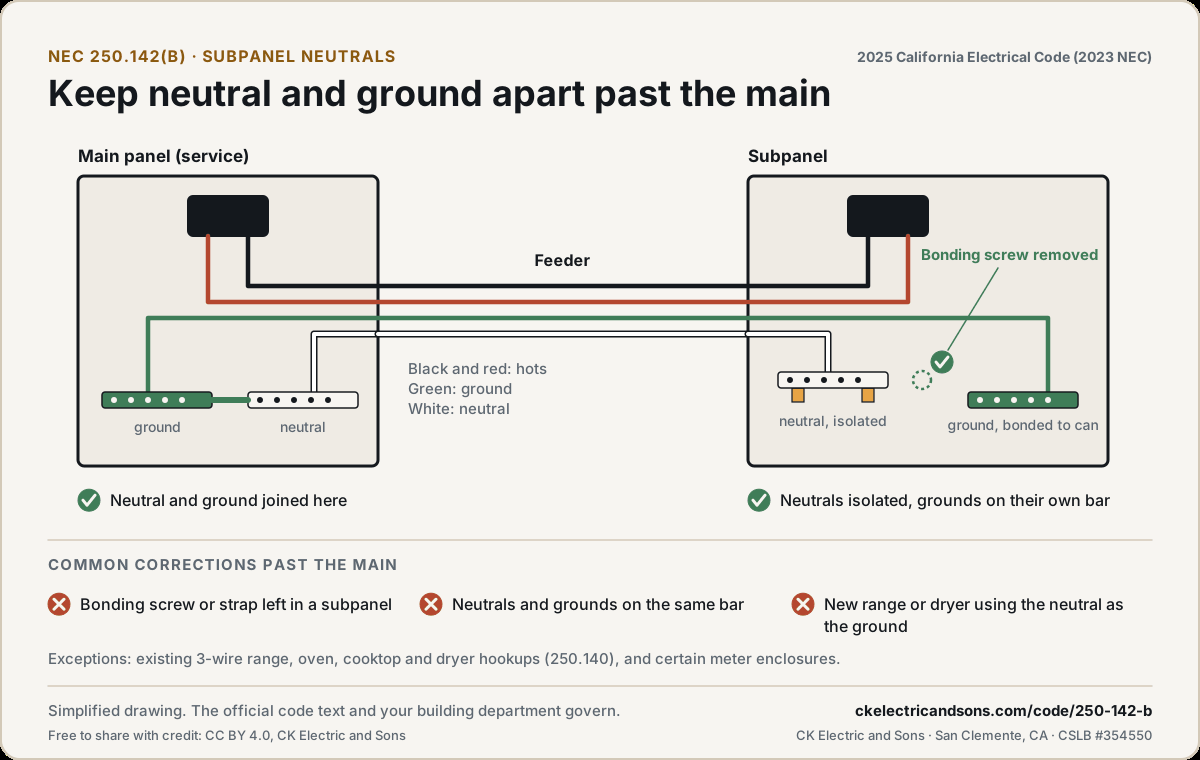
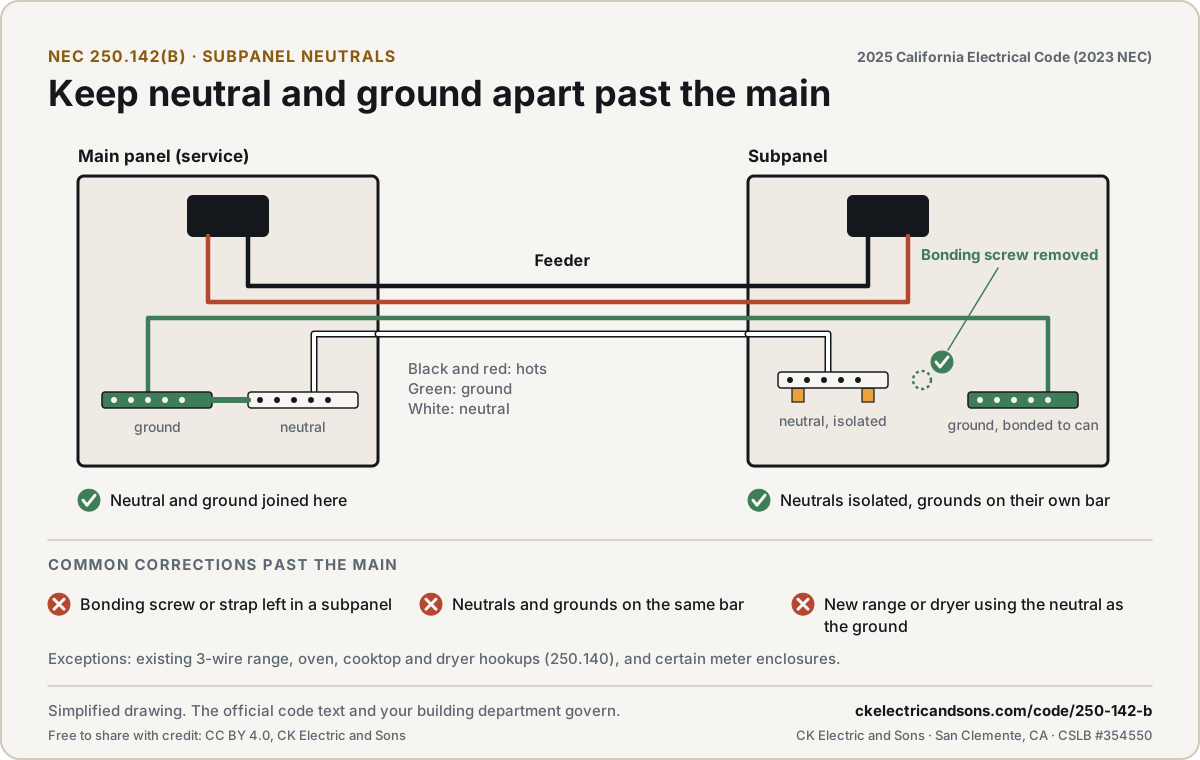 NEC 250.142(B): Keep neutral and ground apart past the mainRead the sectionSVGPNG
Wiring methods, conductors and boxes
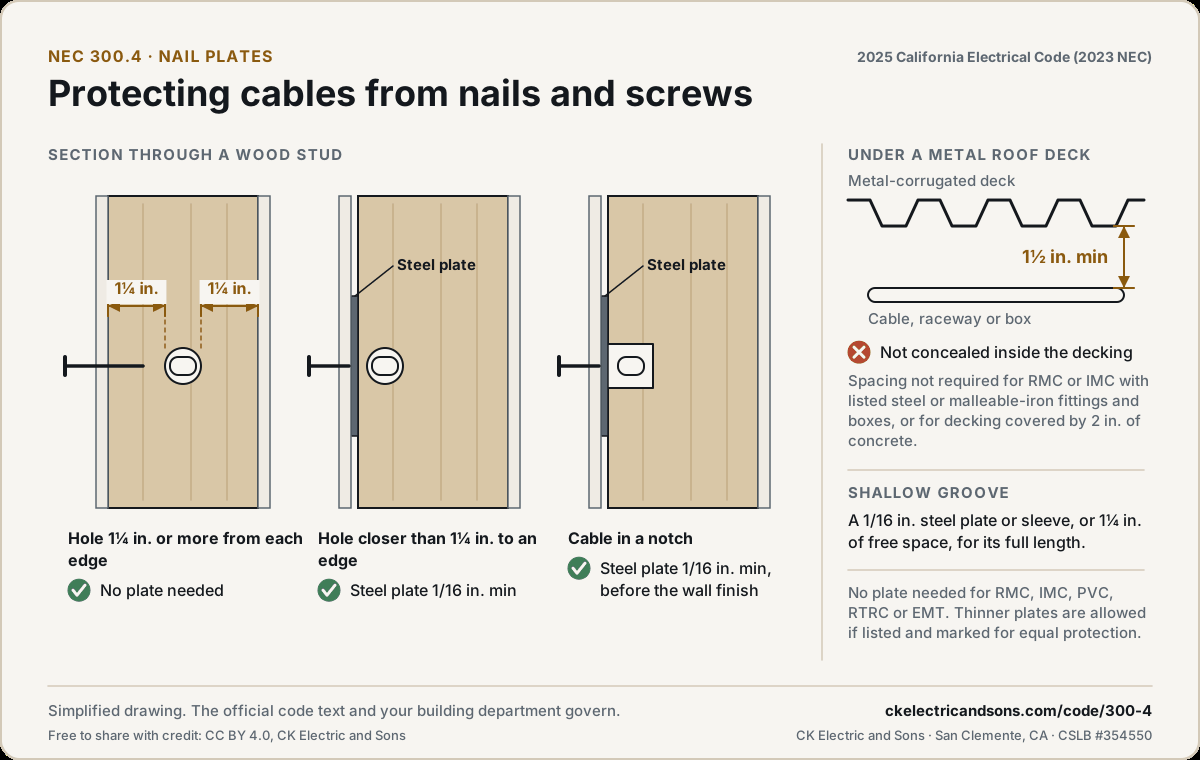
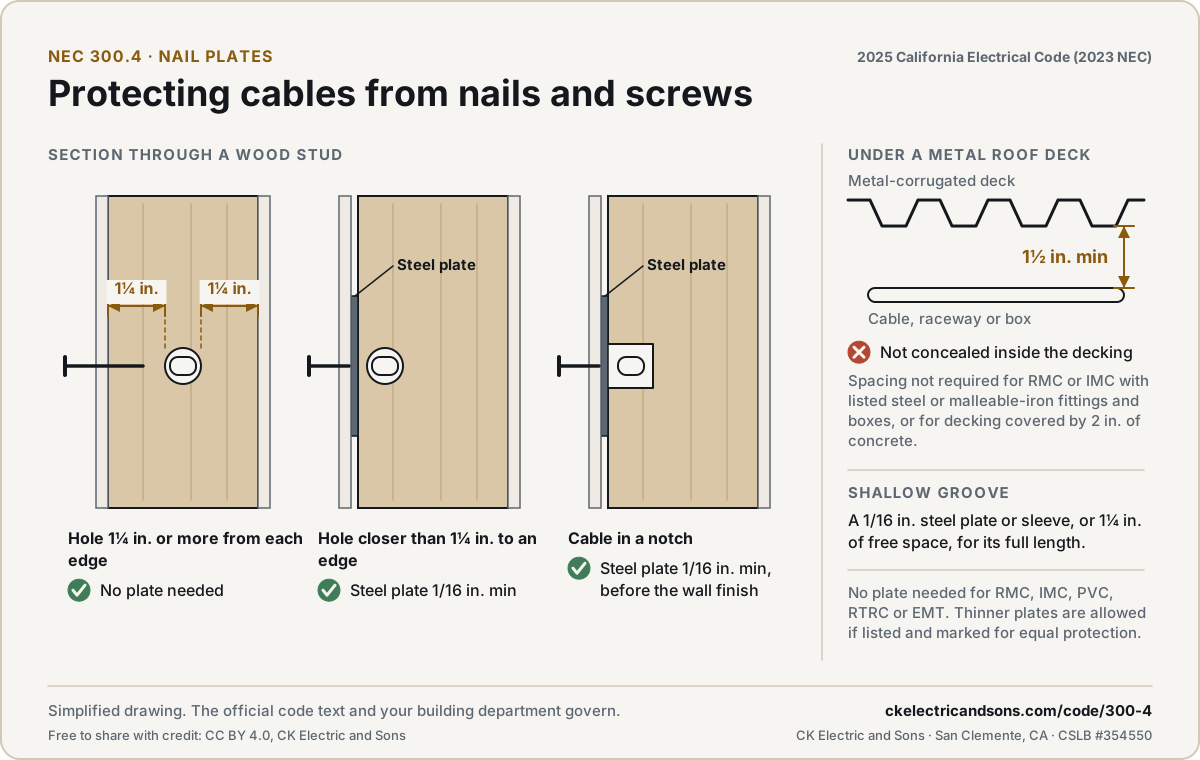 NEC 300.4: Protecting cables from nails and screwsRead the sectionSVGPNG
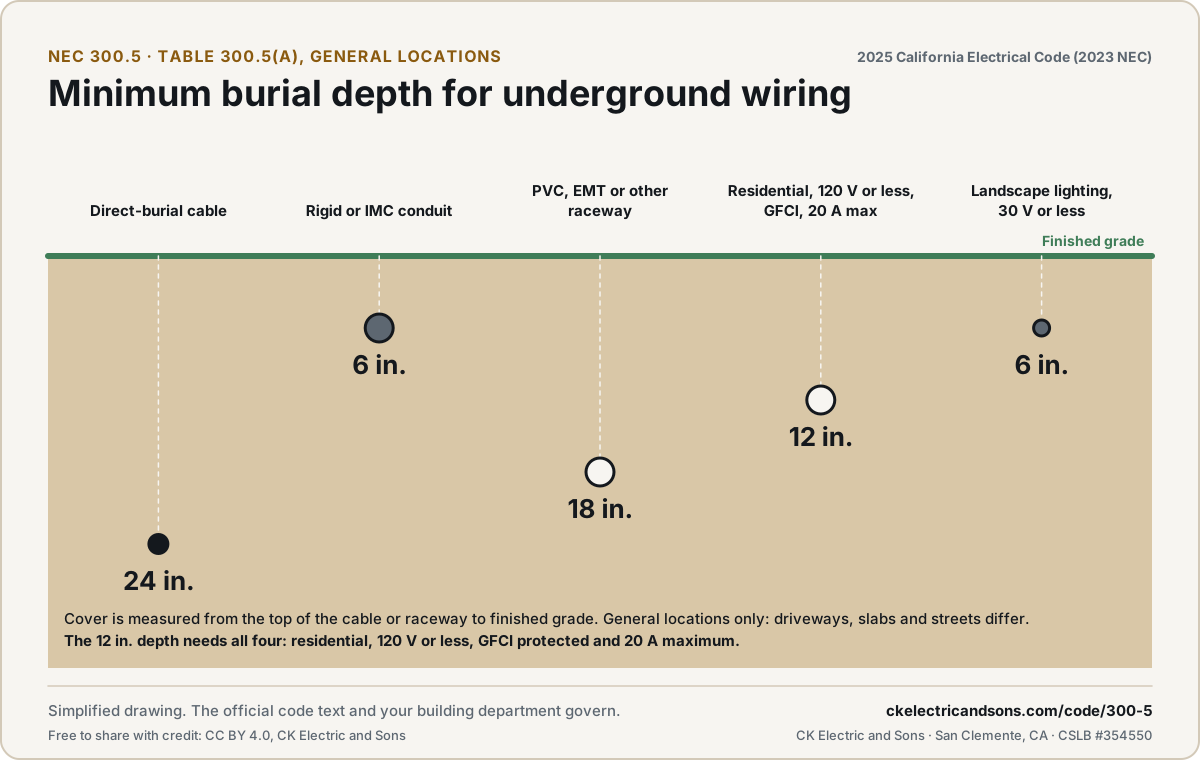 NEC 300.5: Minimum burial depth for underground wiringRead the sectionSVGPNG
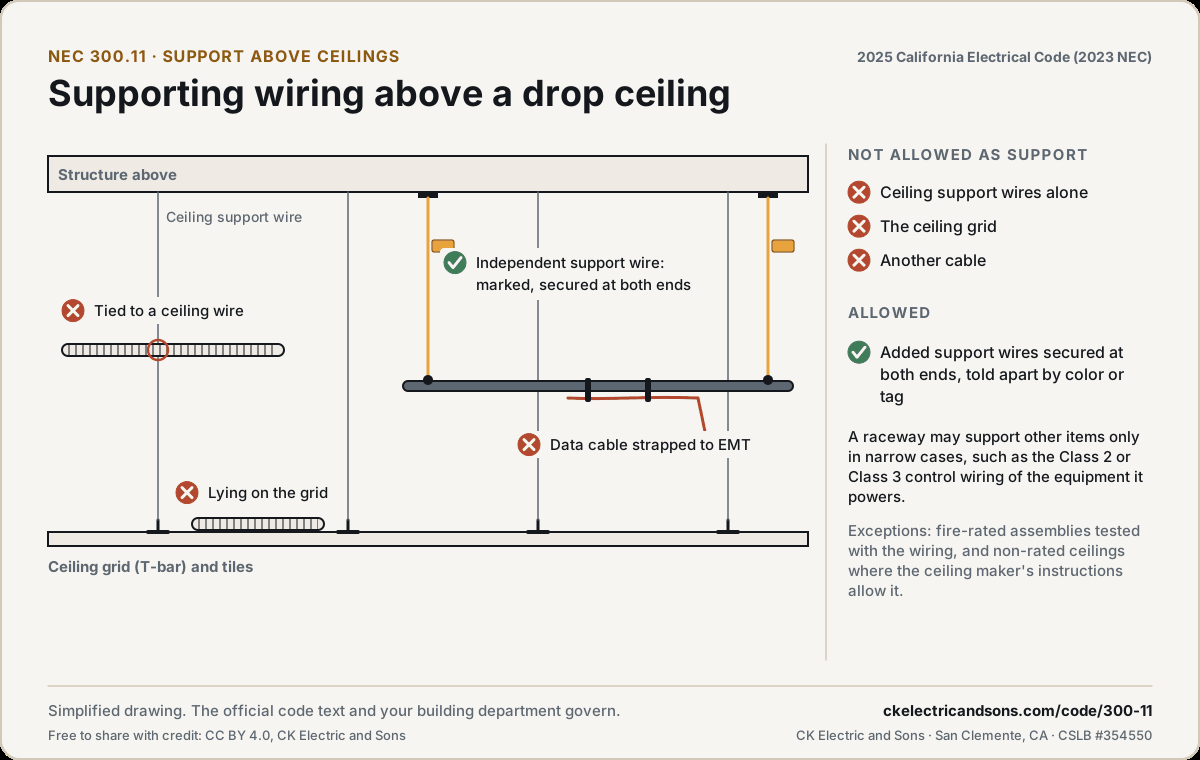
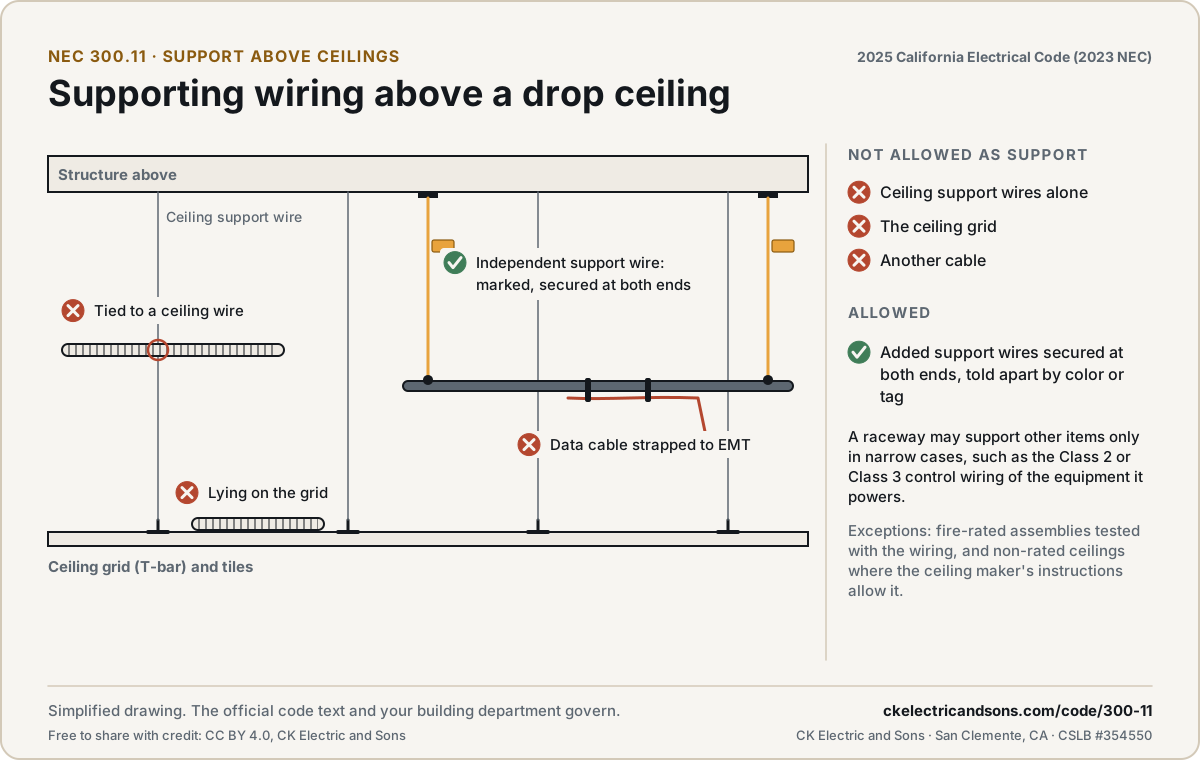 NEC 300.11: Supporting wiring above a drop ceilingRead the sectionSVGPNG
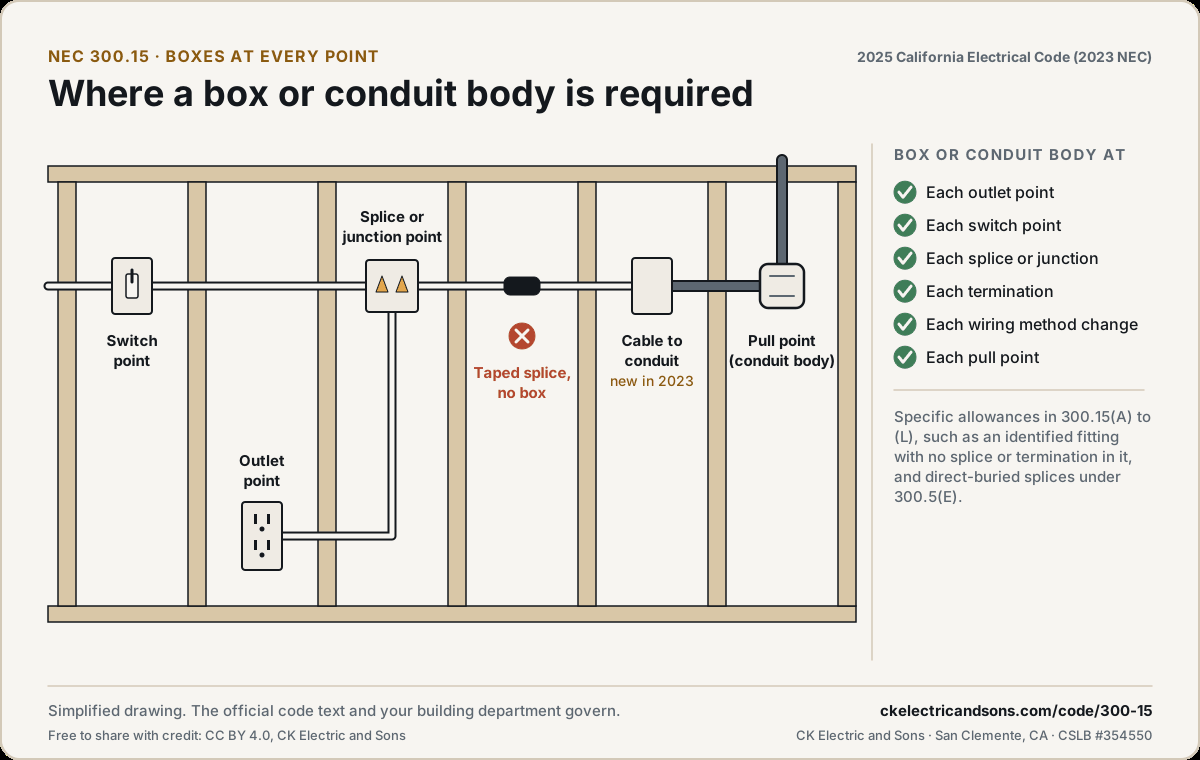
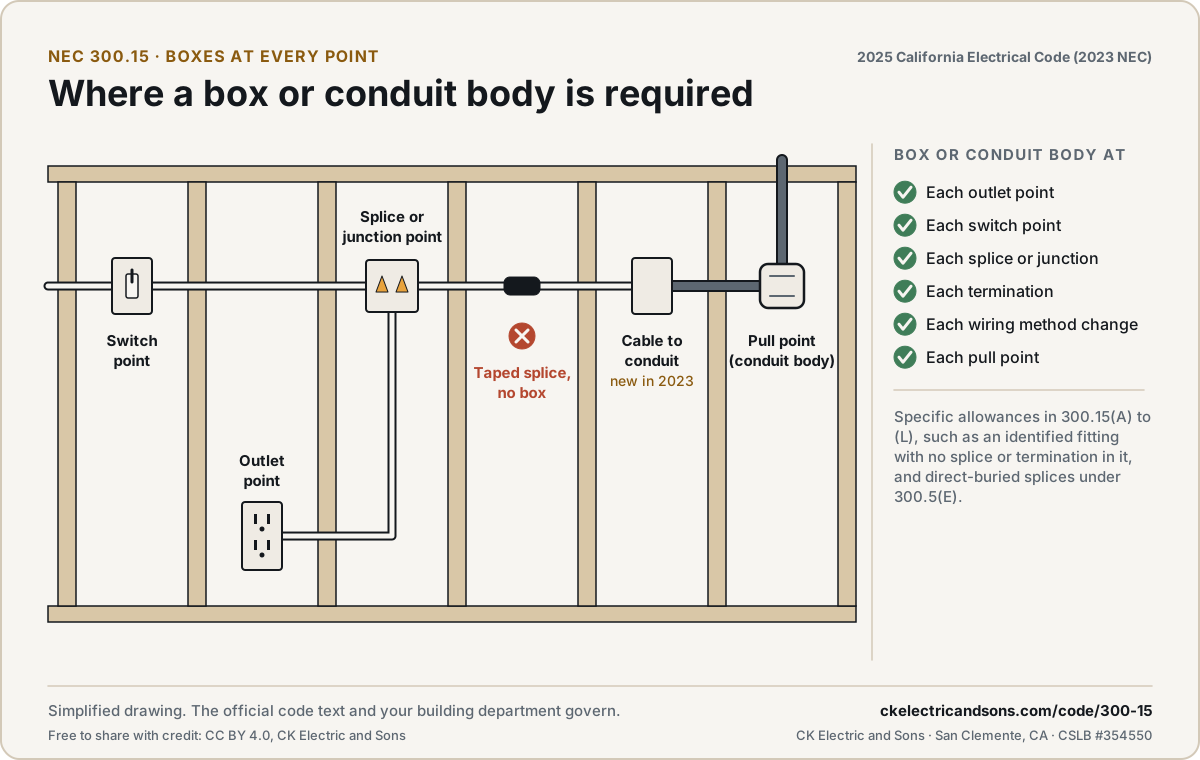 NEC 300.15: Where a box or conduit body is requiredRead the sectionSVGPNG
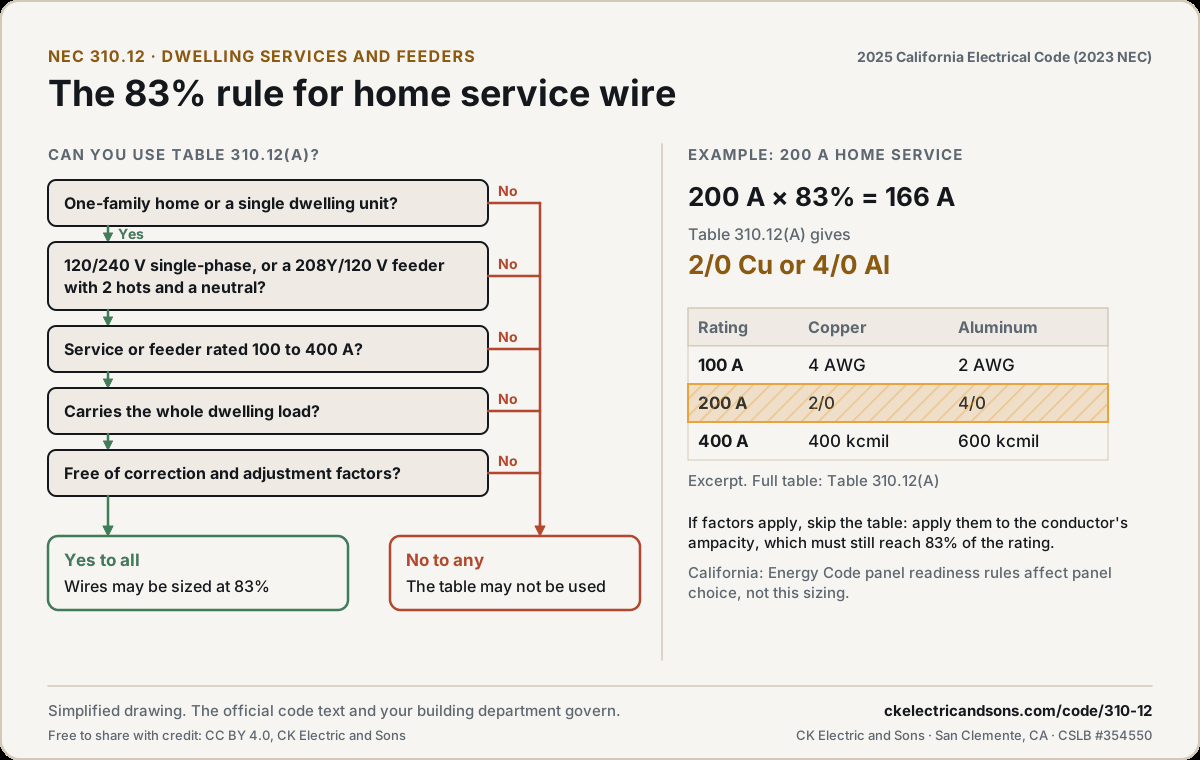
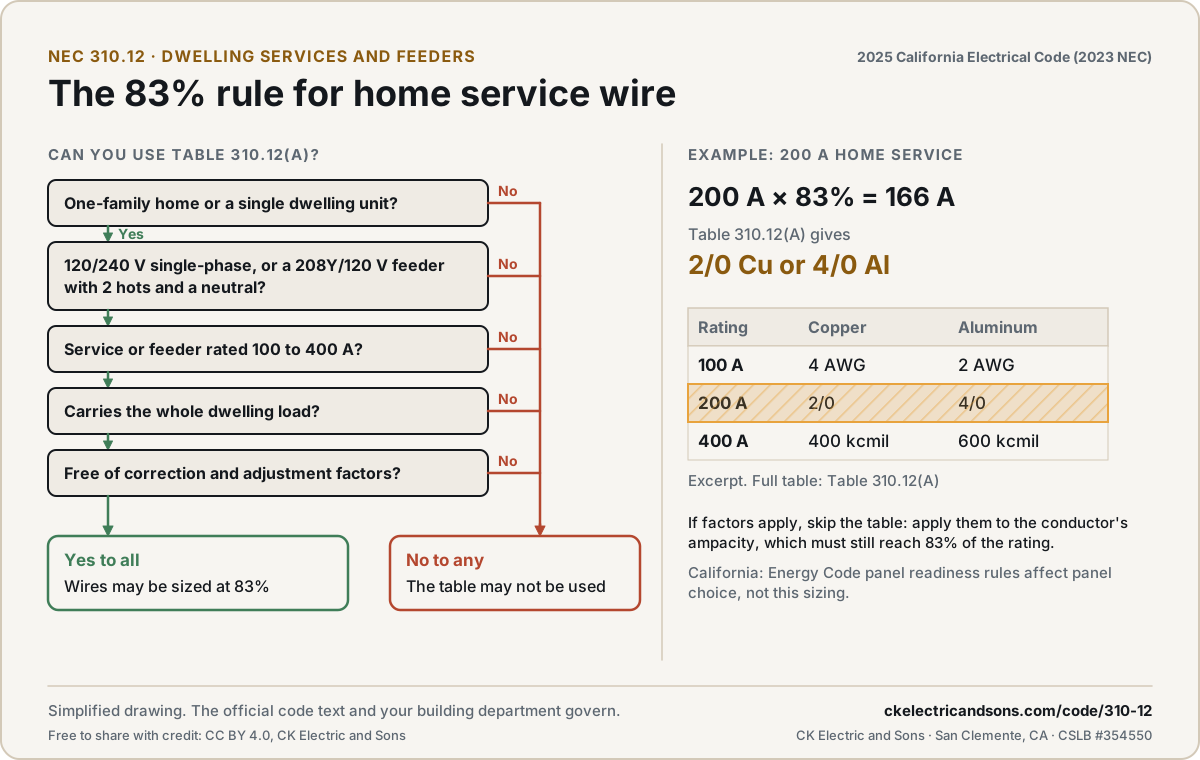 NEC 310.12: The 83% rule for home service wireRead the sectionSVGPNG
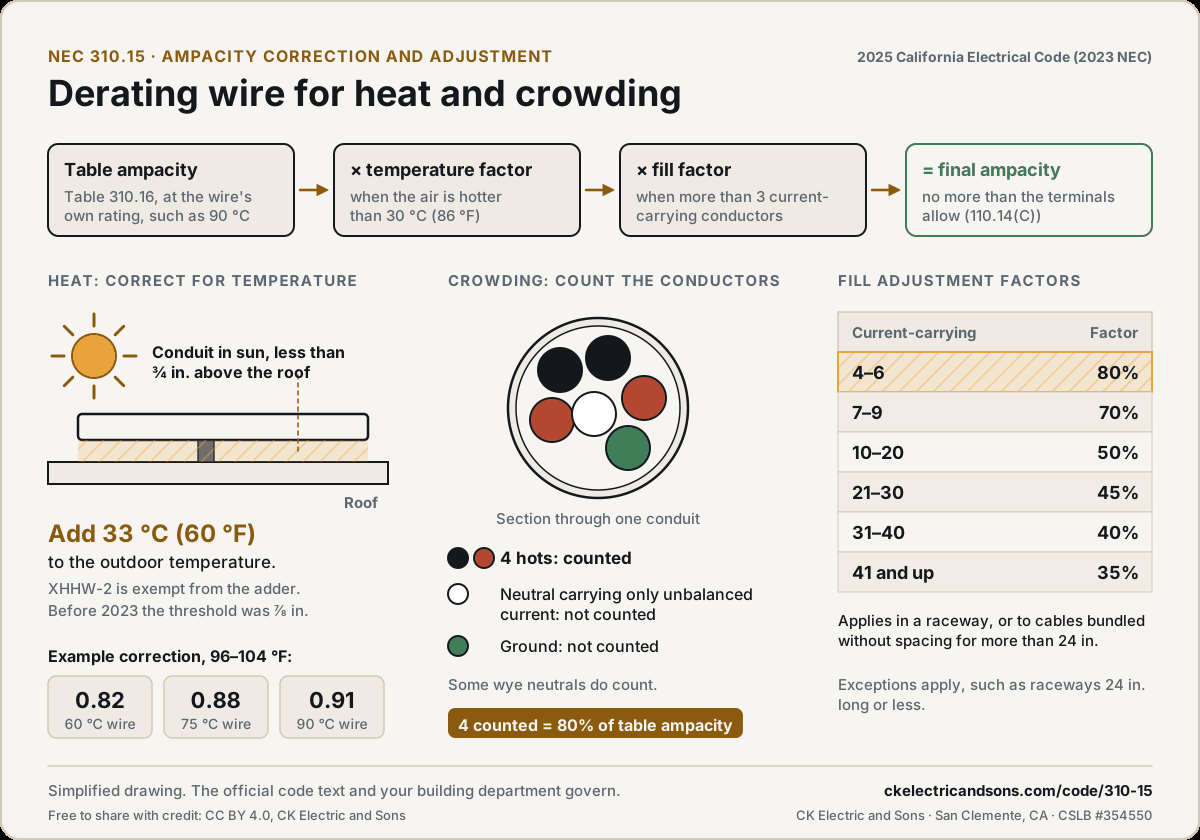
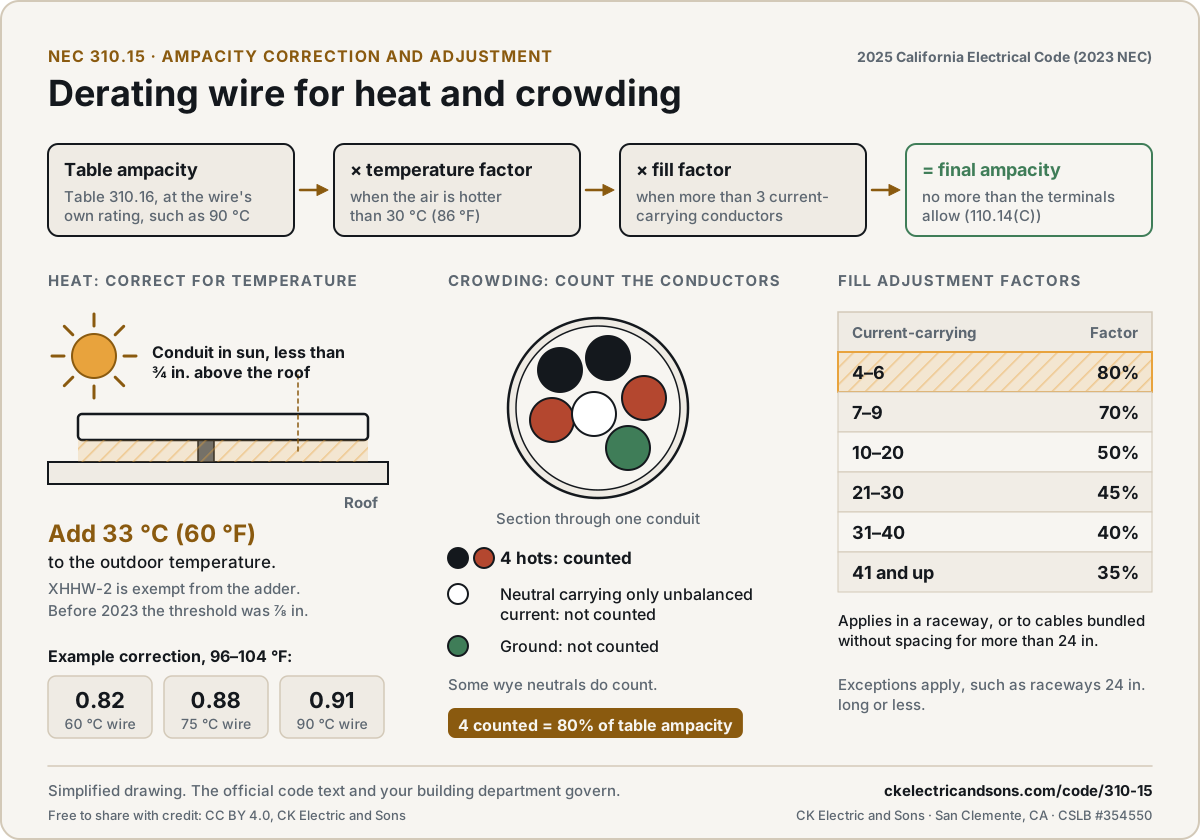 NEC 310.15: Derating wire for heat and crowdingRead the sectionSVGPNG
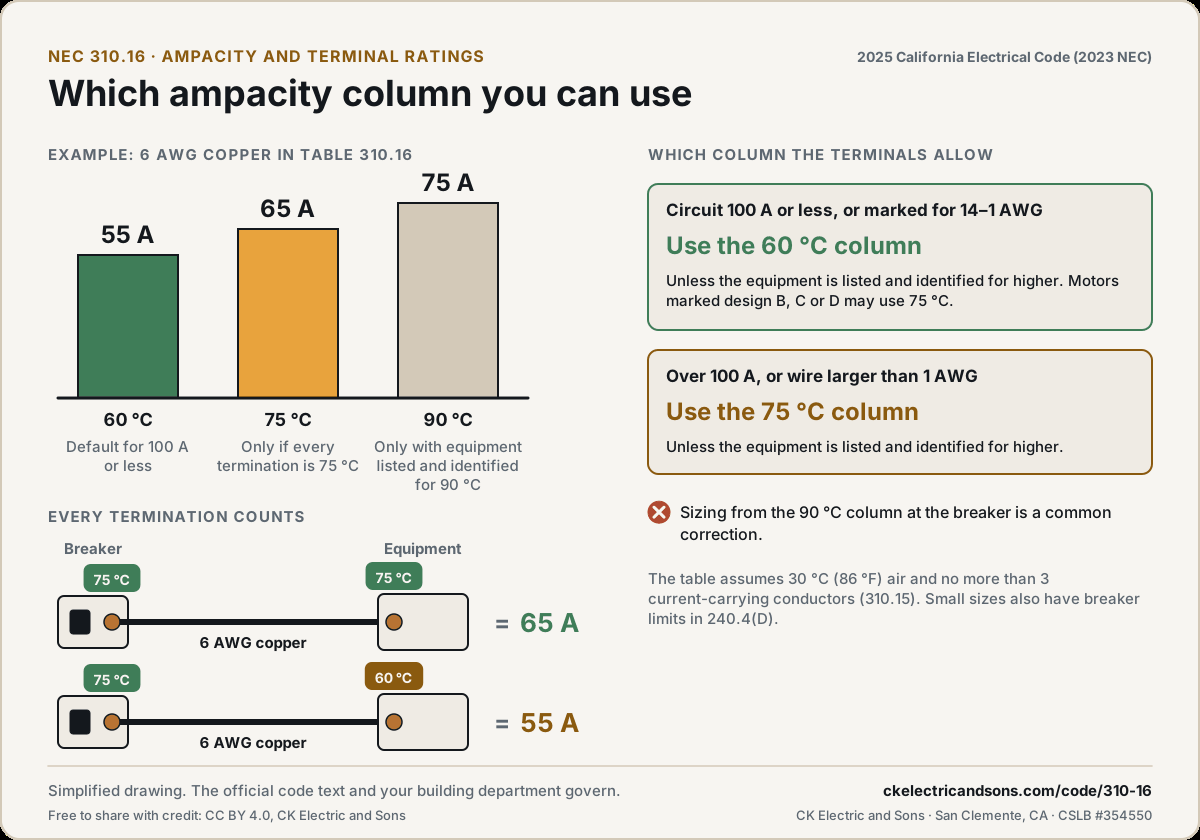
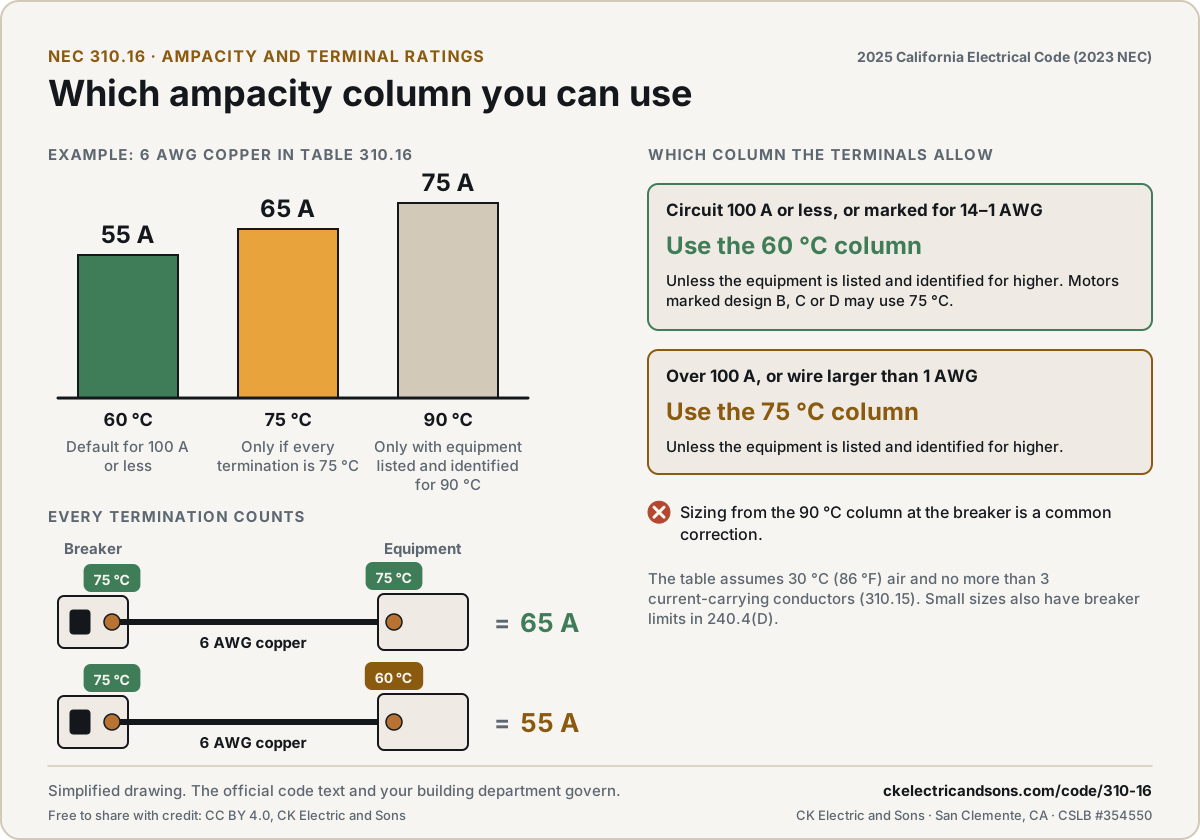 NEC 310.16: Which ampacity column you can useRead the sectionSVGPNG
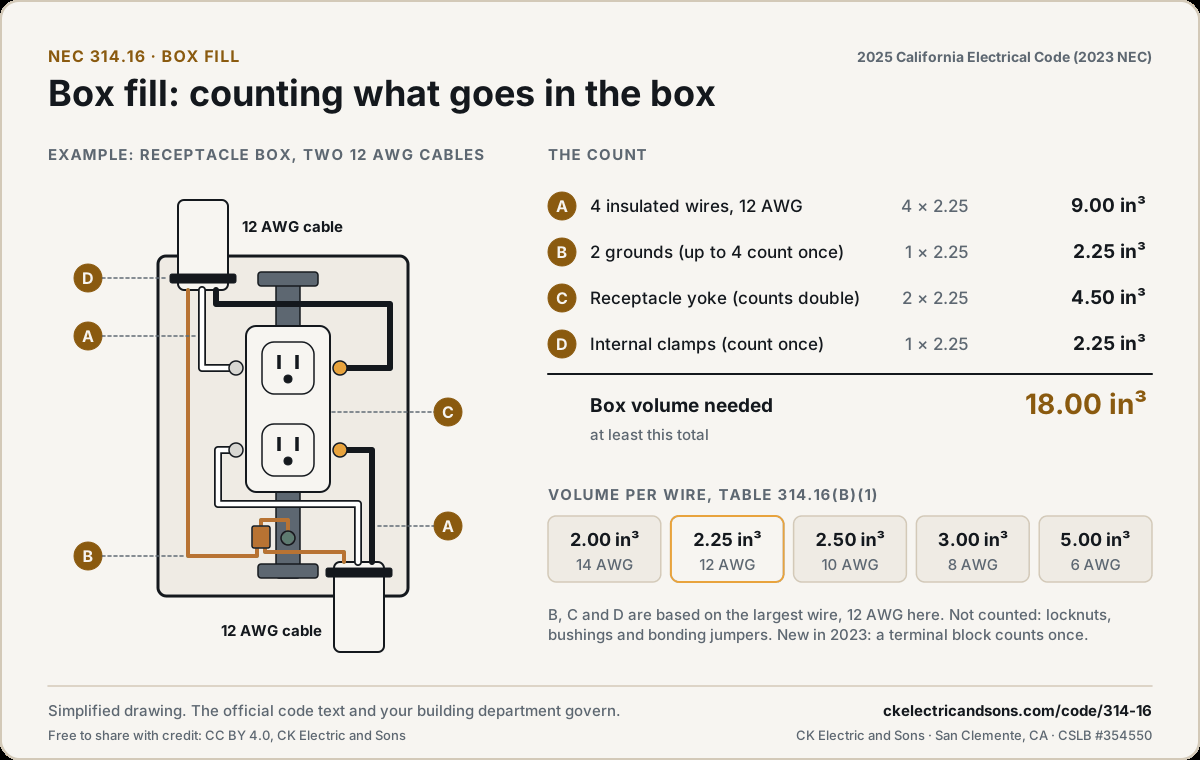
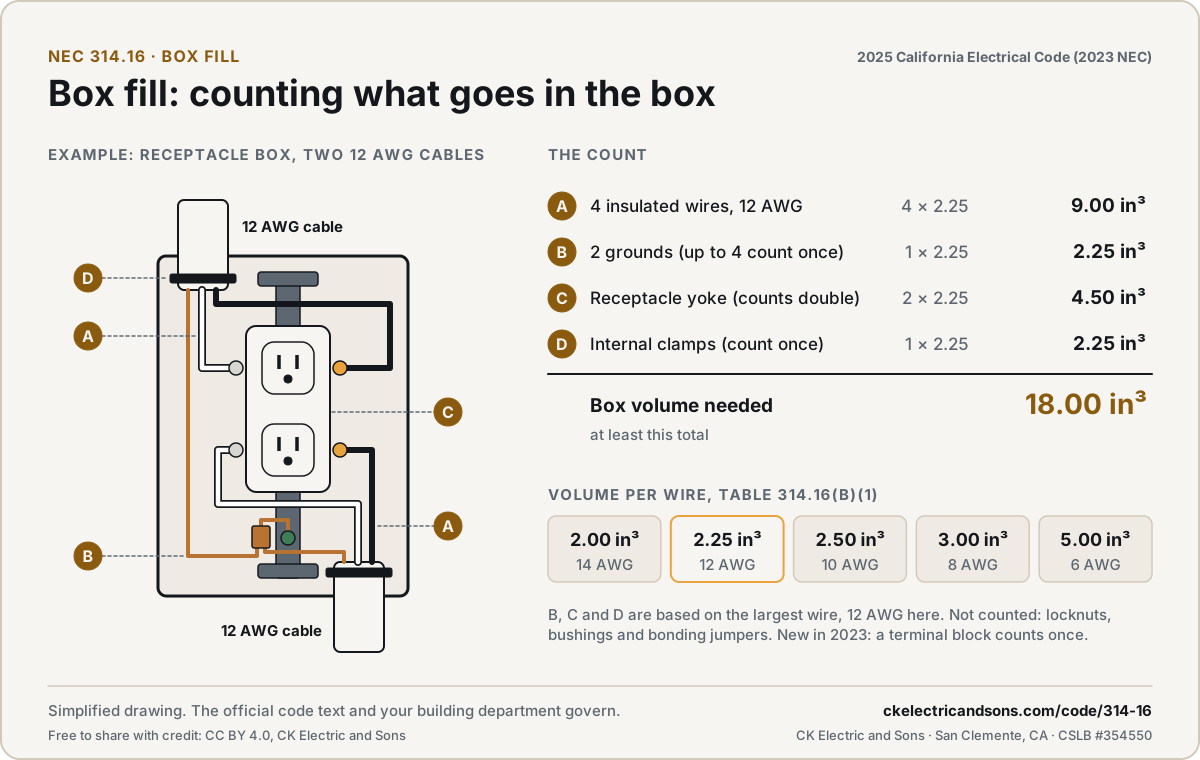 NEC 314.16: Box fill: counting what goes in the boxRead the sectionSVGPNG
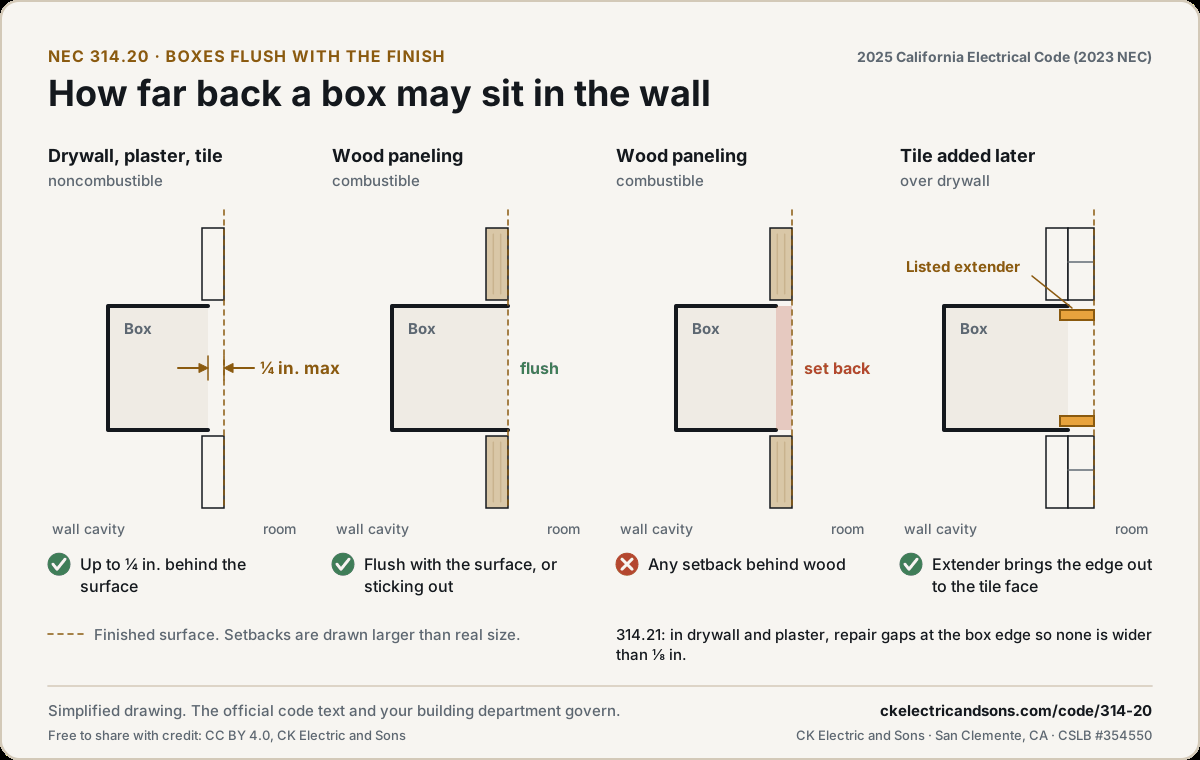
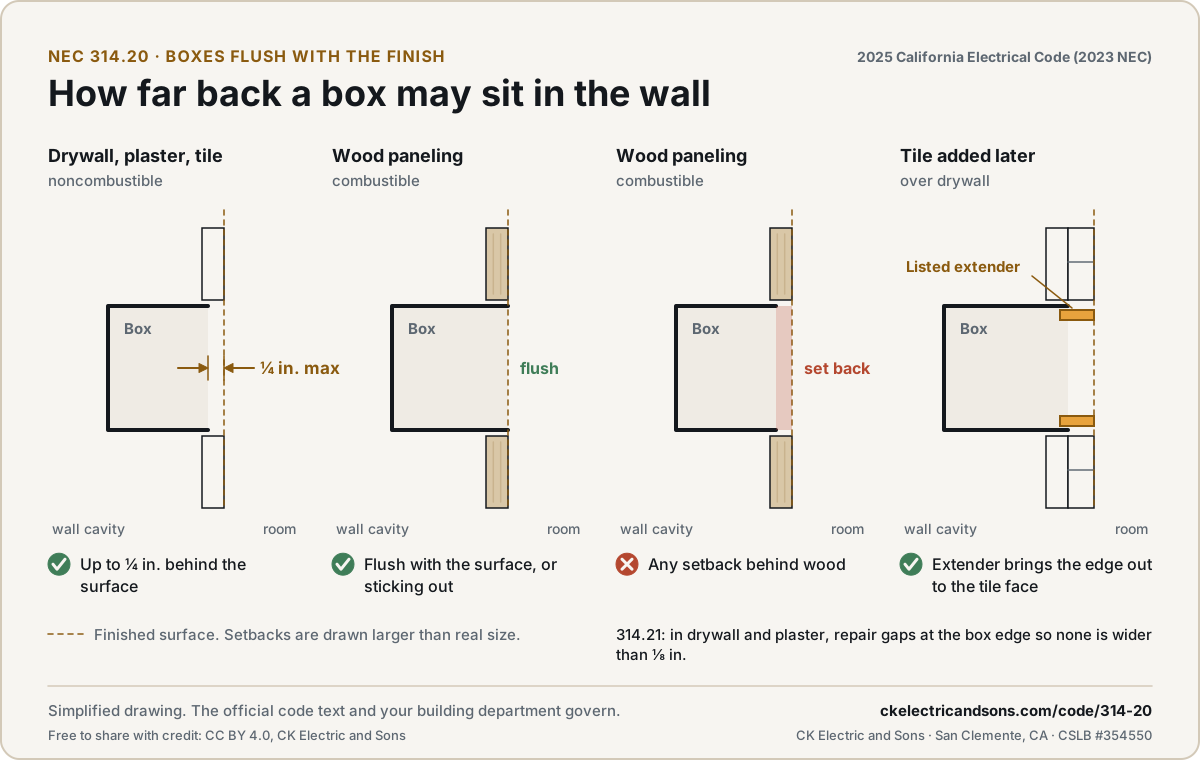 NEC 314.20: How far back a box may sit in the wallRead the sectionSVGPNG
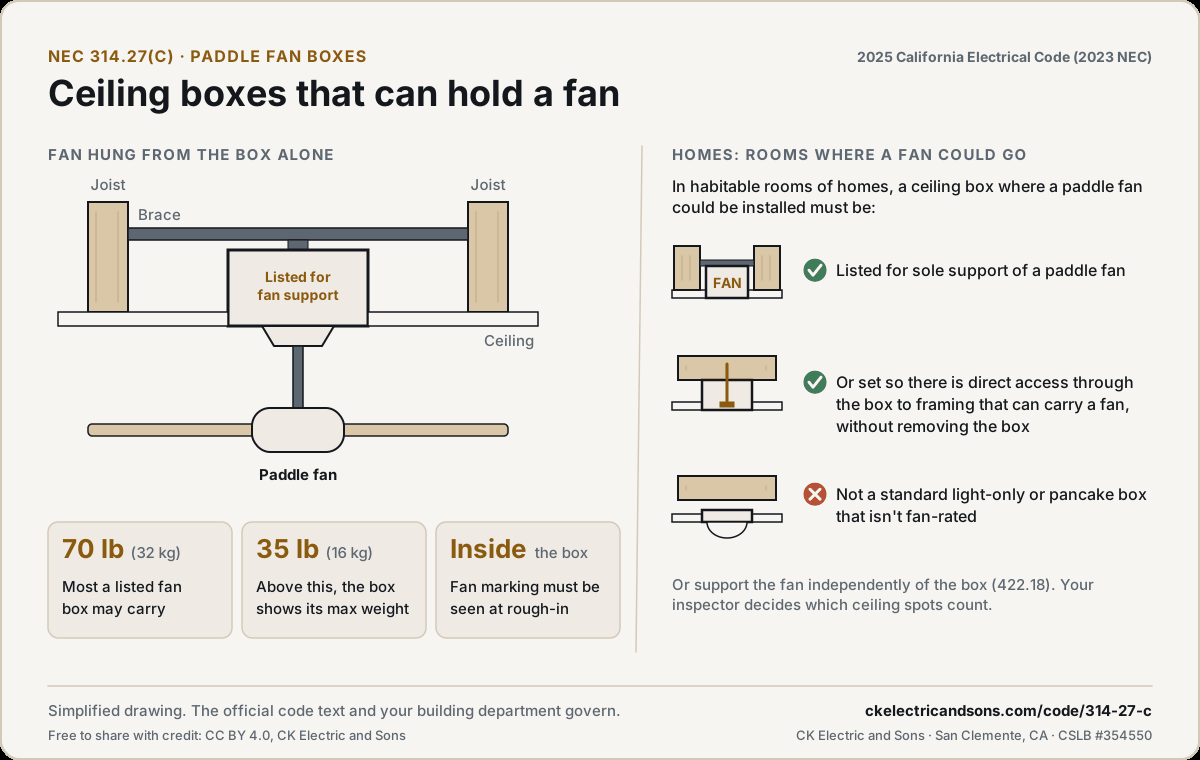
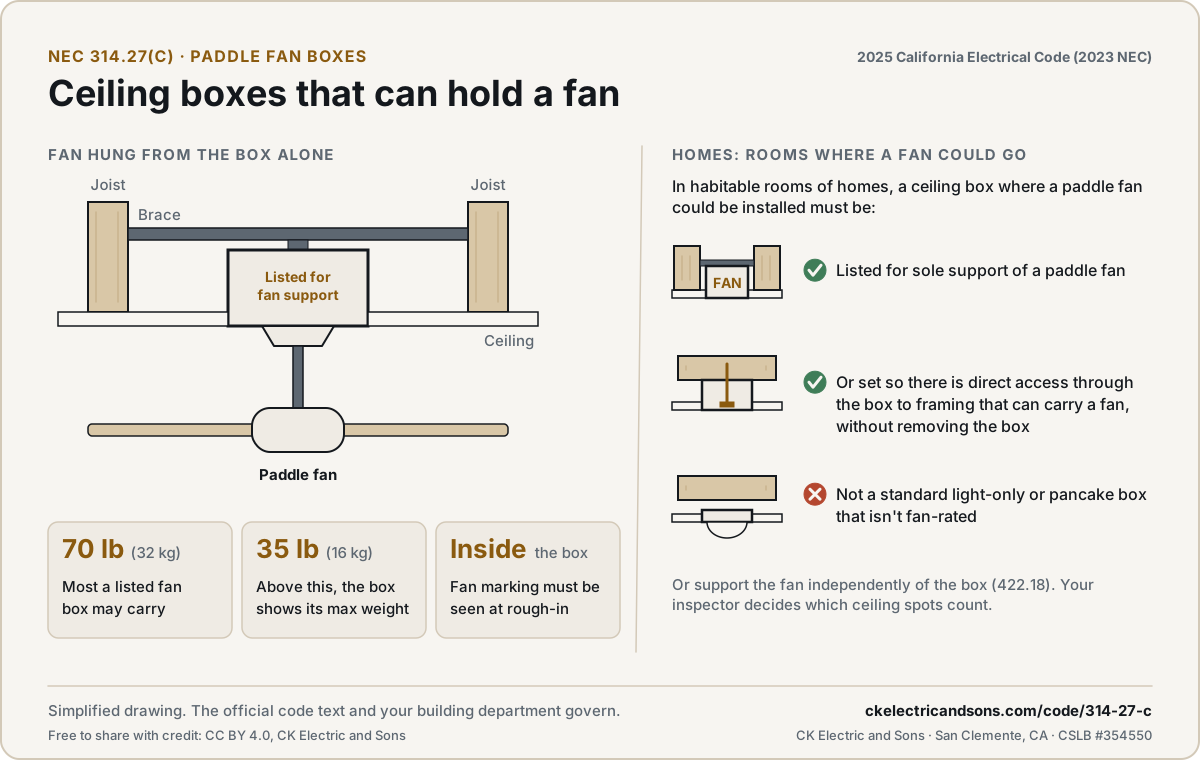 NEC 314.27(C): Ceiling boxes that can hold a fanRead the sectionSVGPNG
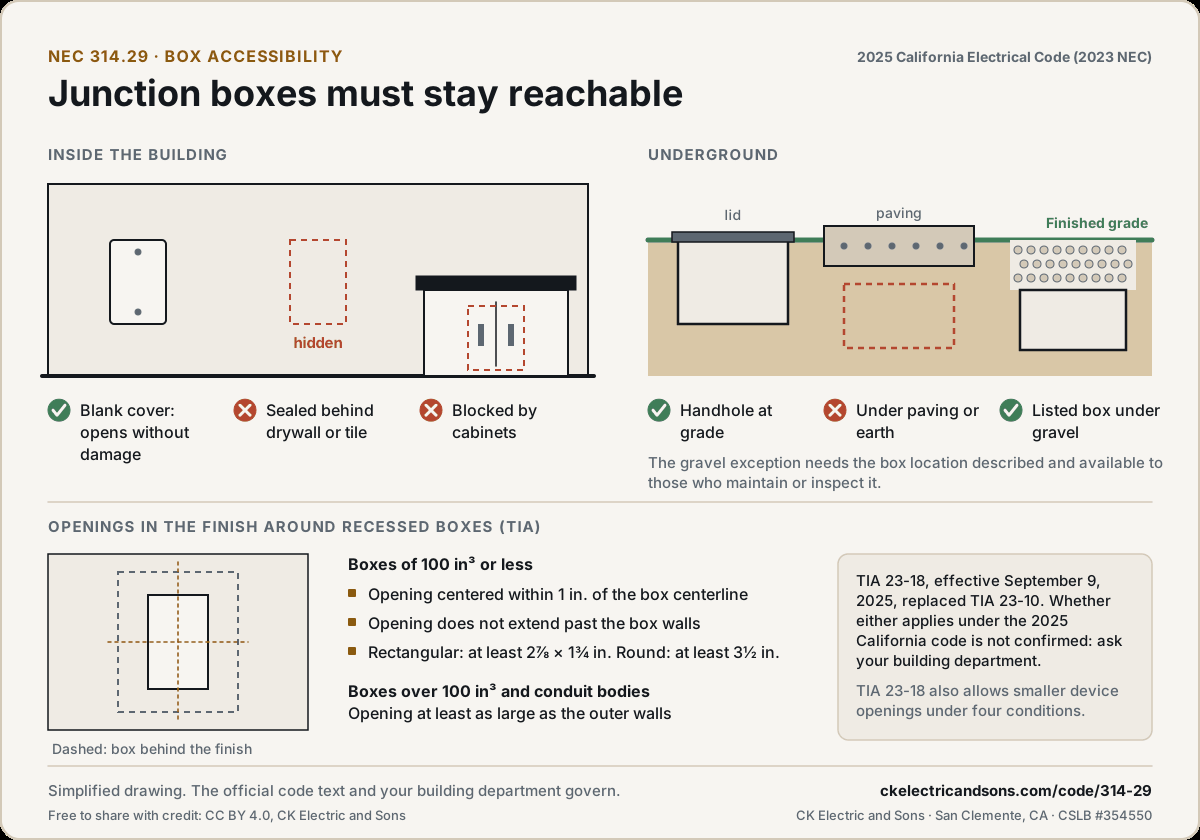
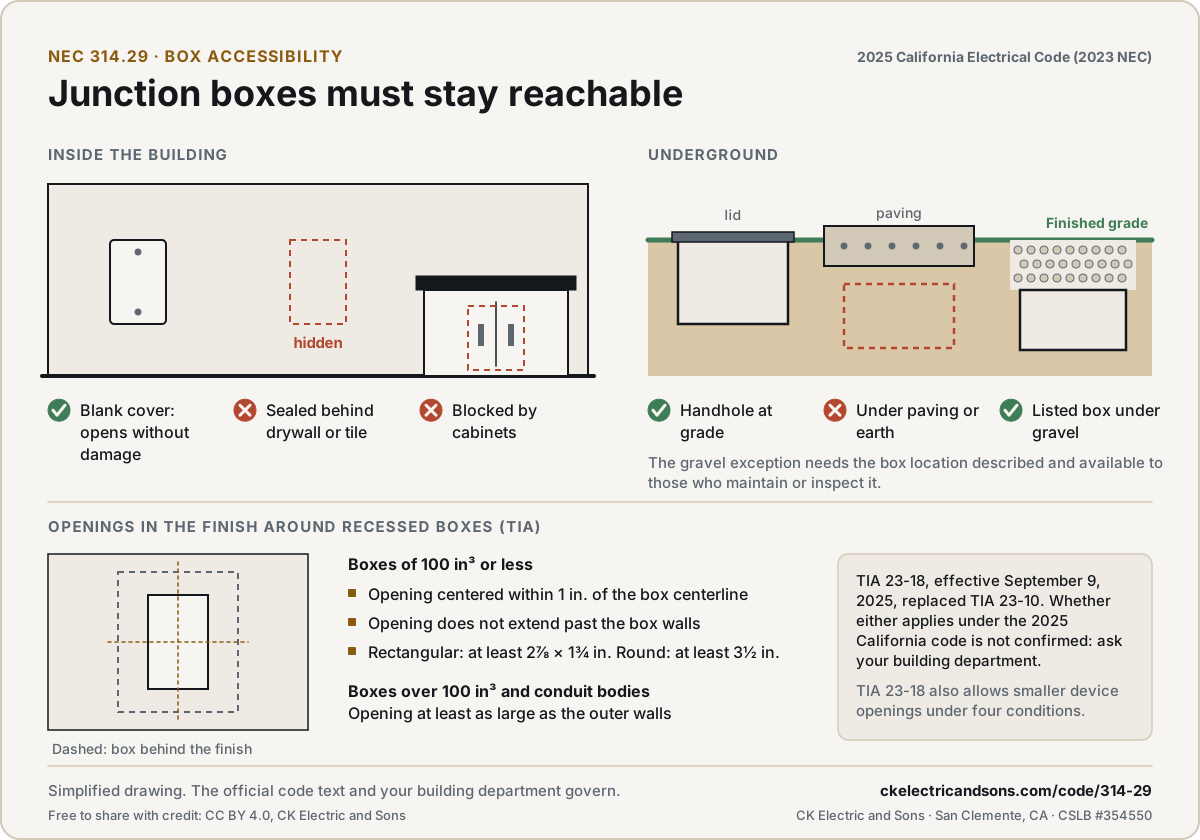 NEC 314.29: Junction boxes must stay reachableRead the sectionSVGPNG
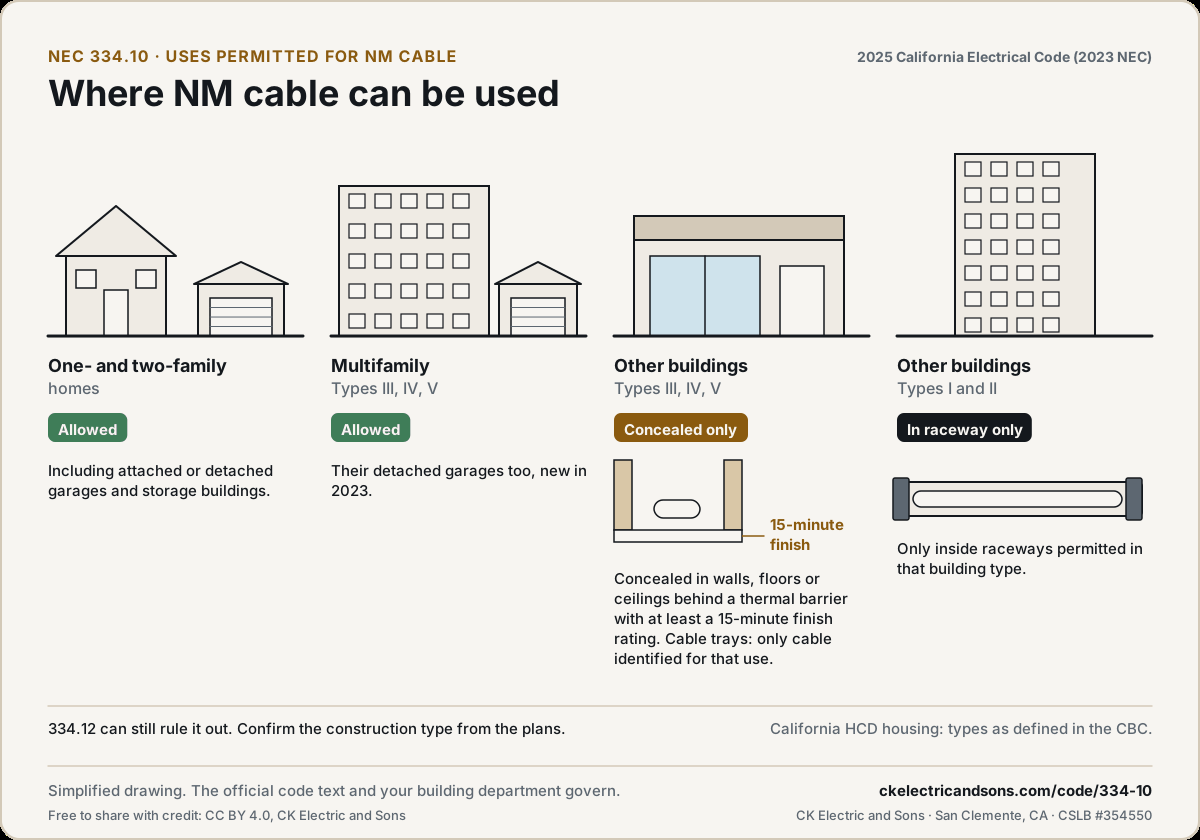
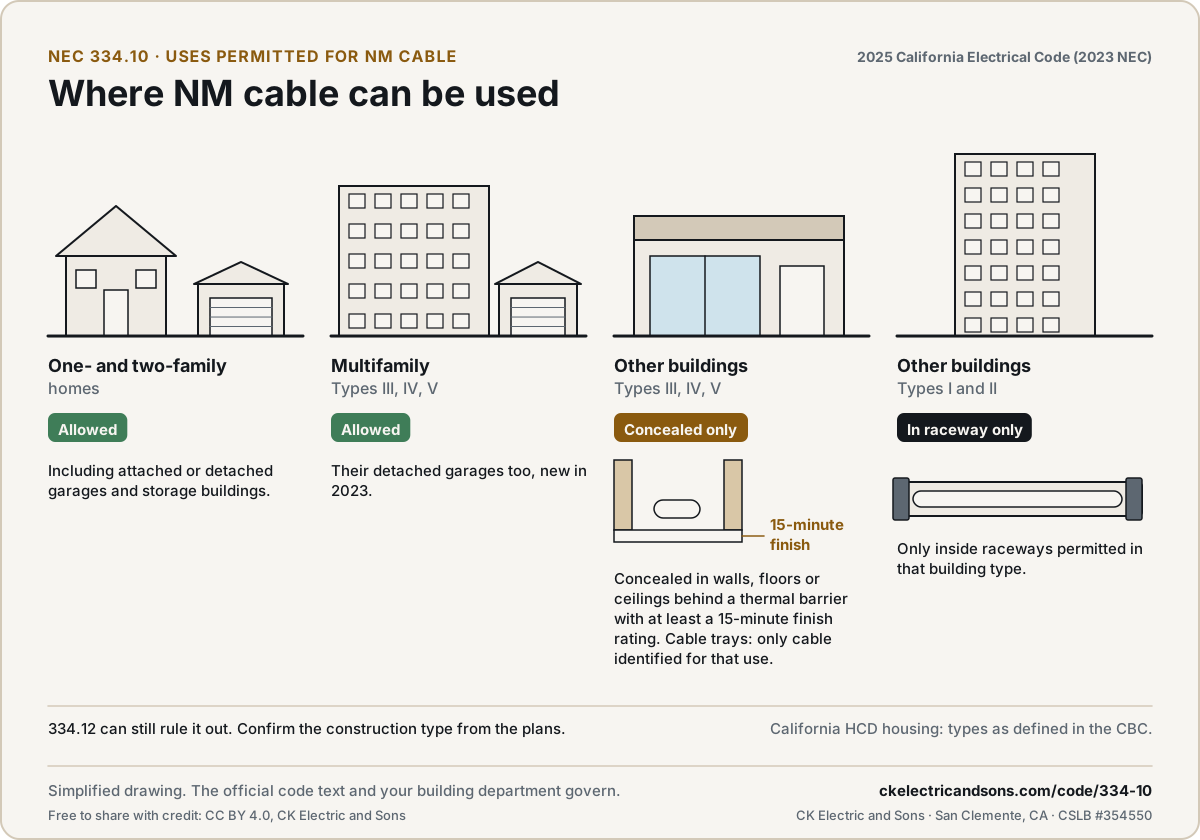 NEC 334.10: Where NM cable can be usedRead the sectionSVGPNG
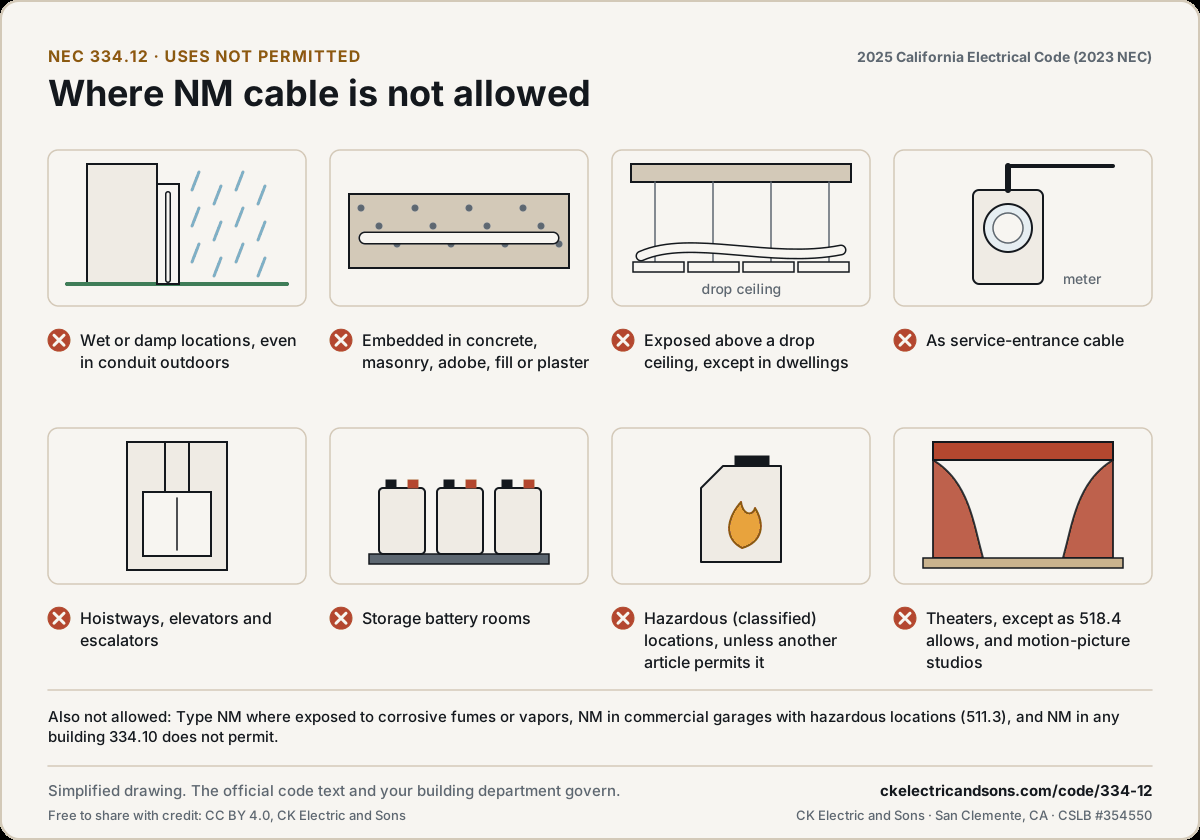
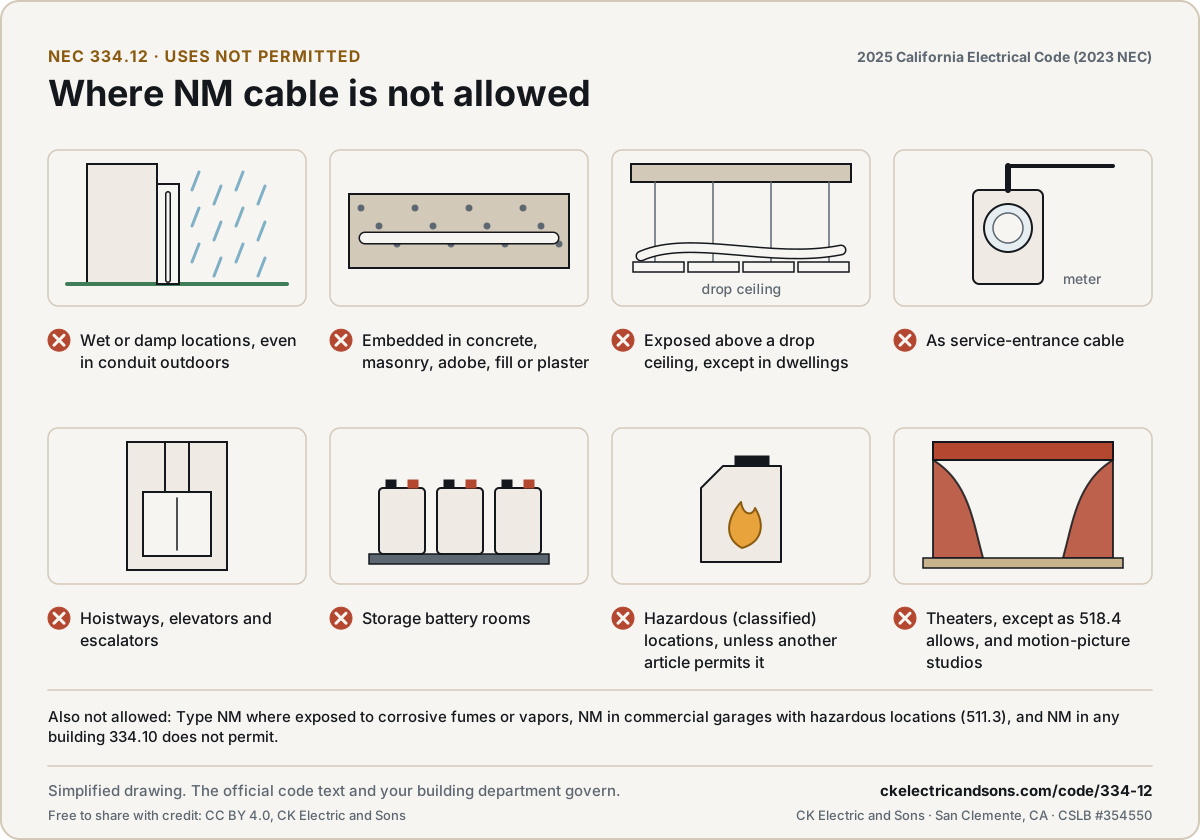 NEC 334.12: Where NM cable is not allowedRead the sectionSVGPNG
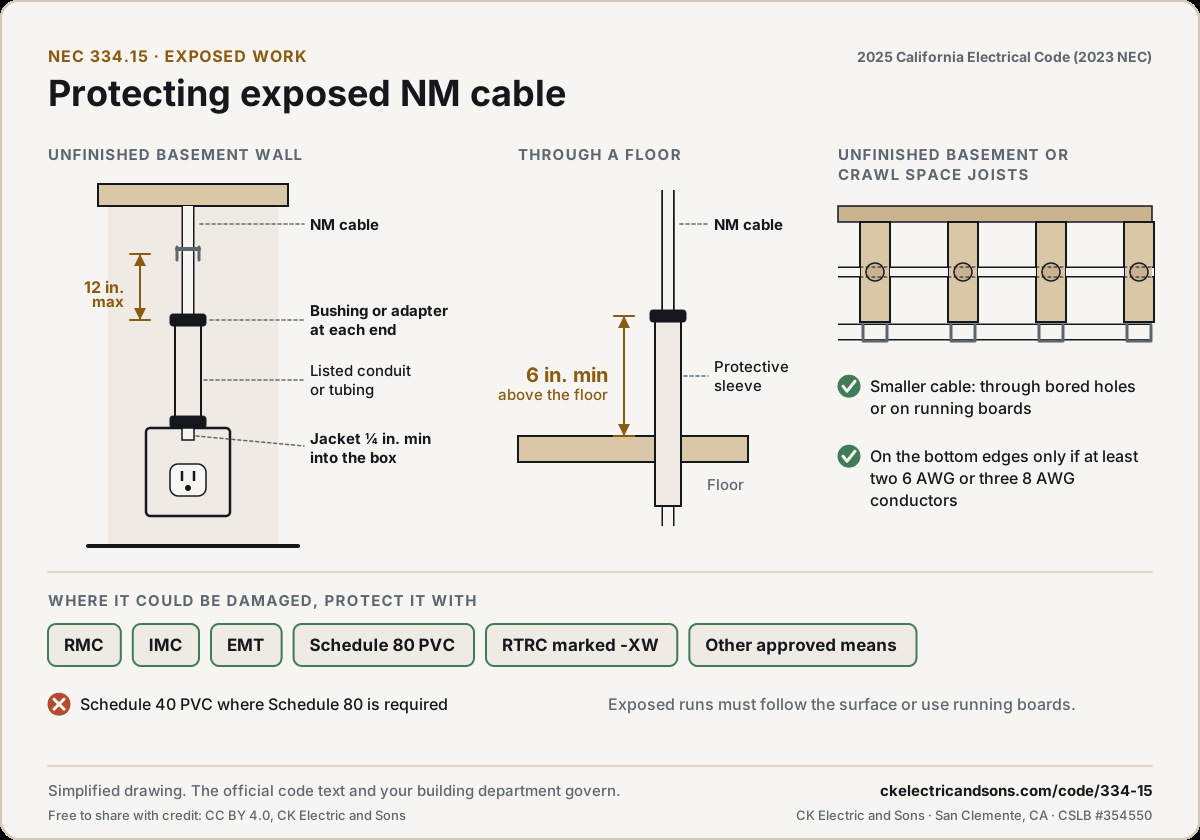
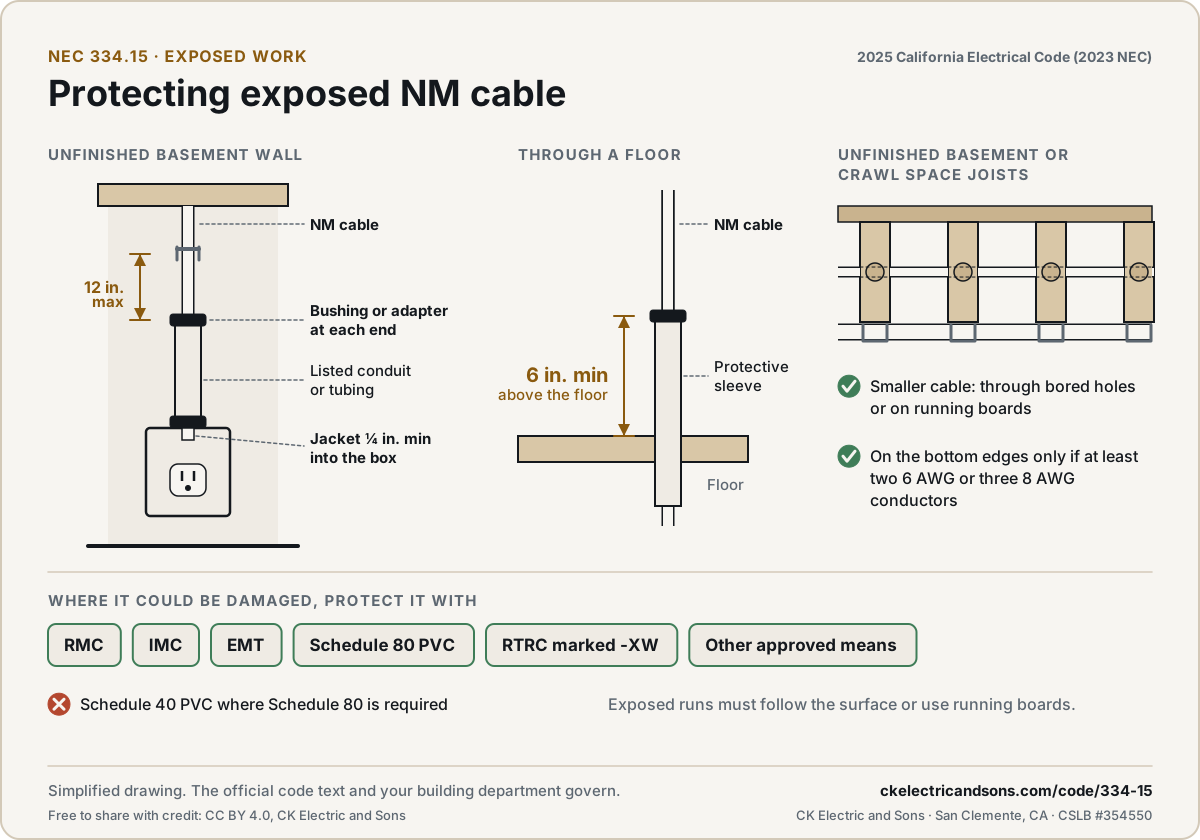 NEC 334.15: Protecting exposed NM cableRead the sectionSVGPNG
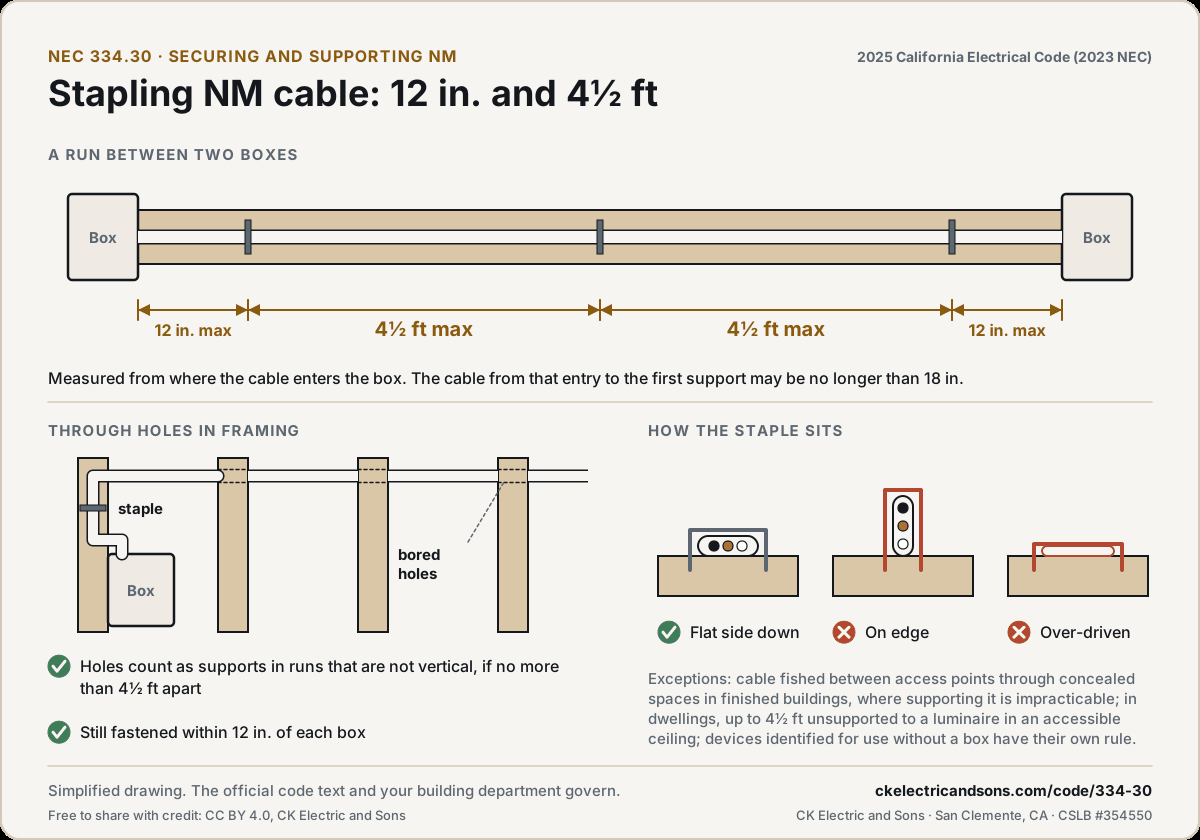
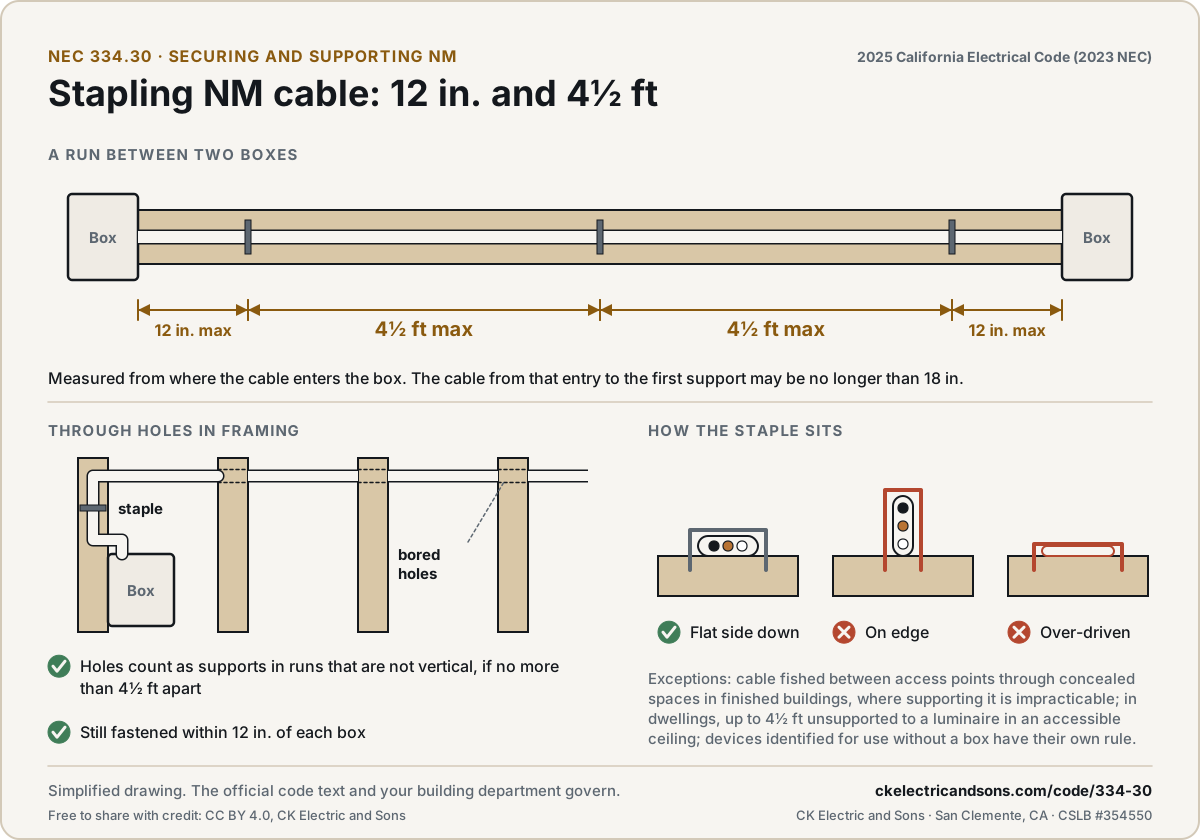 NEC 334.30: Stapling NM cable: 12 in. and 4½ ftRead the sectionSVGPNG
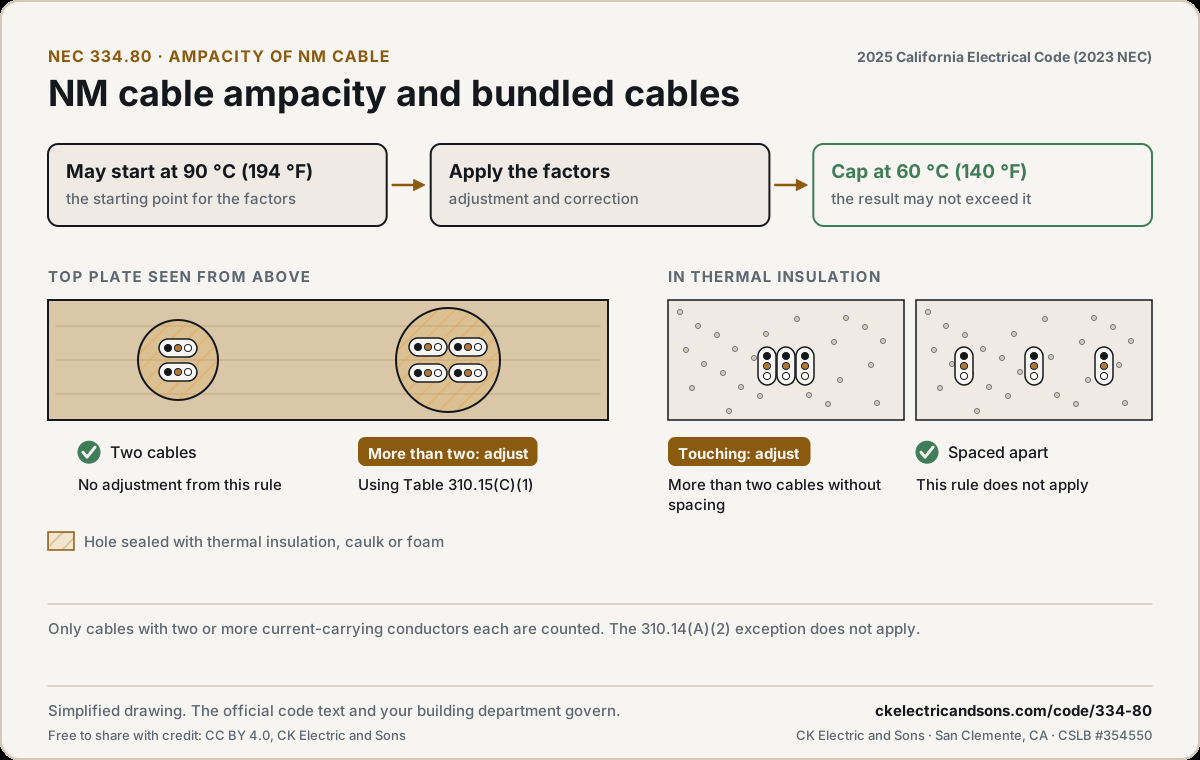
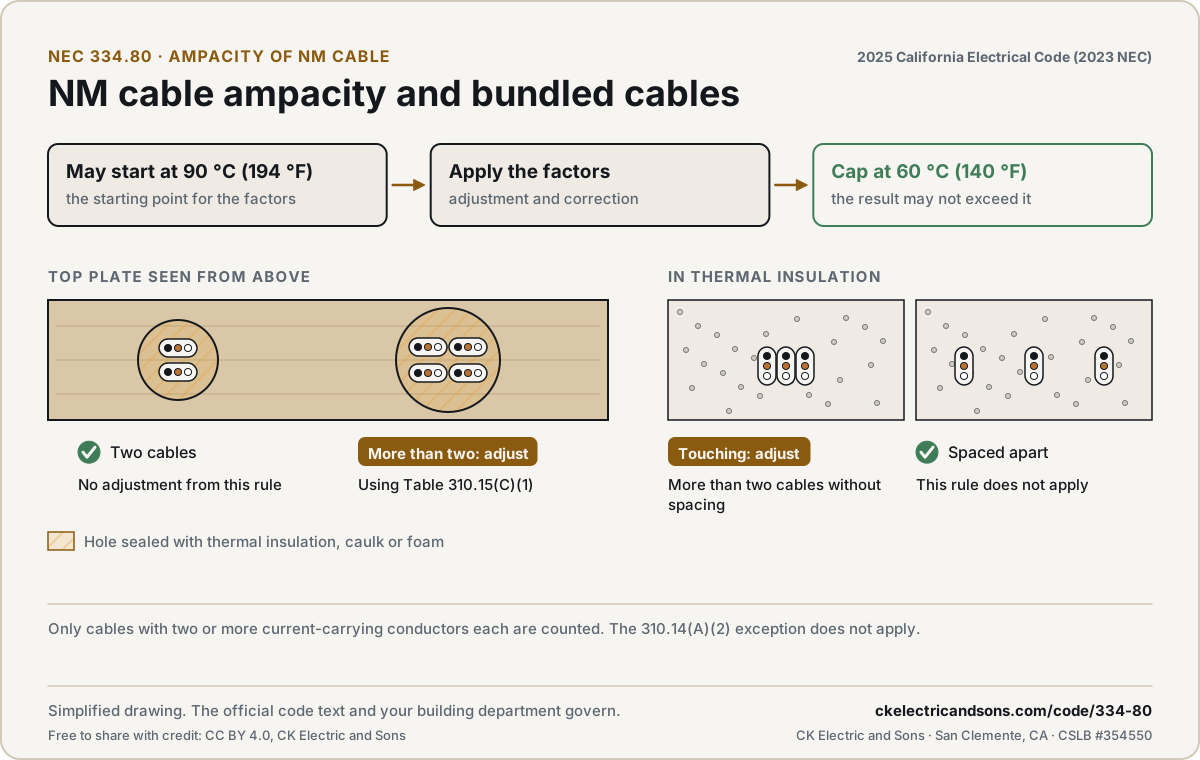 NEC 334.80: NM cable ampacity and bundled cablesRead the sectionSVGPNG
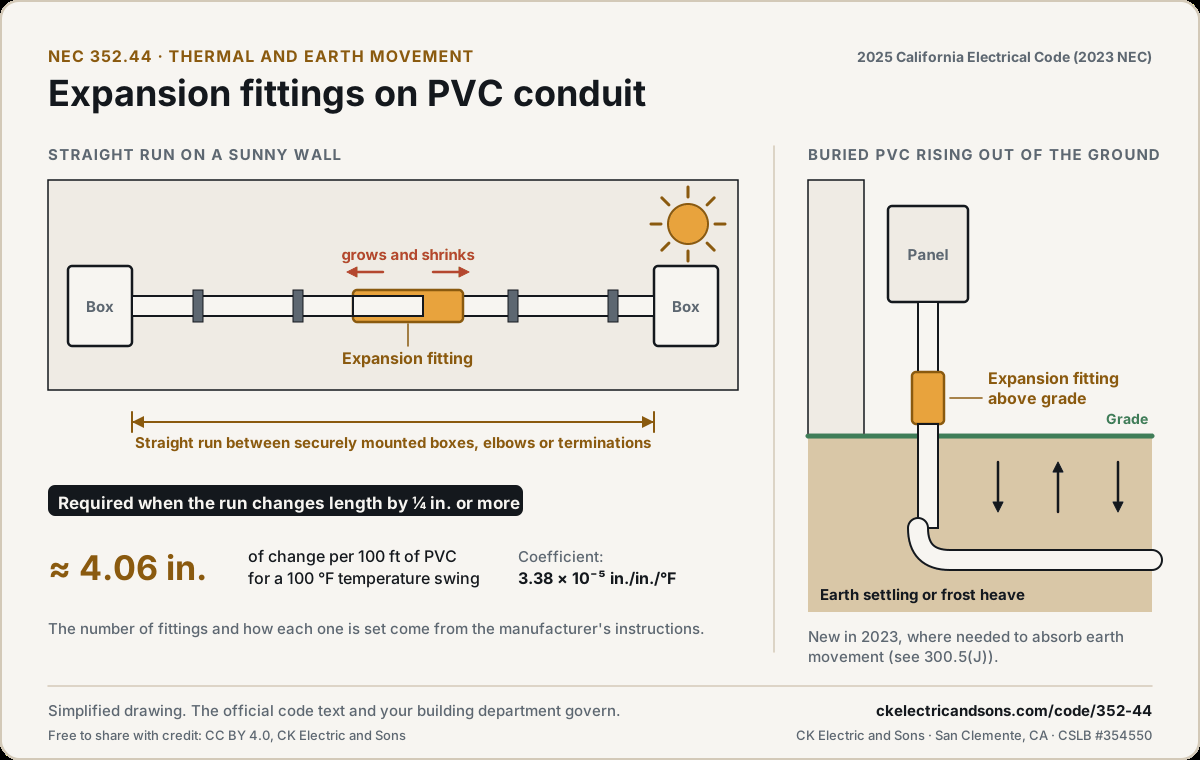
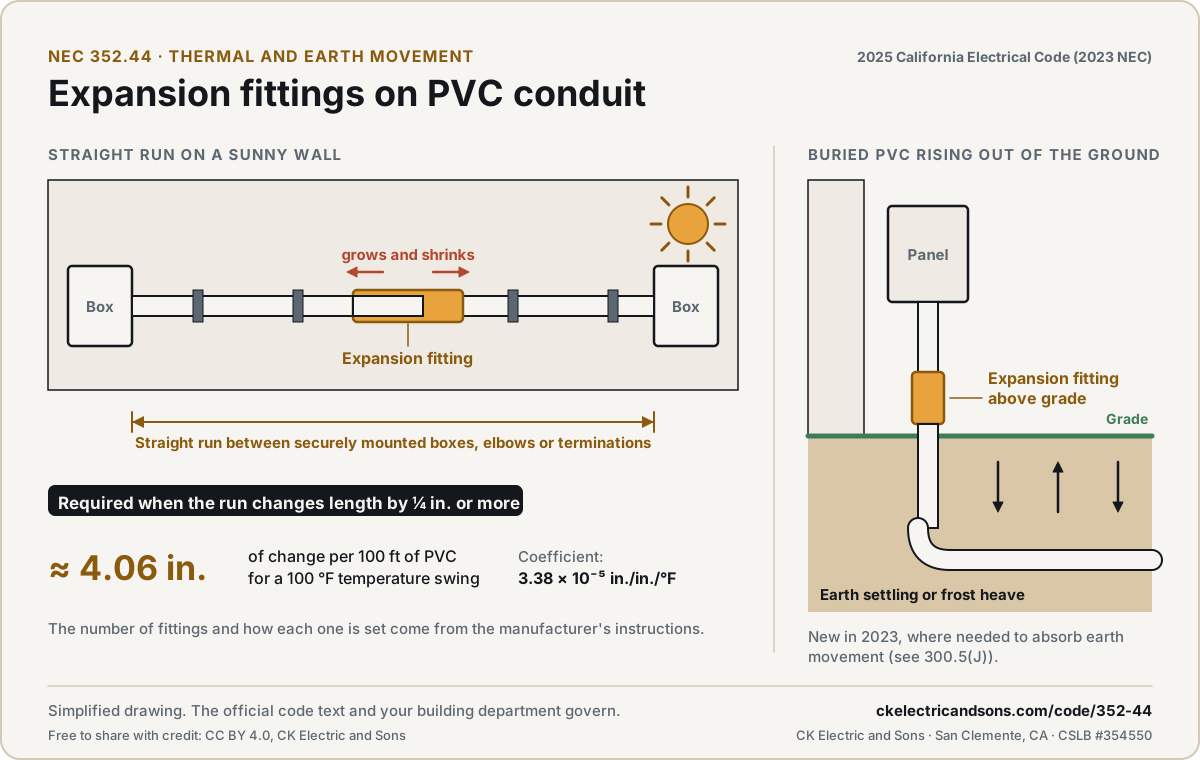 NEC 352.44: Expansion fittings on PVC conduitRead the sectionSVGPNG
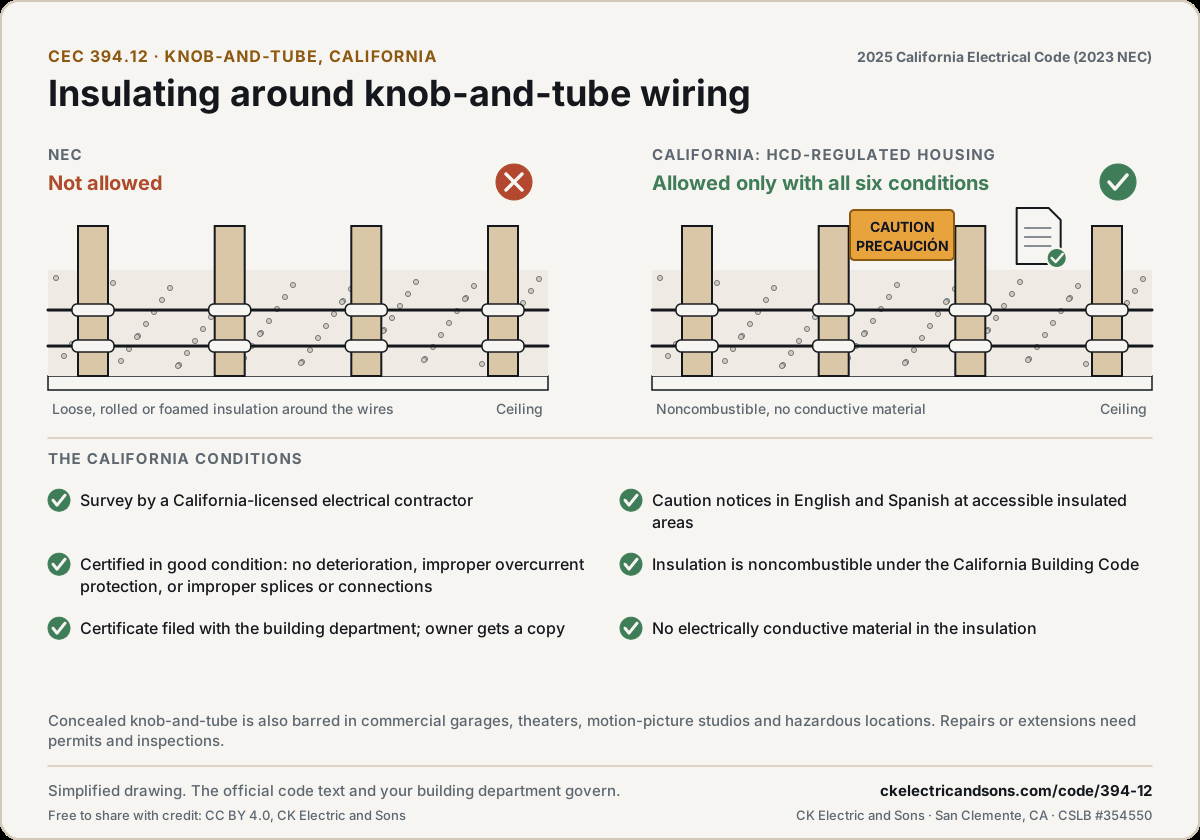
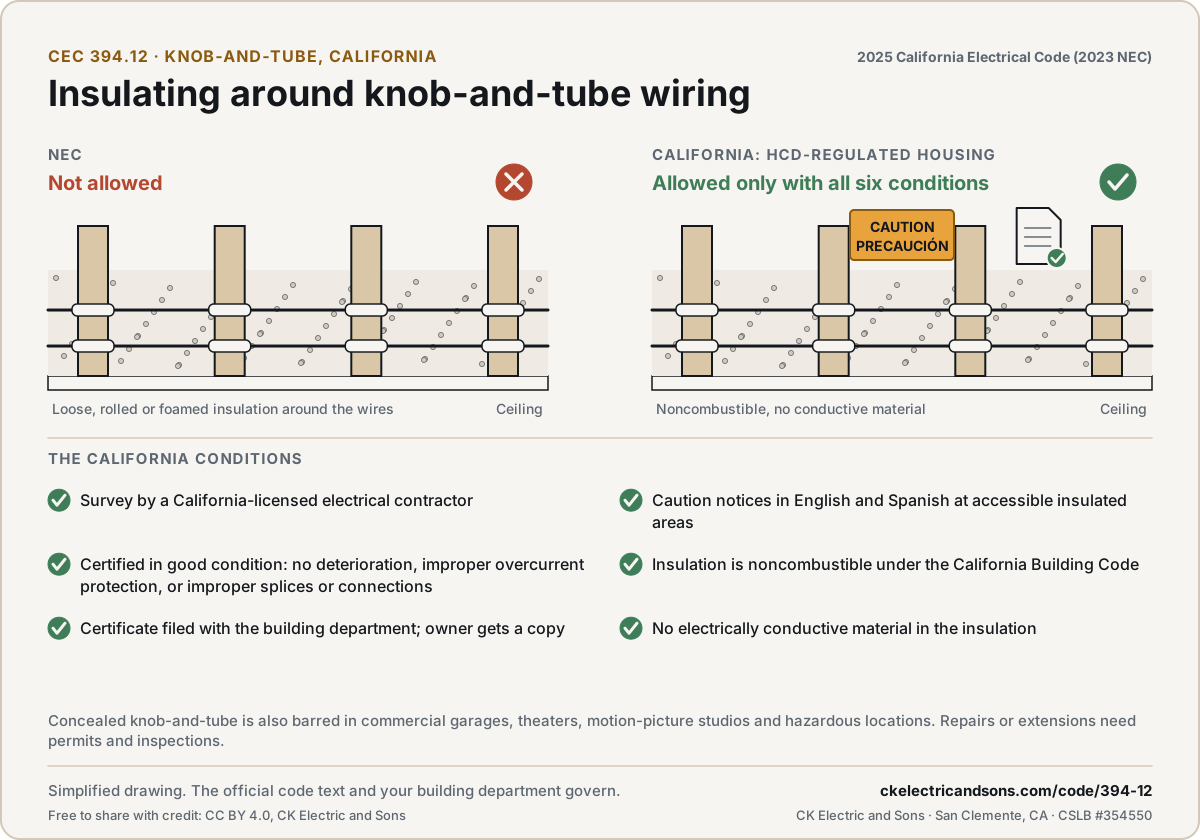 CEC 394.12: Insulating around knob-and-tube wiringRead the sectionSVGPNG
Switches, receptacles, panels and lighting
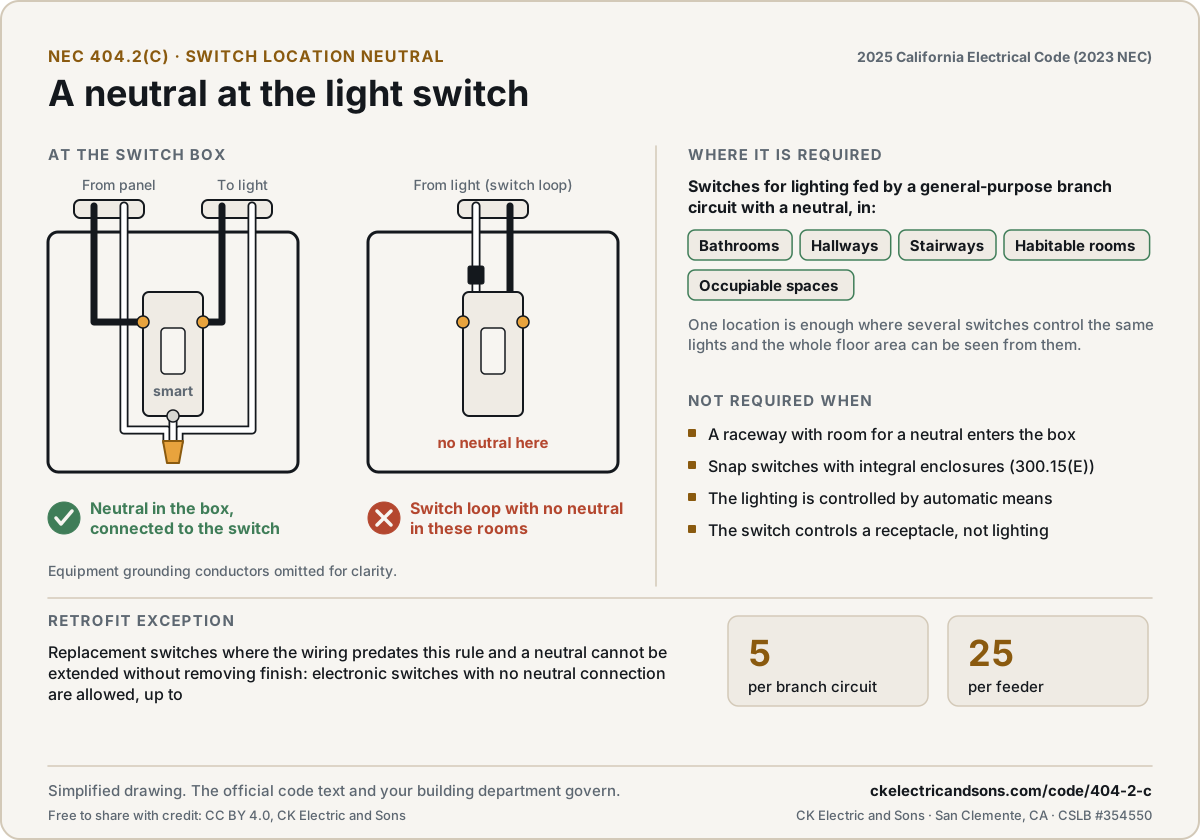 NEC 404.2(C): A neutral at the light switchRead the sectionSVGPNG
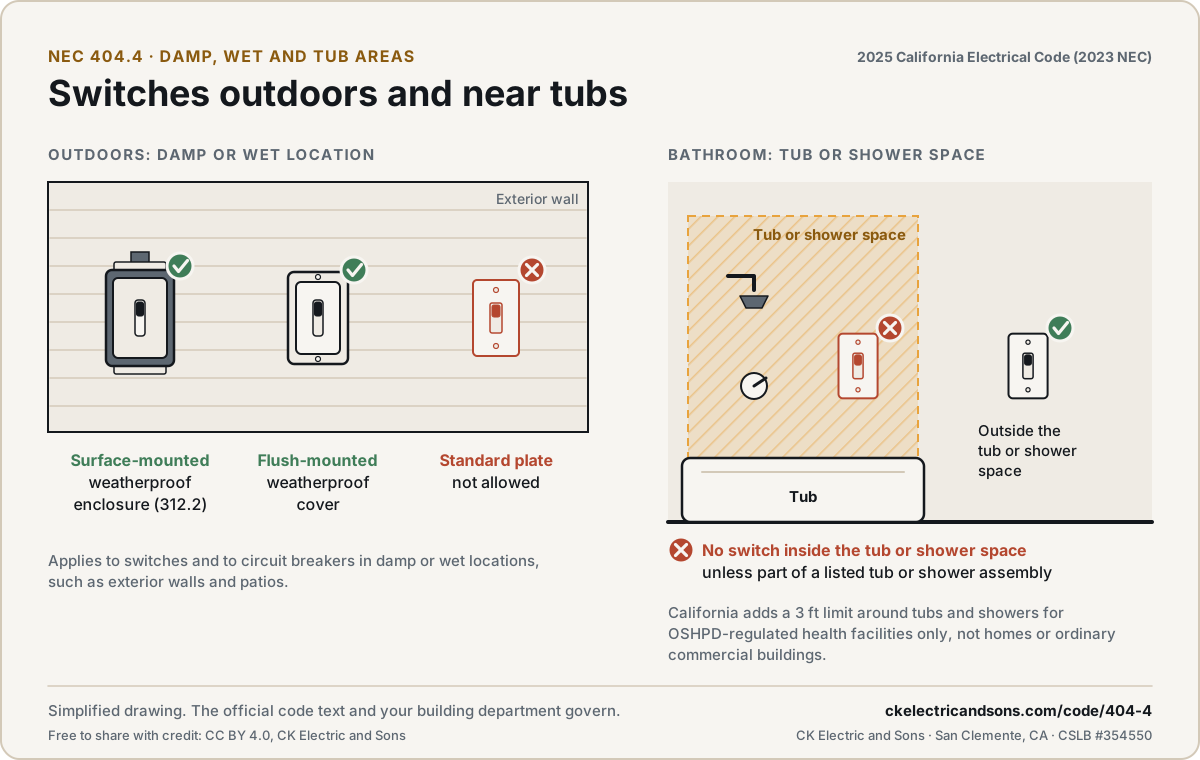 NEC 404.4: Switches outdoors and near tubsRead the sectionSVGPNG
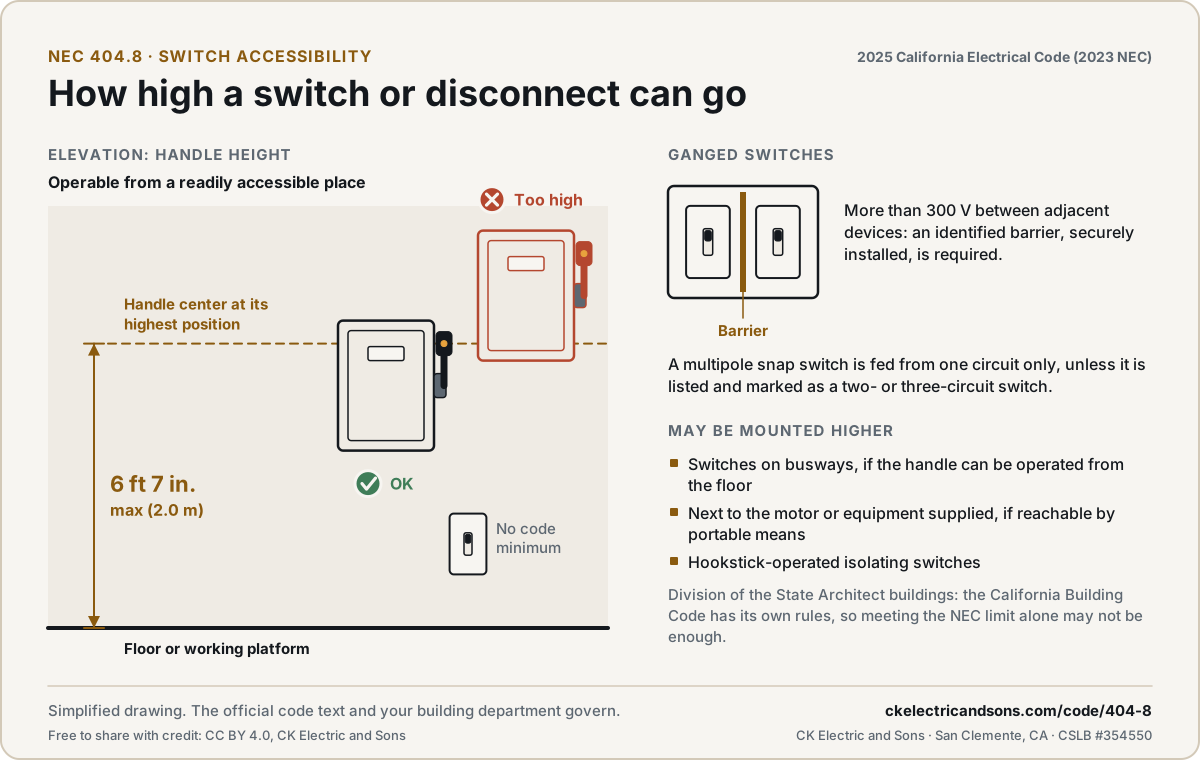 NEC 404.8: How high a switch or disconnect can goRead the sectionSVGPNG
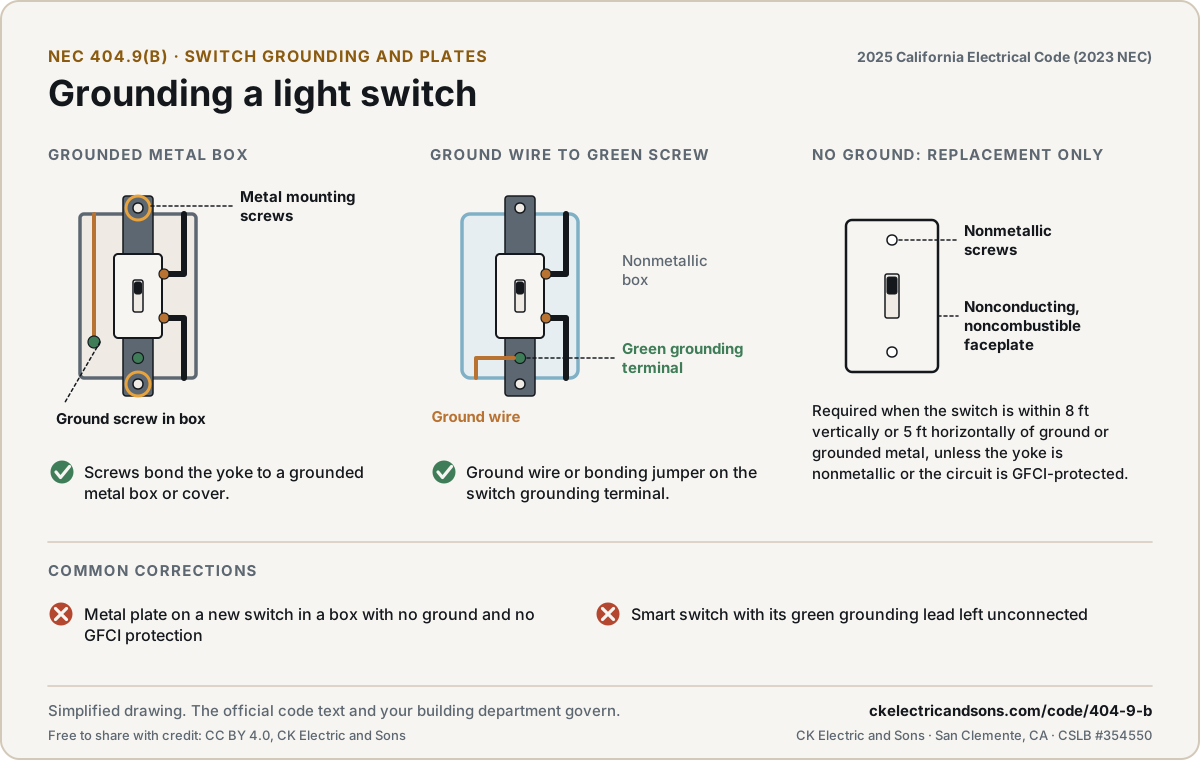 NEC 404.9(B): Grounding a light switchRead the sectionSVGPNG
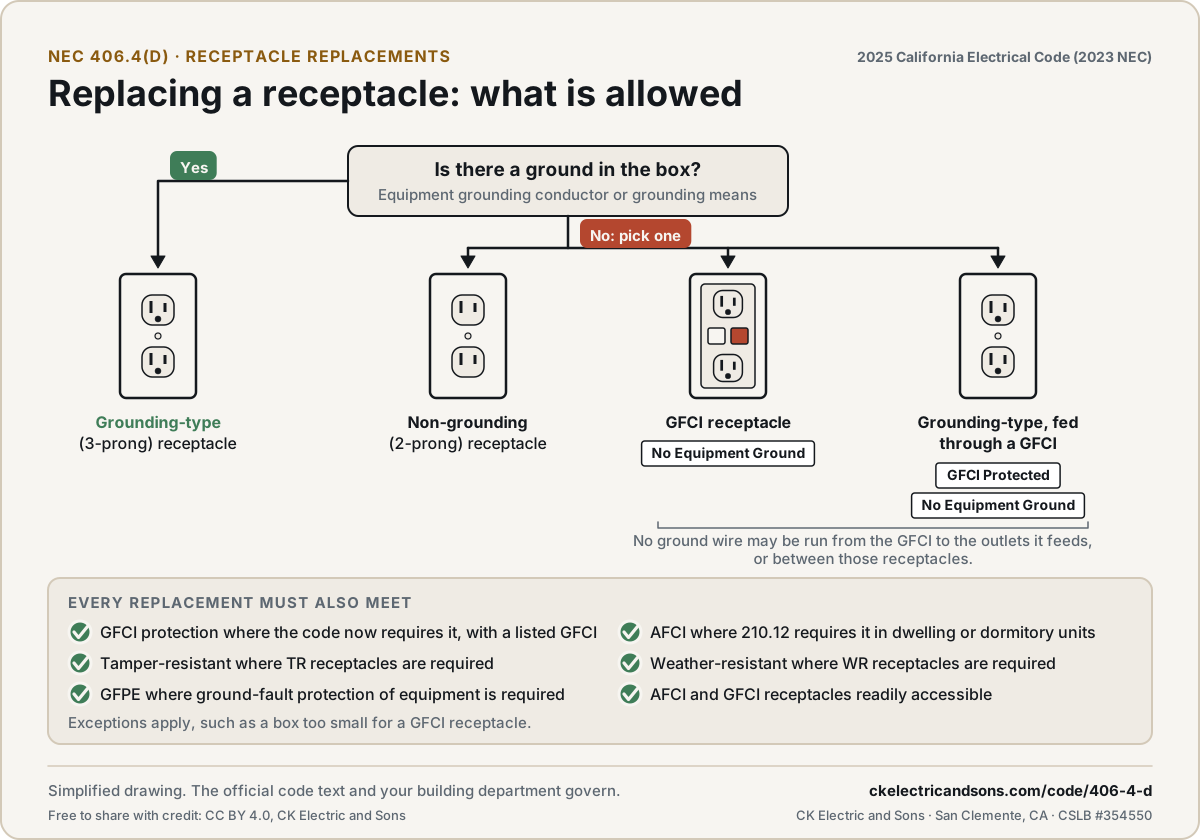 NEC 406.4(D): Replacing a receptacle: what is allowedRead the sectionSVGPNG
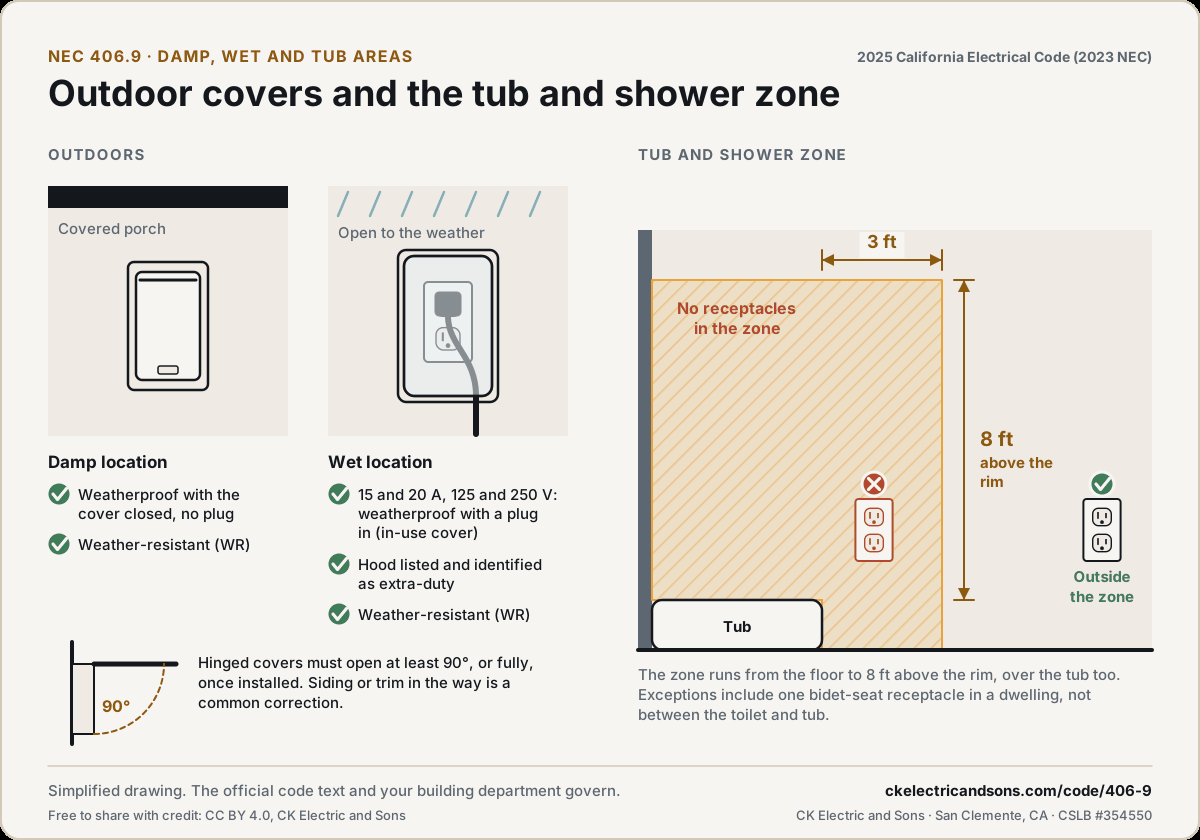
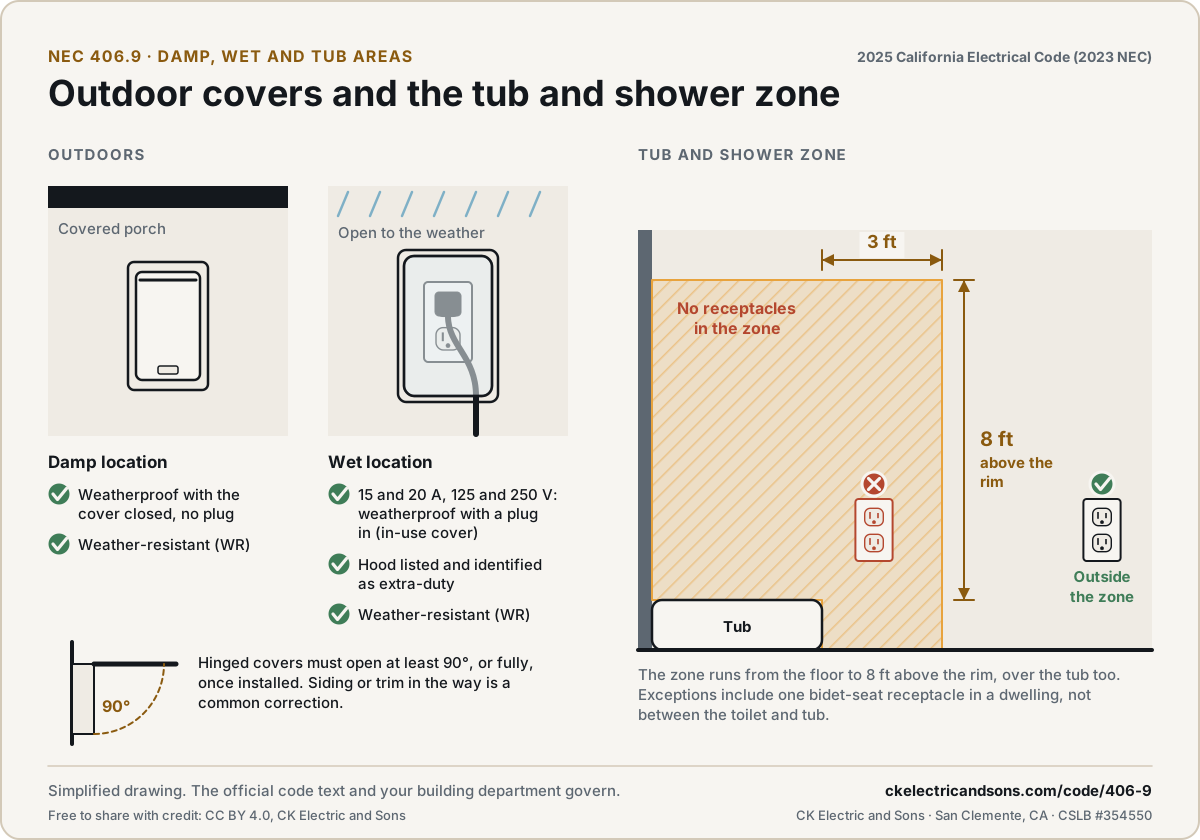 NEC 406.9: Outdoor covers and the tub and shower zoneRead the sectionSVGPNG
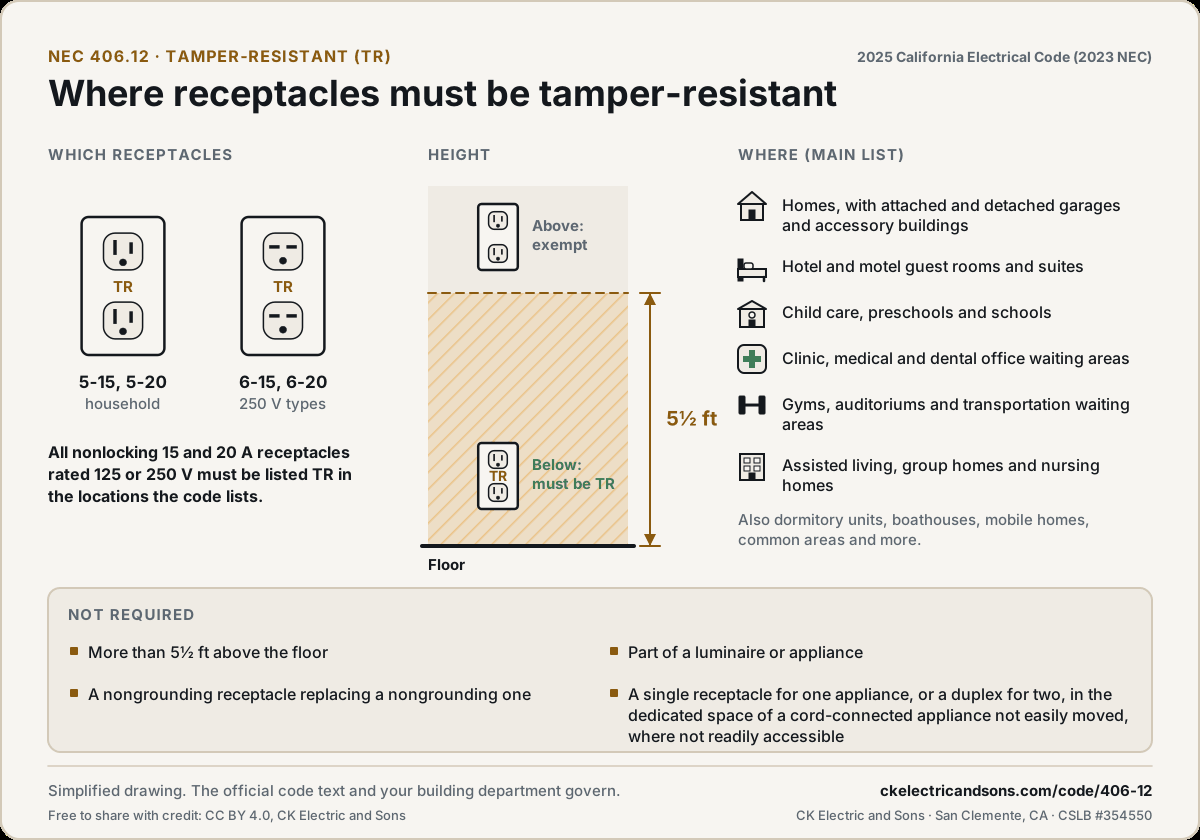
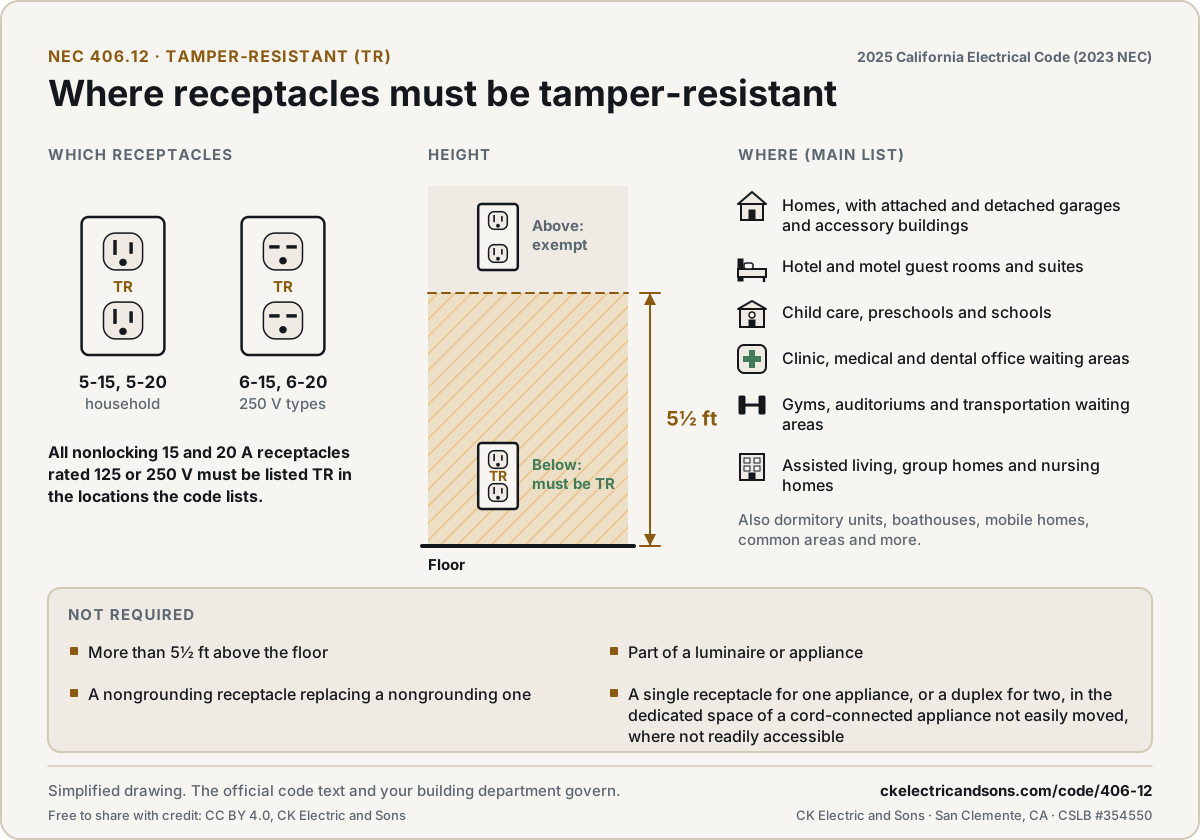 NEC 406.12: Where receptacles must be tamper-resistantRead the sectionSVGPNG
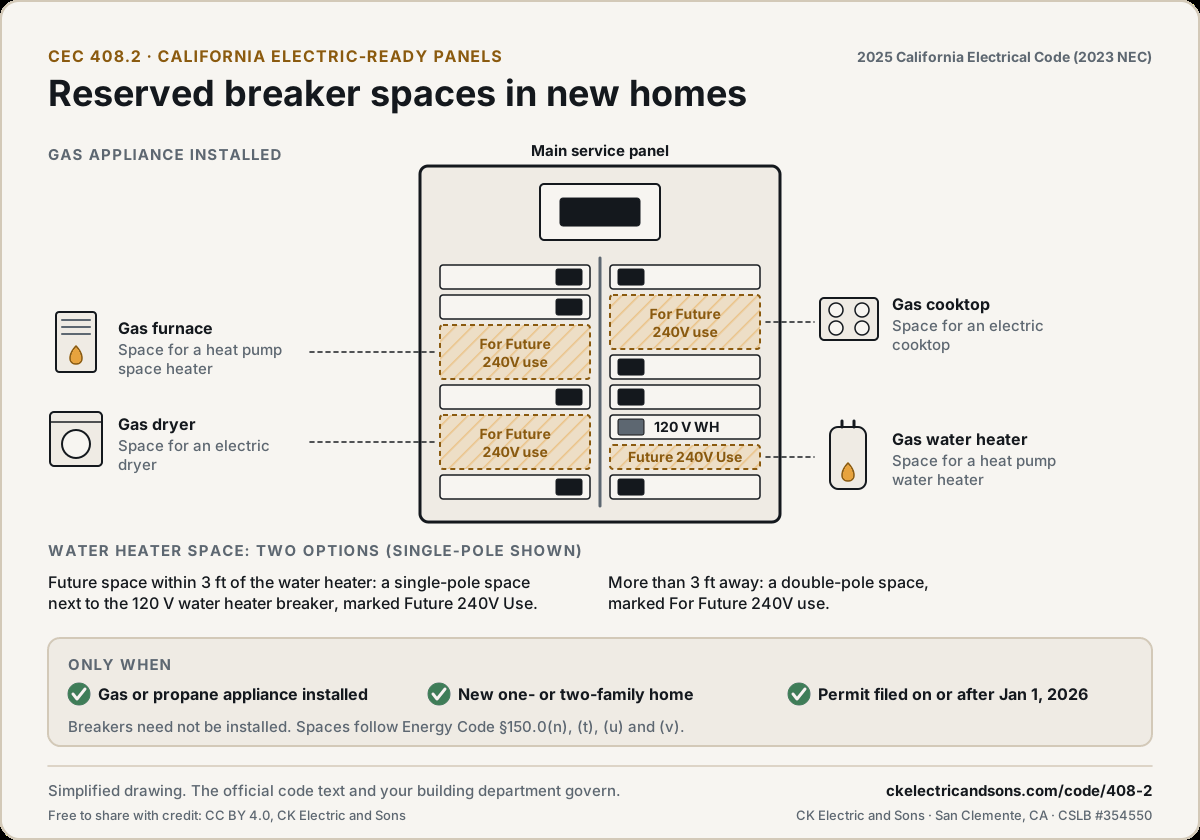
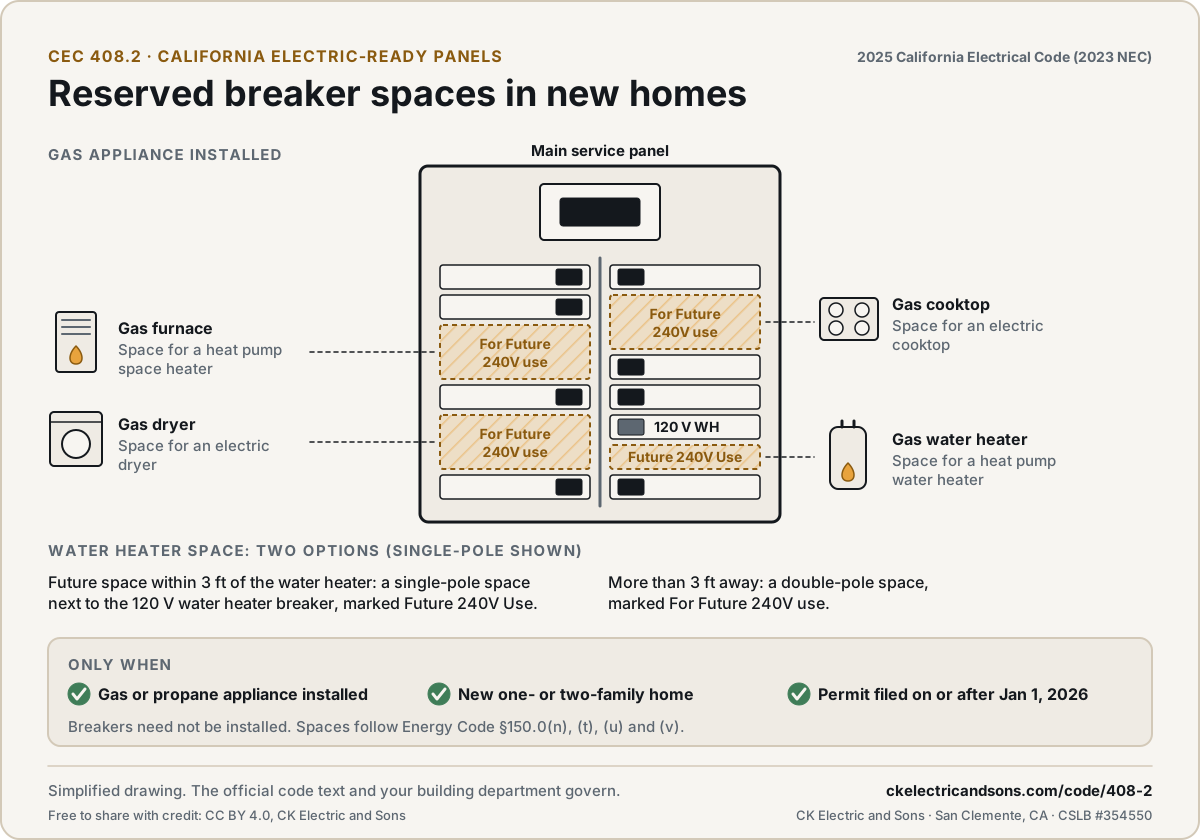 CEC 408.2: Reserved breaker spaces in new homesRead the sectionSVGPNG
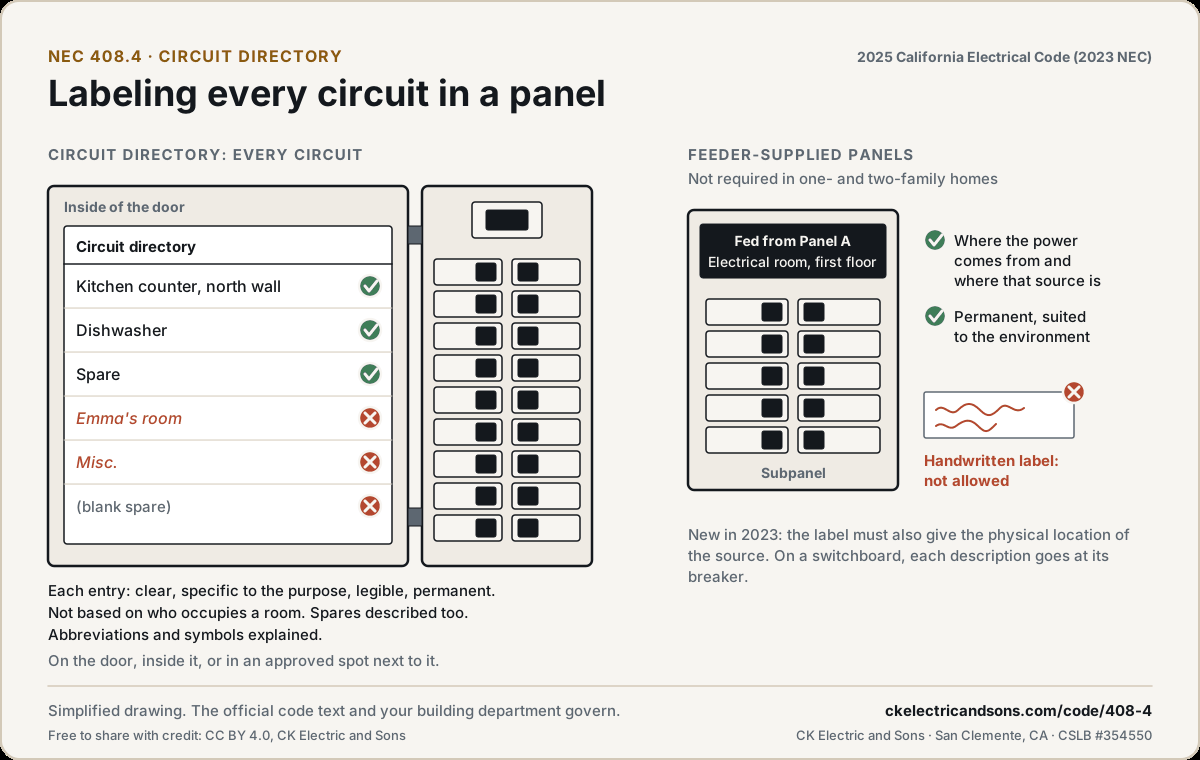
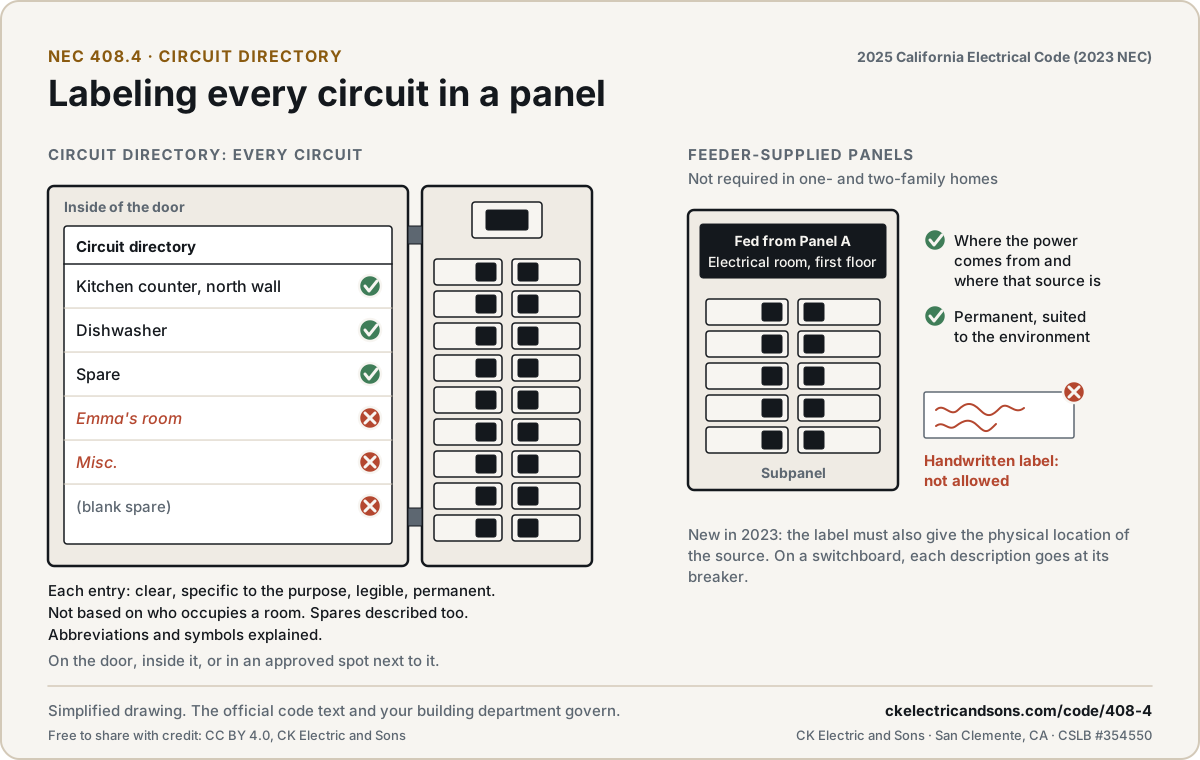 NEC 408.4: Labeling every circuit in a panelRead the sectionSVGPNG
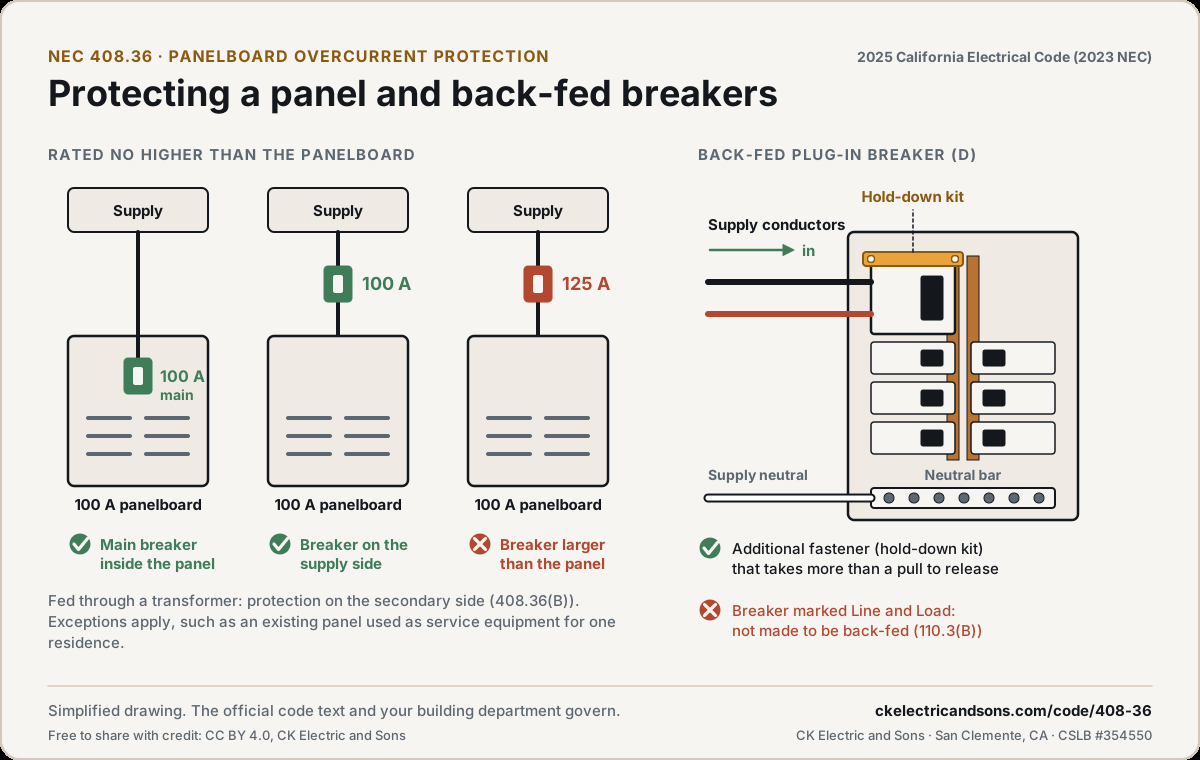
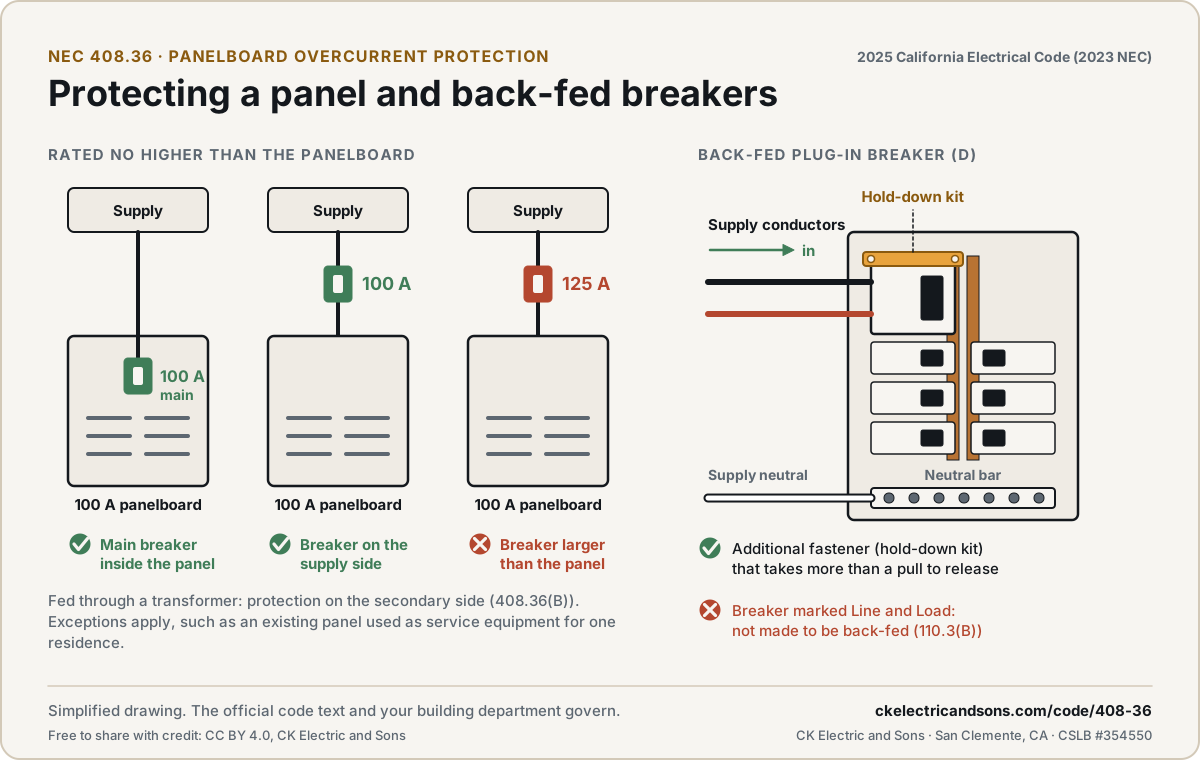 NEC 408.36: Protecting a panel and back-fed breakersRead the sectionSVGPNG
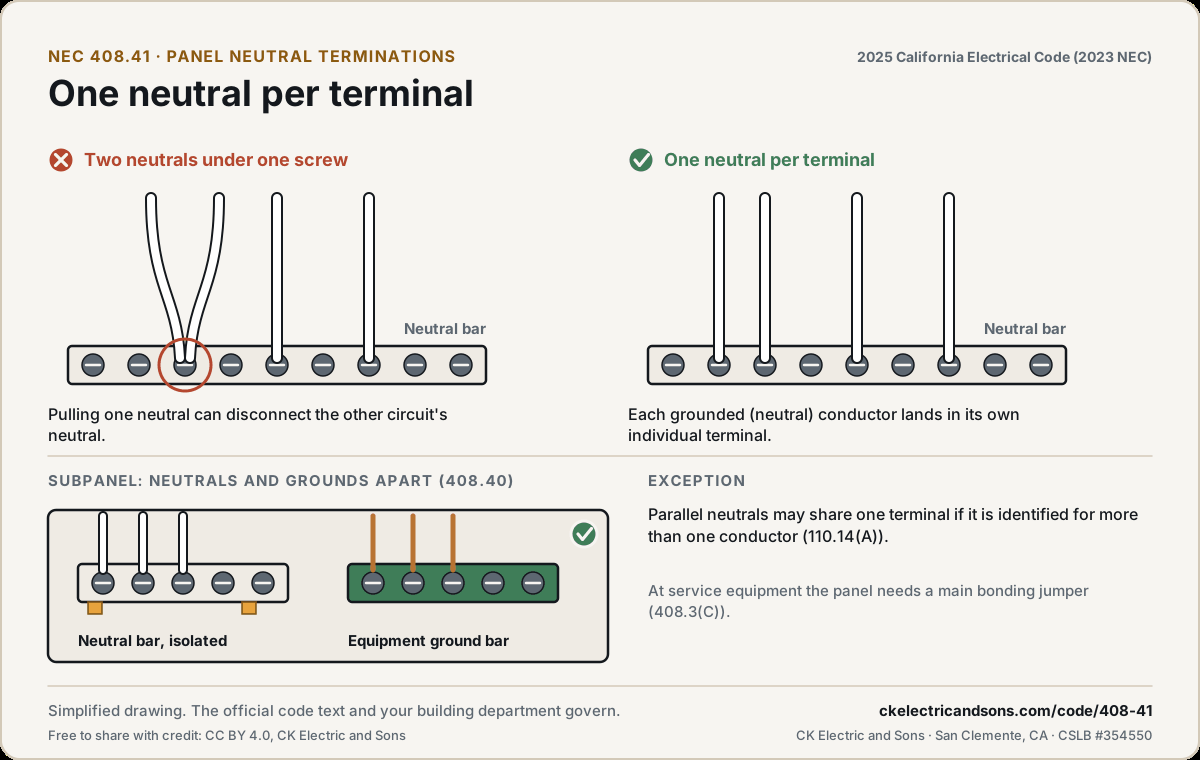
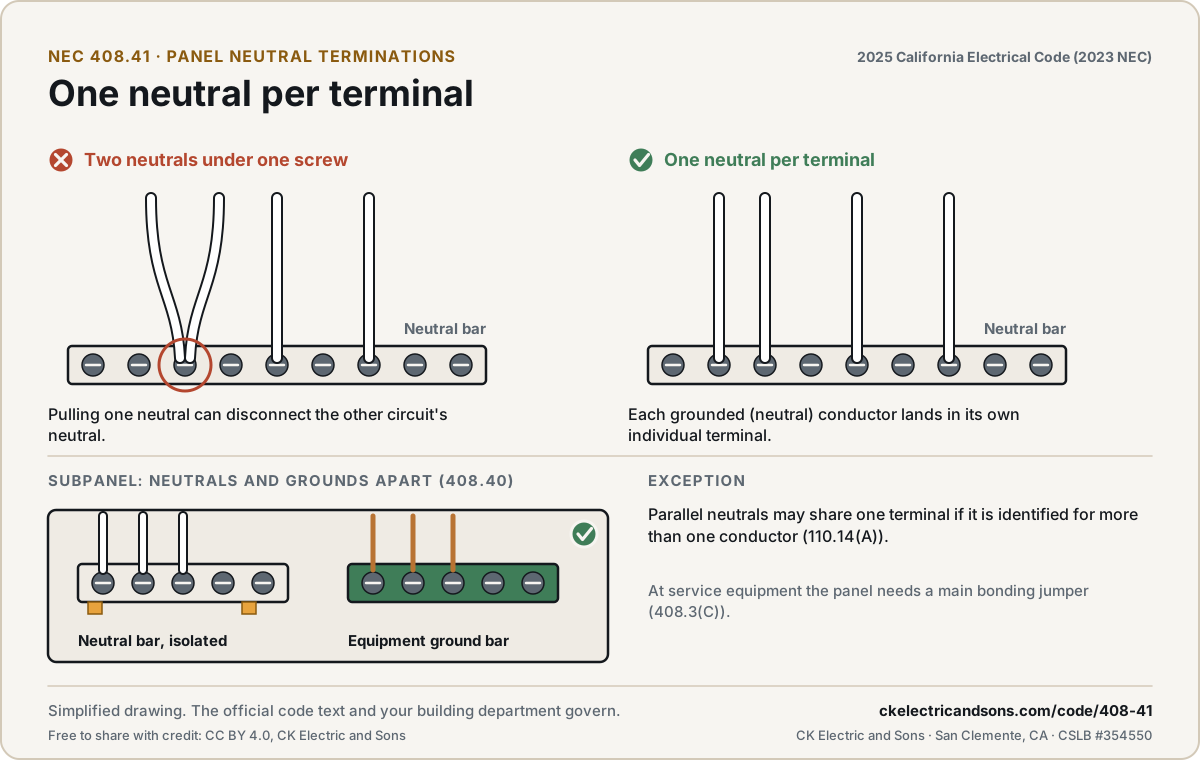 NEC 408.41: One neutral per terminalRead the sectionSVGPNG
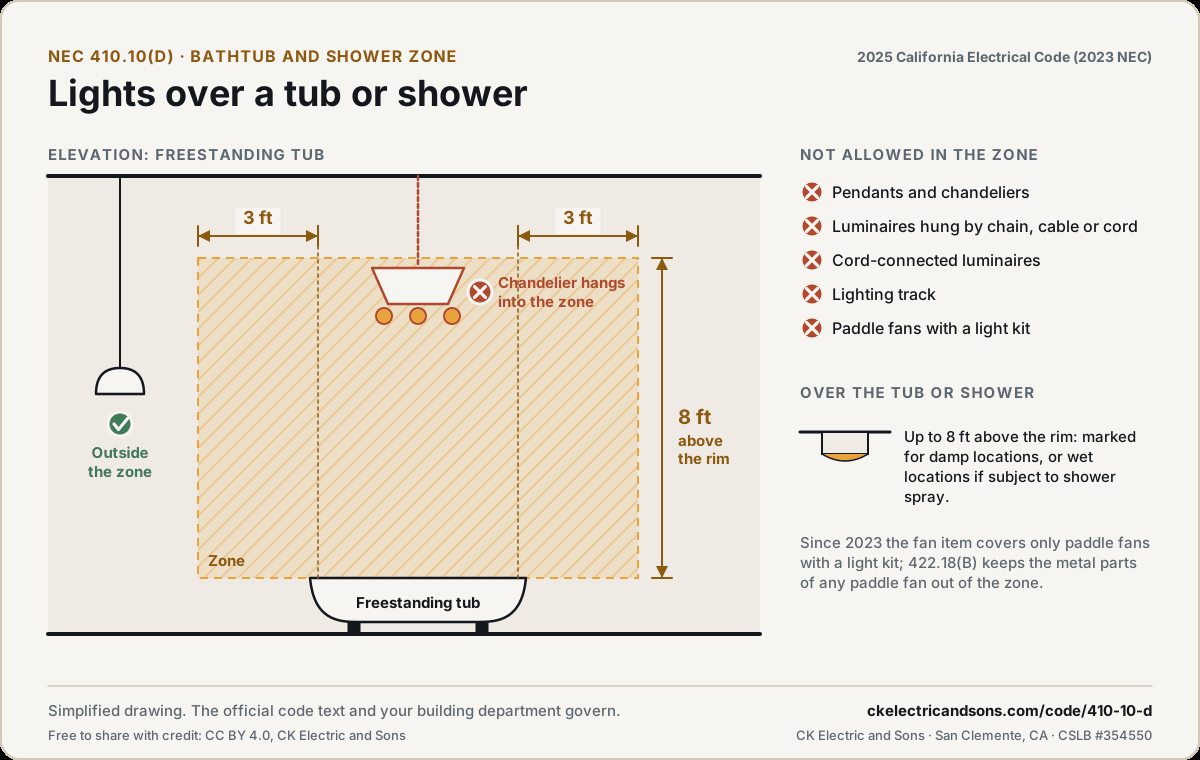
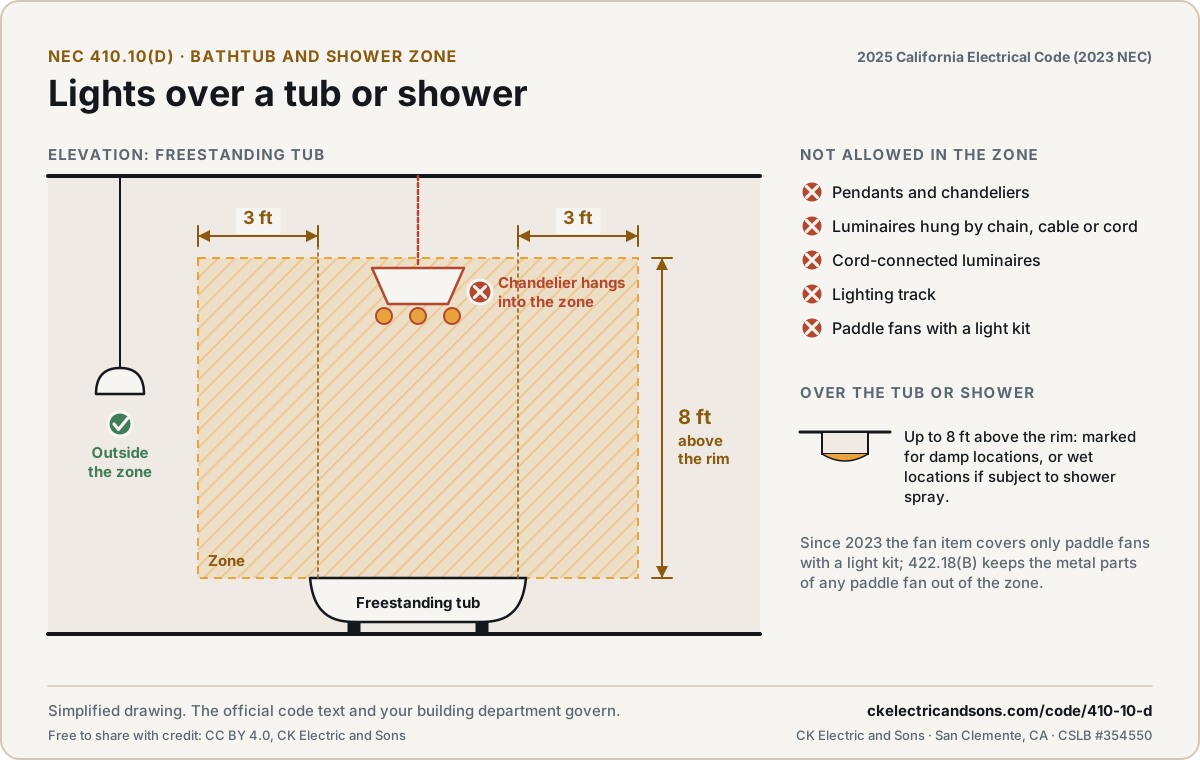 NEC 410.10(D): Lights over a tub or showerRead the sectionSVGPNG
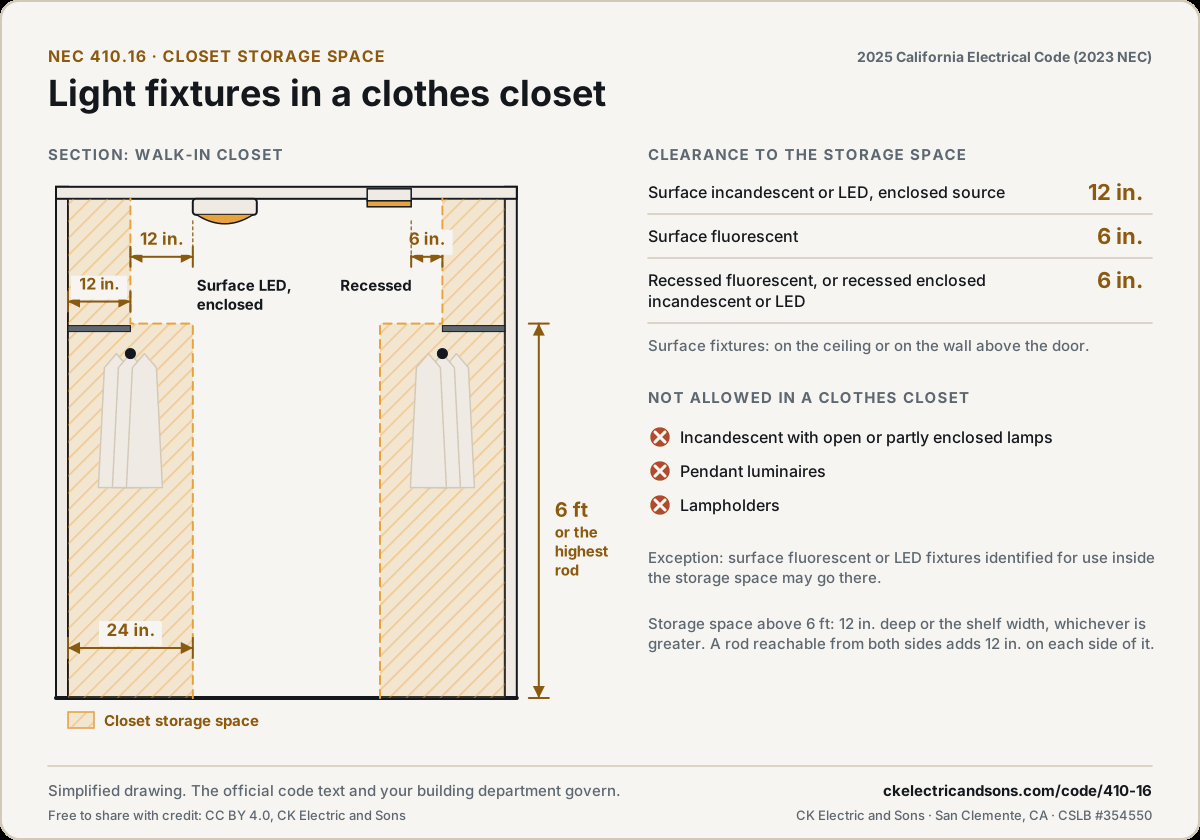
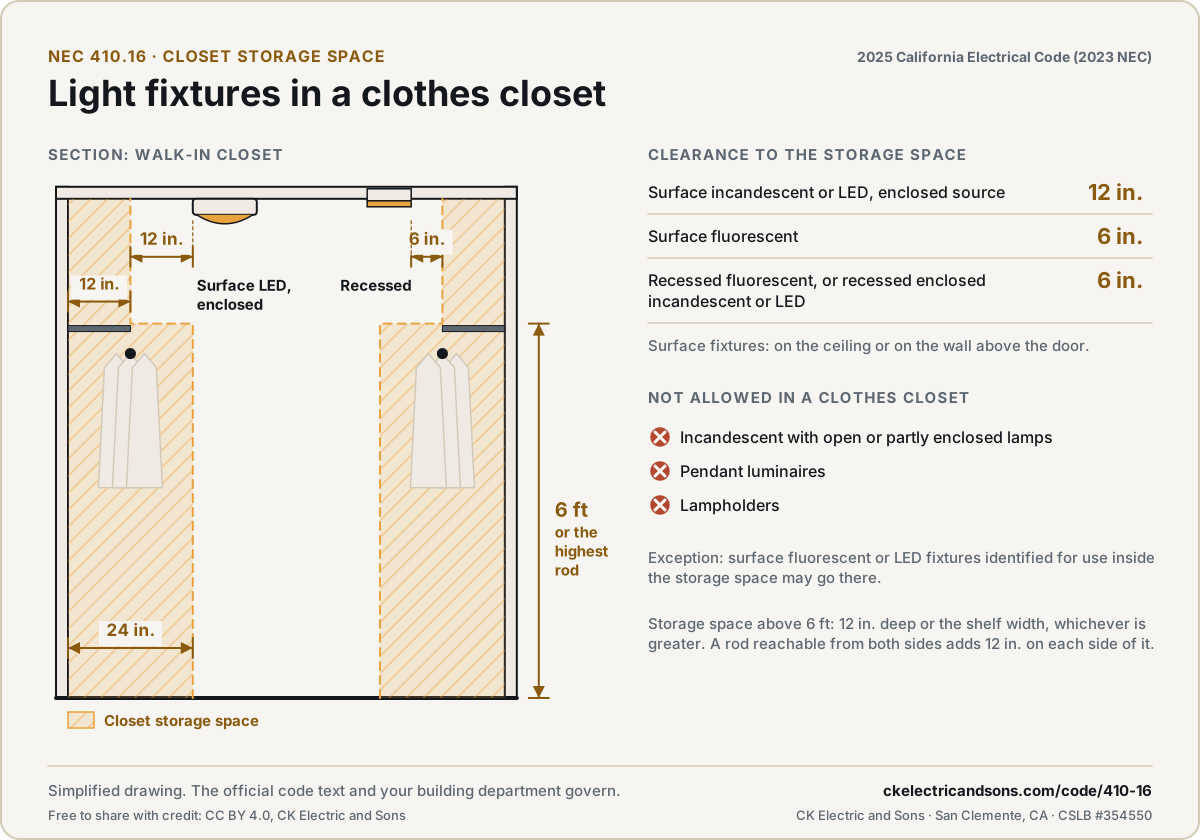 NEC 410.16: Light fixtures in a clothes closetRead the sectionSVGPNG
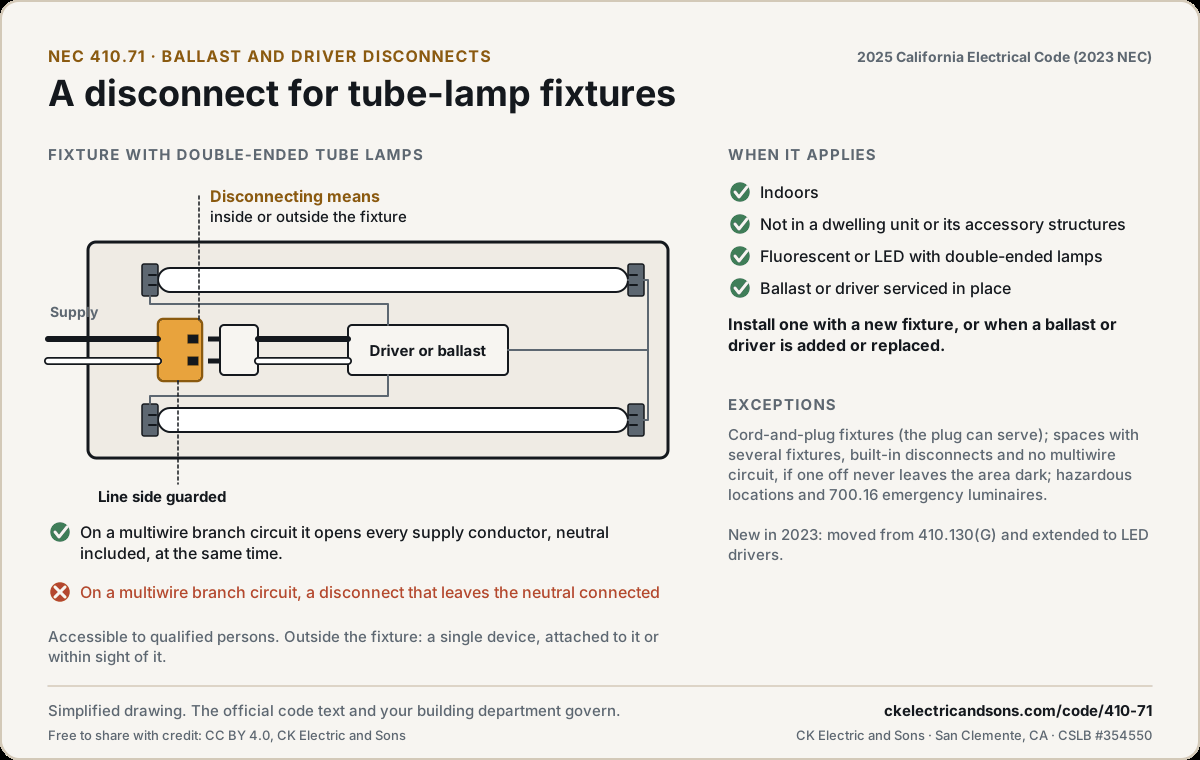
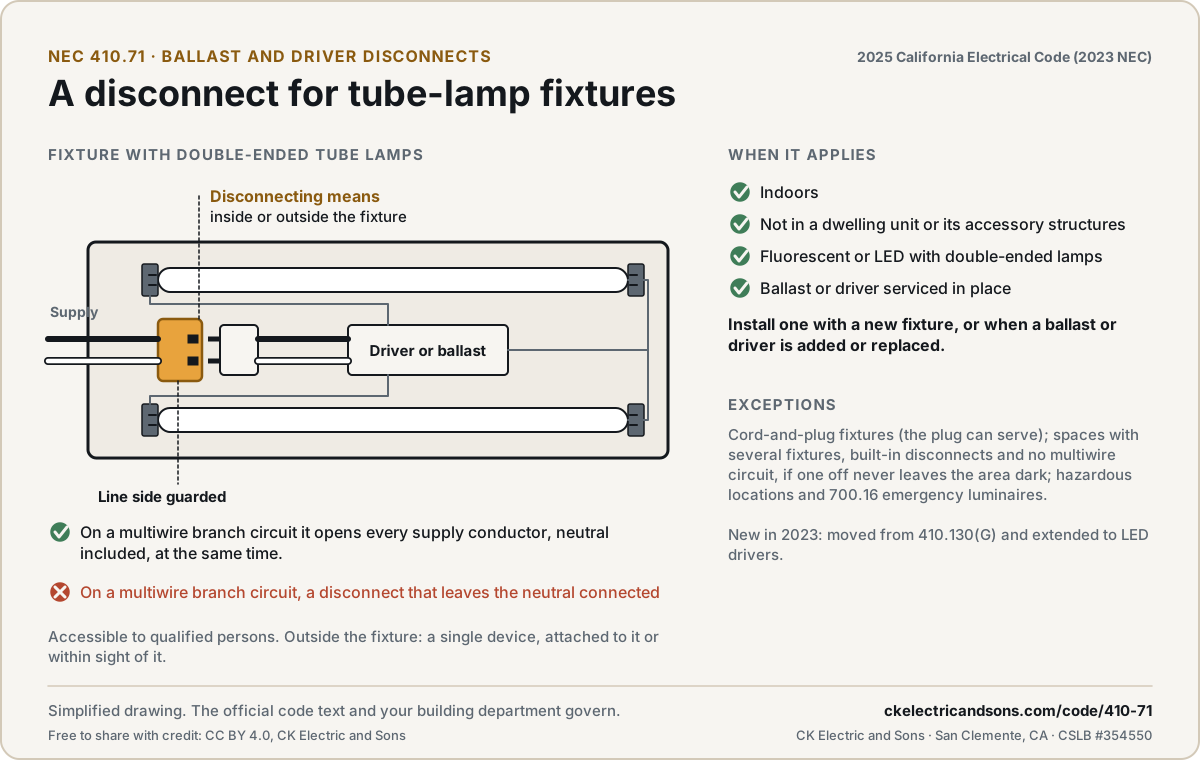 NEC 410.71: A disconnect for tube-lamp fixturesRead the sectionSVGPNG
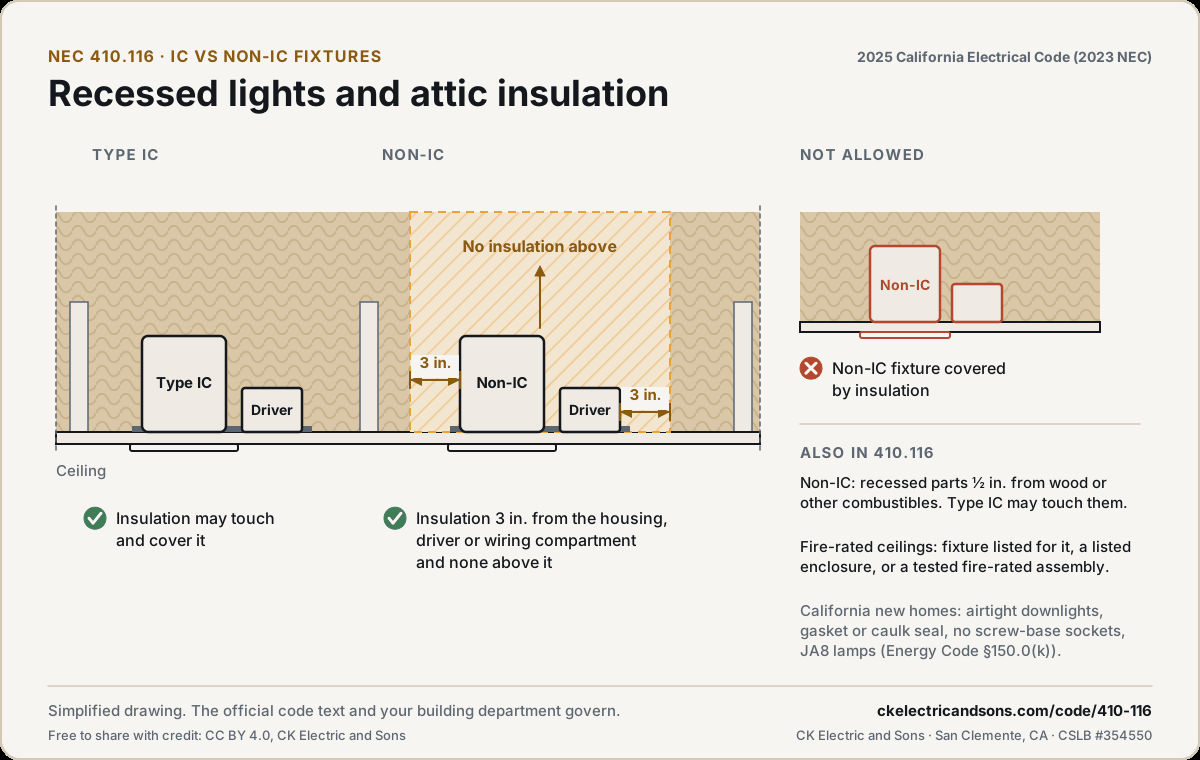
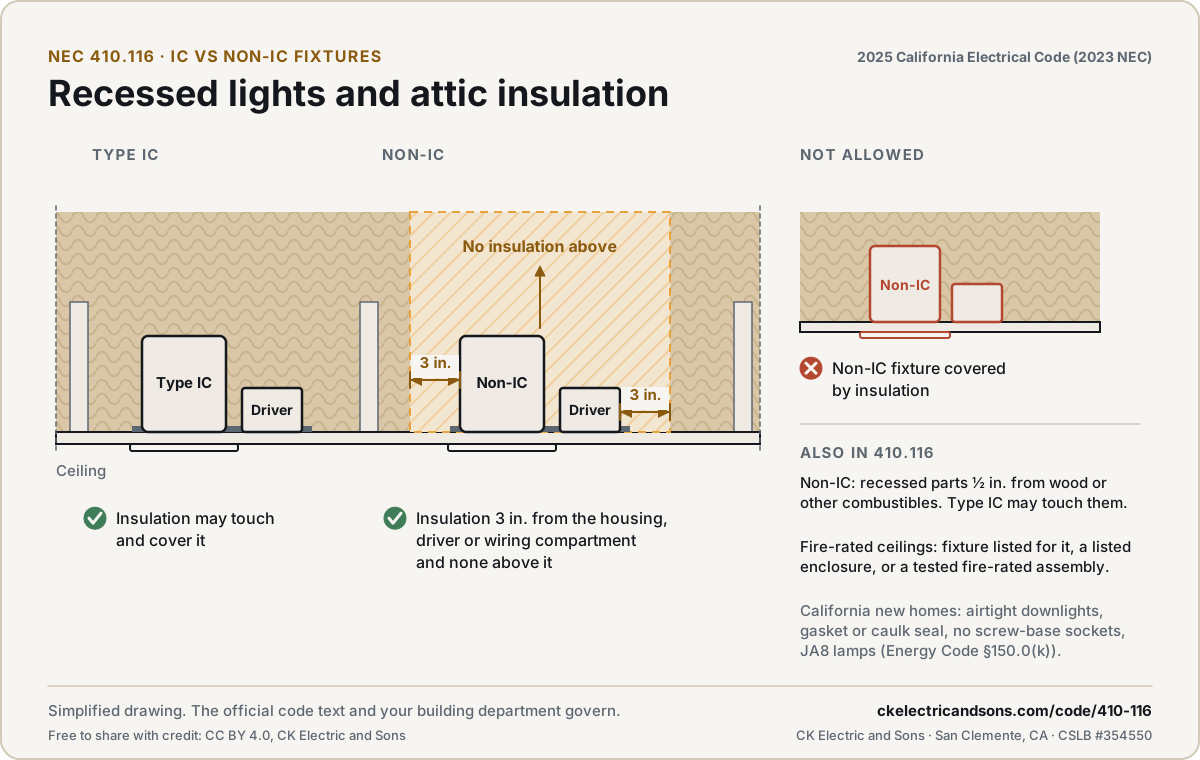 NEC 410.116: Recessed lights and attic insulationRead the sectionSVGPNG
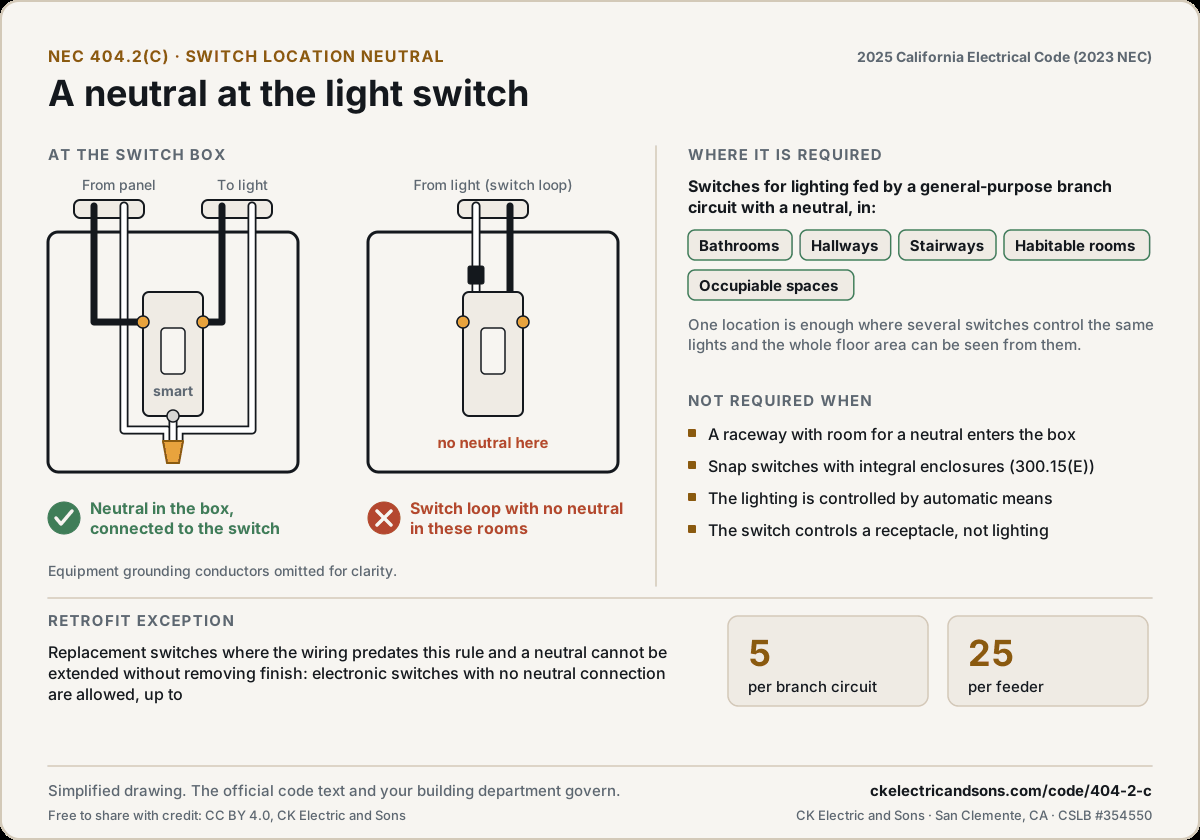
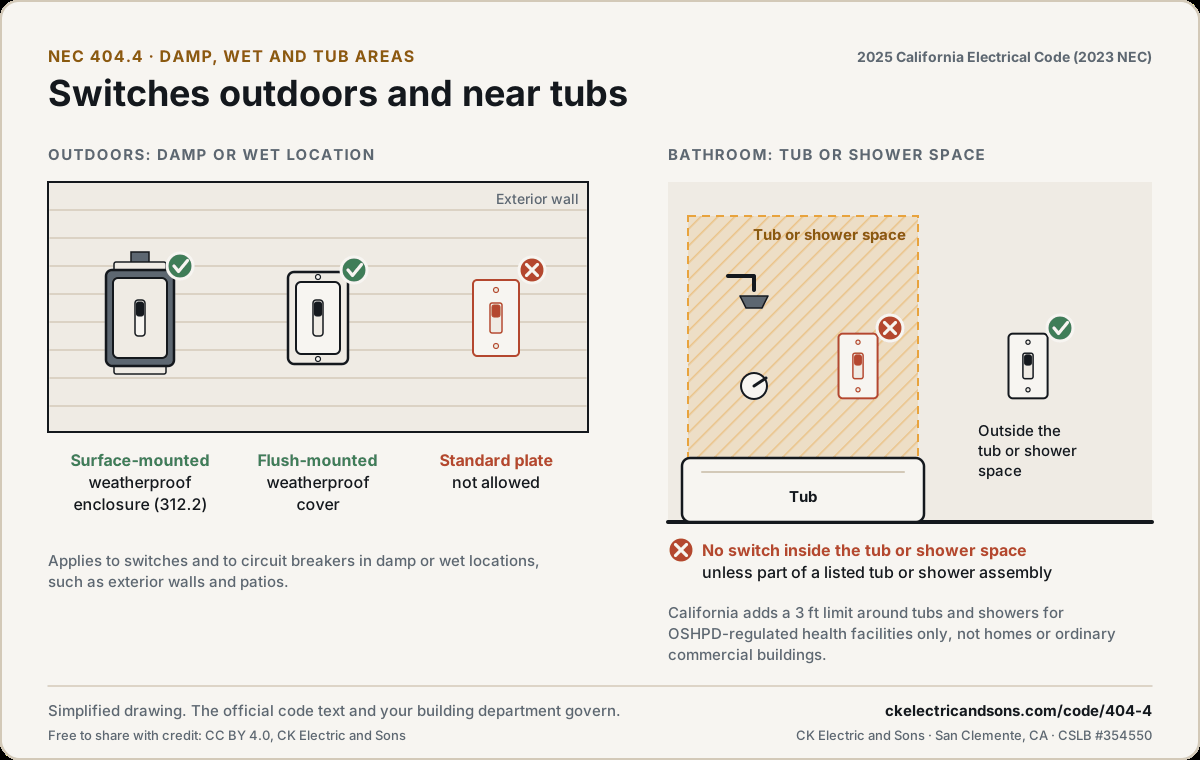
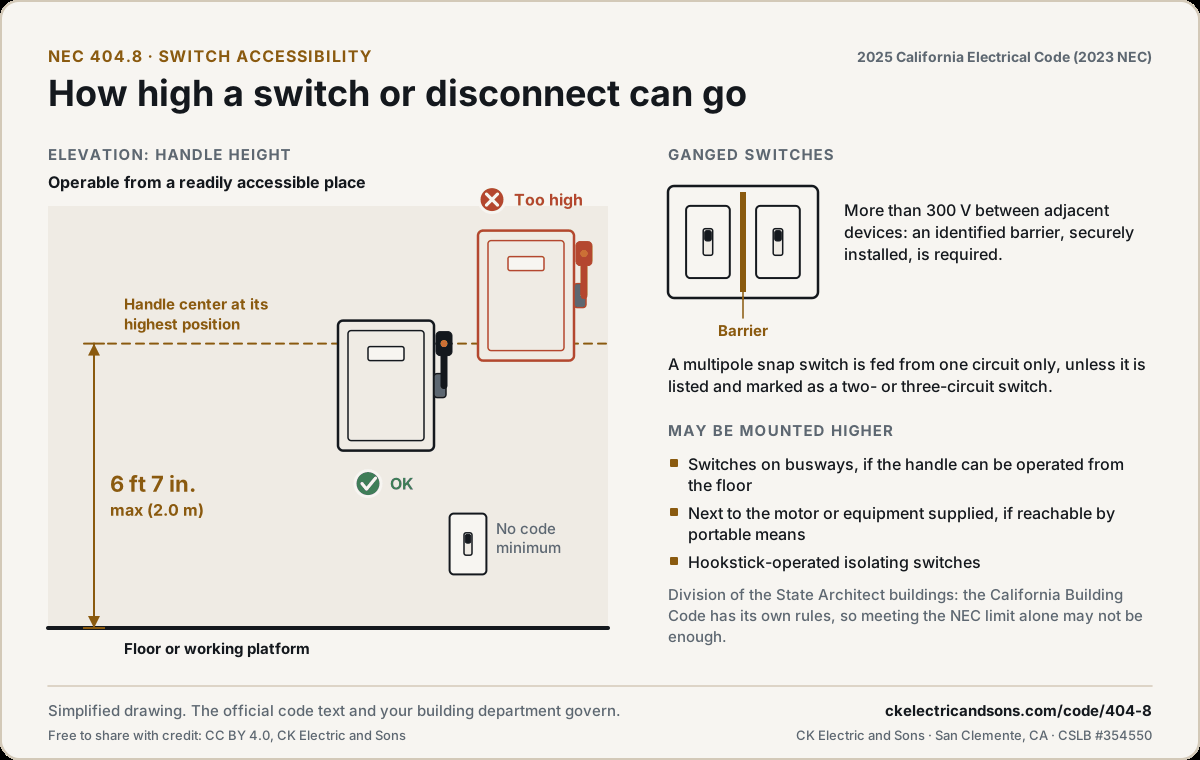
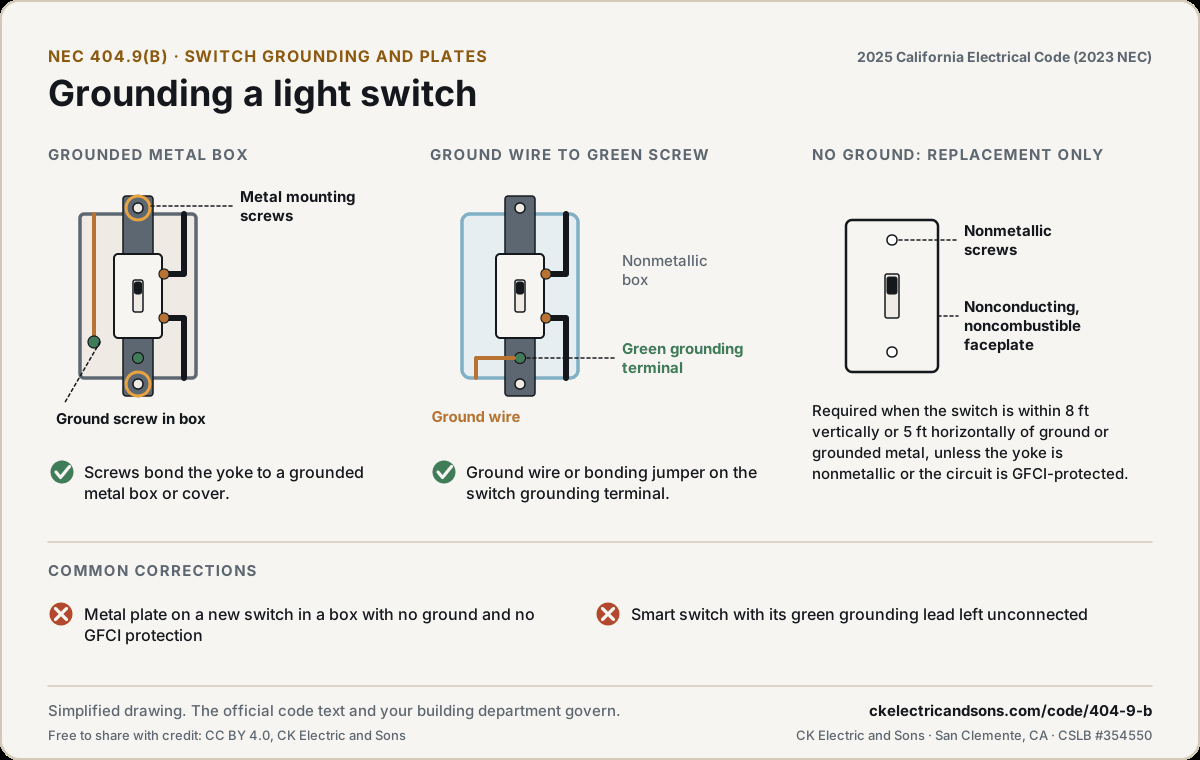
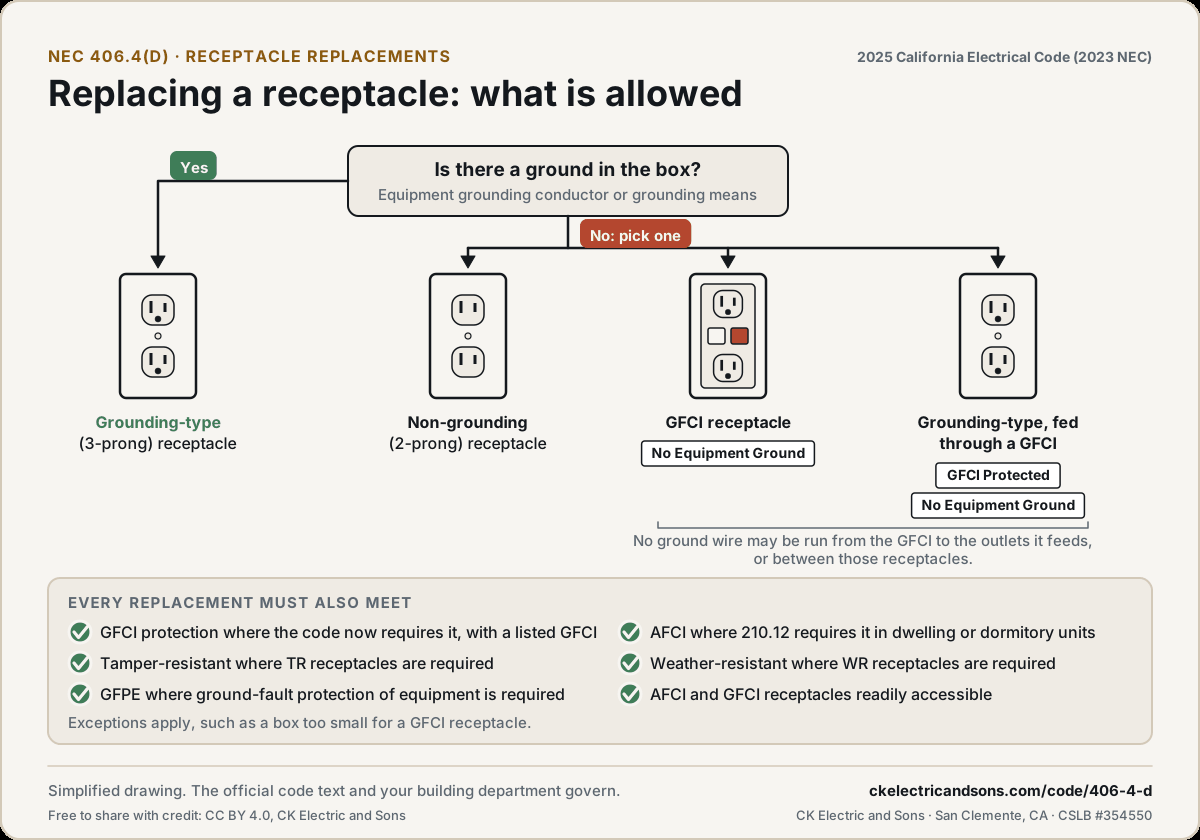
Appliances, HVAC, motors and generators
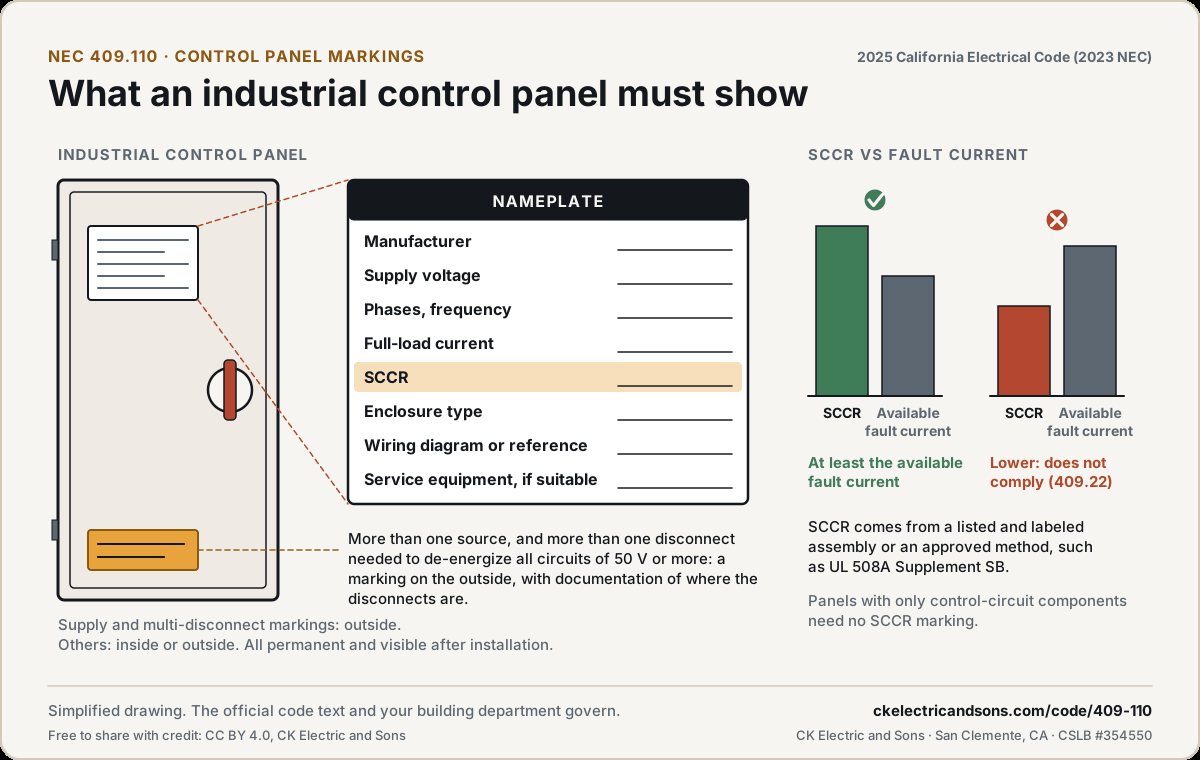
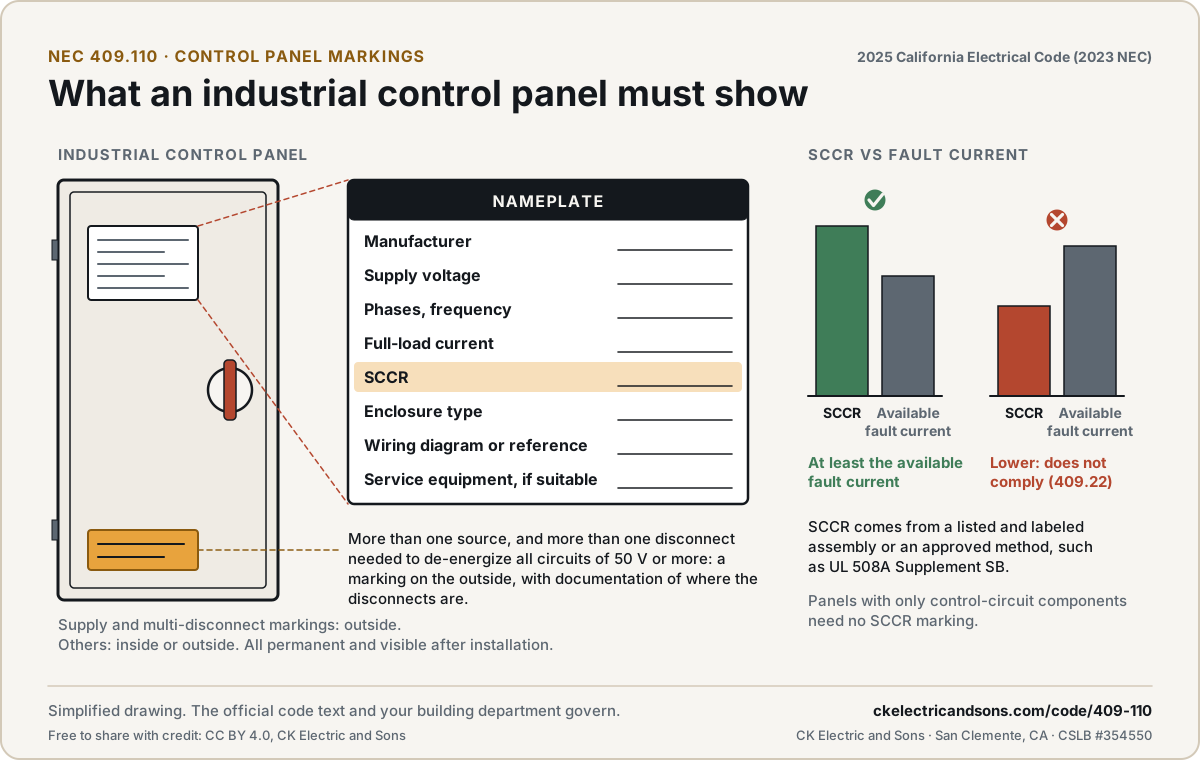 NEC 409.110: What an industrial control panel must showRead the sectionSVGPNG
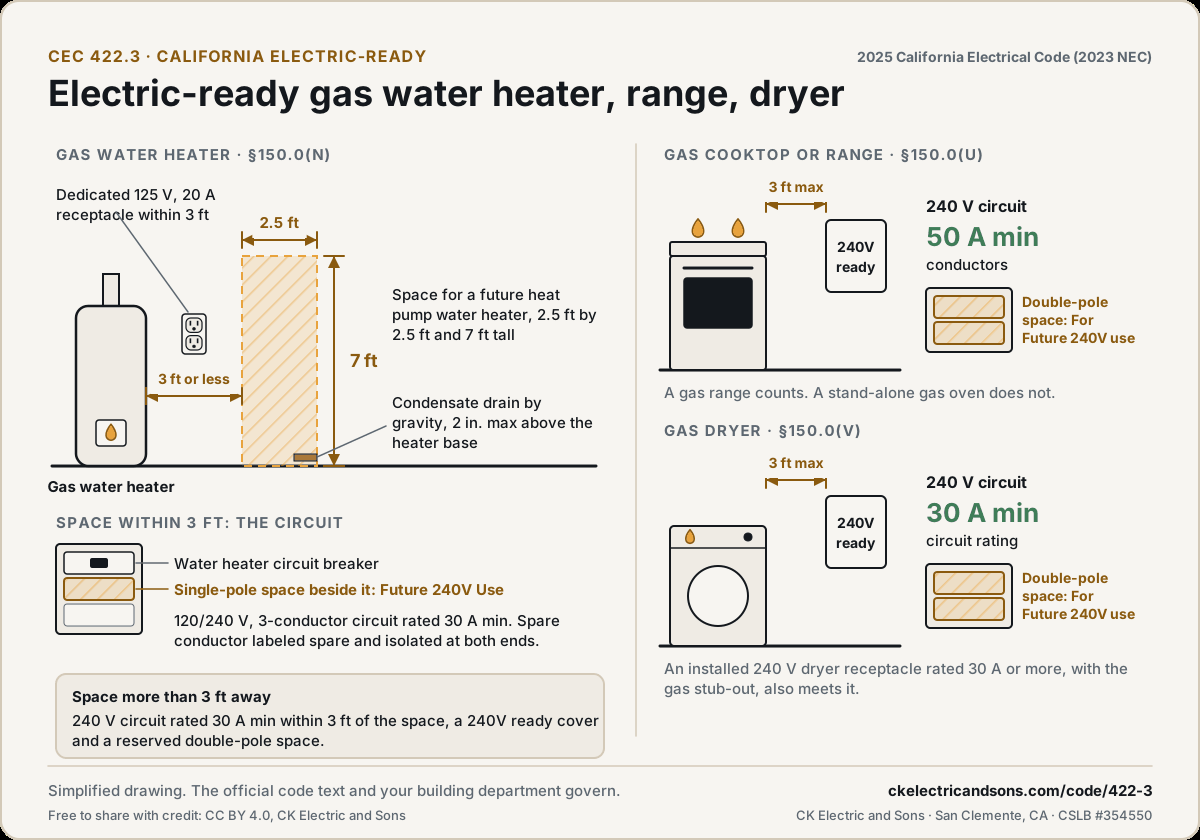
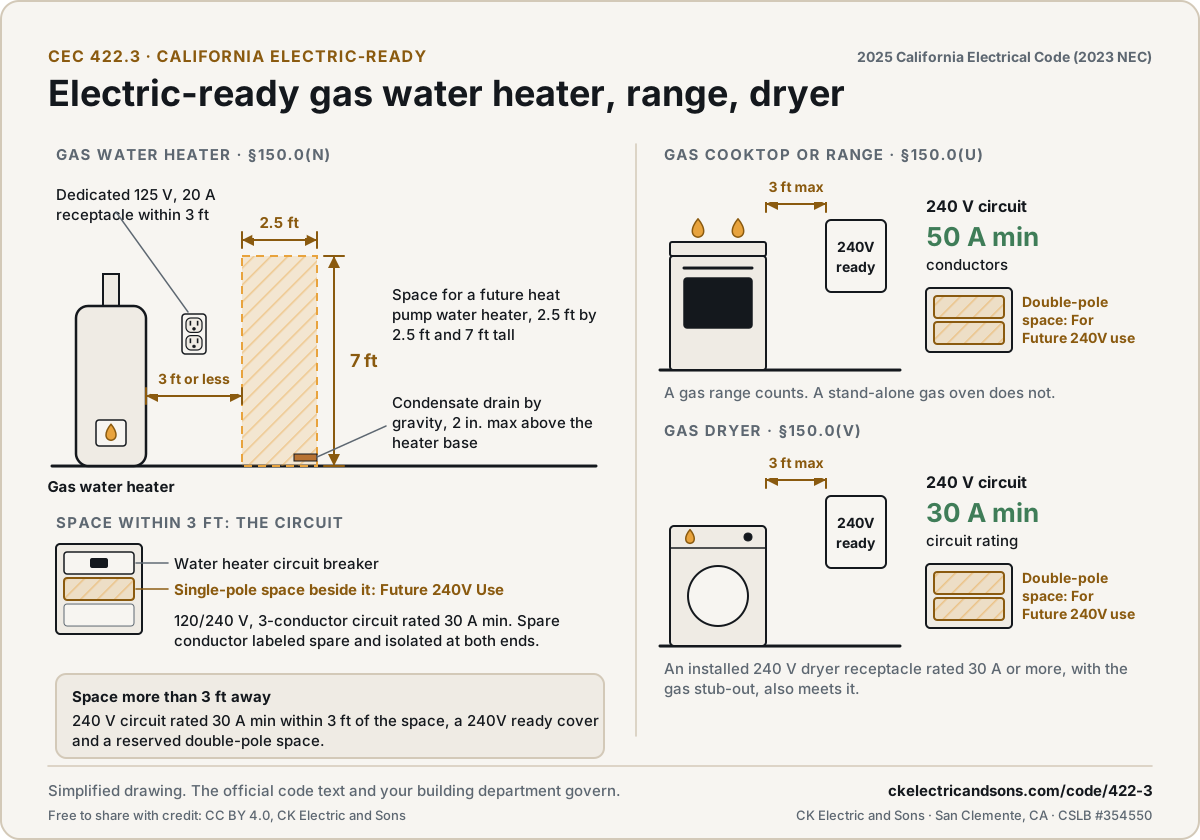 CEC 422.3: Electric-ready gas water heater, range, dryerRead the sectionSVGPNG
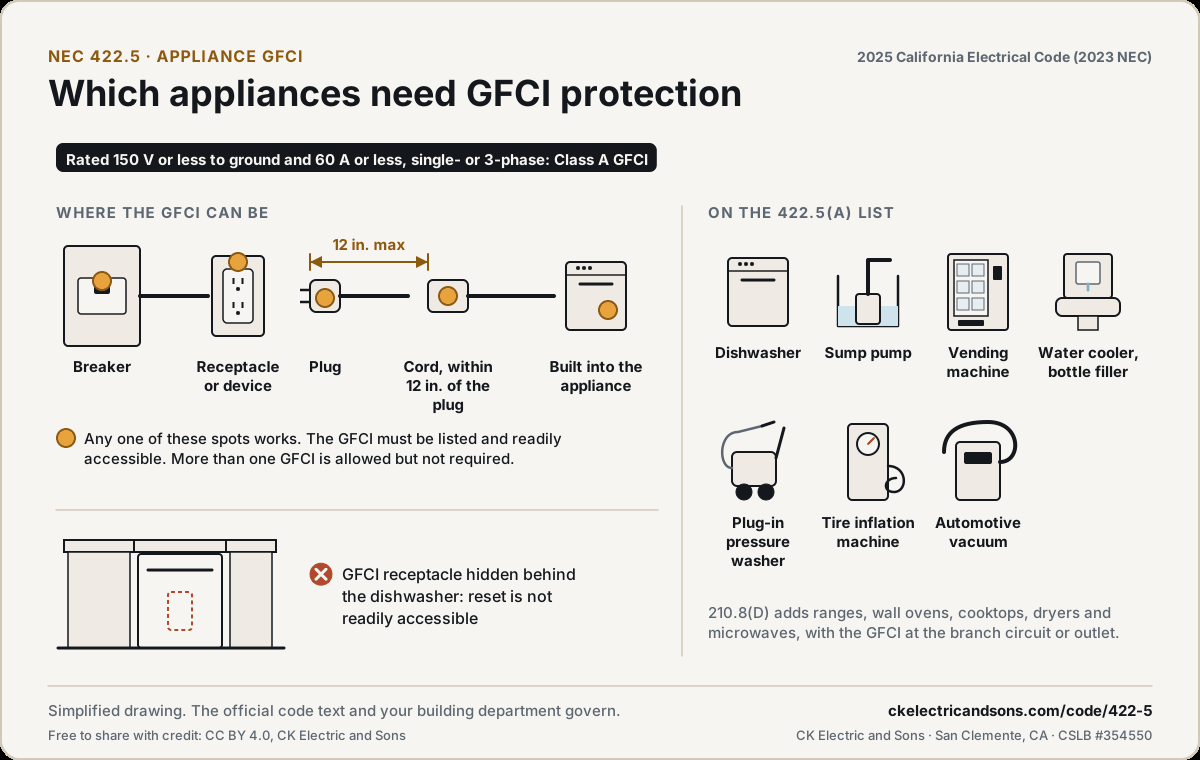
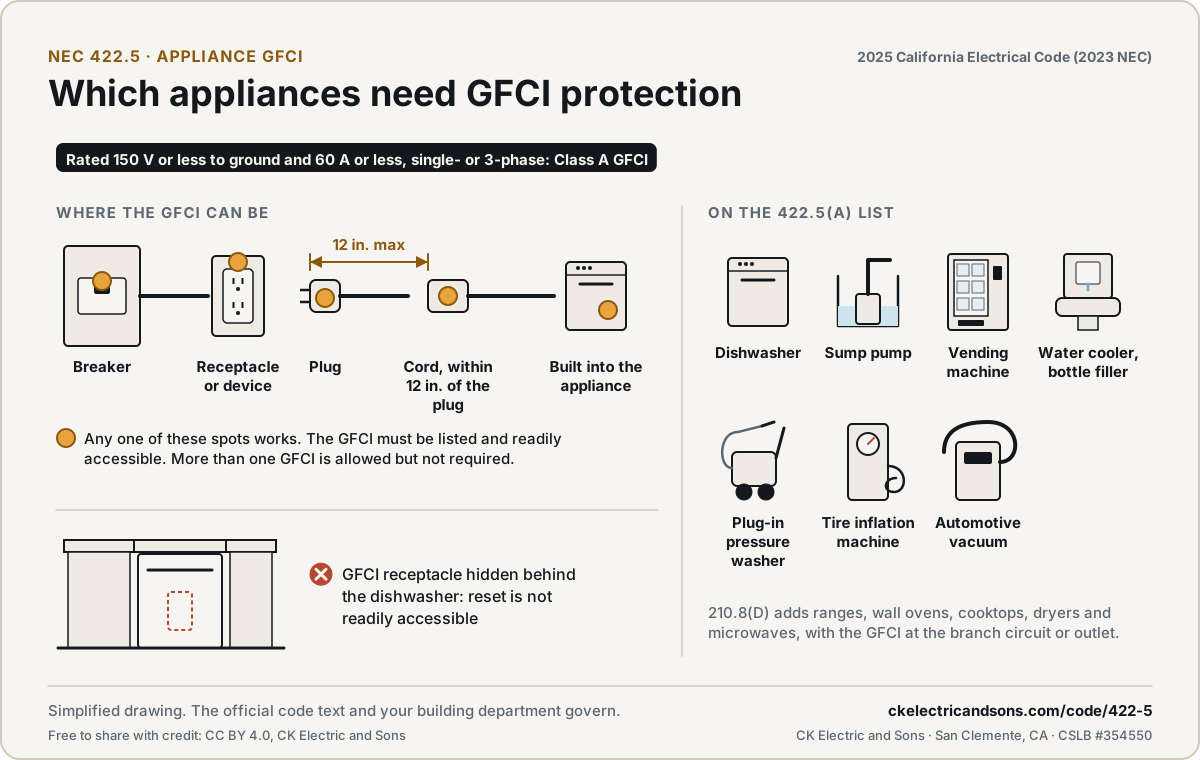 NEC 422.5: Which appliances need GFCI protectionRead the sectionSVGPNG
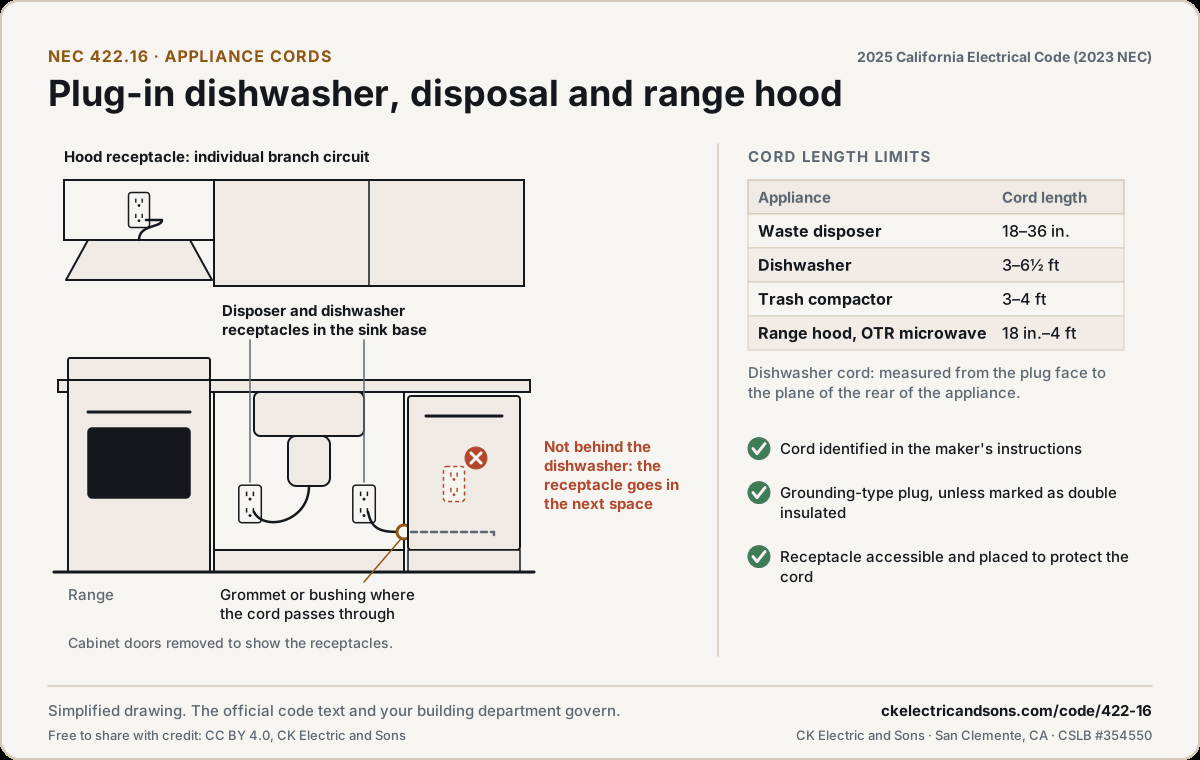
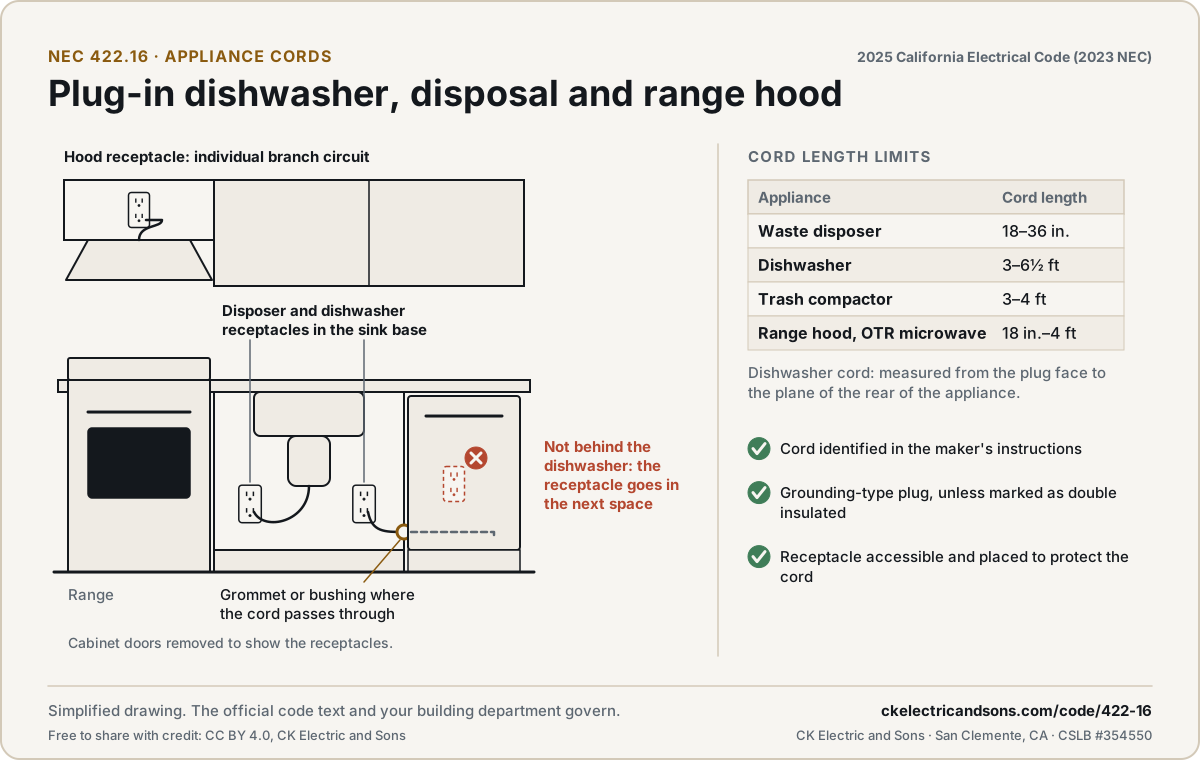 NEC 422.16: Plug-in dishwasher, disposal and range hoodRead the sectionSVGPNG
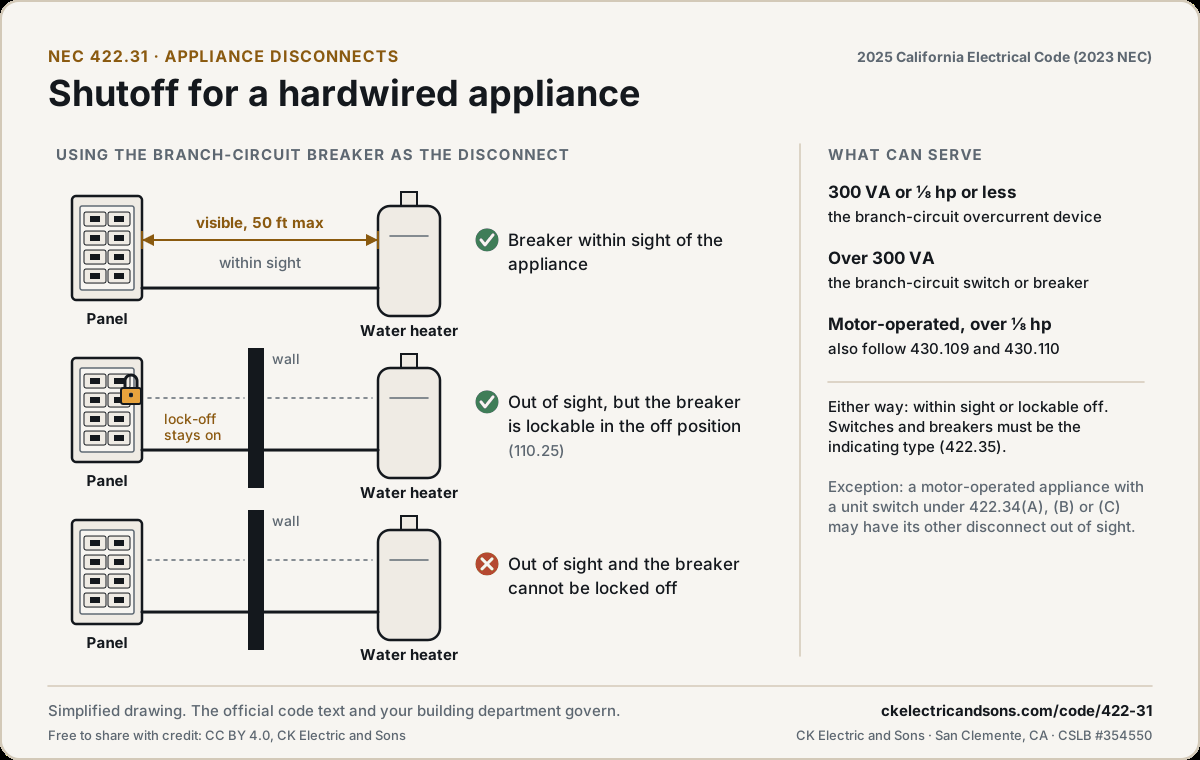
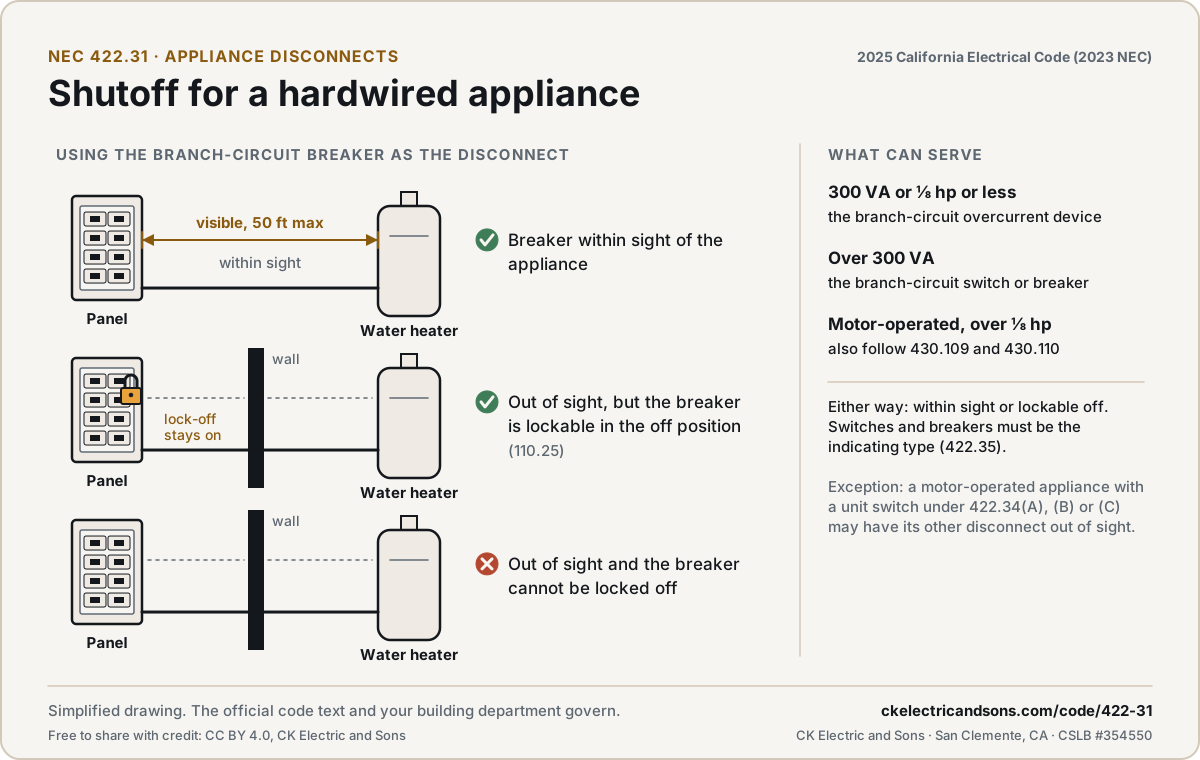 NEC 422.31: Shutoff for a hardwired applianceRead the sectionSVGPNG
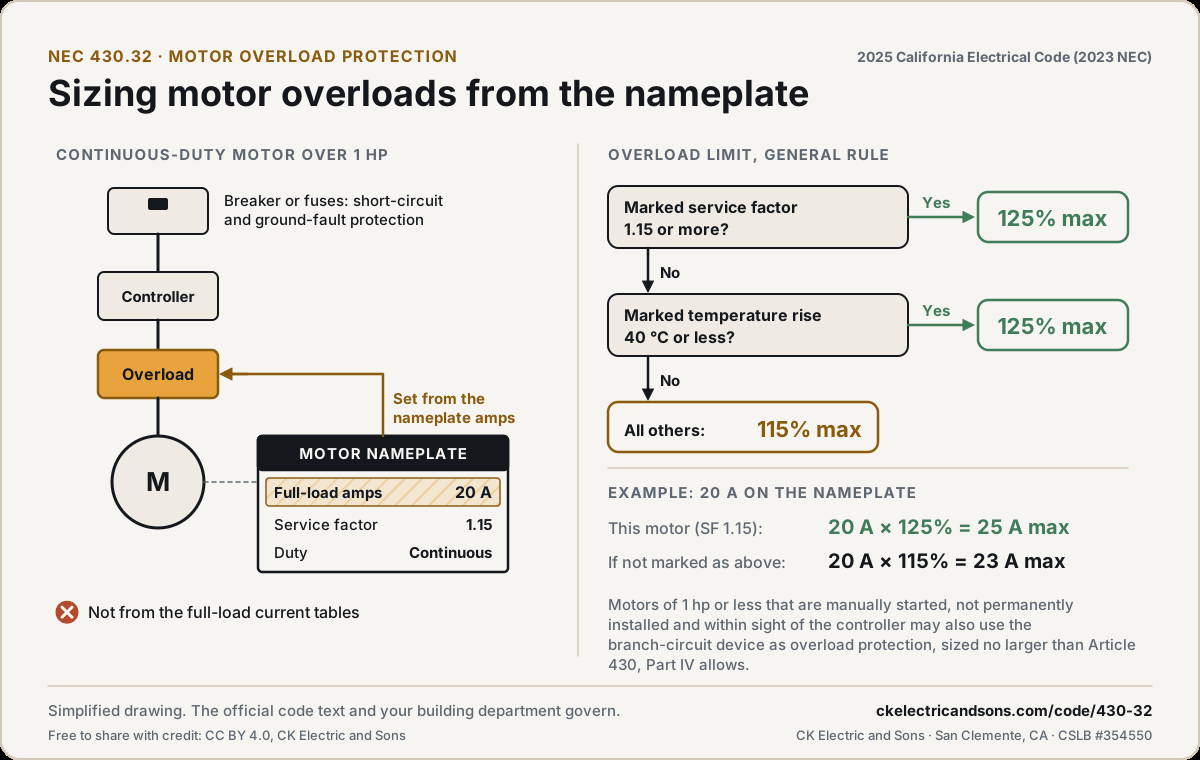
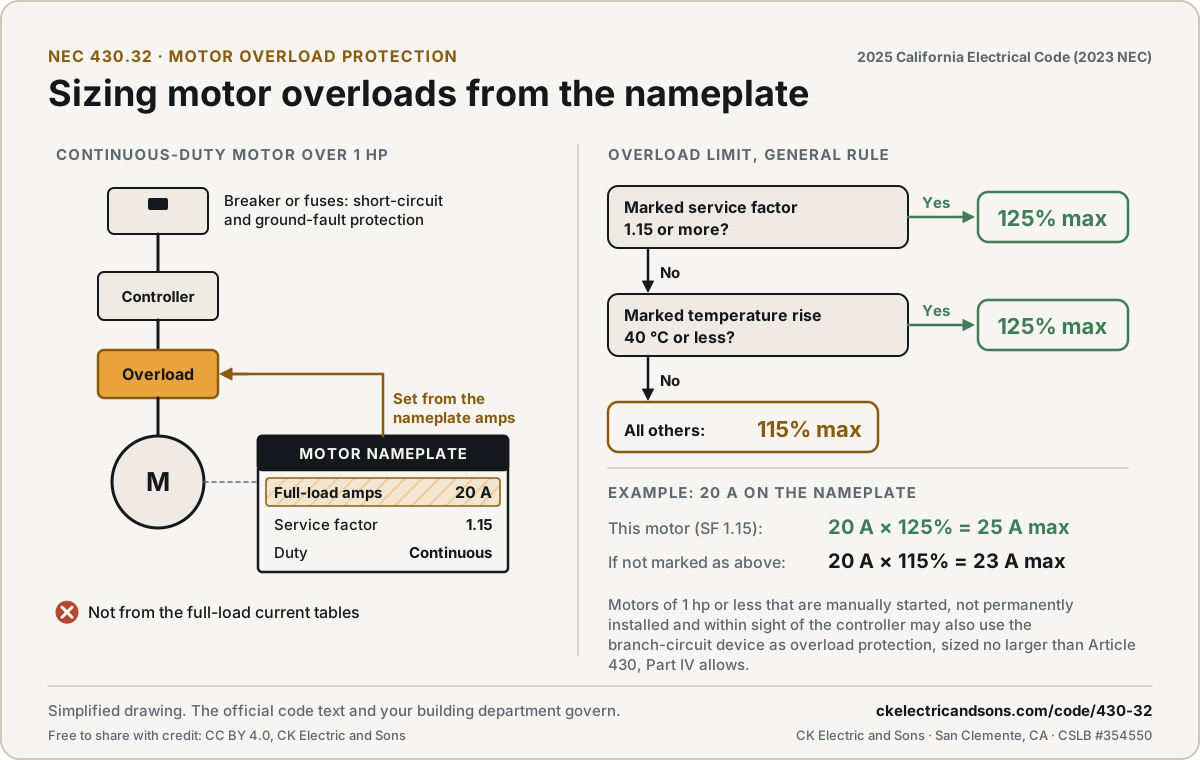 NEC 430.32: Sizing motor overloads from the nameplateRead the sectionSVGPNG
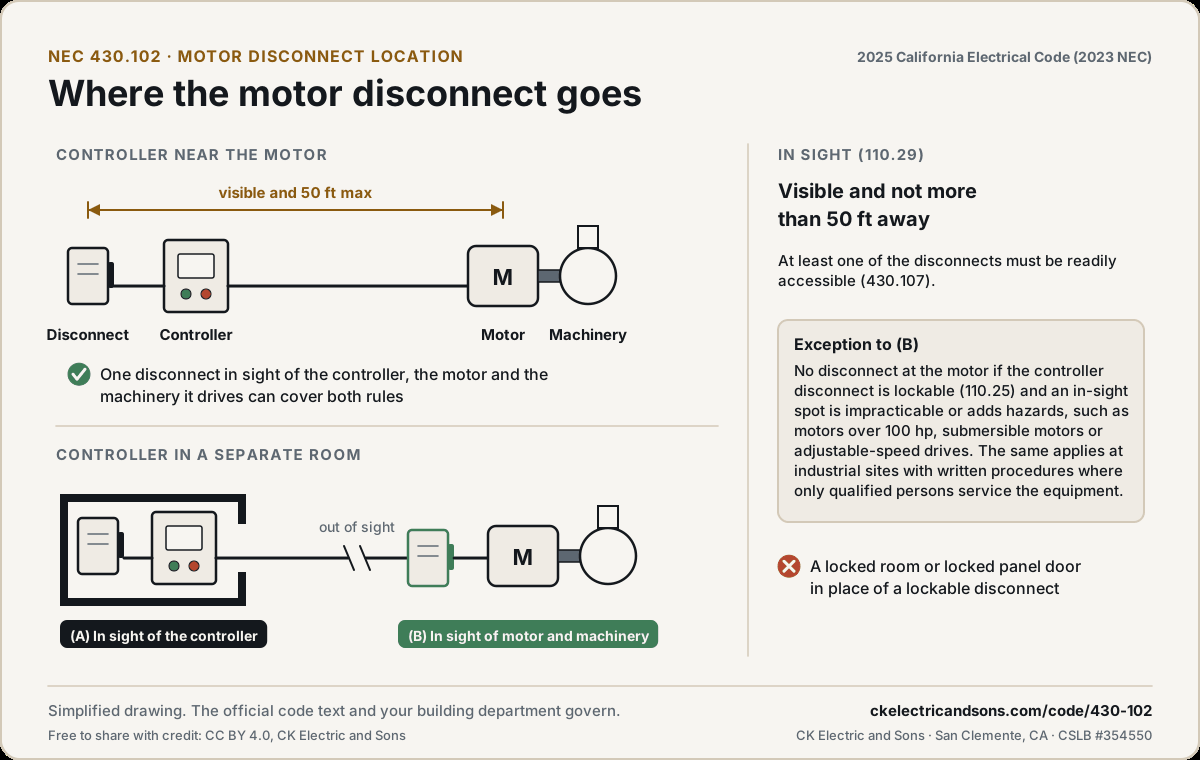
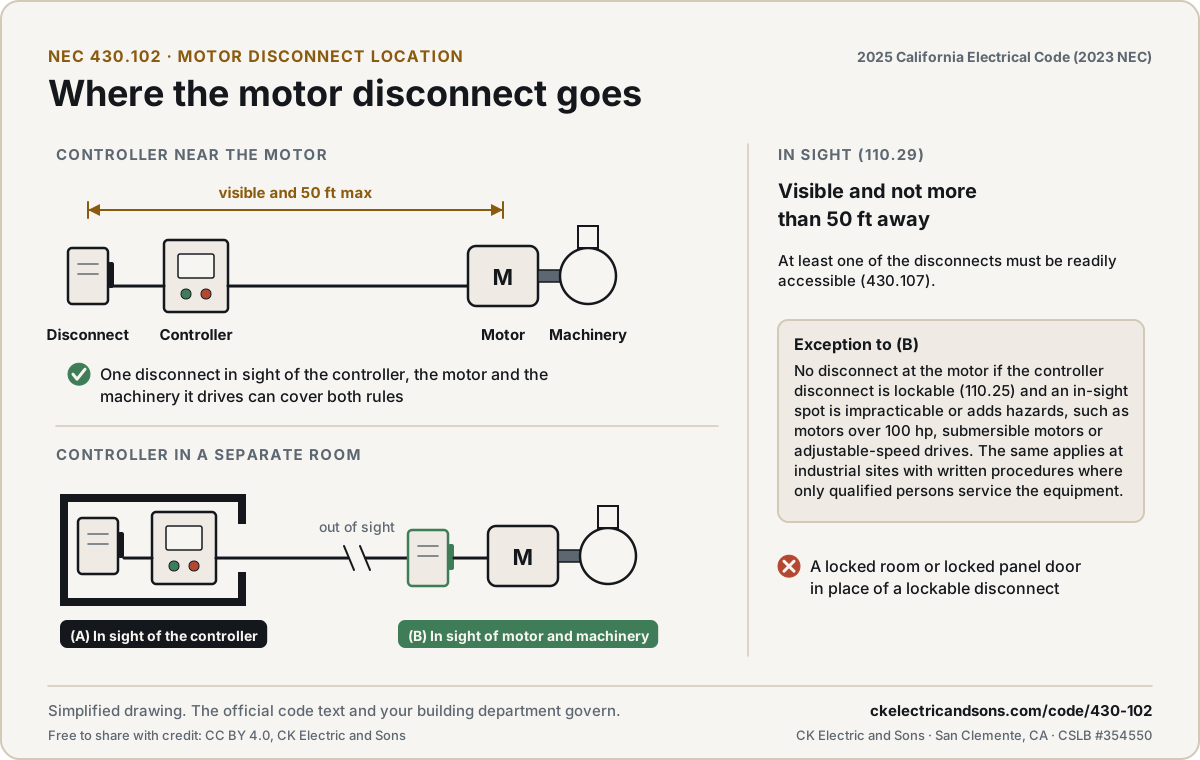 NEC 430.102: Where the motor disconnect goesRead the sectionSVGPNG
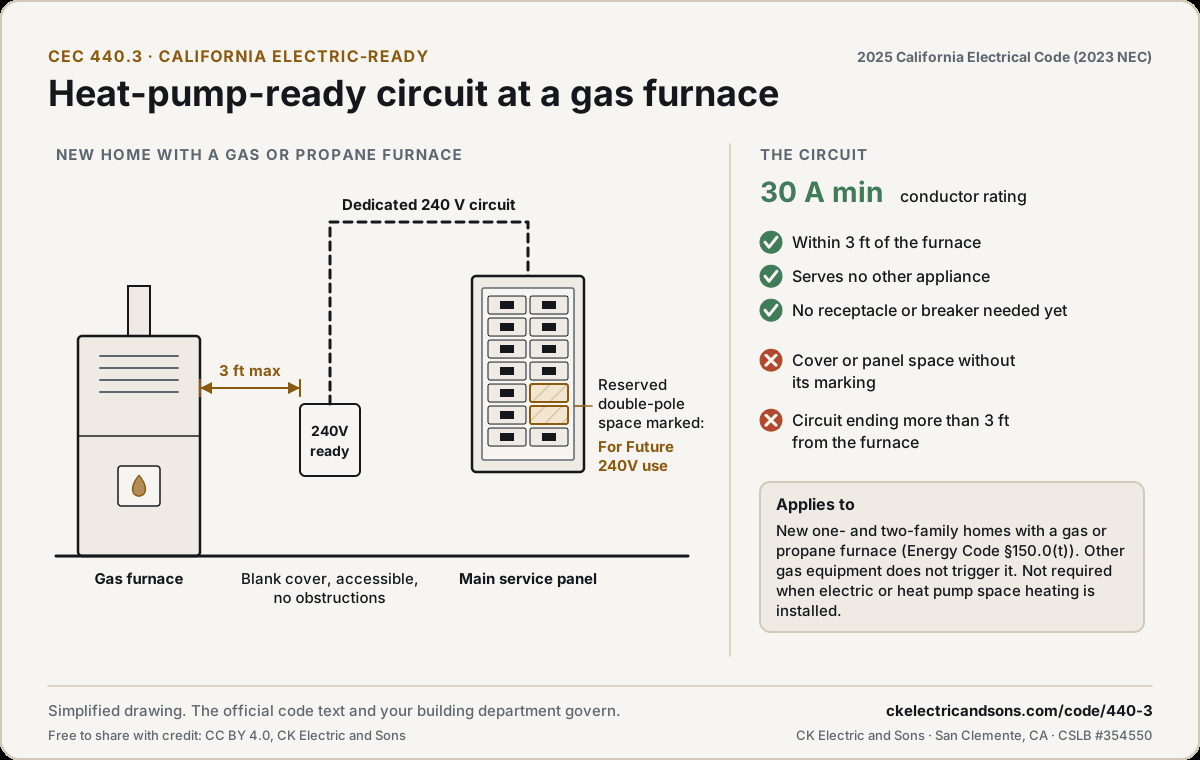
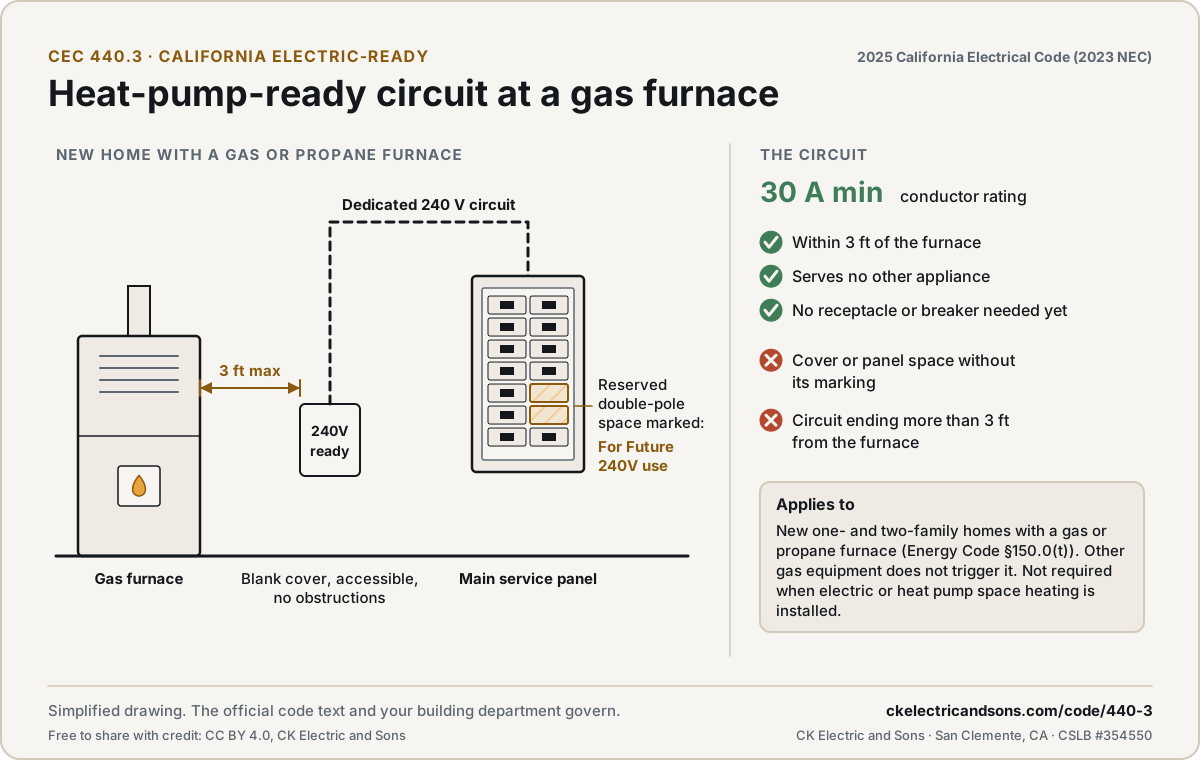 CEC 440.3: Heat-pump-ready circuit at a gas furnaceRead the sectionSVGPNG
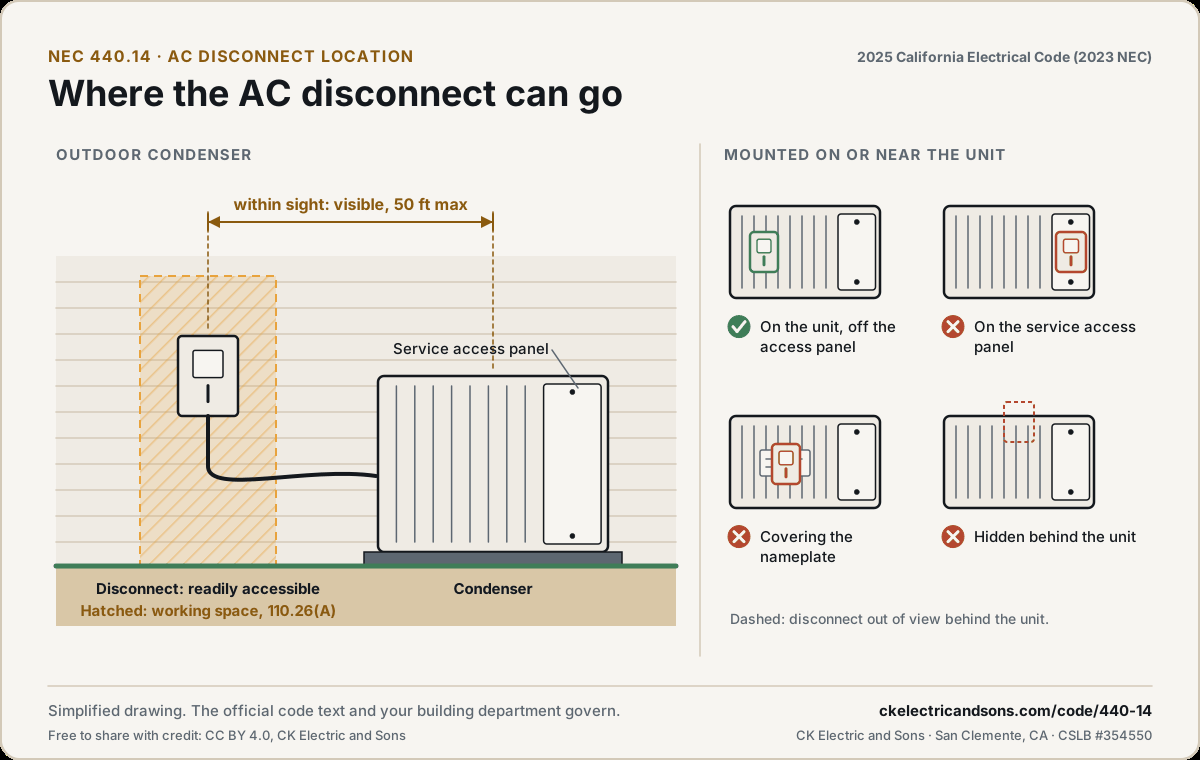
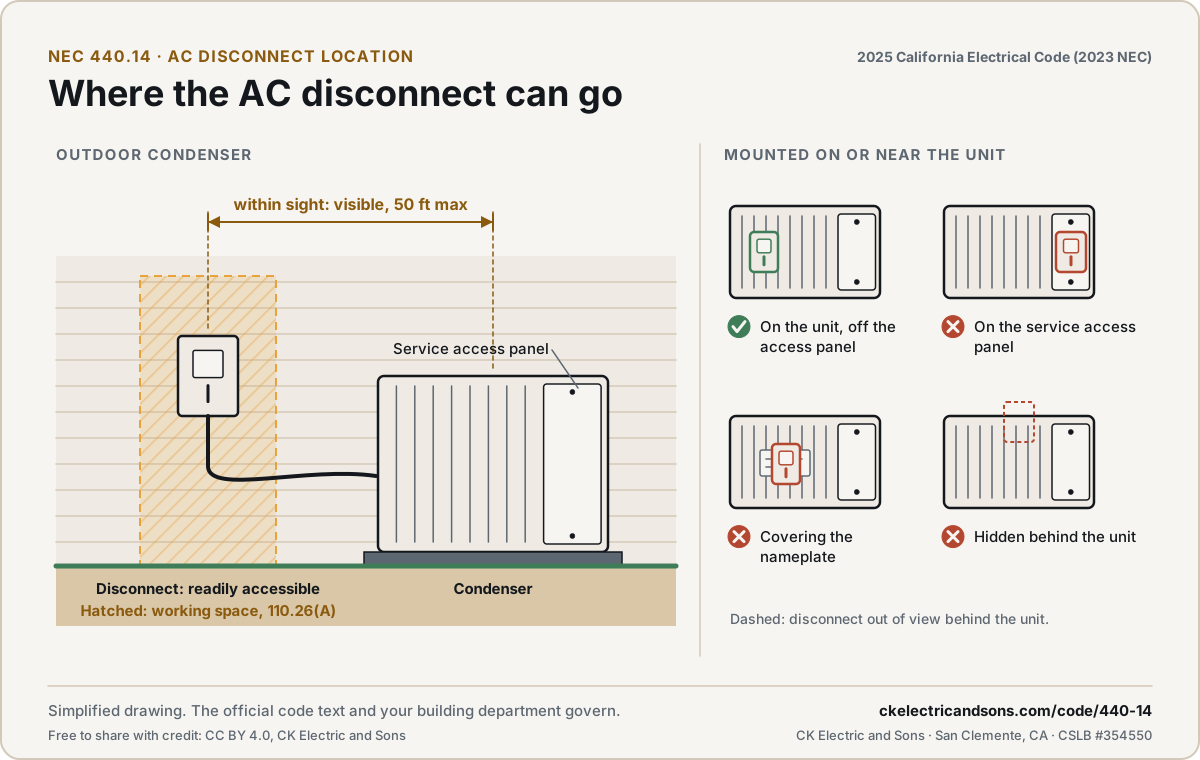 NEC 440.14: Where the AC disconnect can goRead the sectionSVGPNG
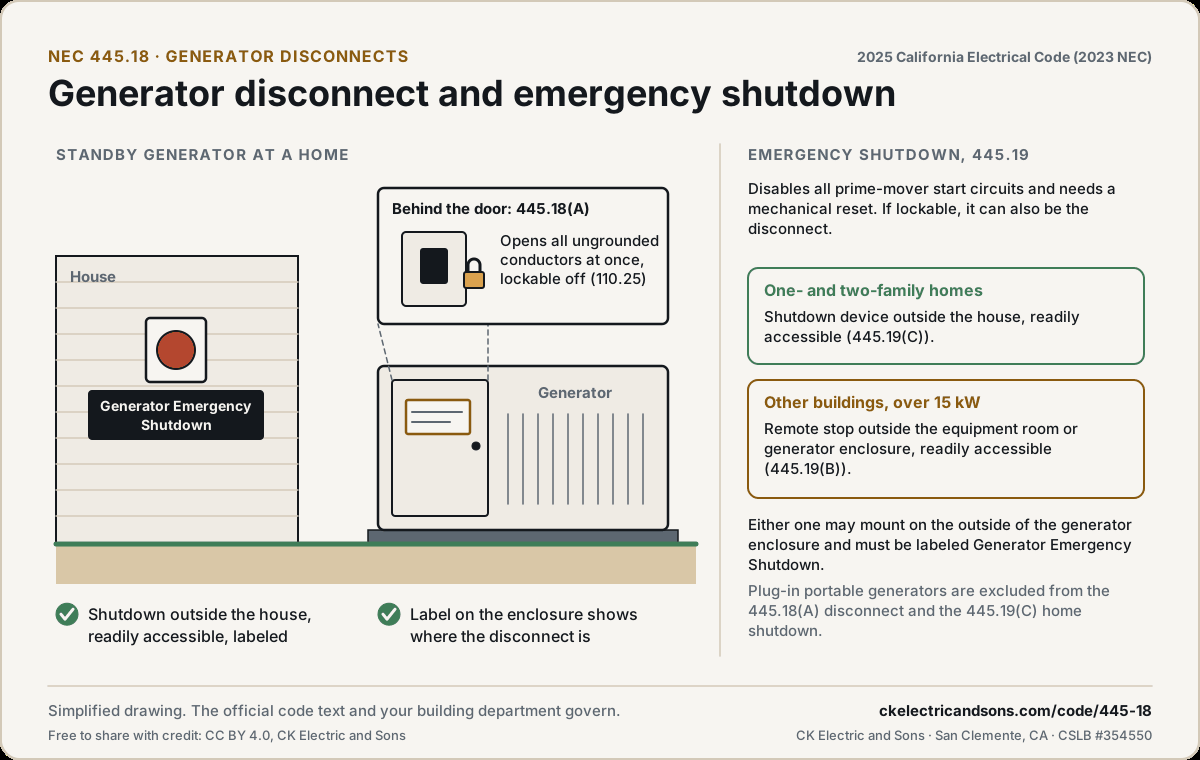
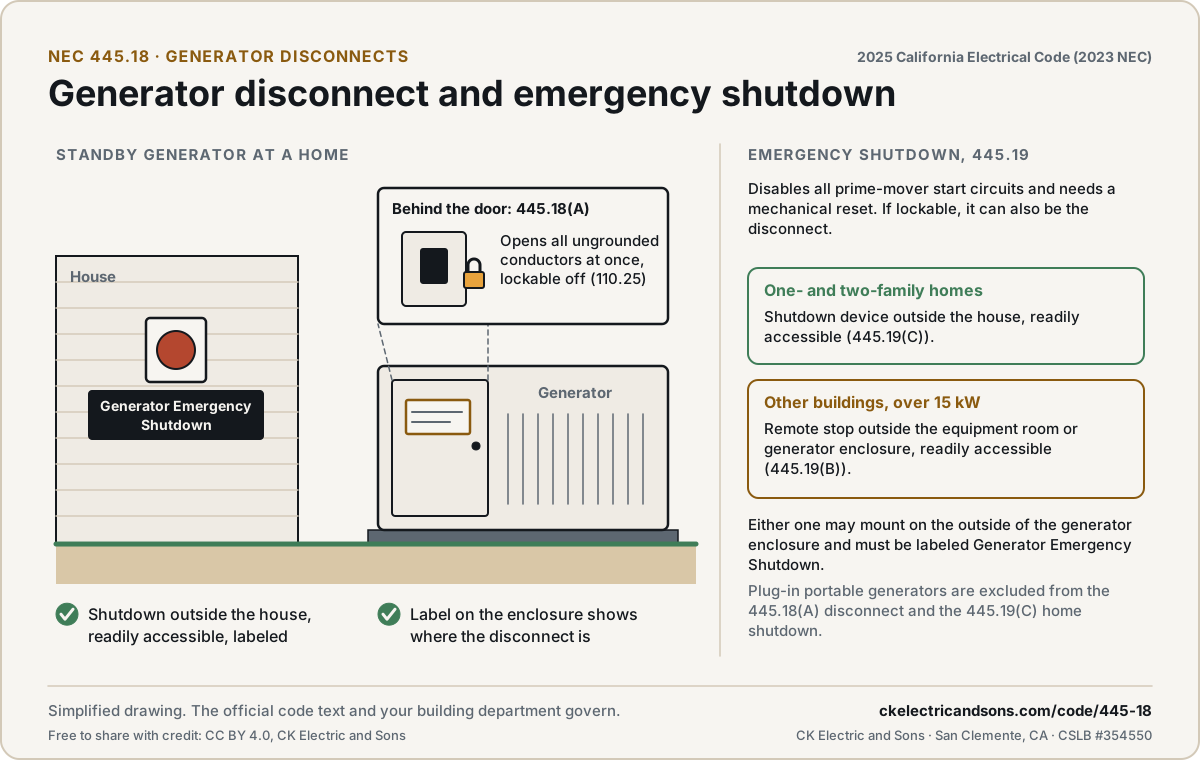 NEC 445.18: Generator disconnect and emergency shutdownRead the sectionSVGPNG
Special locations
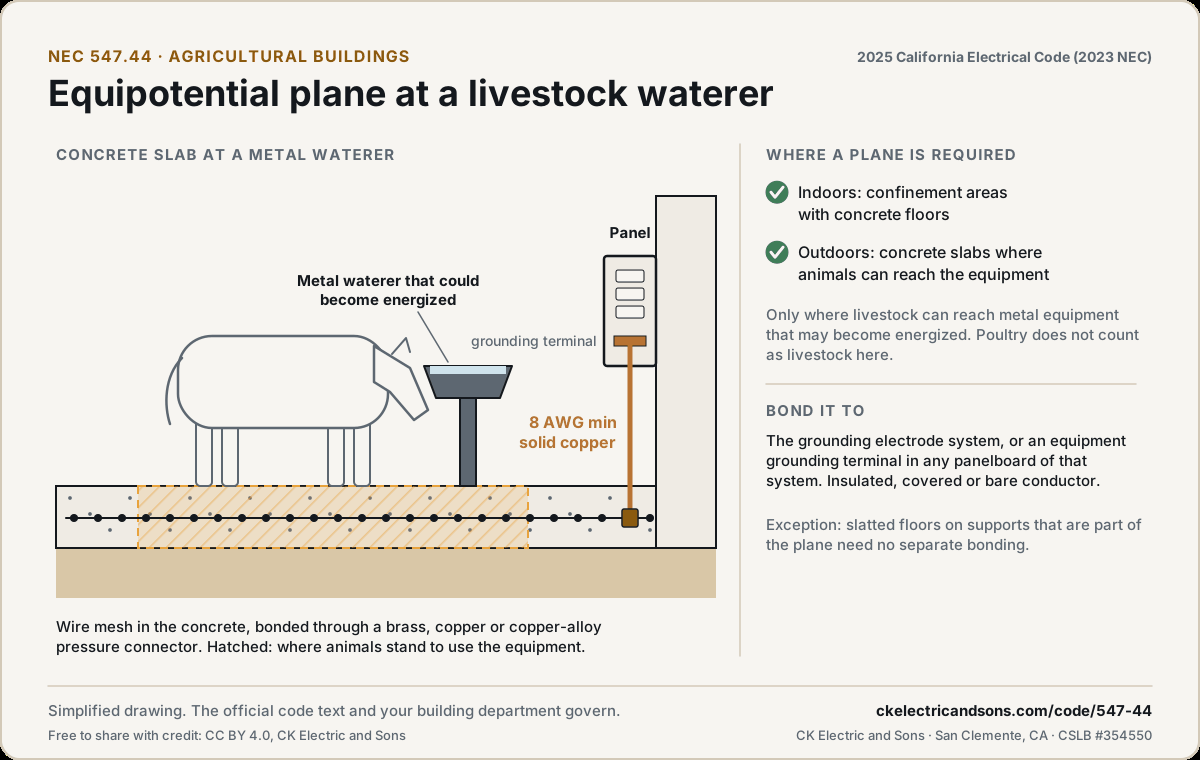
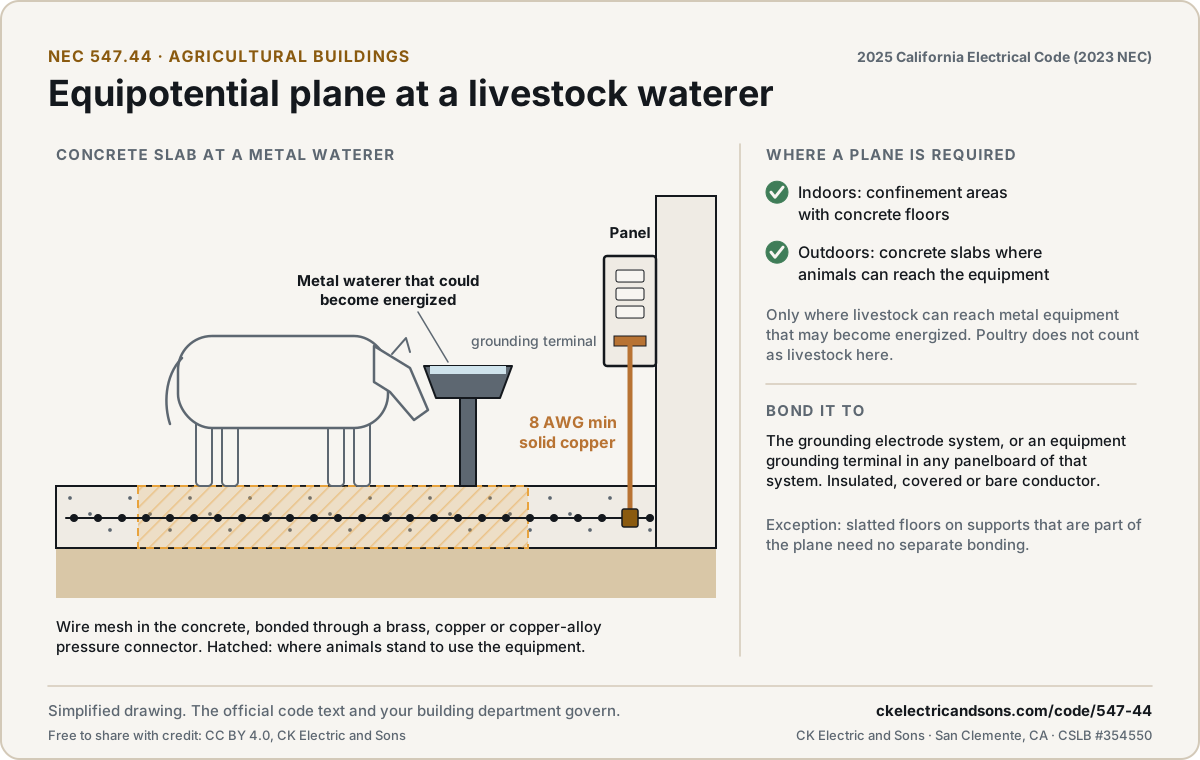 NEC 547.44: Equipotential plane at a livestock watererRead the sectionSVGPNG
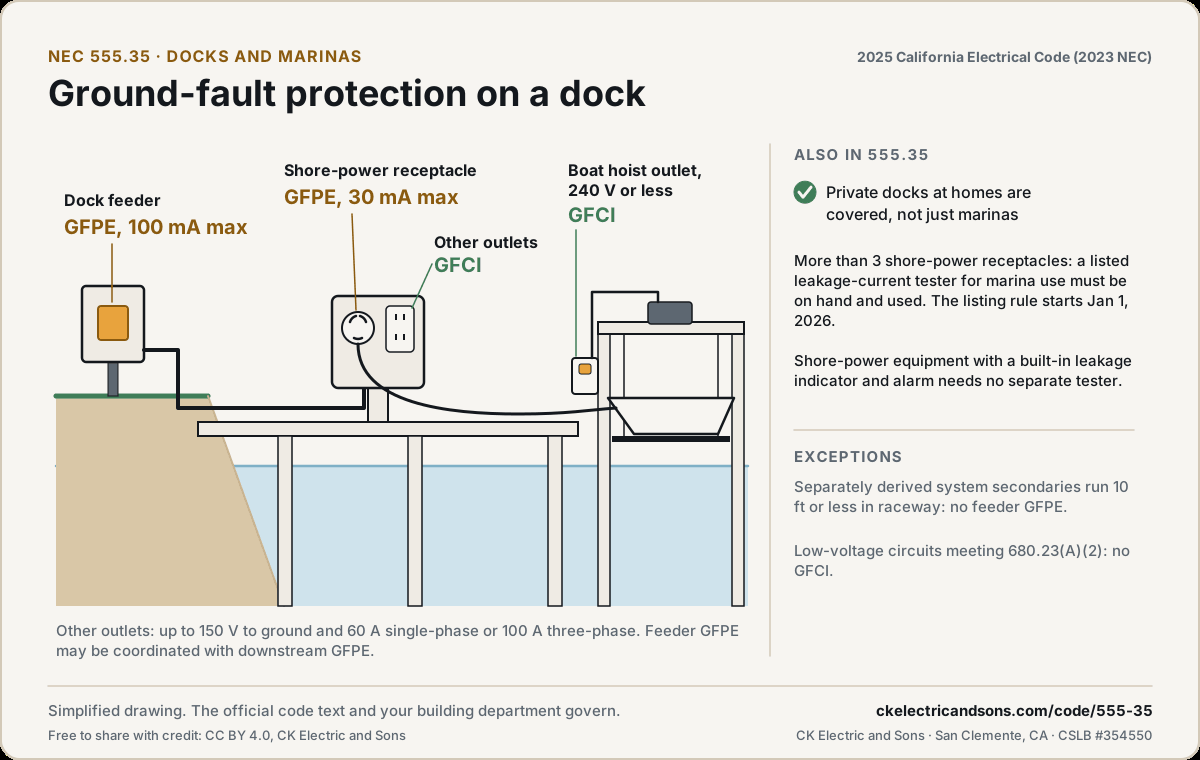
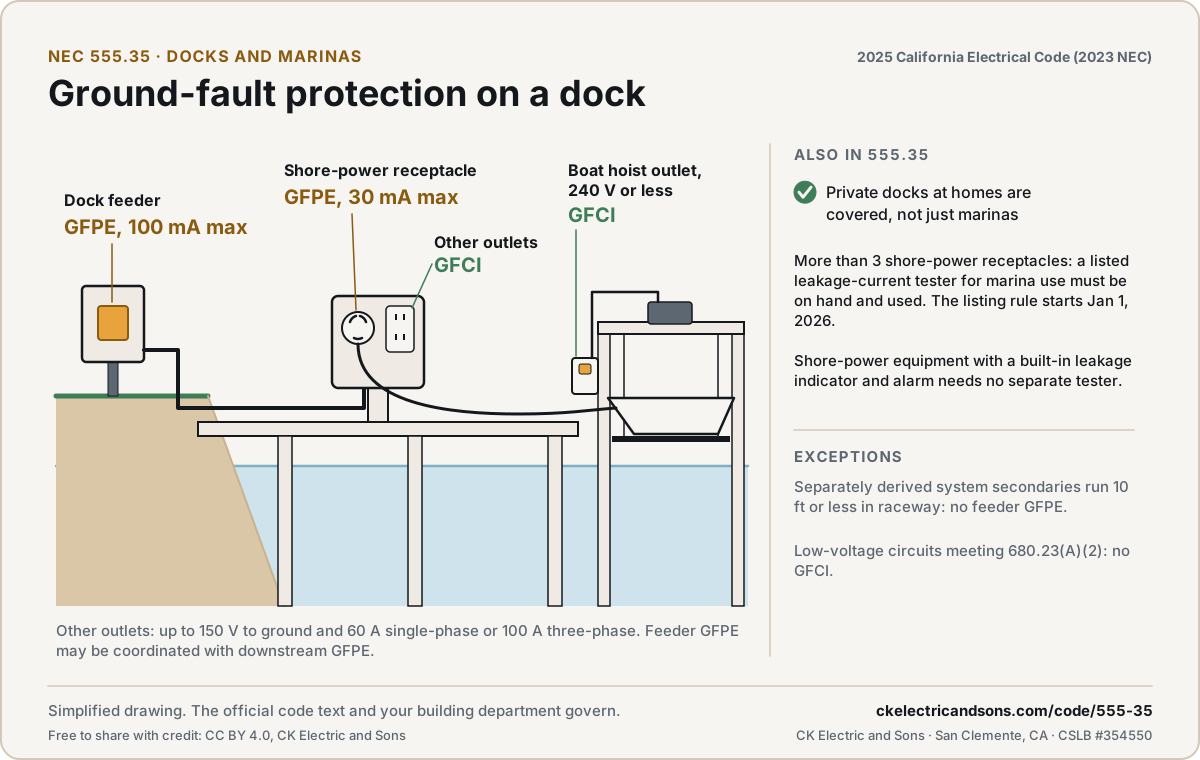 NEC 555.35: Ground-fault protection on a dockRead the sectionSVGPNG
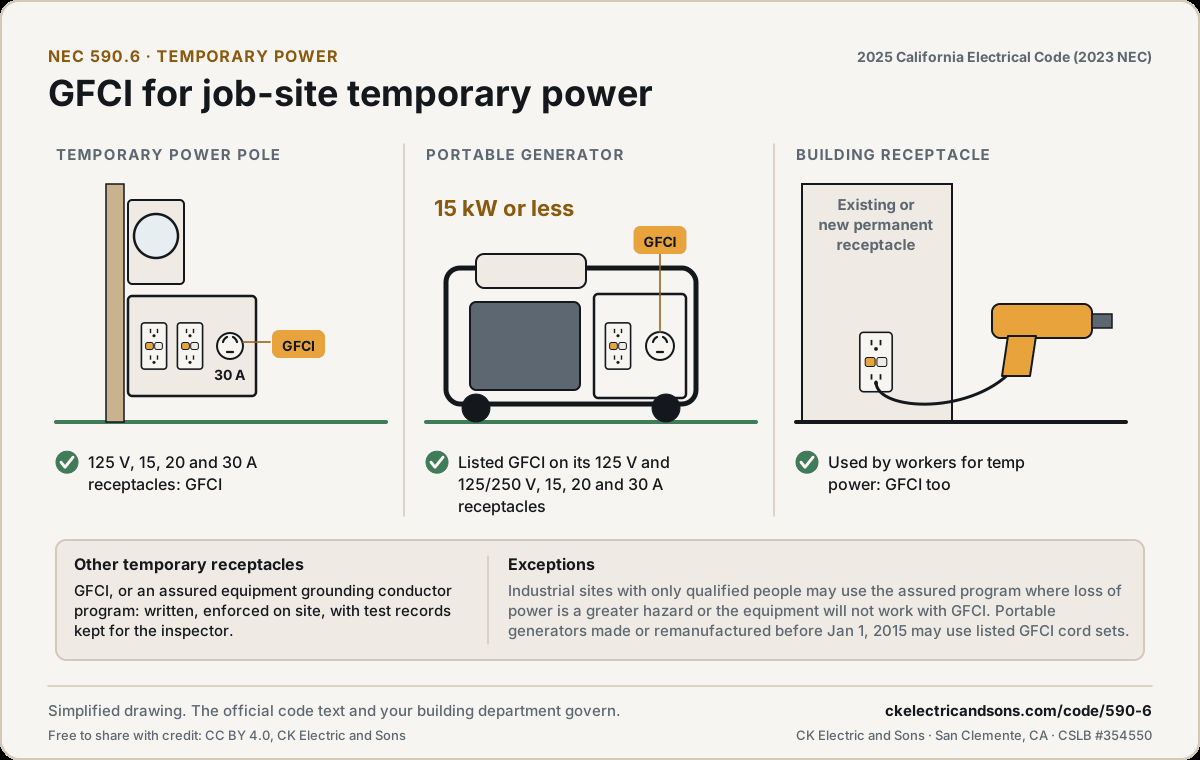
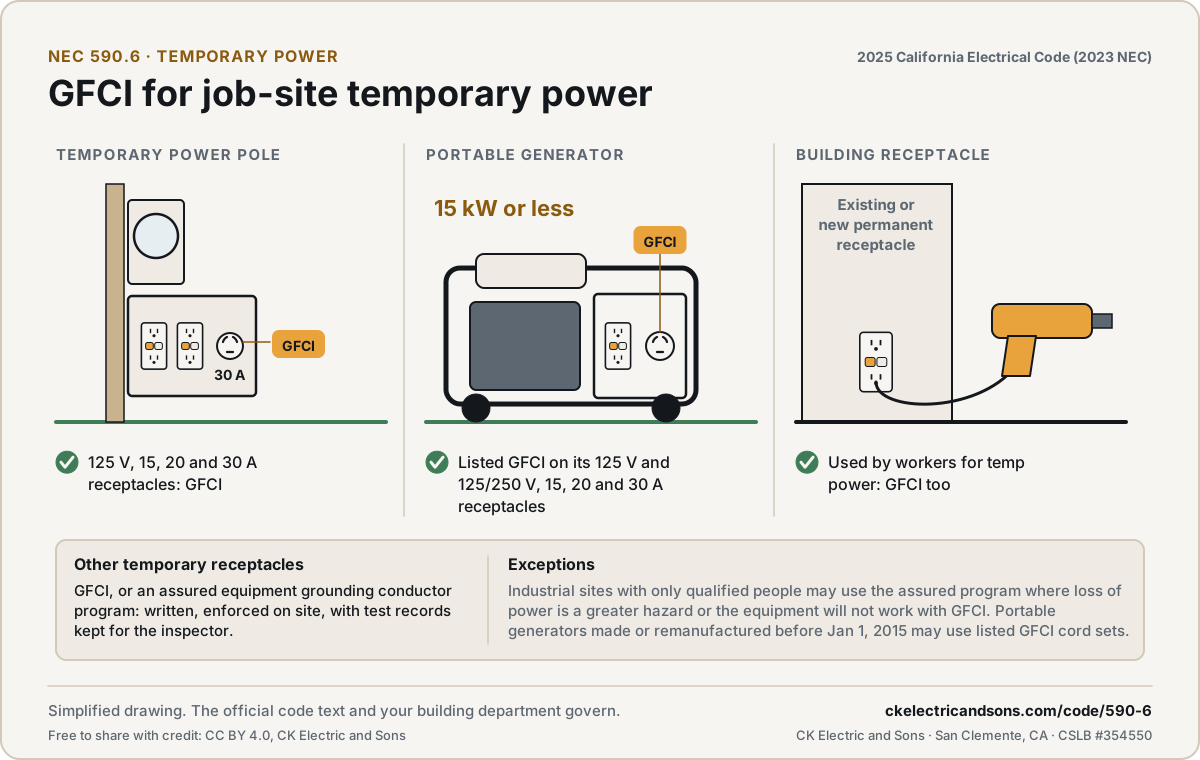 NEC 590.6: GFCI for job-site temporary powerRead the sectionSVGPNG
EV charging, pools and solar
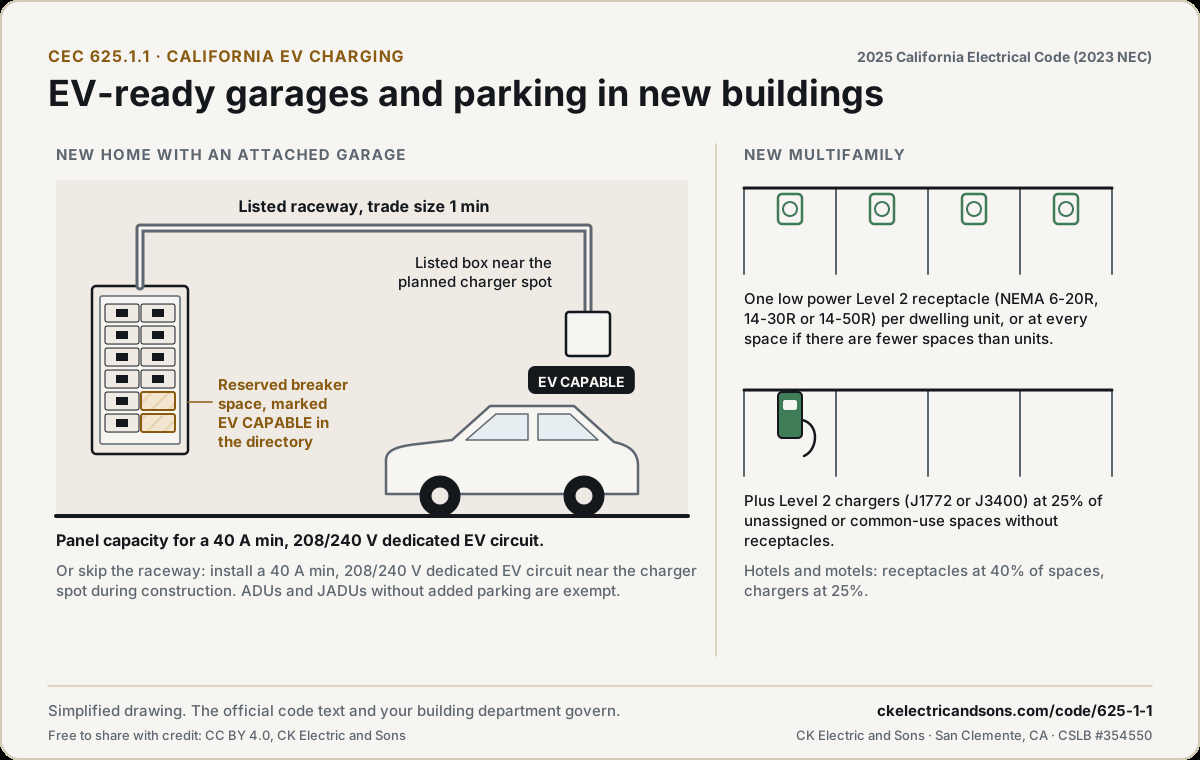
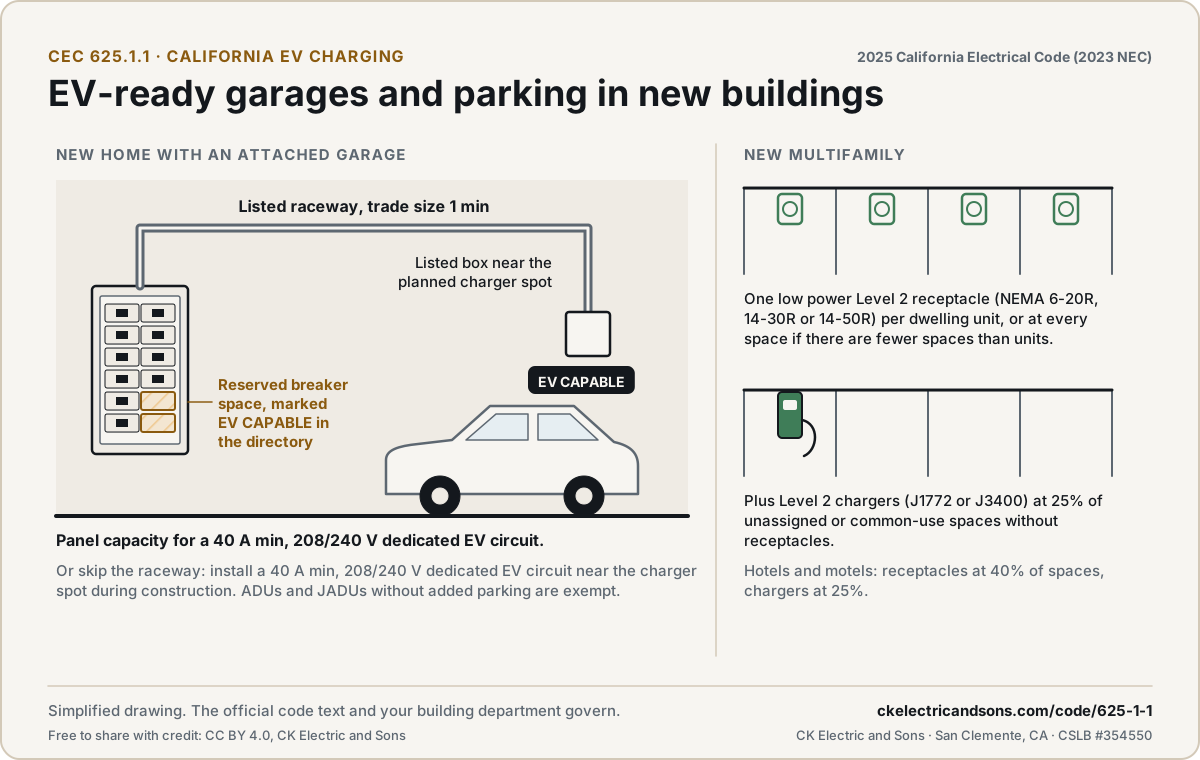 CEC 625.1.1: EV-ready garages and parking in new buildingsRead the sectionSVGPNG
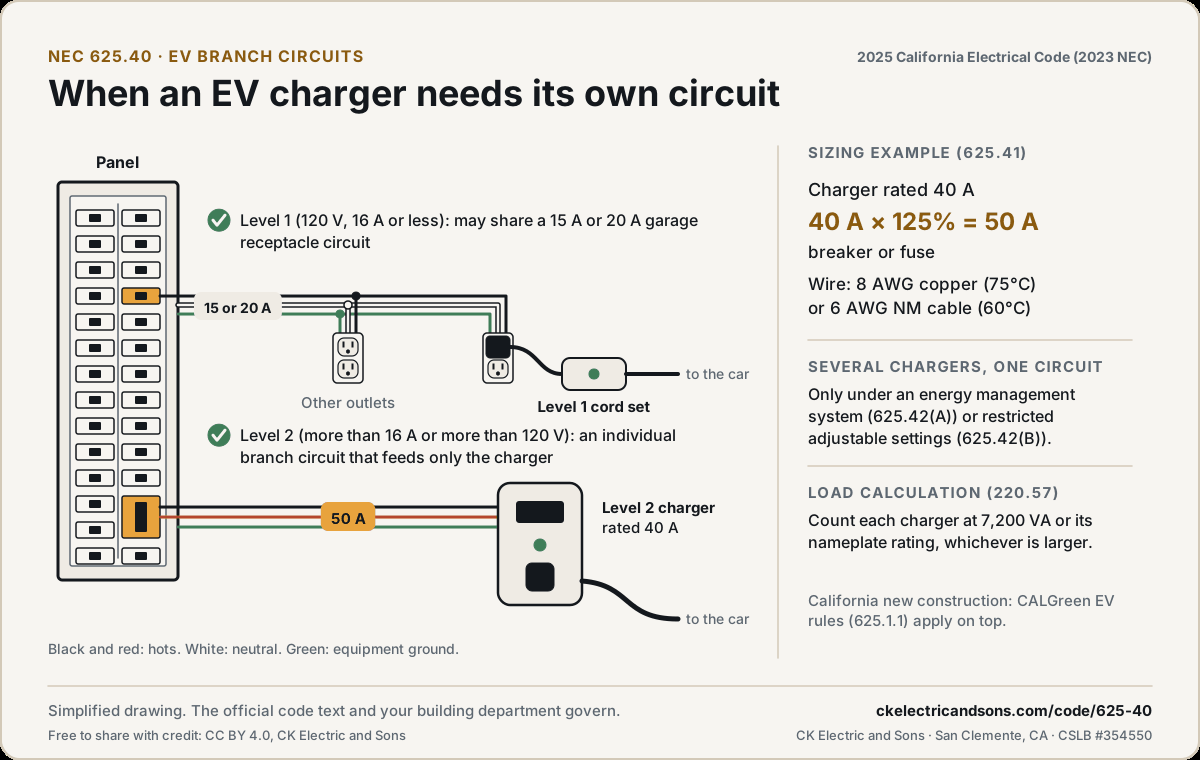
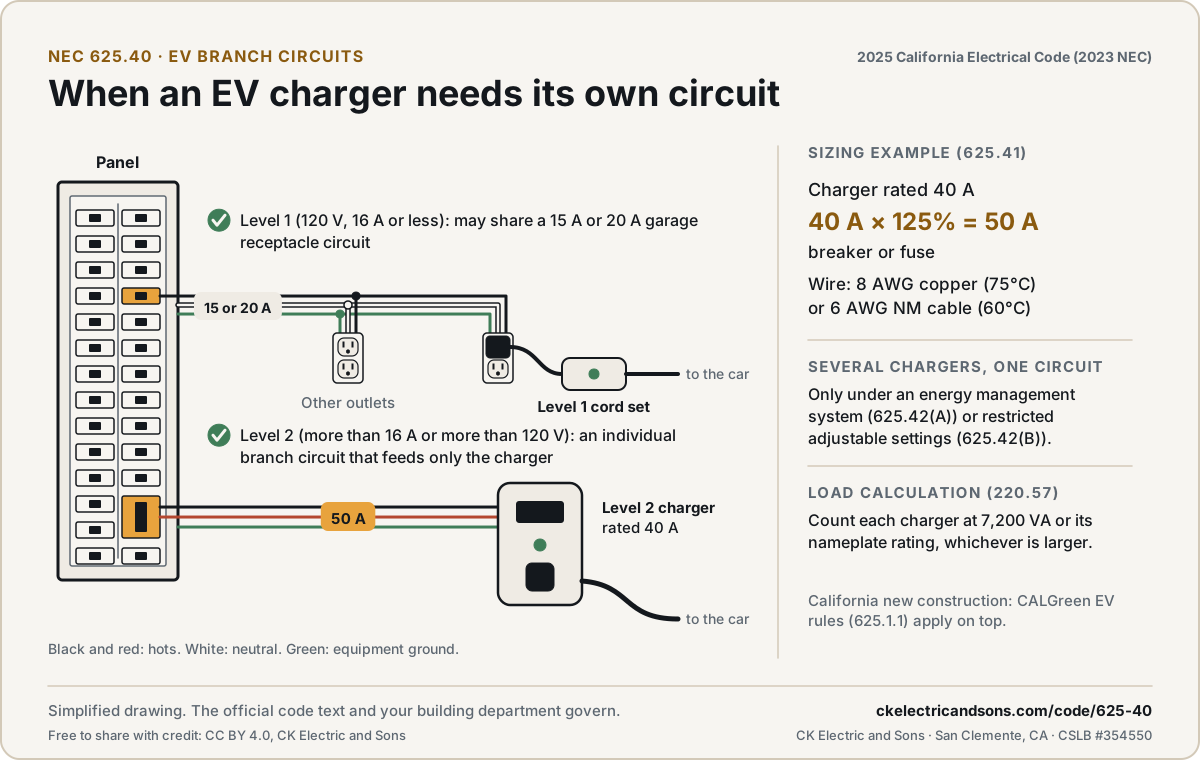 NEC 625.40: When an EV charger needs its own circuitRead the sectionSVGPNG
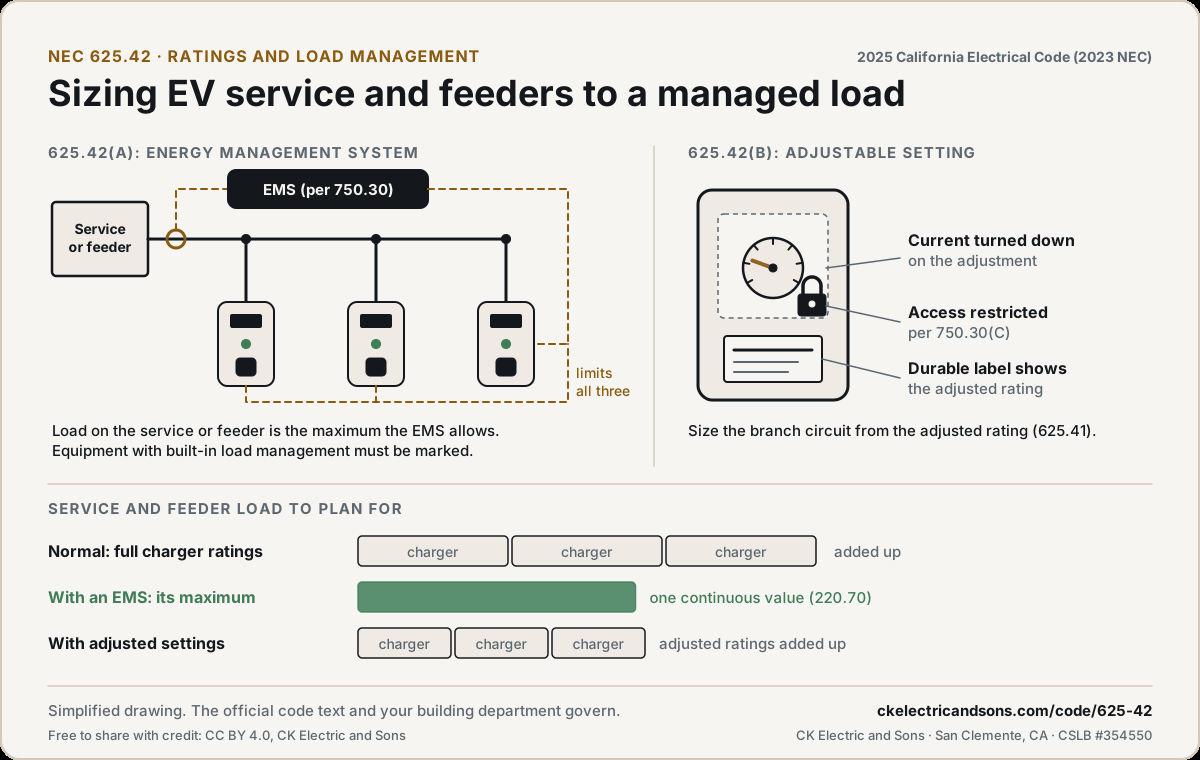
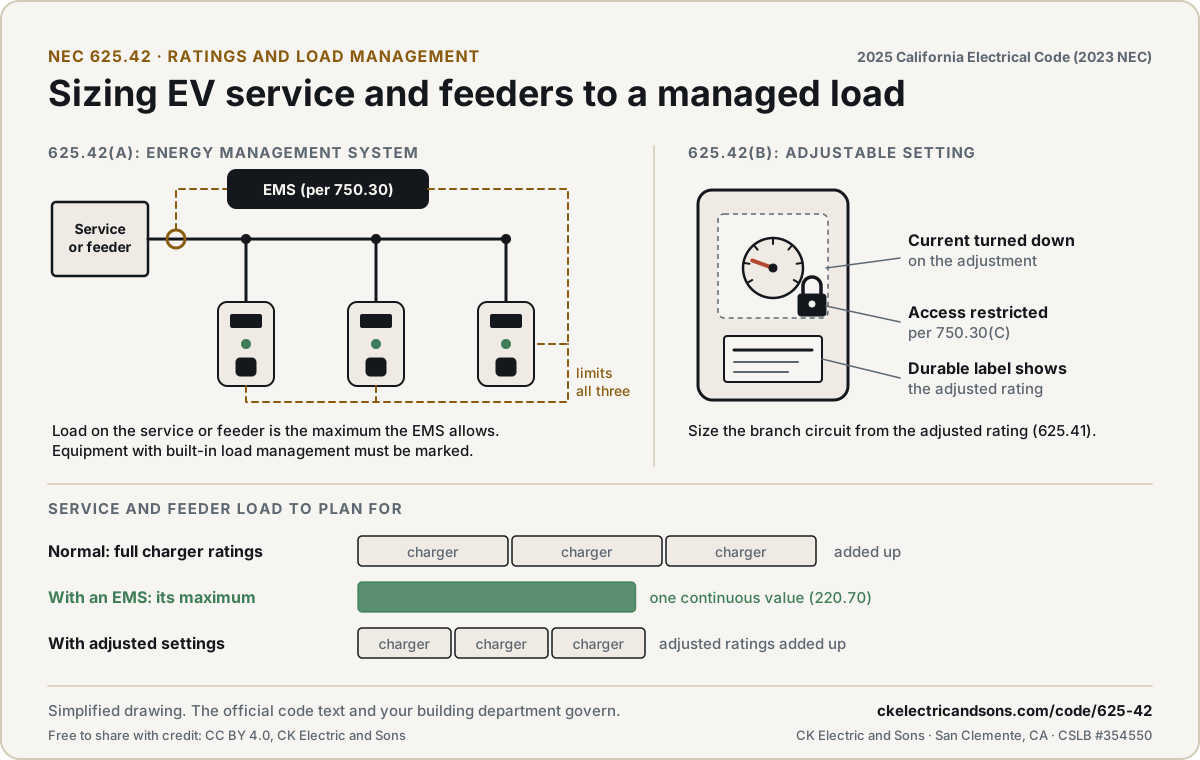 NEC 625.42: Sizing EV service and feeders to a managed loadRead the sectionSVGPNG
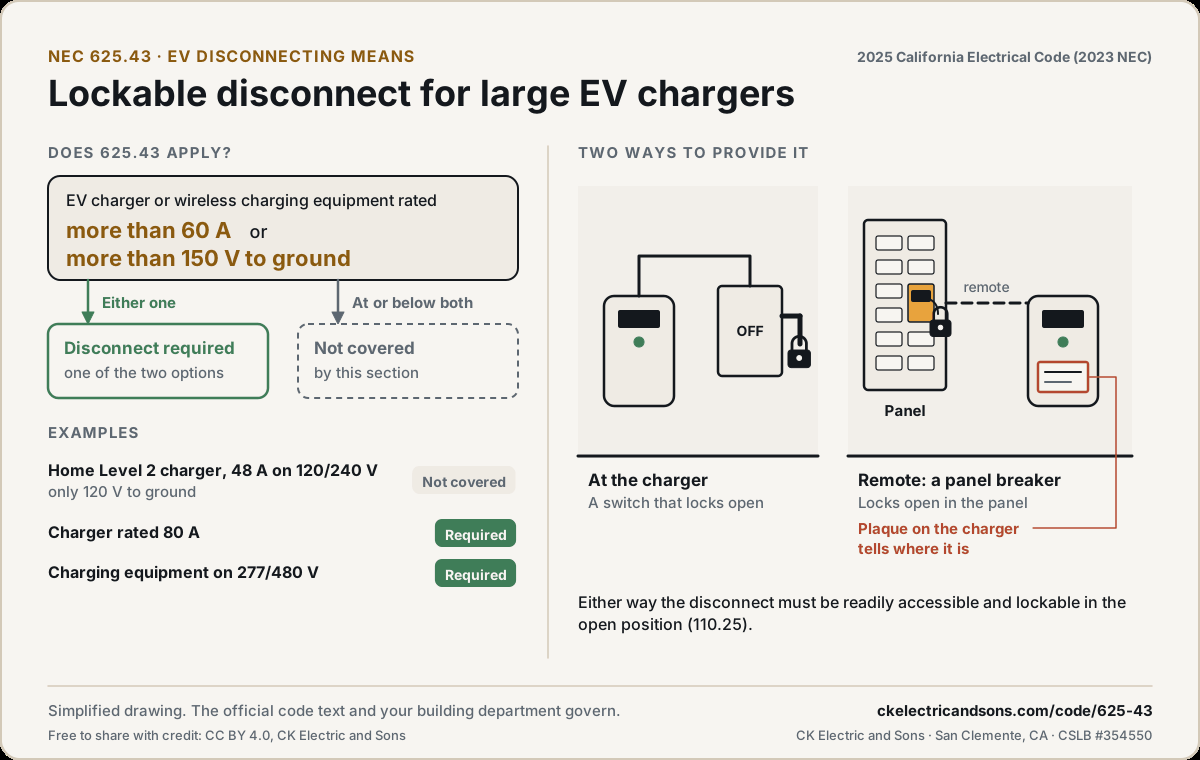
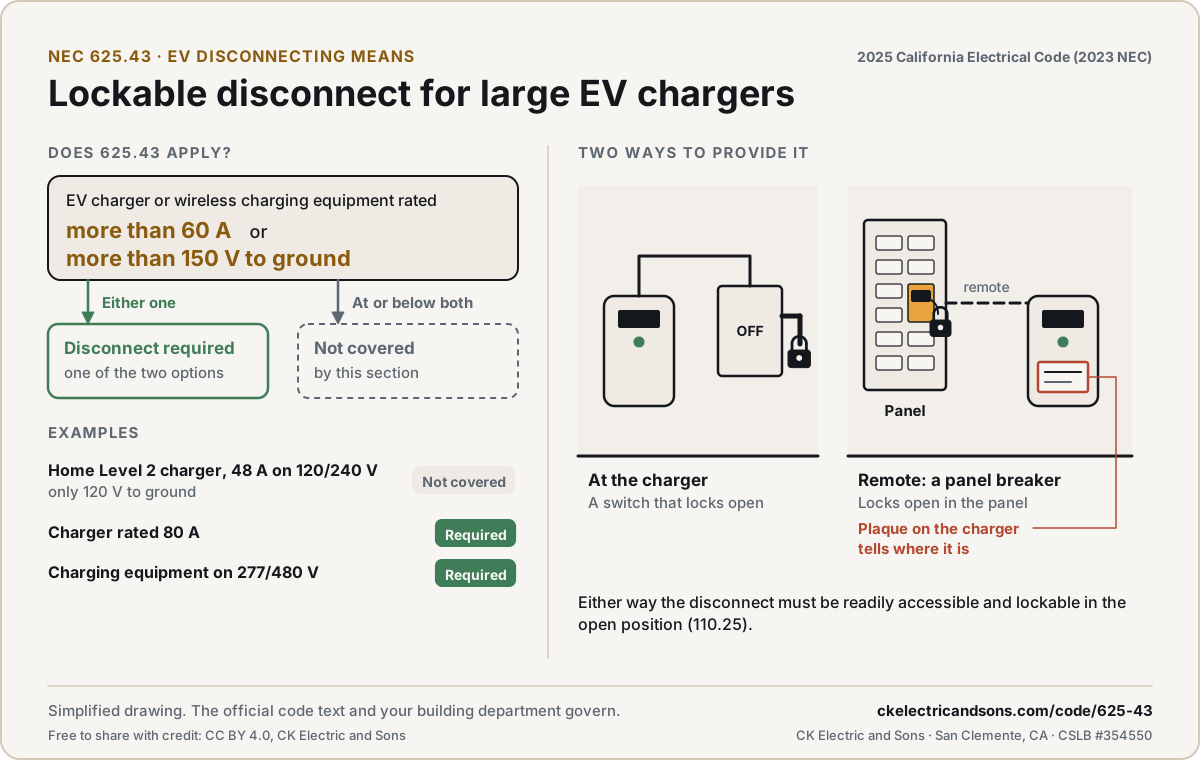 NEC 625.43: Lockable disconnect for large EV chargersRead the sectionSVGPNG
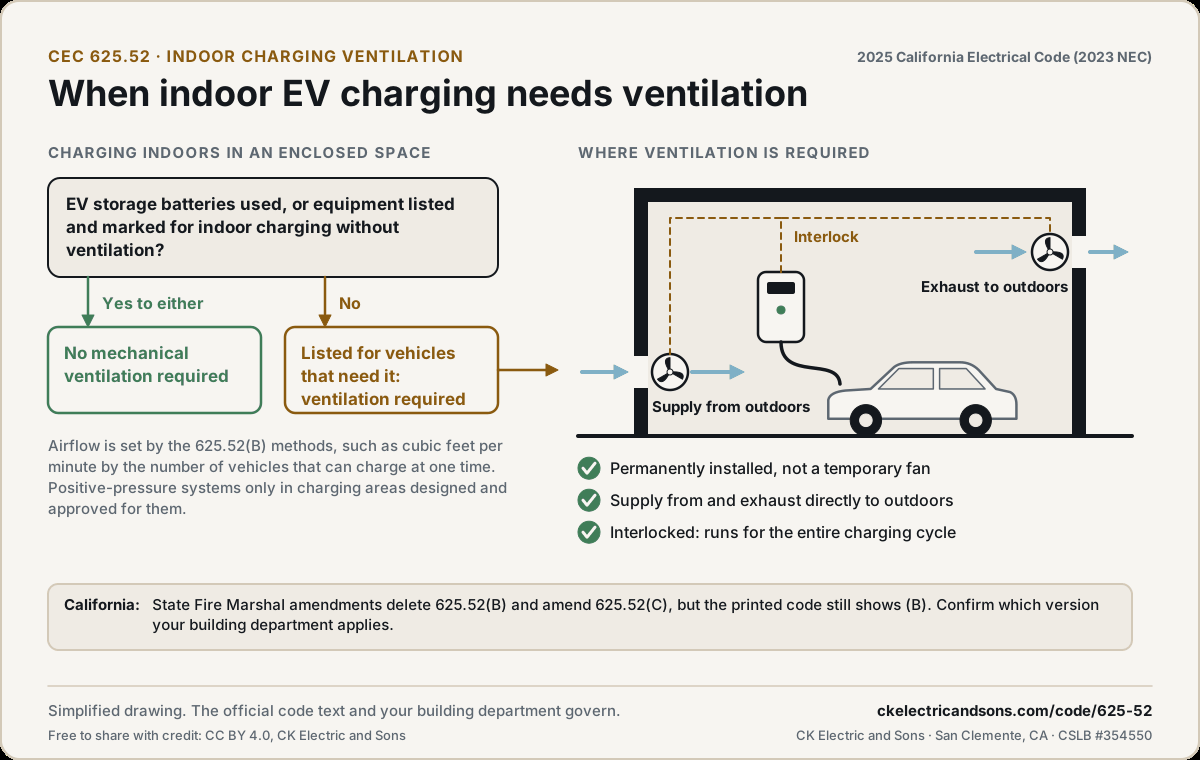
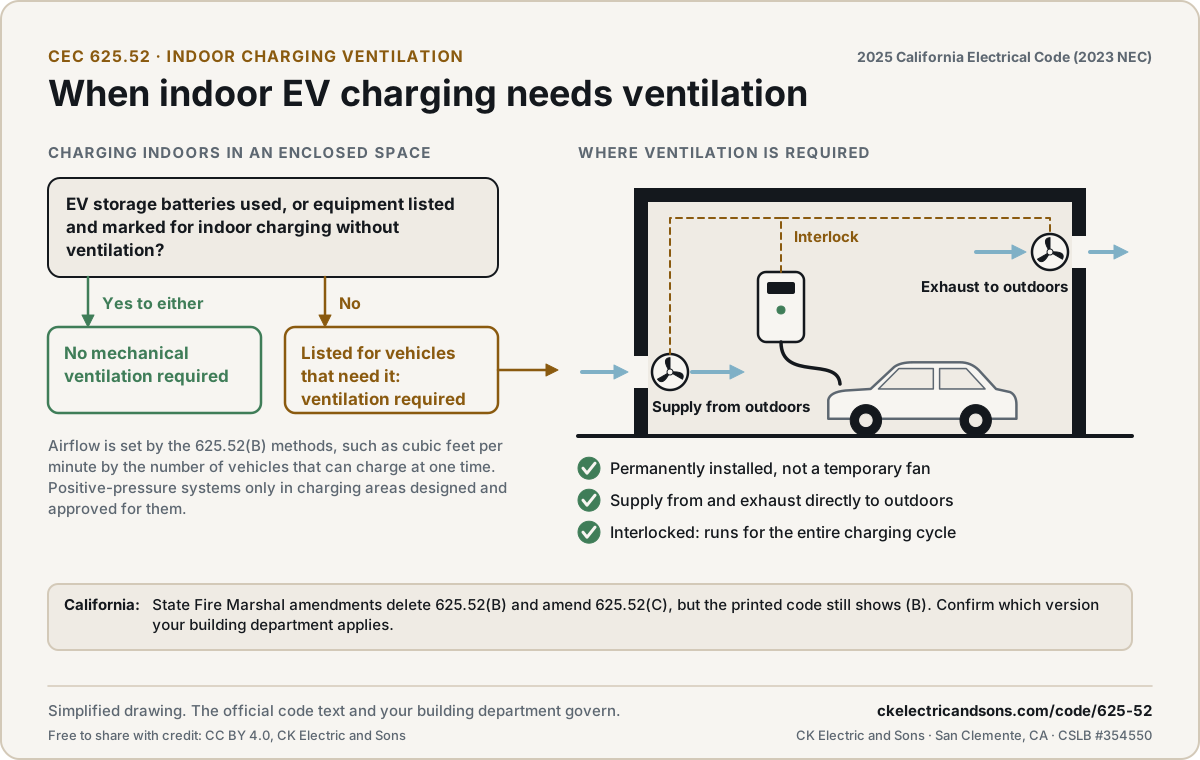 CEC 625.52: When indoor EV charging needs ventilationRead the sectionSVGPNG
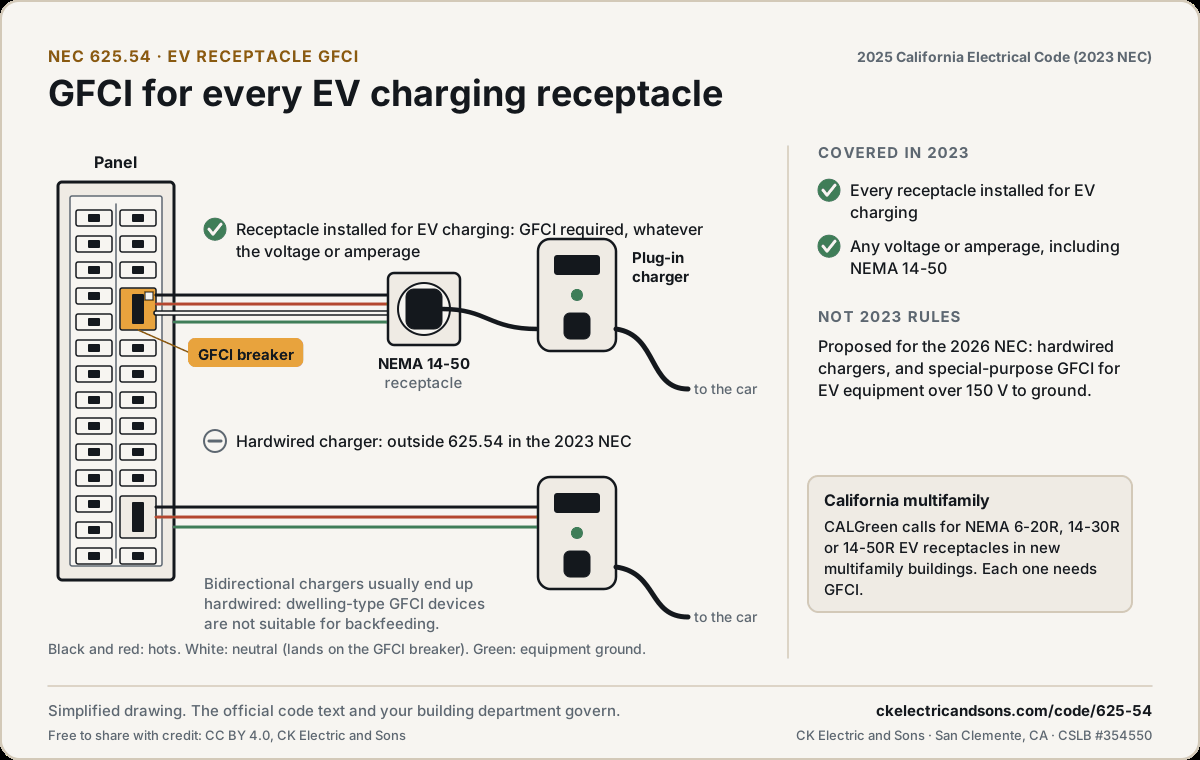
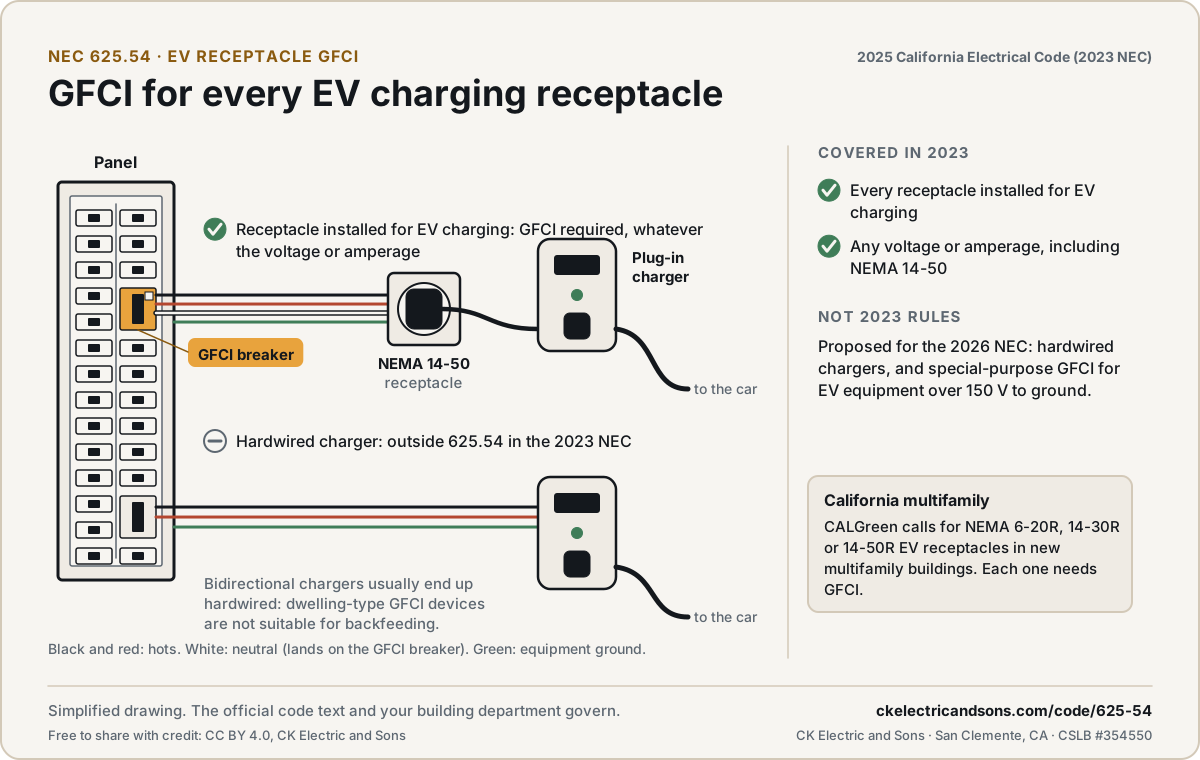 NEC 625.54: GFCI for every EV charging receptacleRead the sectionSVGPNG
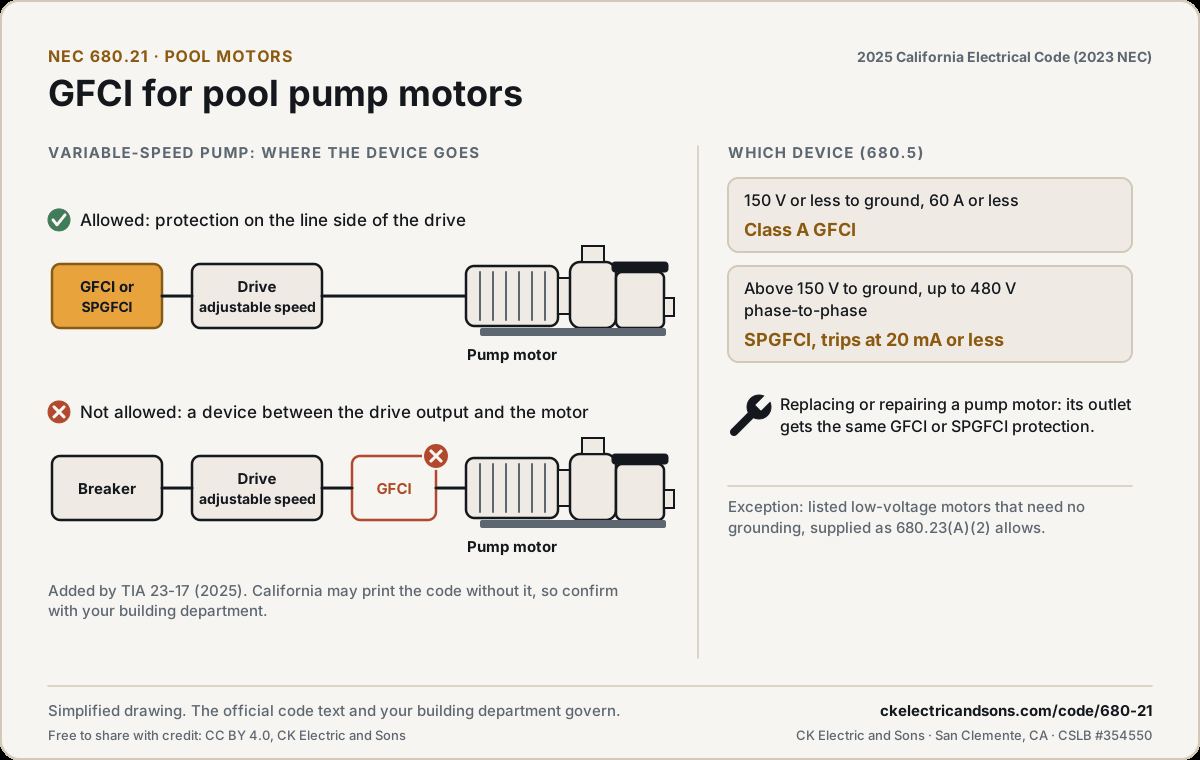
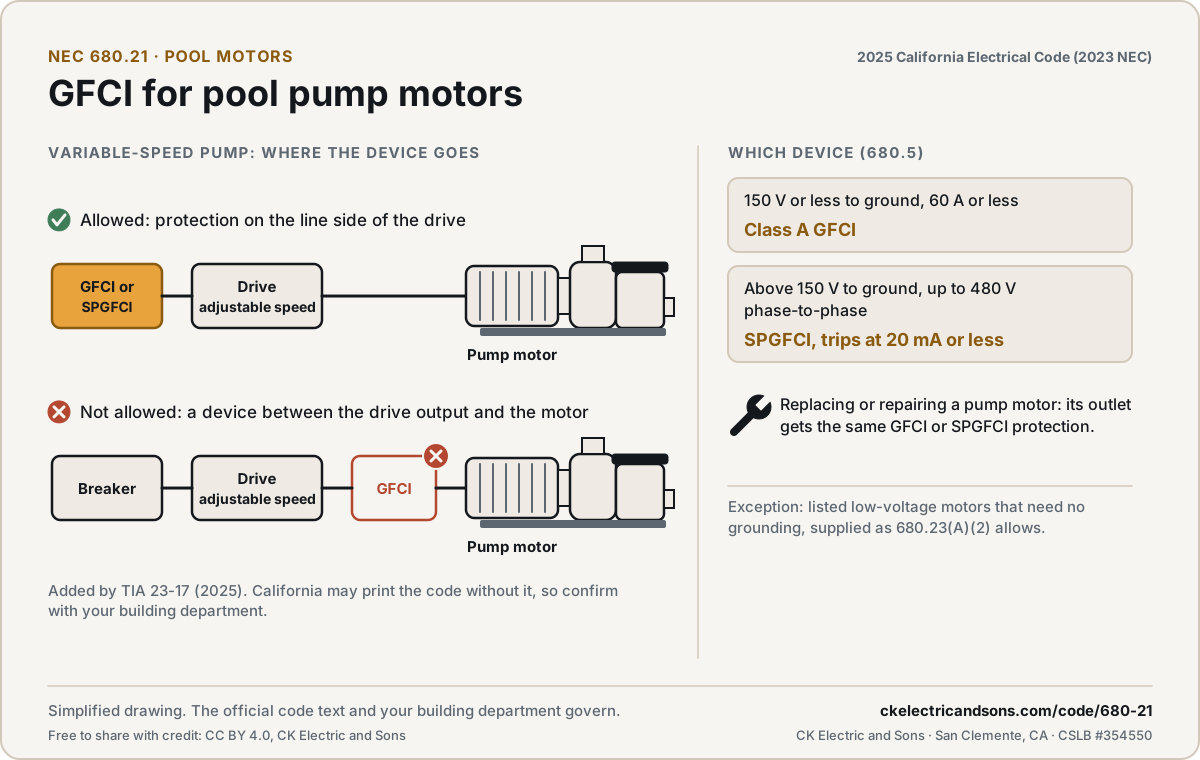 NEC 680.21: GFCI for pool pump motorsRead the sectionSVGPNG
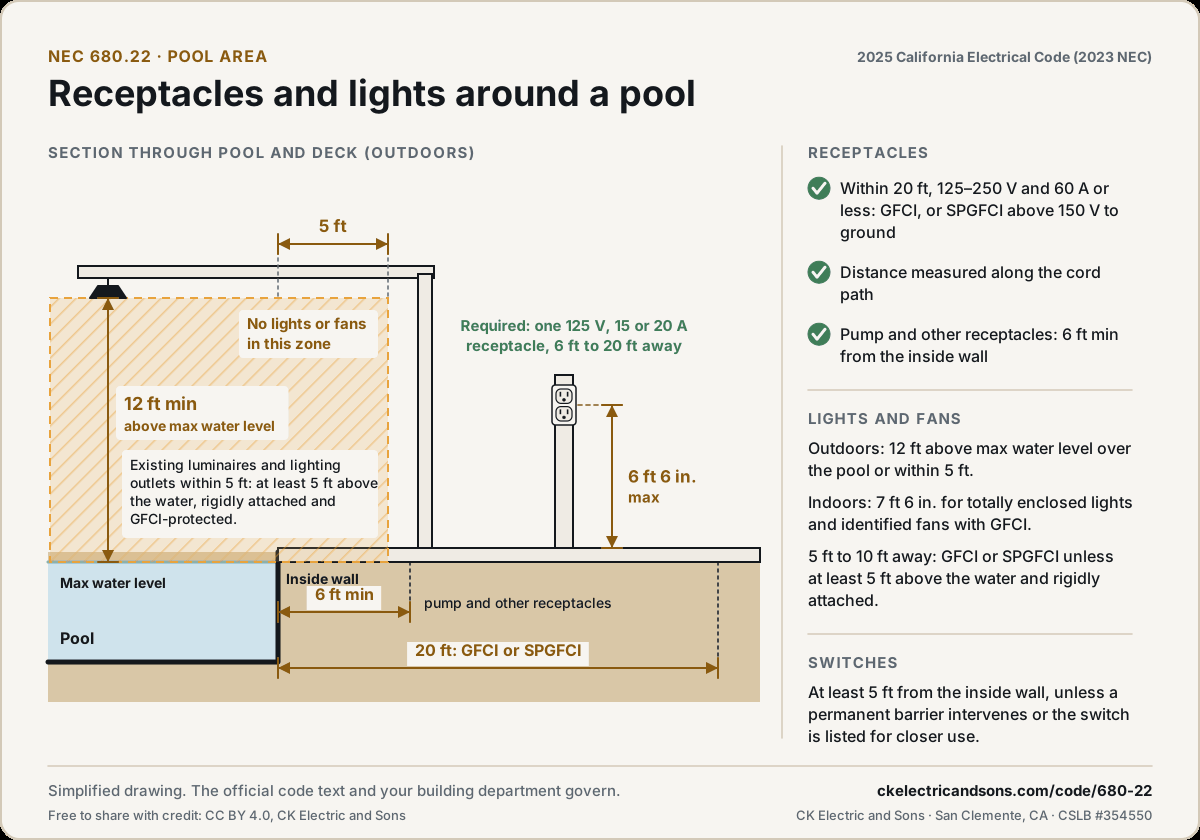
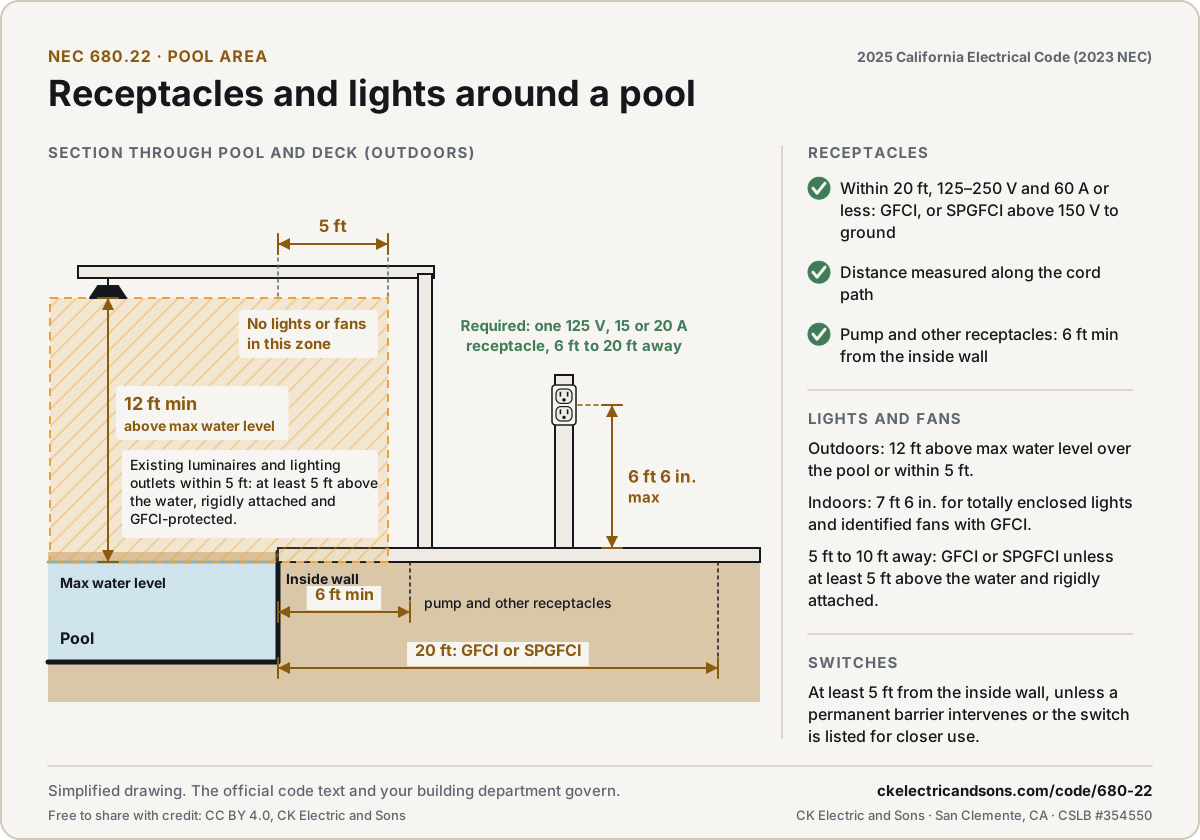 NEC 680.22: Receptacles and lights around a poolRead the sectionSVGPNG
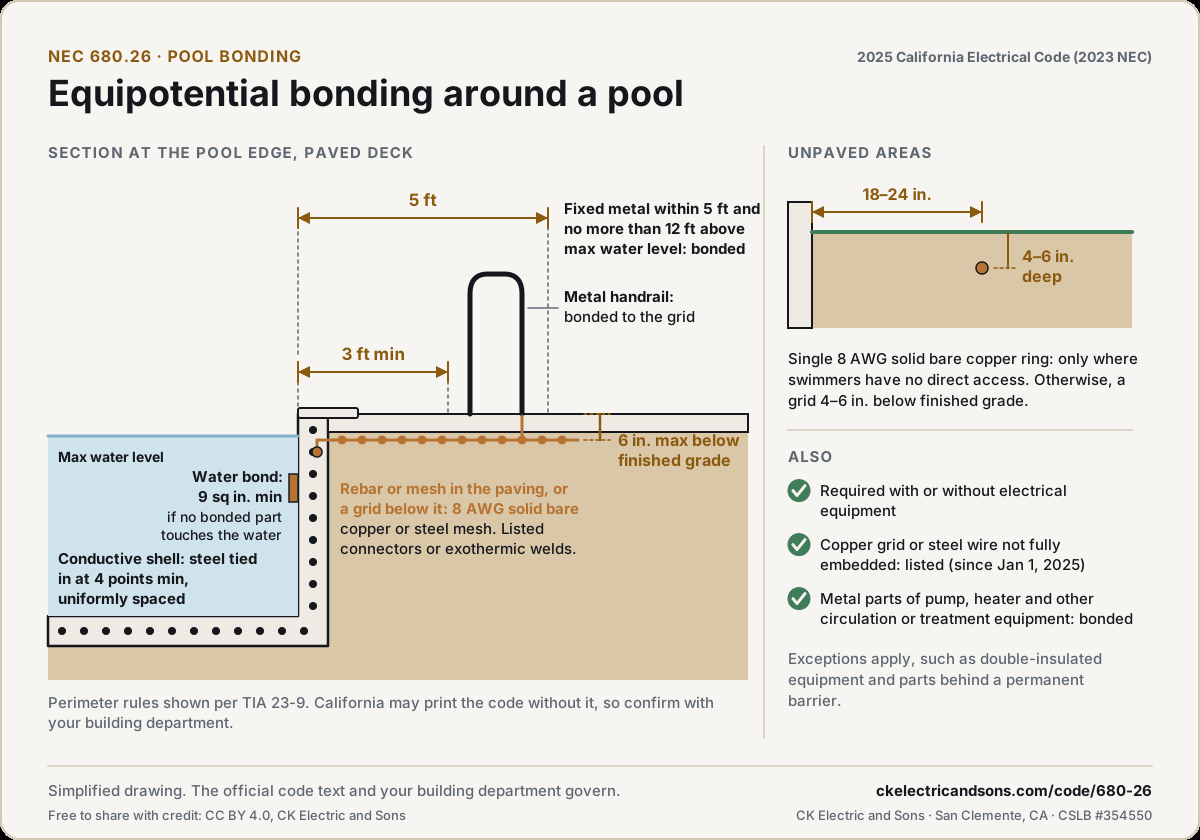
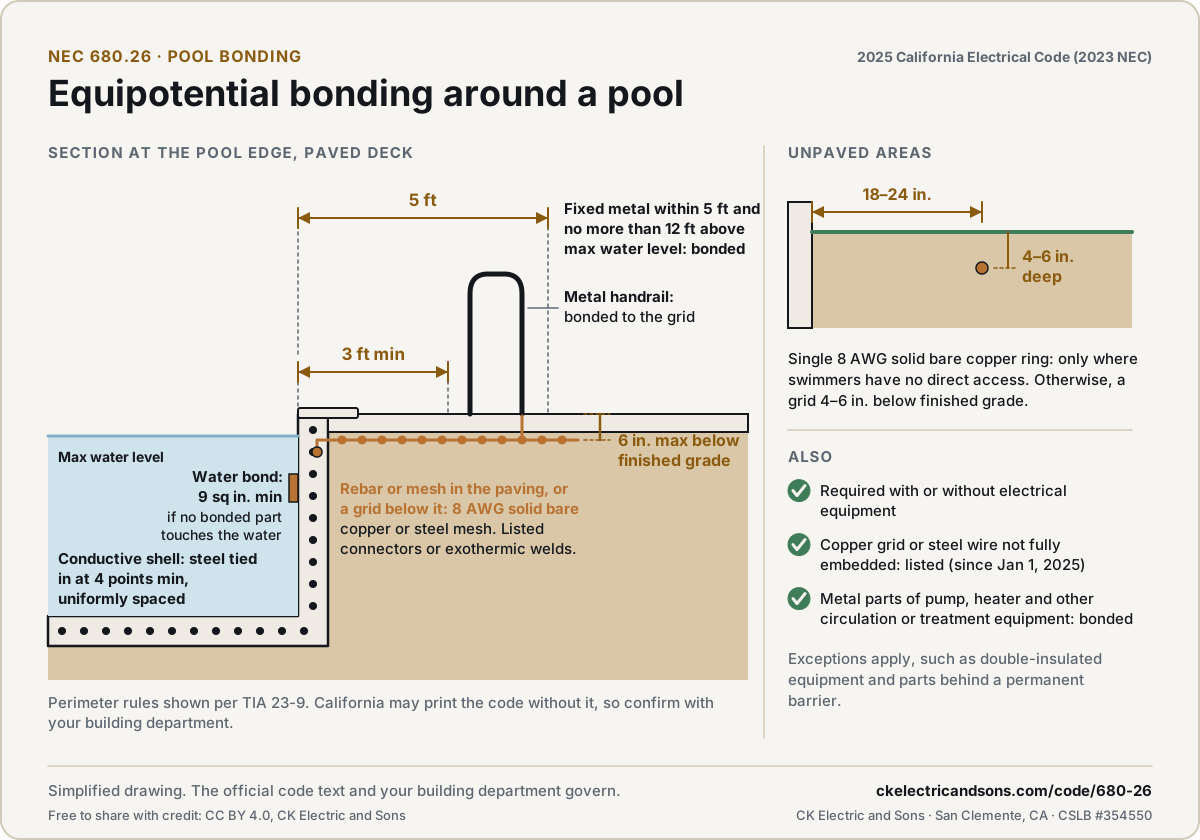 NEC 680.26: Equipotential bonding around a poolRead the sectionSVGPNG
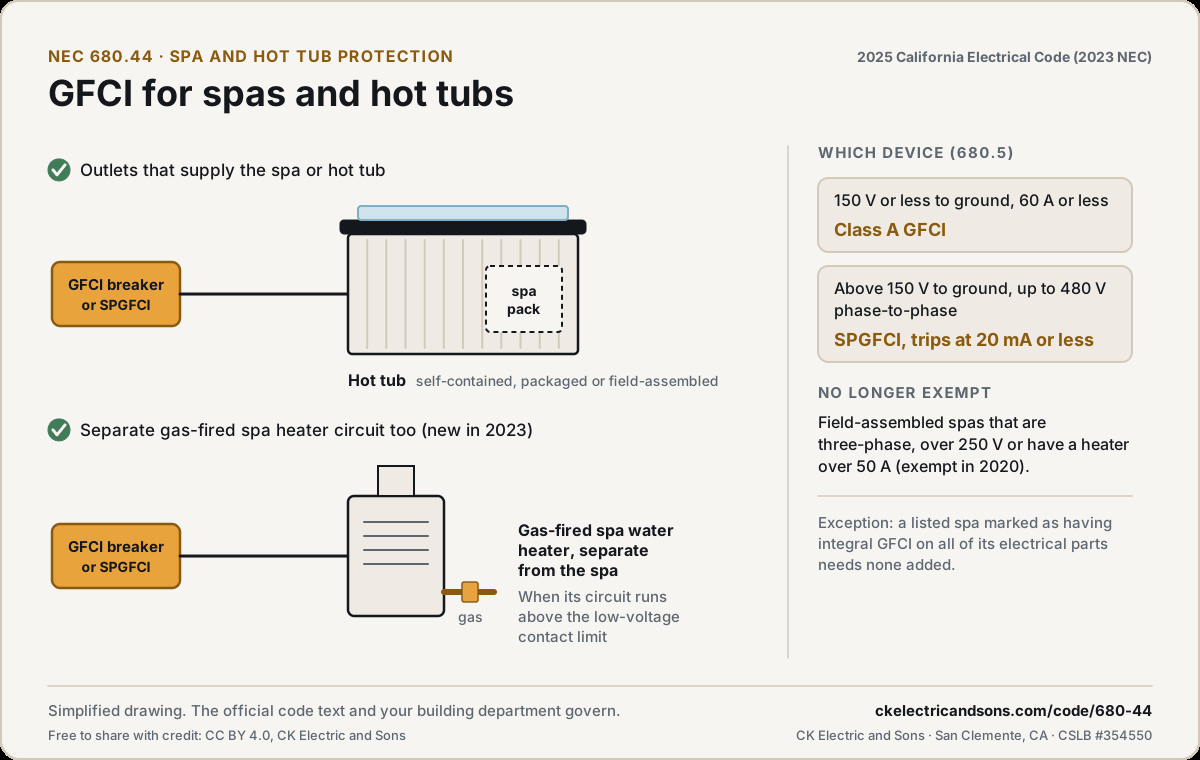
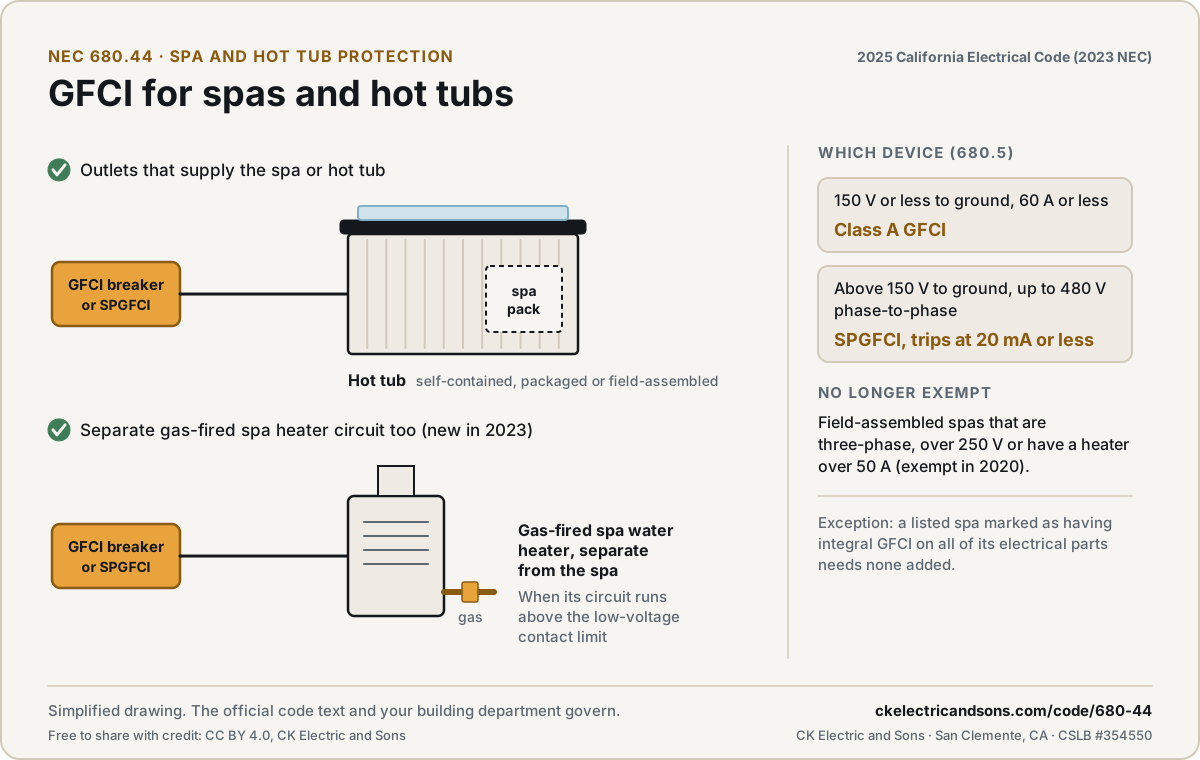 NEC 680.44: GFCI for spas and hot tubsRead the sectionSVGPNG
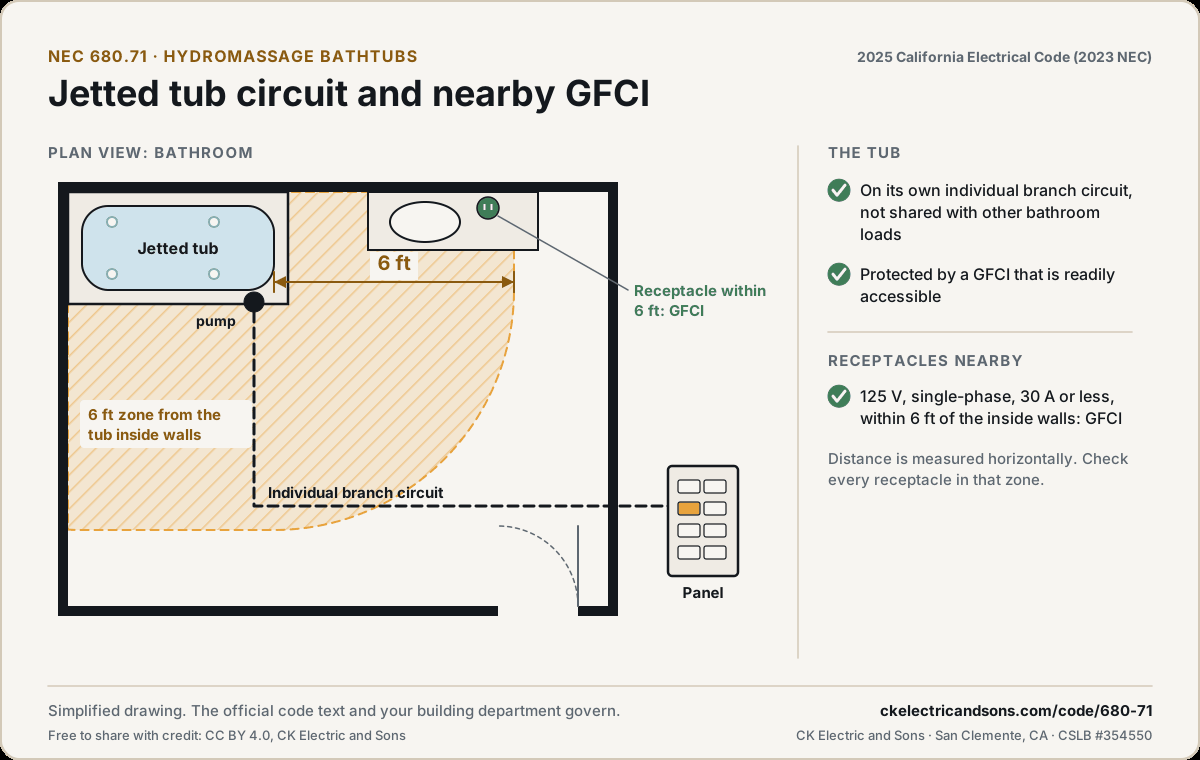
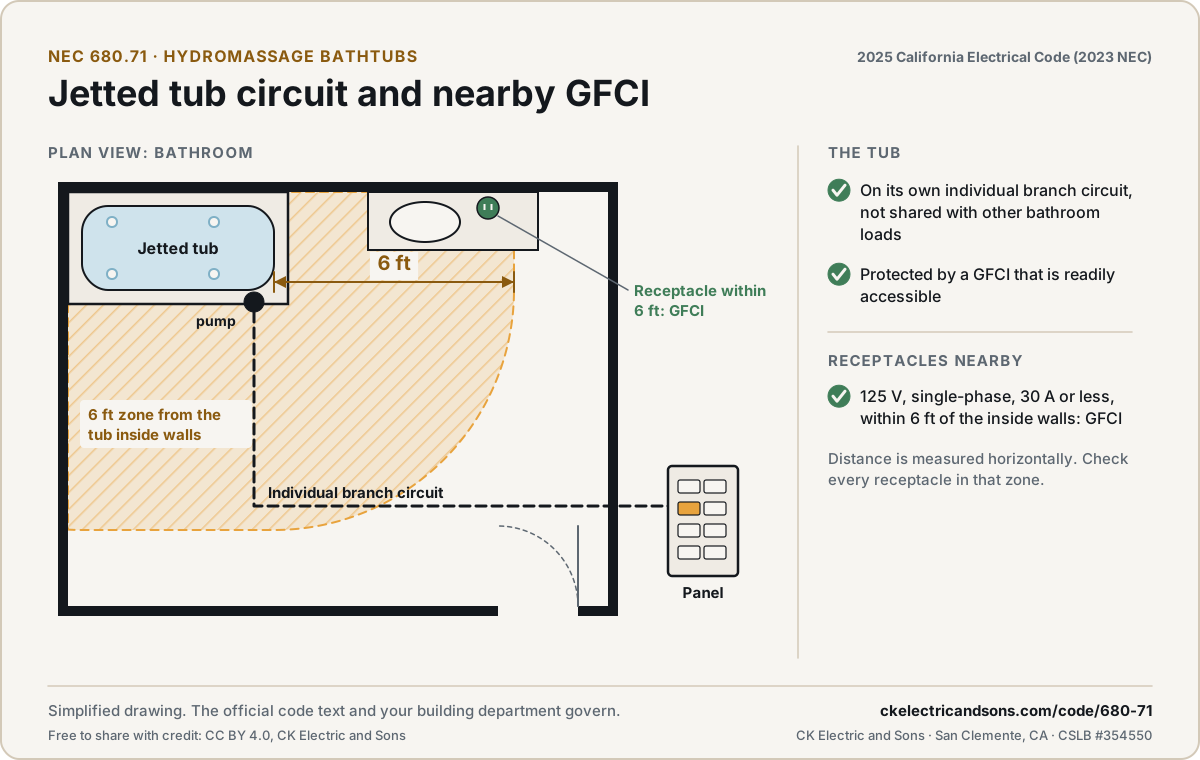 NEC 680.71: Jetted tub circuit and nearby GFCIRead the sectionSVGPNG
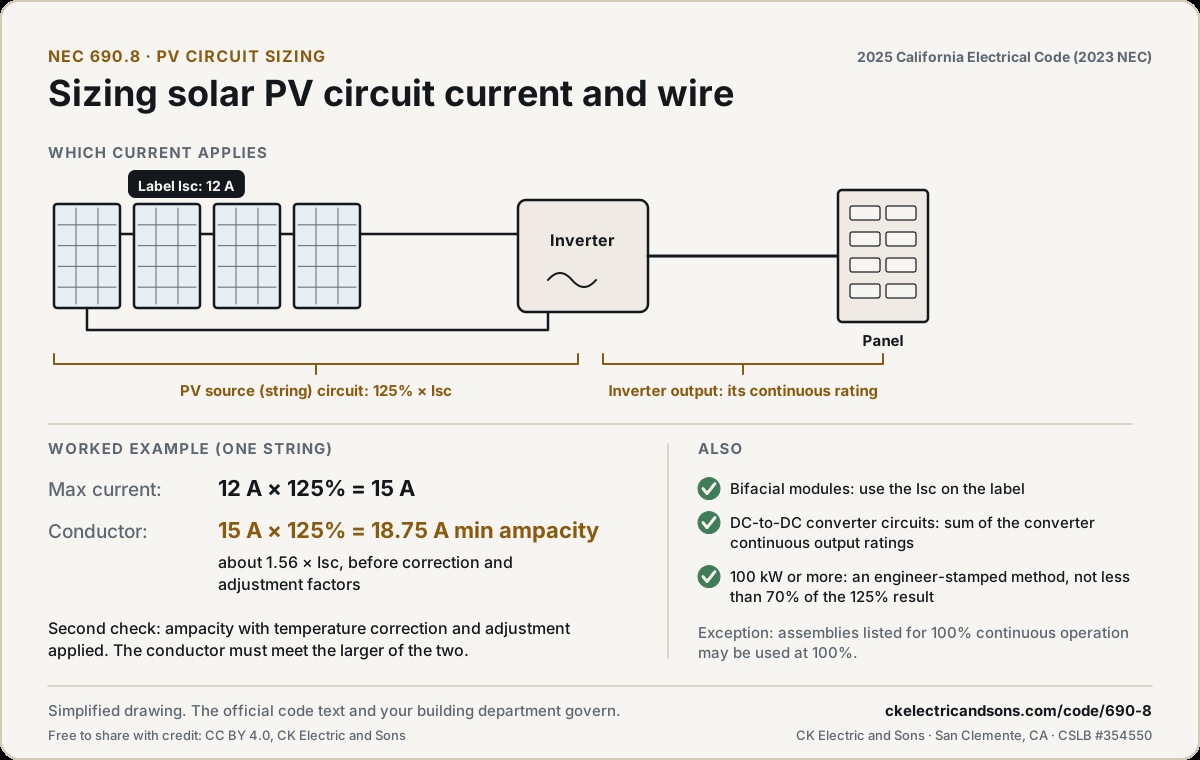
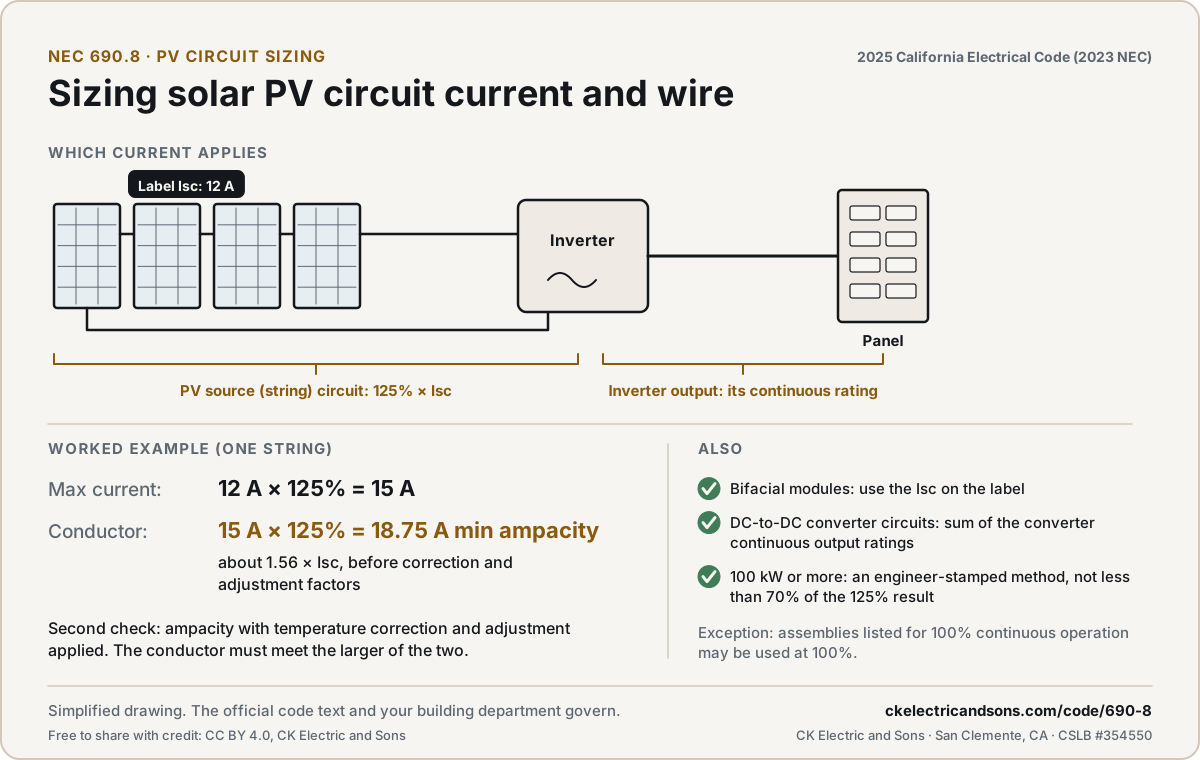 NEC 690.8: Sizing solar PV circuit current and wireRead the sectionSVGPNG
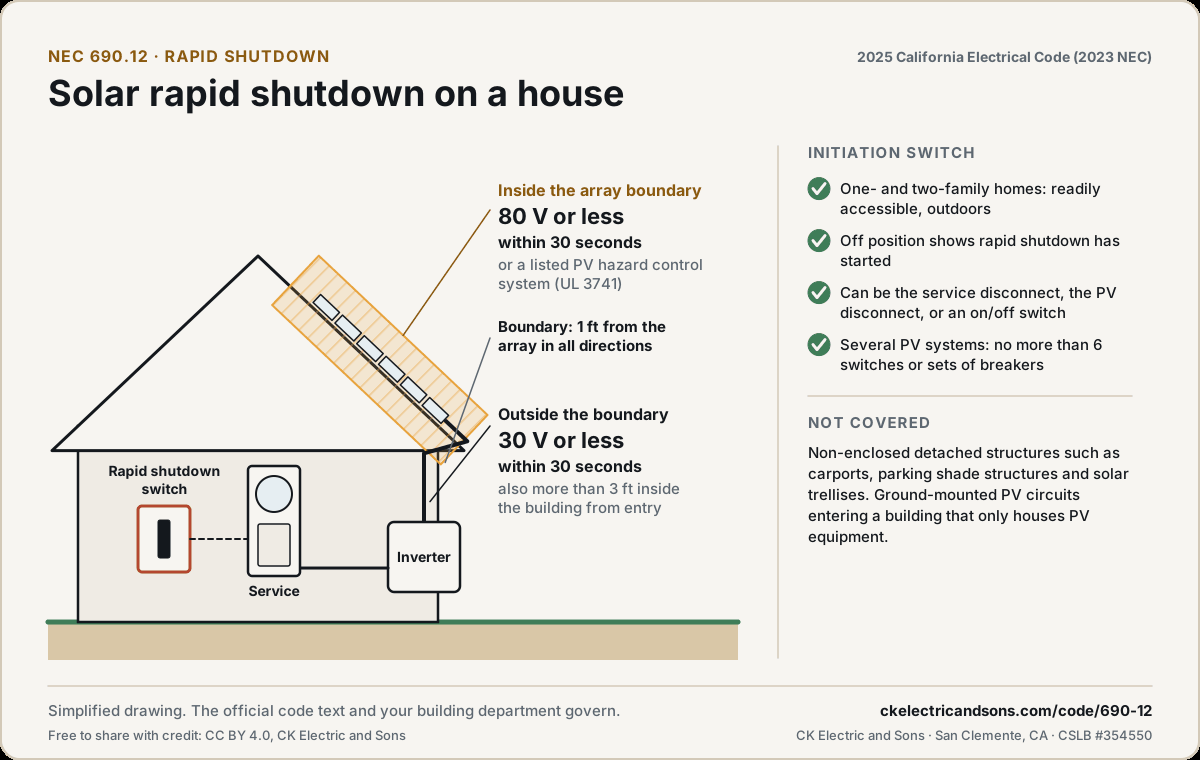
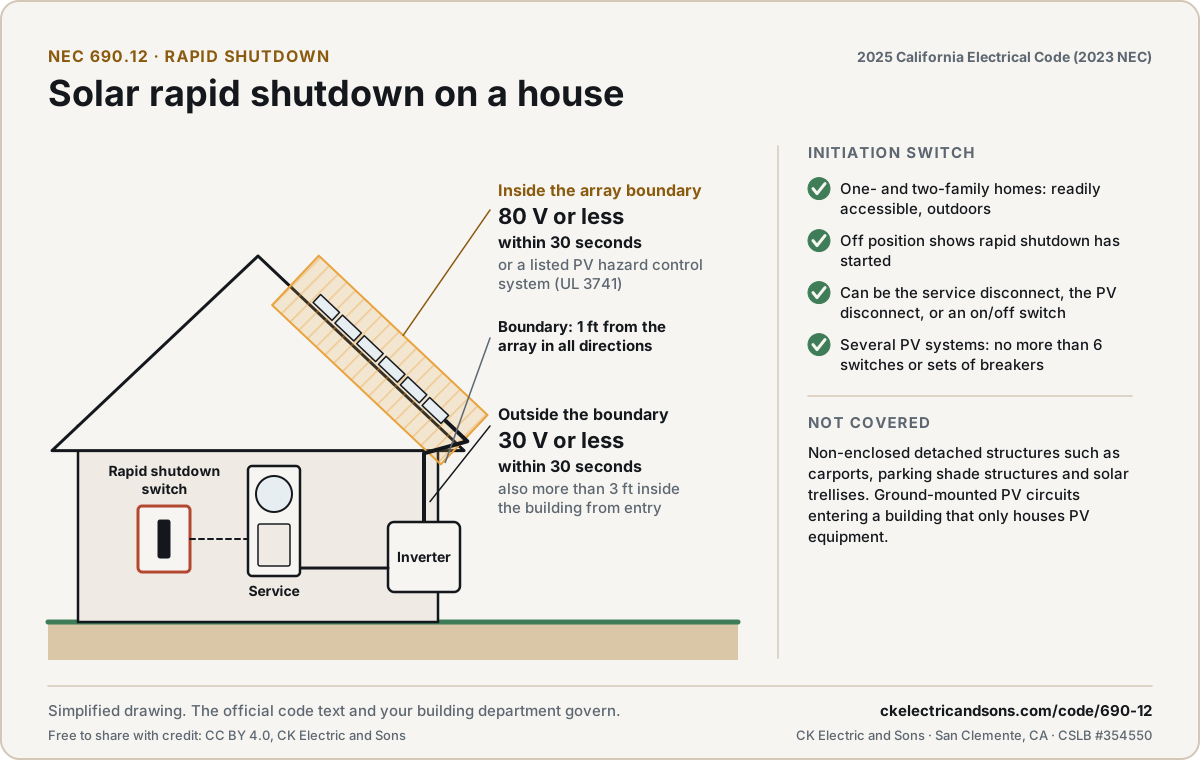 NEC 690.12: Solar rapid shutdown on a houseRead the sectionSVGPNG
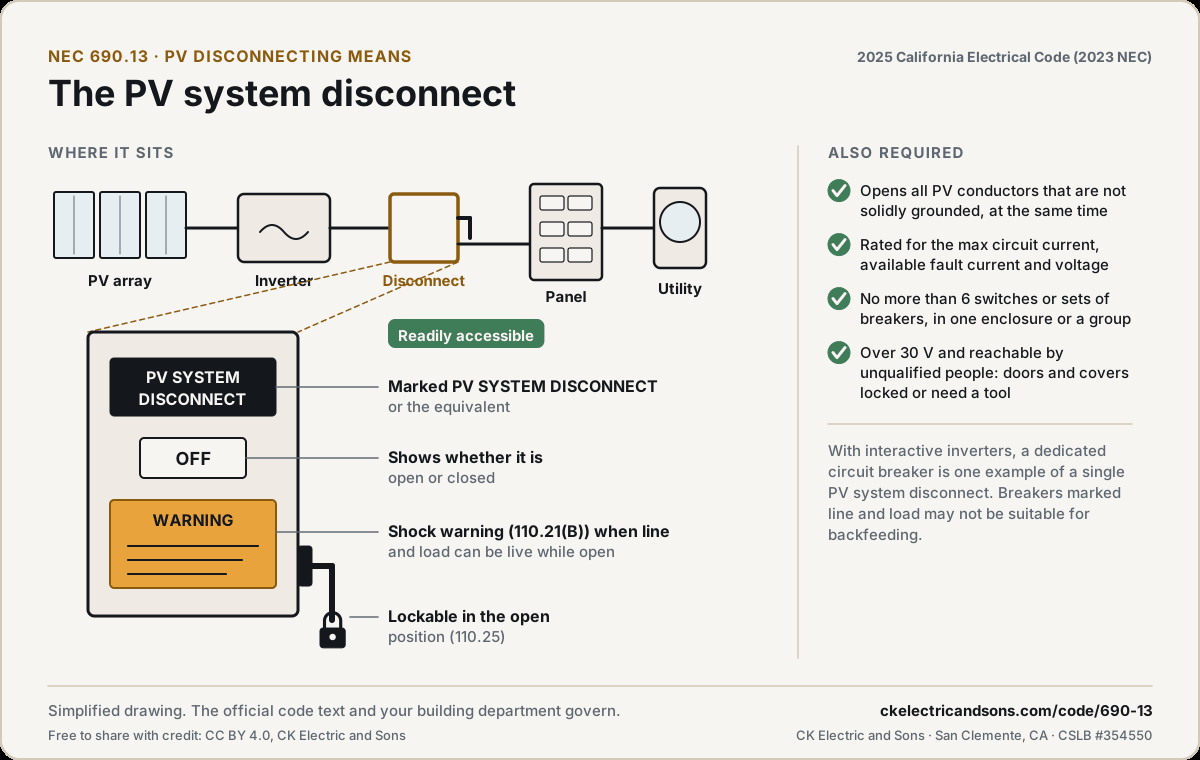
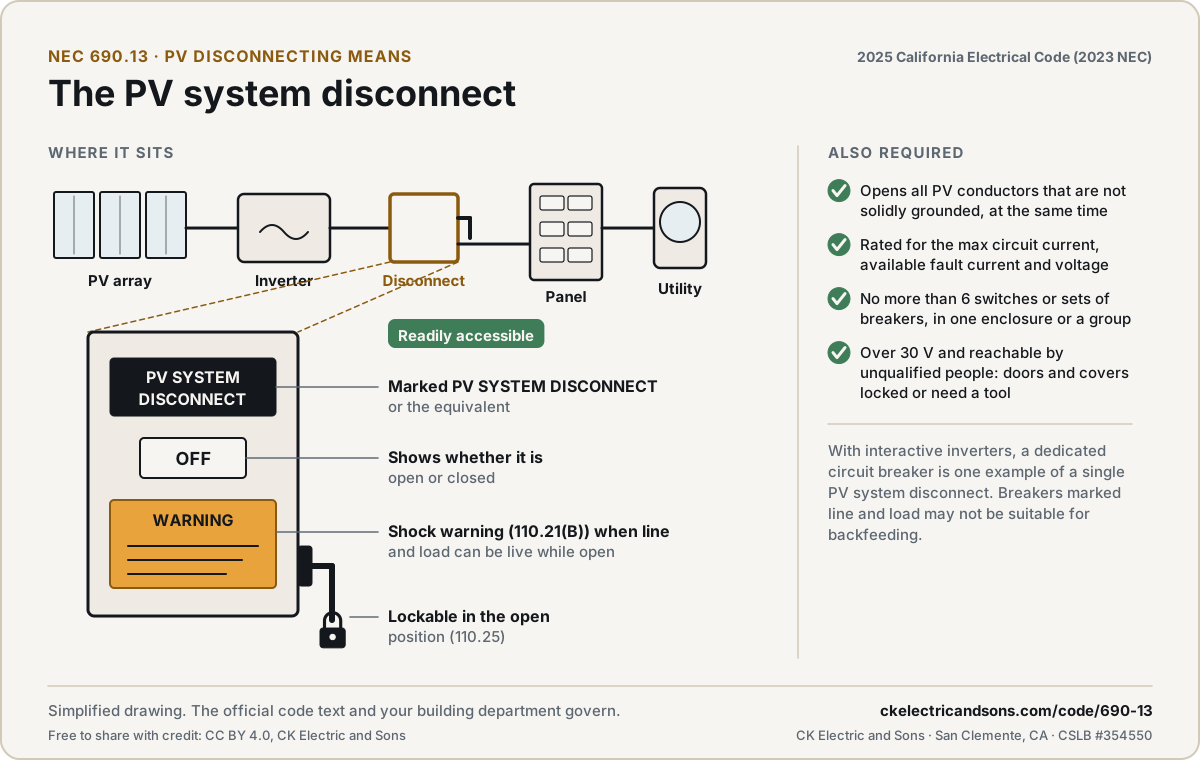 NEC 690.13: The PV system disconnectRead the sectionSVGPNG
Backup power, solar interconnection and batteries
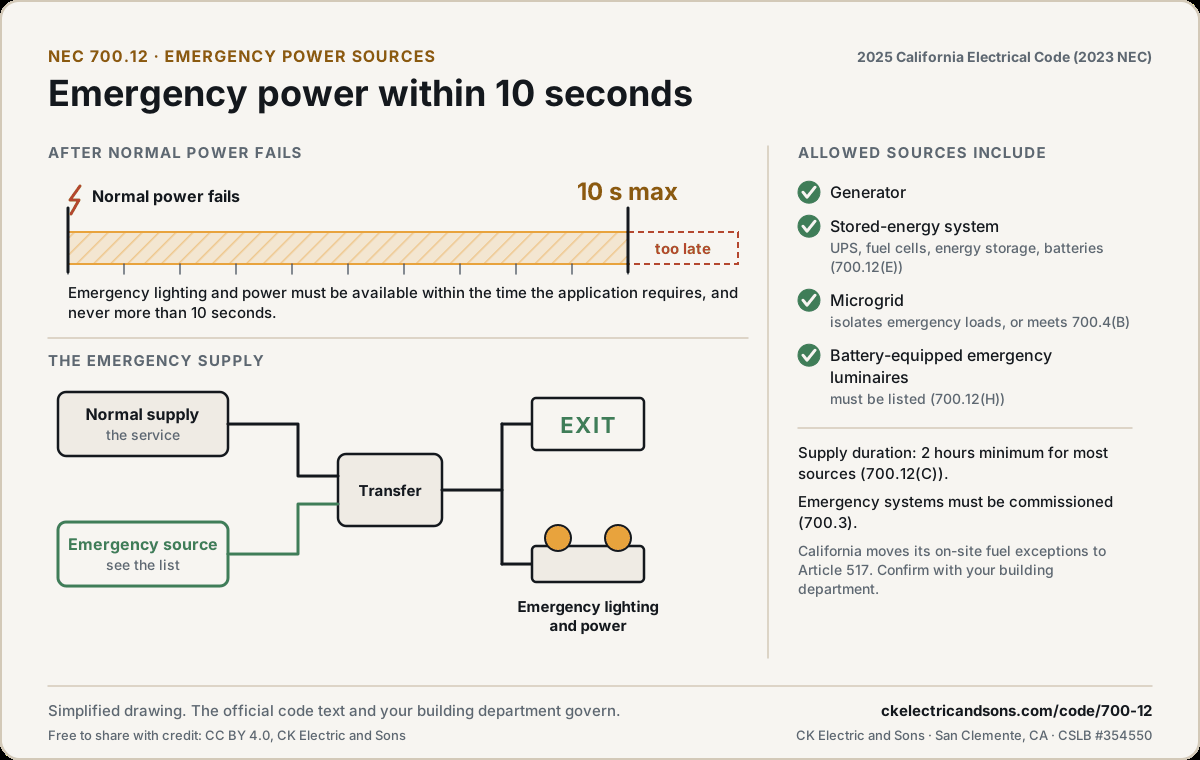
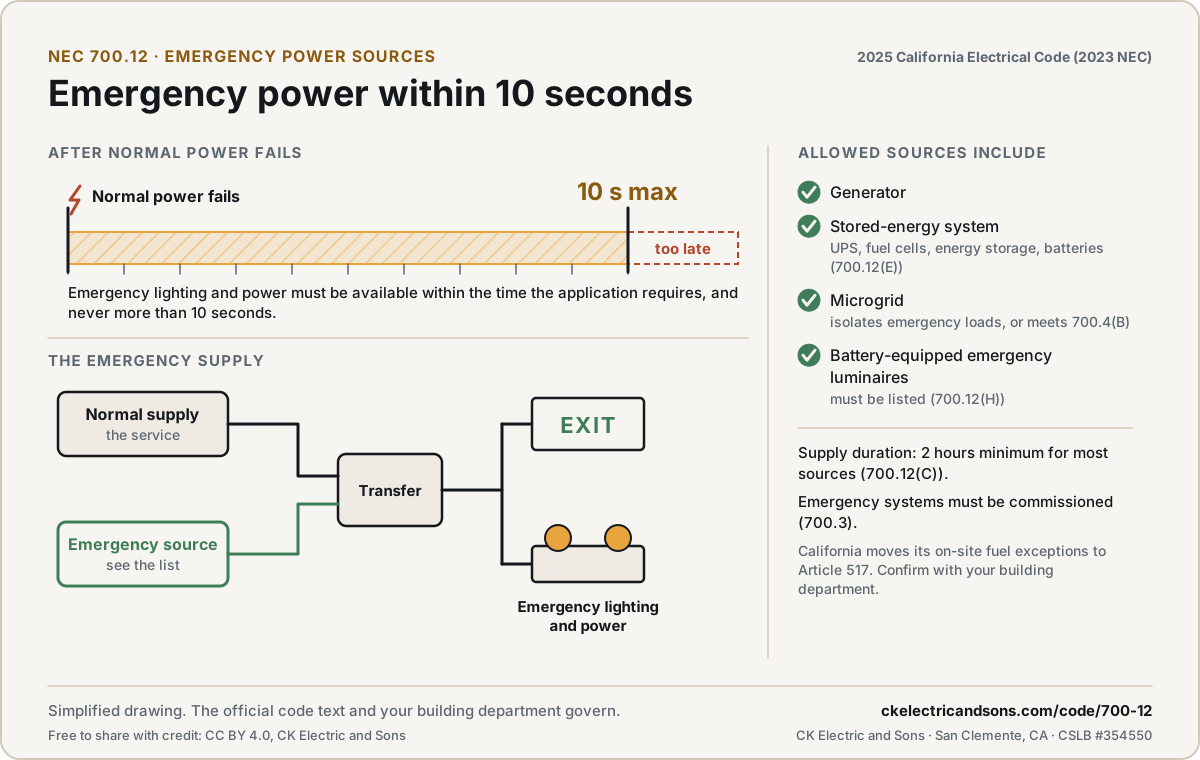 NEC 700.12: Emergency power within 10 secondsRead the sectionSVGPNG
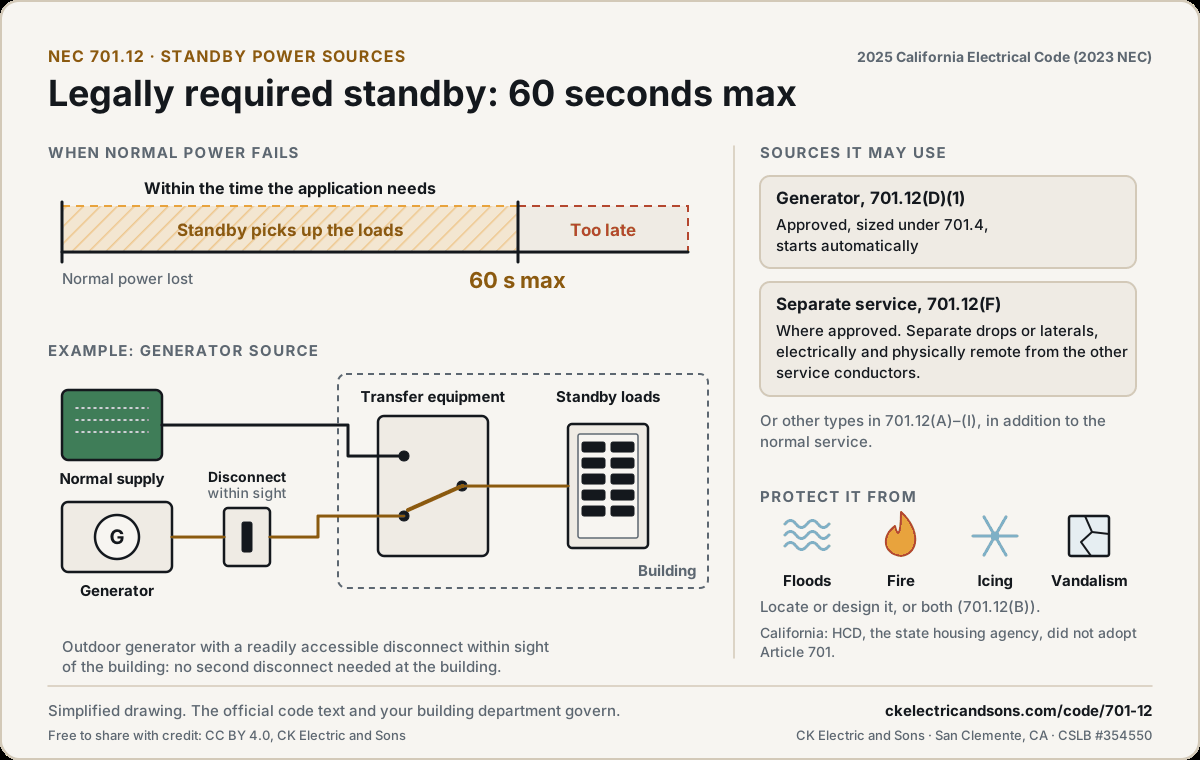
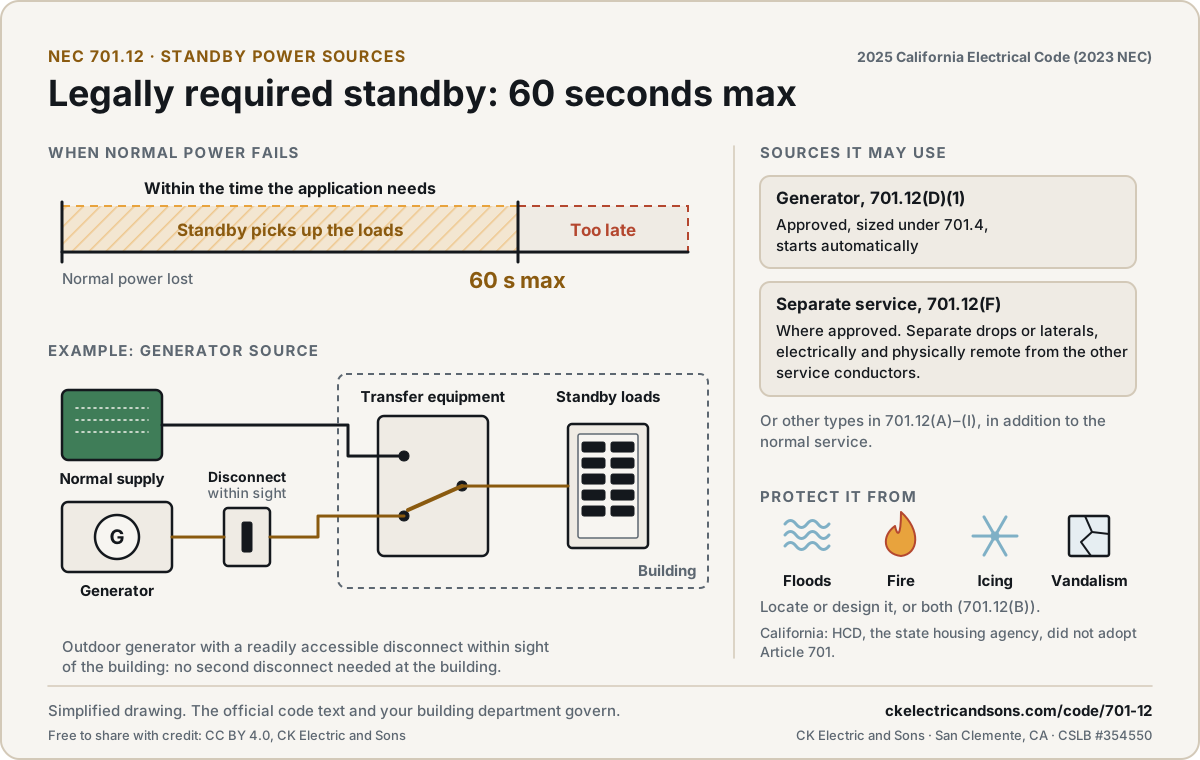 NEC 701.12: Legally required standby: 60 seconds maxRead the sectionSVGPNG
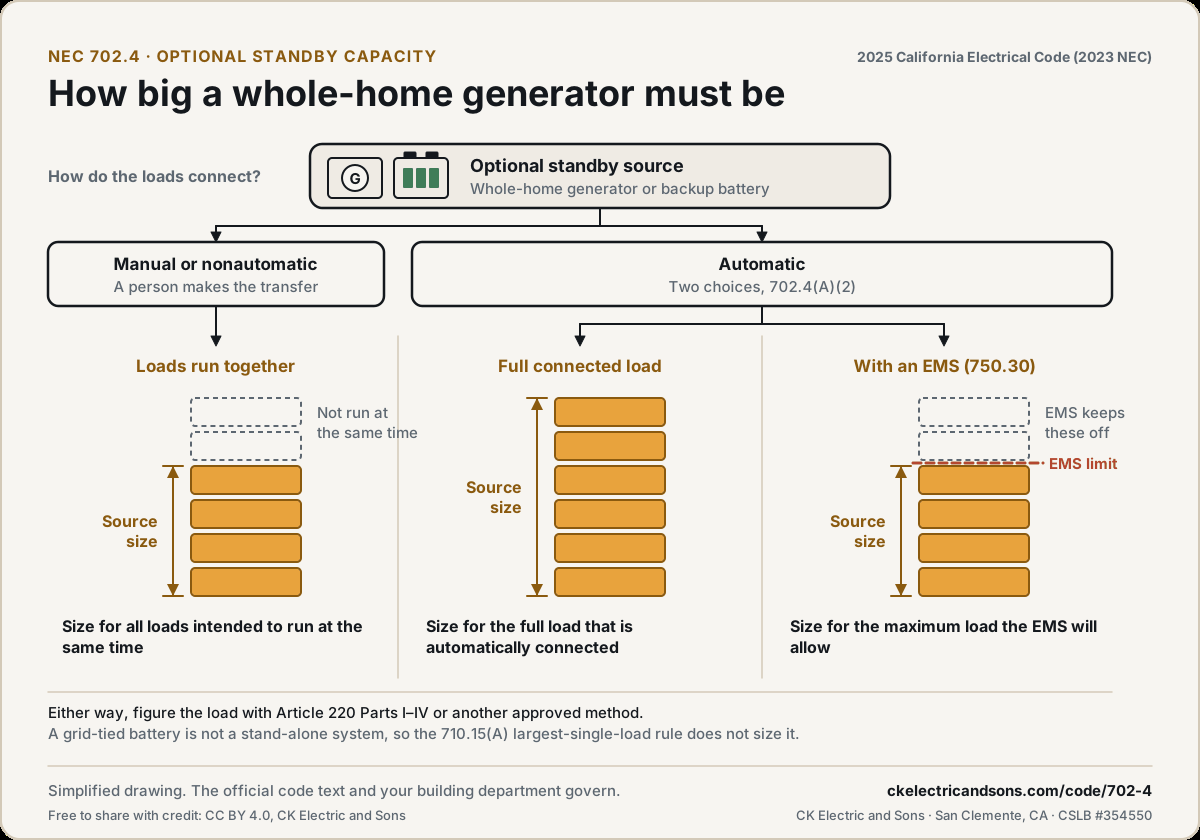
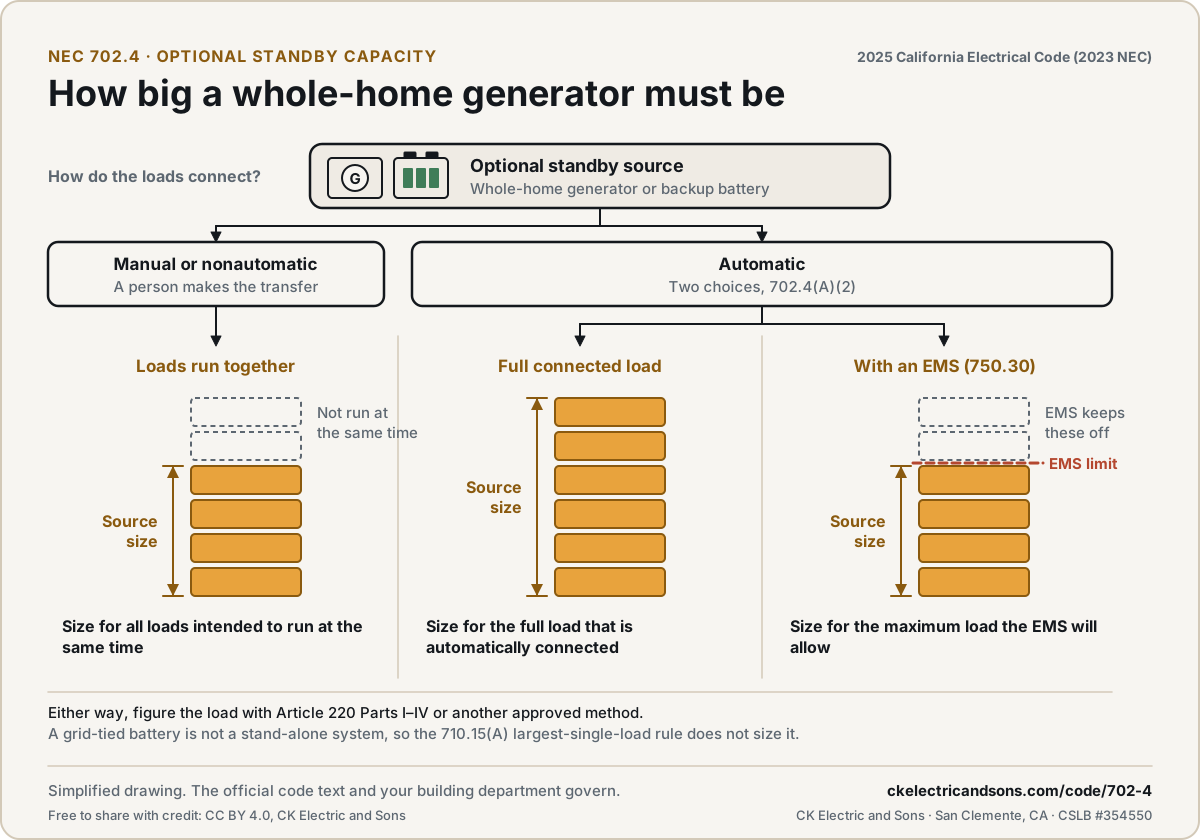 NEC 702.4: How big a whole-home generator must beRead the sectionSVGPNG
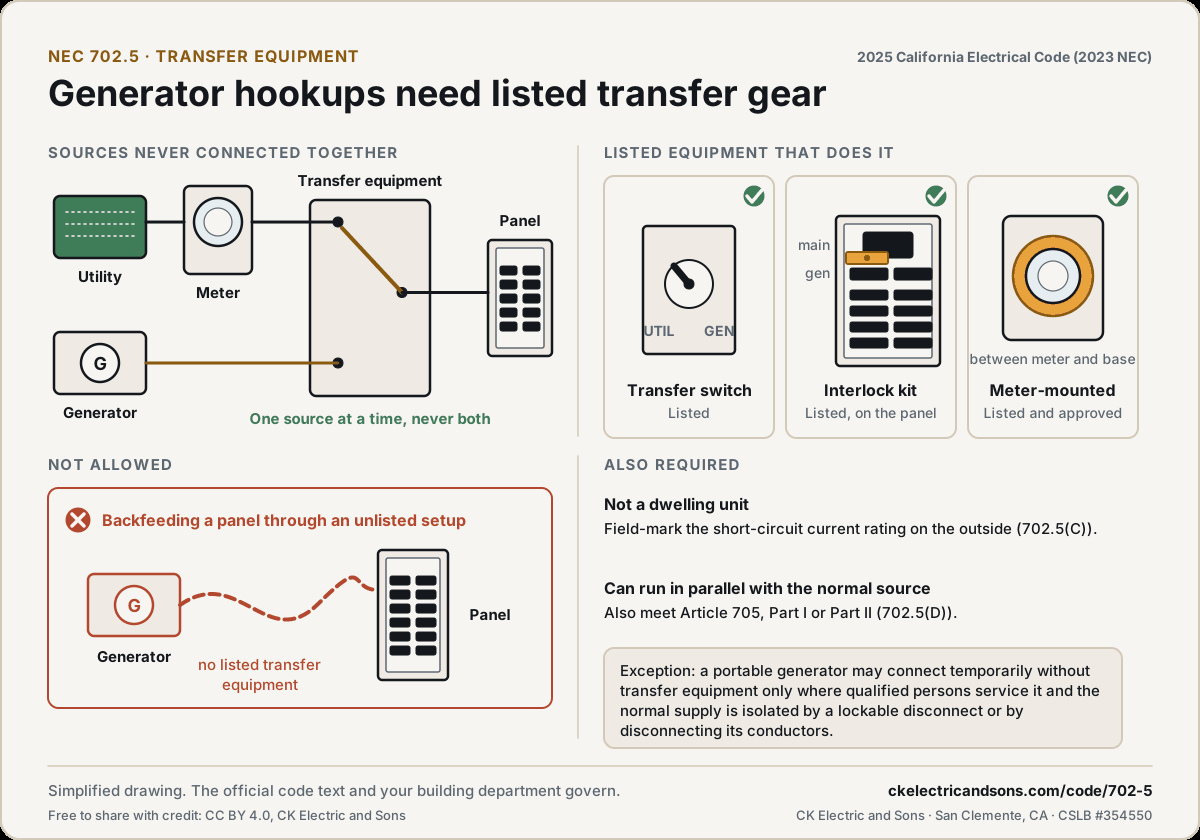
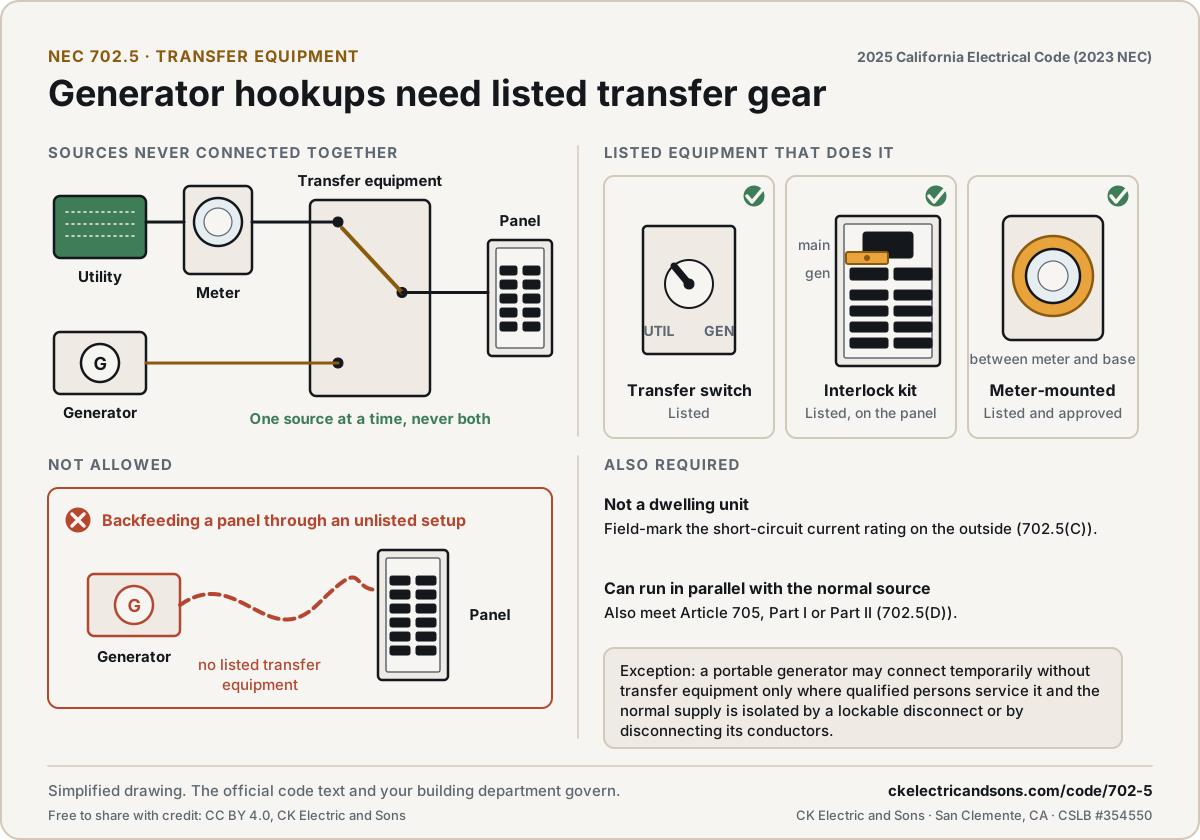 NEC 702.5: Generator hookups need listed transfer gearRead the sectionSVGPNG
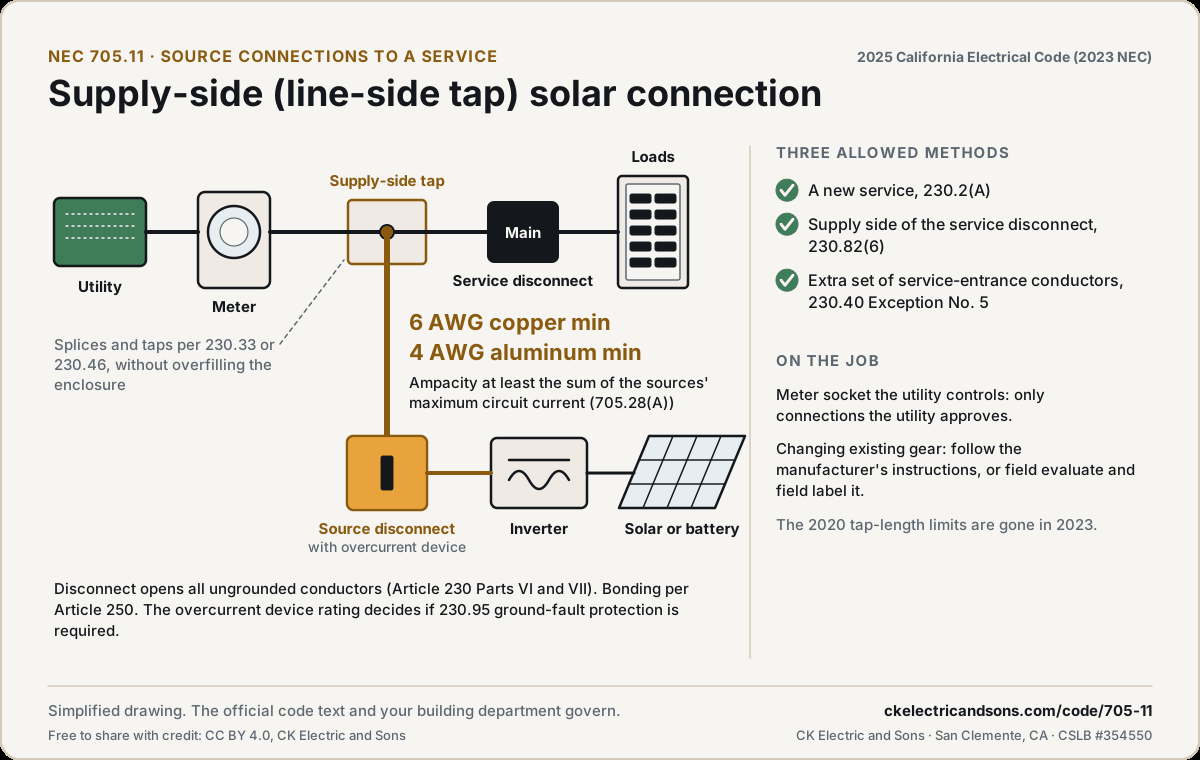
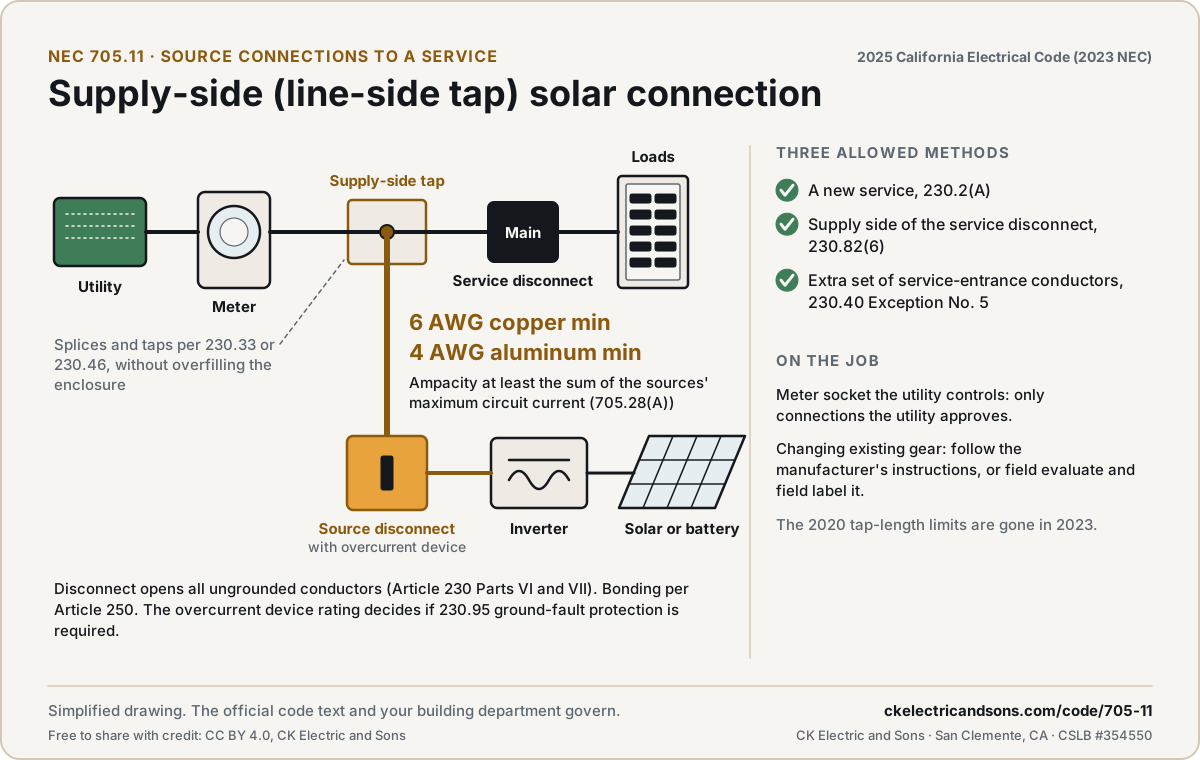 NEC 705.11: Supply-side (line-side tap) solar connectionRead the sectionSVGPNG
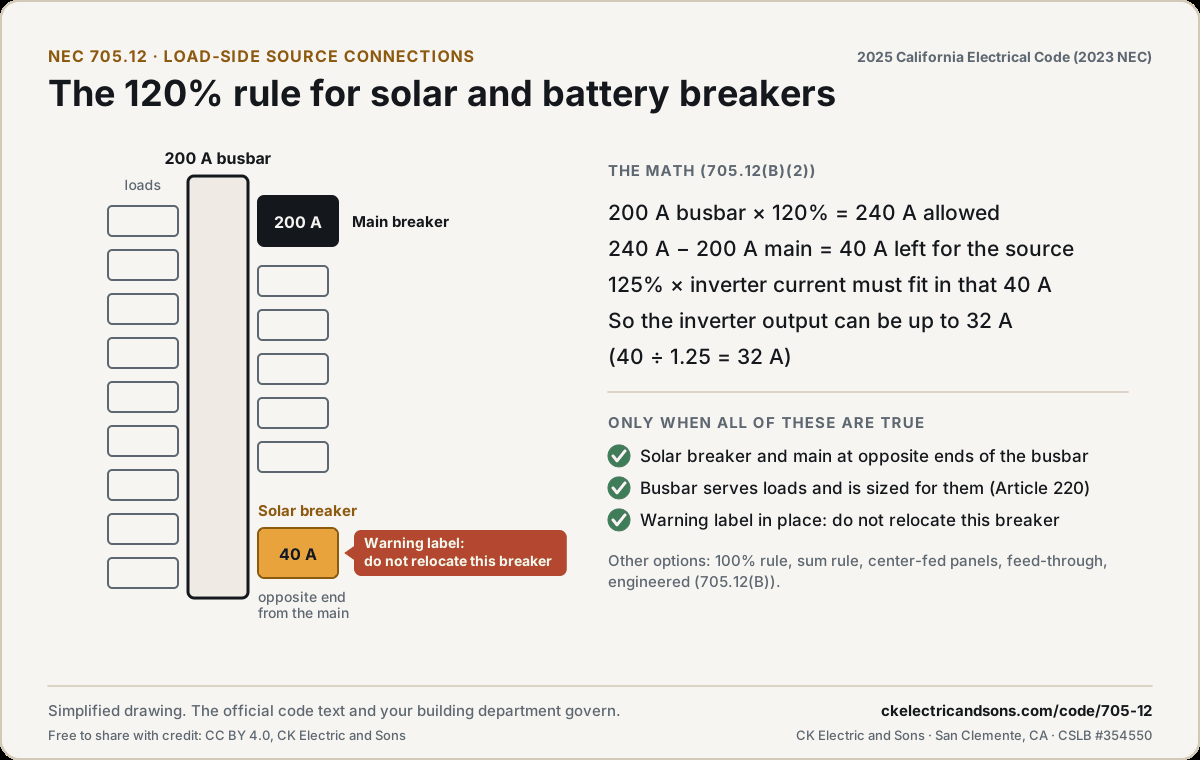
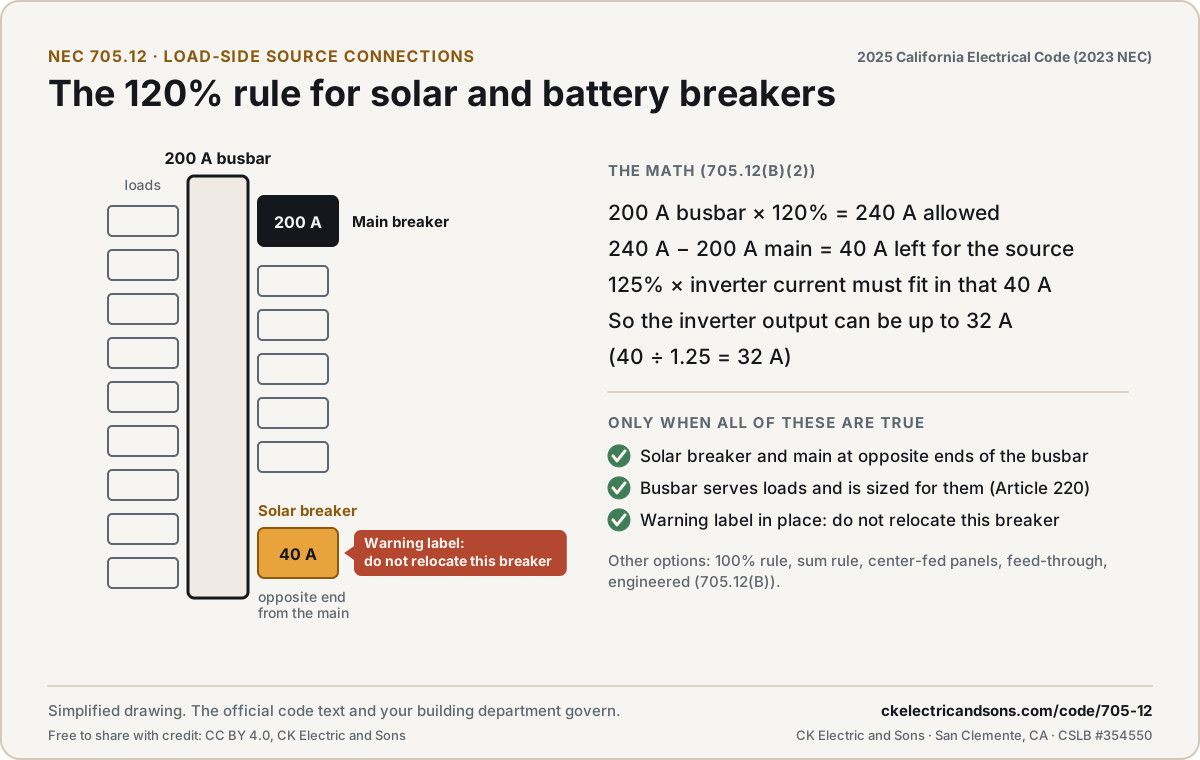 NEC 705.12: The 120% rule for solar and battery breakersRead the sectionSVGPNG
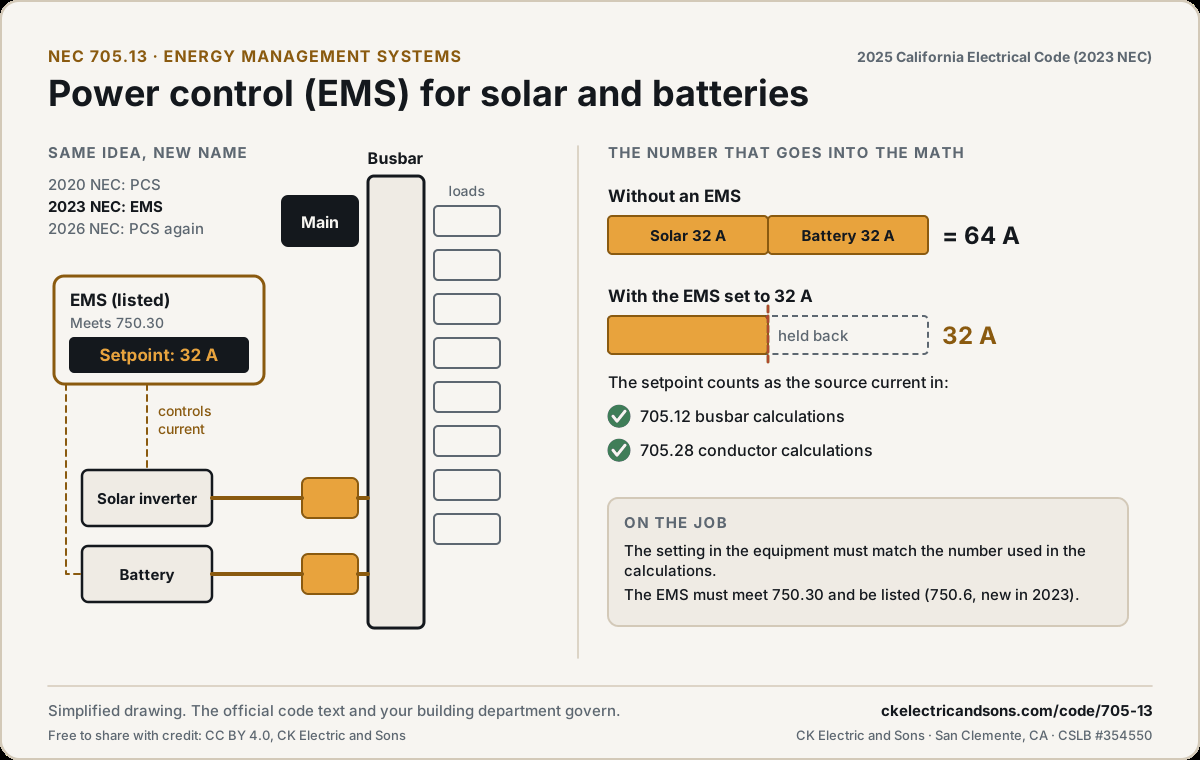
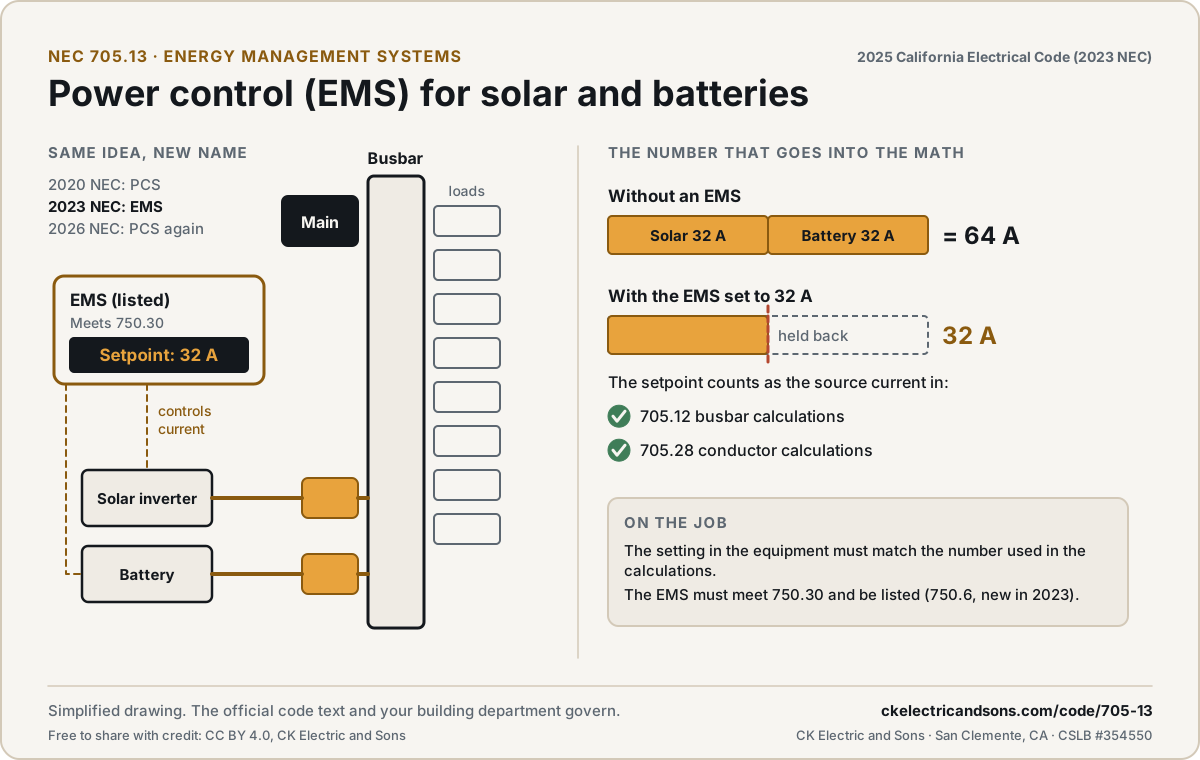 NEC 705.13: Power control (EMS) for solar and batteriesRead the sectionSVGPNG
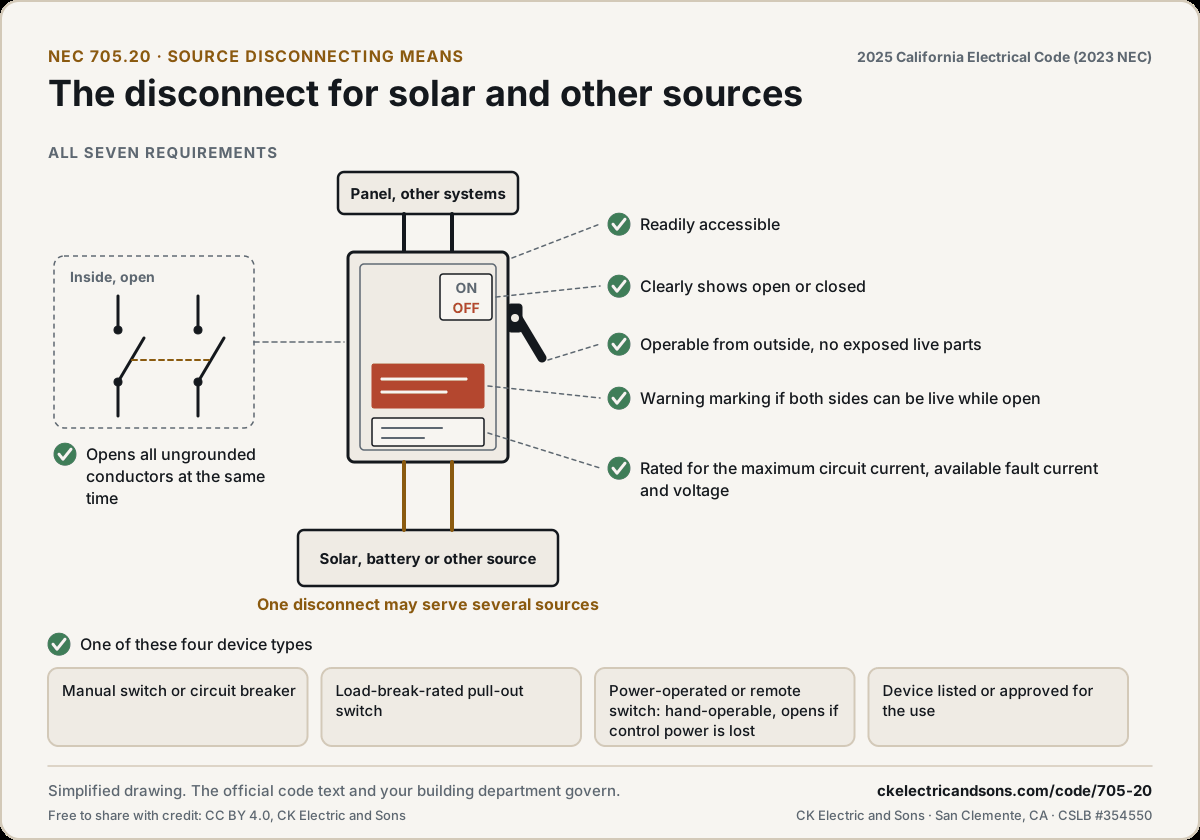
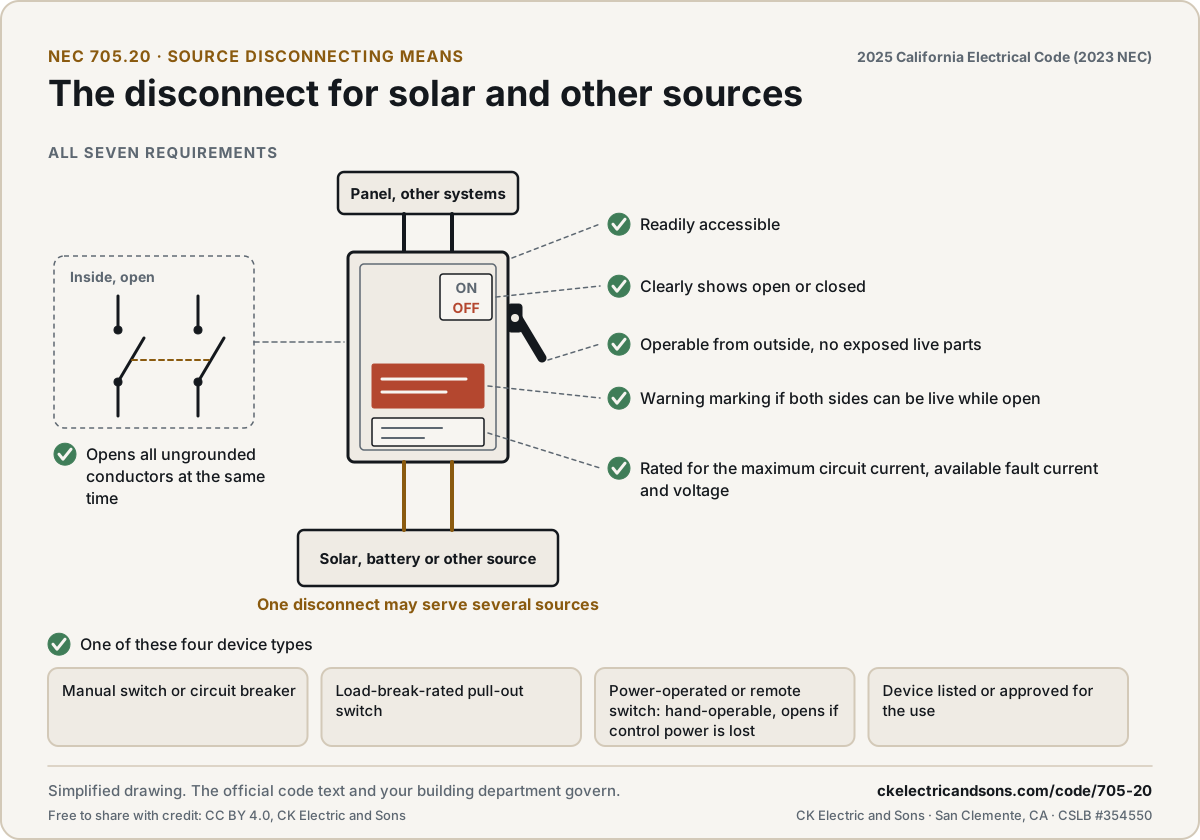 NEC 705.20: The disconnect for solar and other sourcesRead the sectionSVGPNG
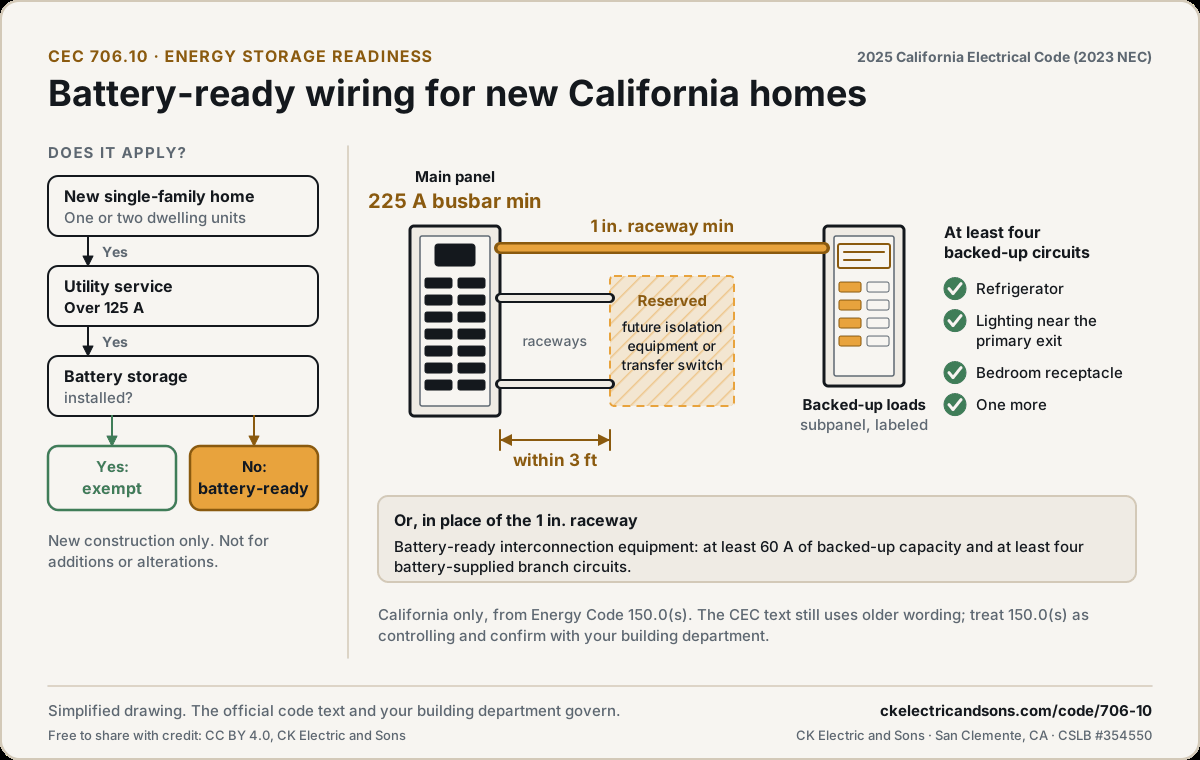
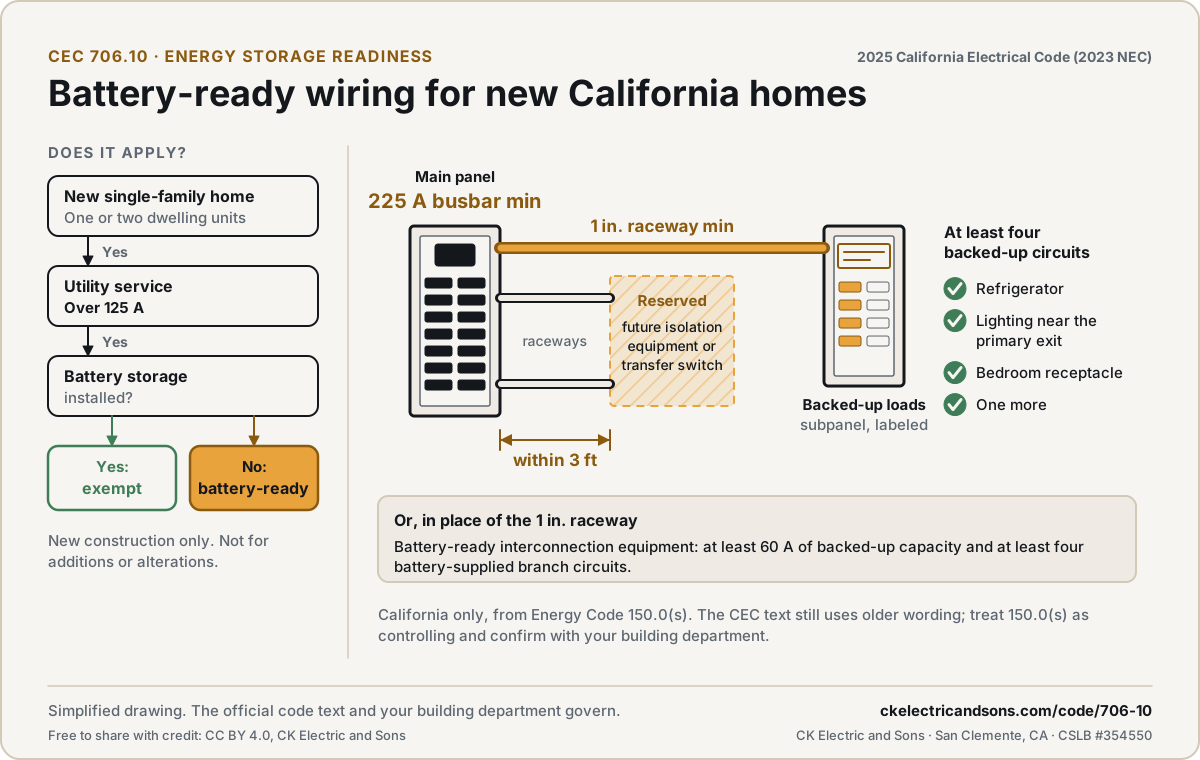 CEC 706.10: Battery-ready wiring for new California homesRead the sectionSVGPNG
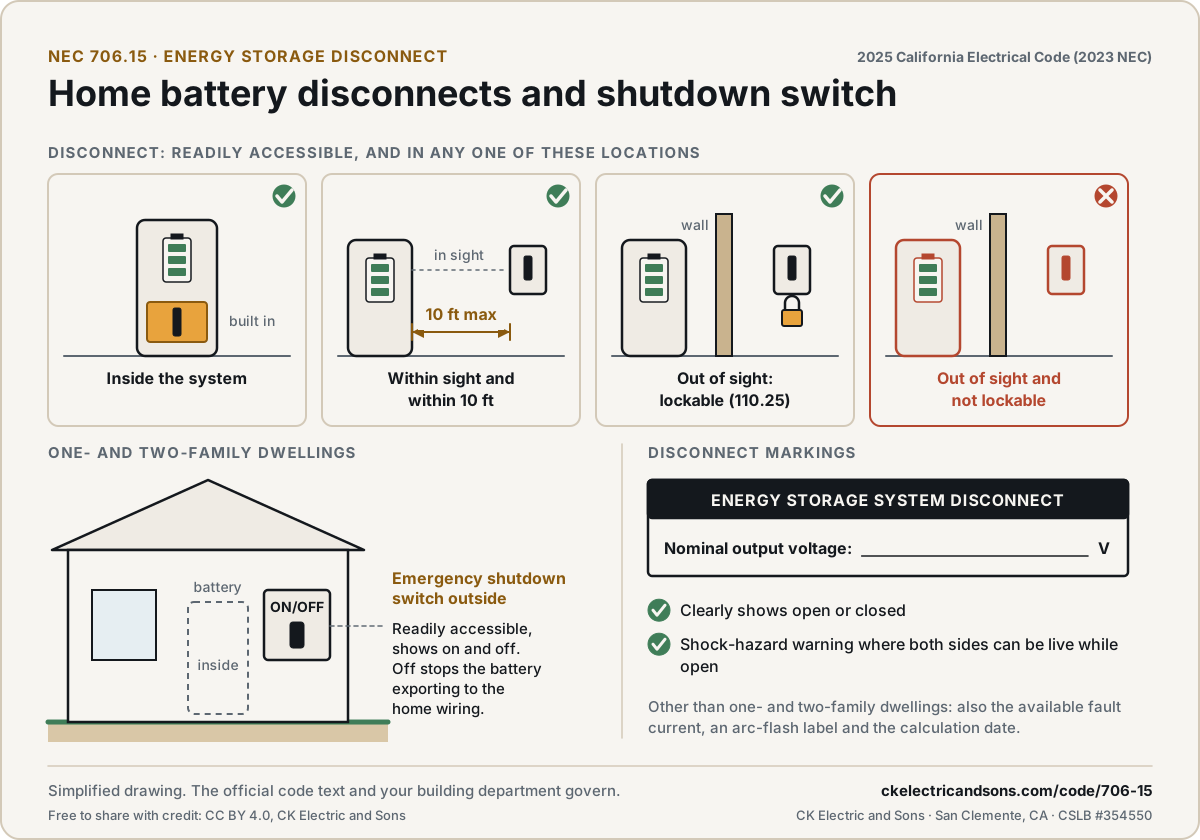 NEC 706.15: Home battery disconnects and shutdown switchRead the sectionSVGPNG
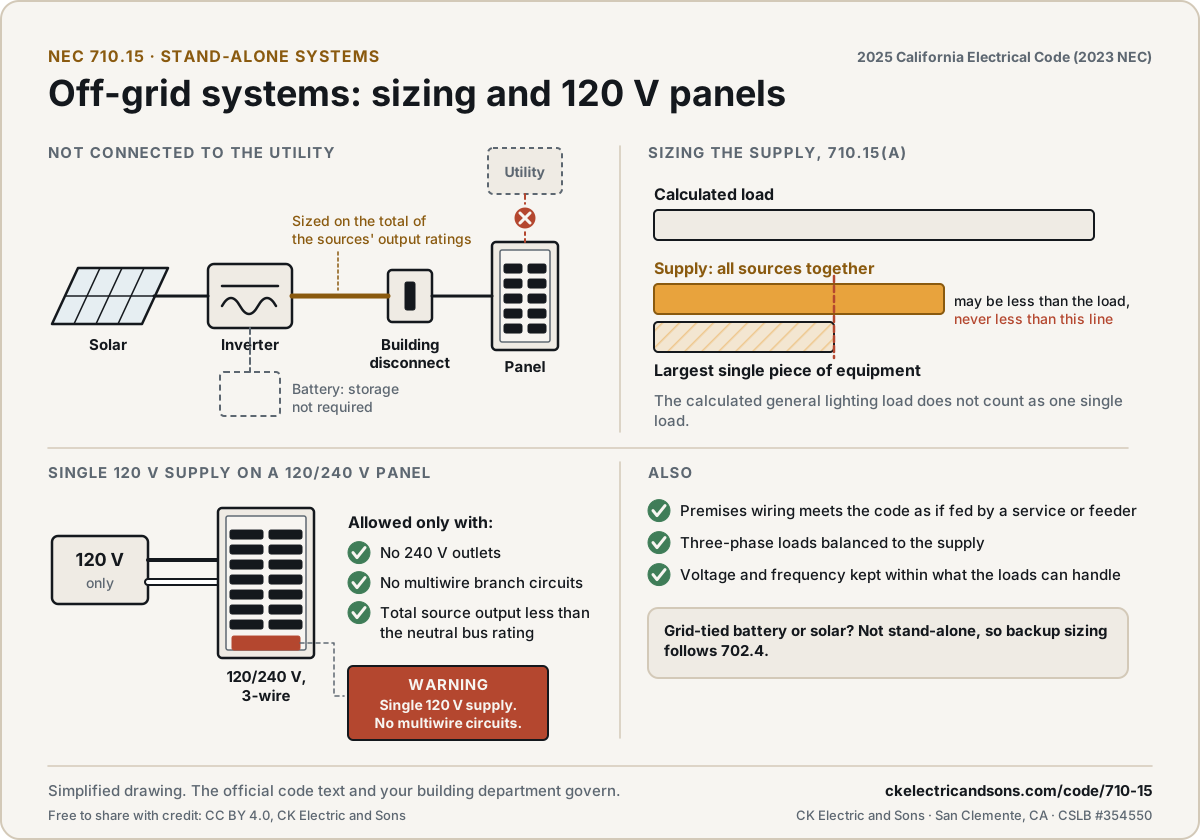 NEC 710.15: Off-grid systems: sizing and 120 V panelsRead the sectionSVGPNG
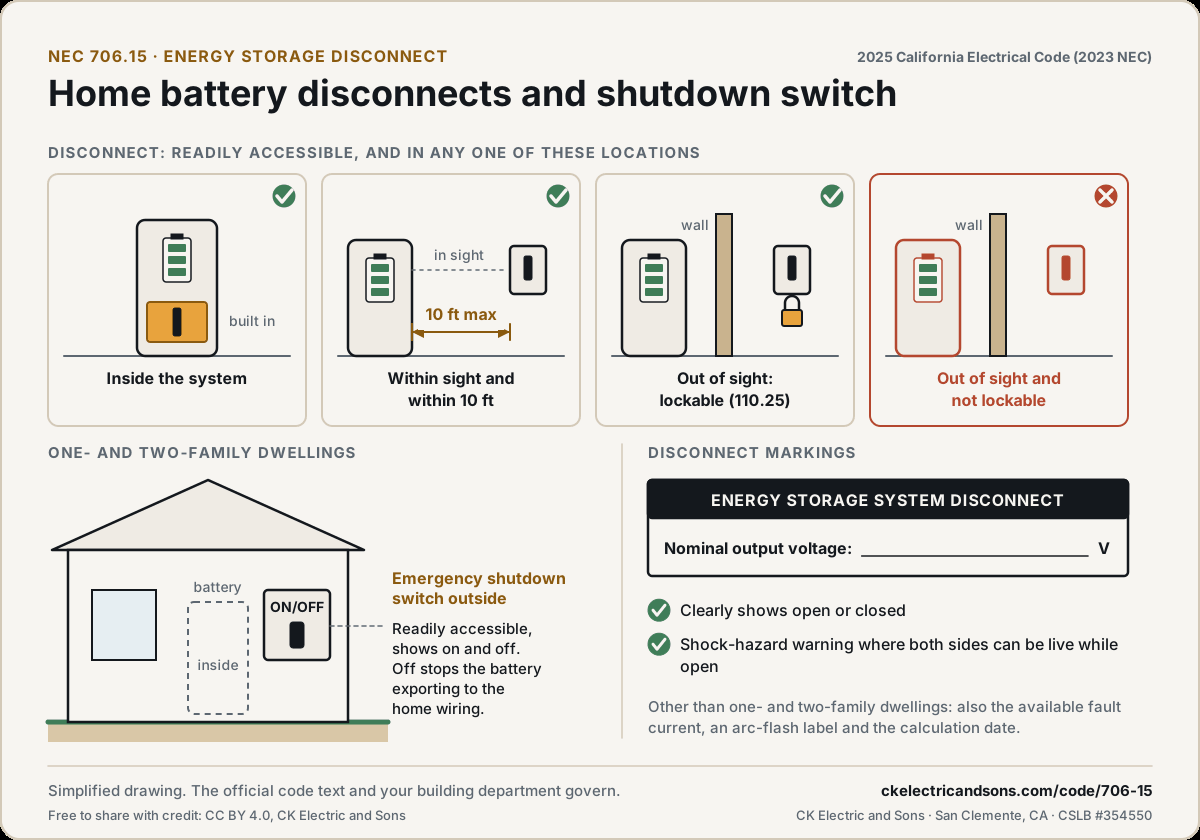
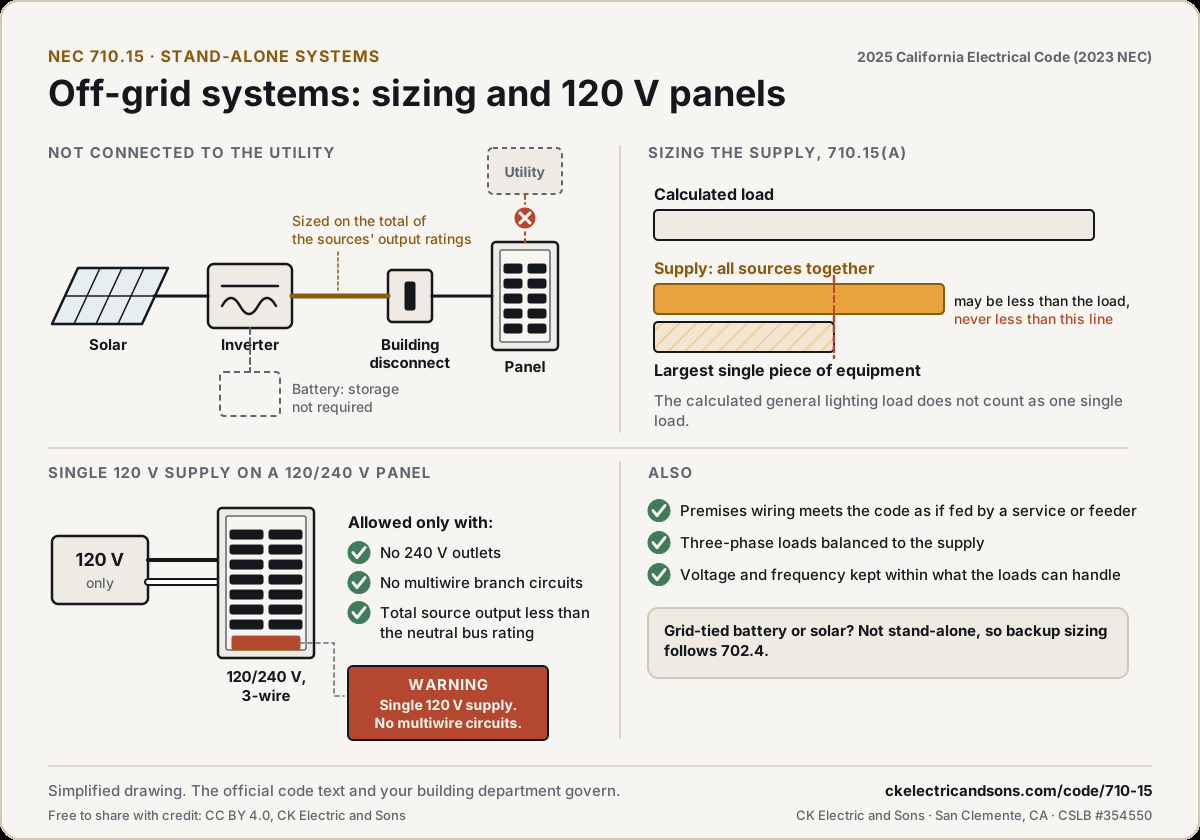
Low-voltage and fire alarm
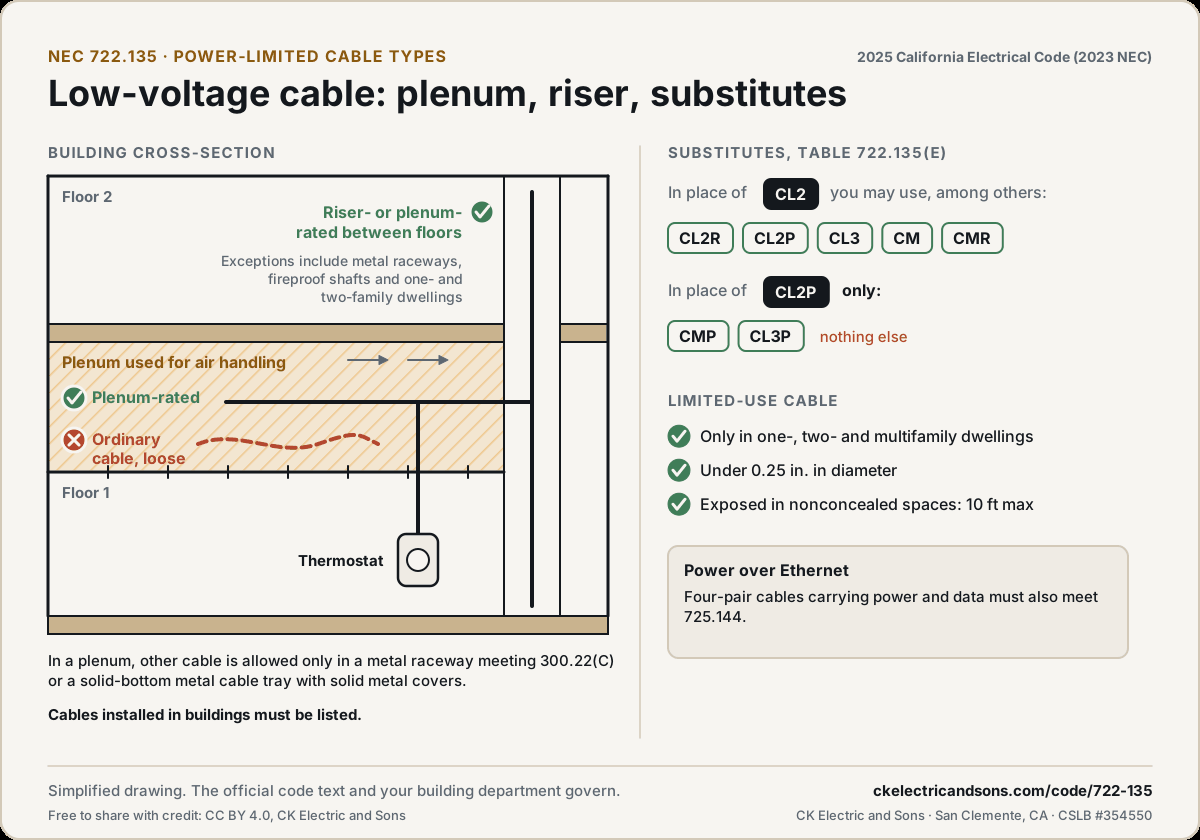
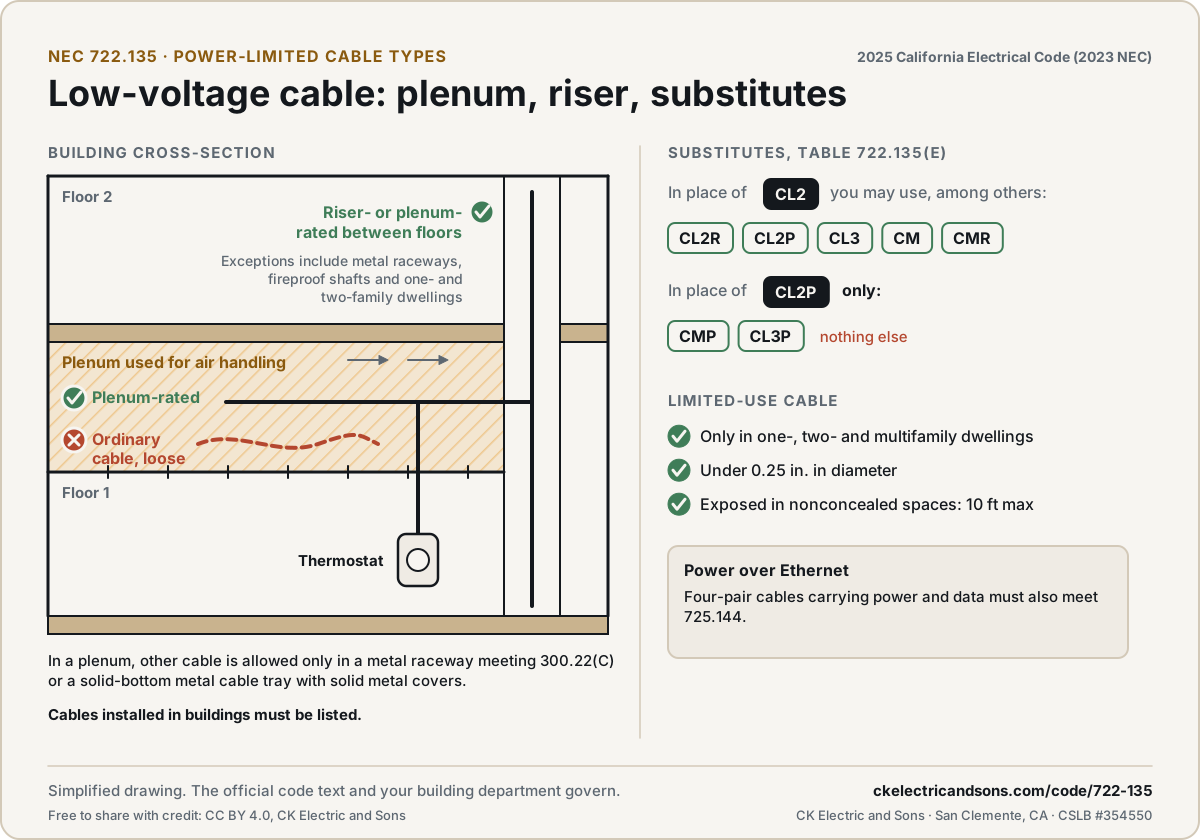 NEC 722.135: Low-voltage cable: plenum, riser, substitutesRead the sectionSVGPNG
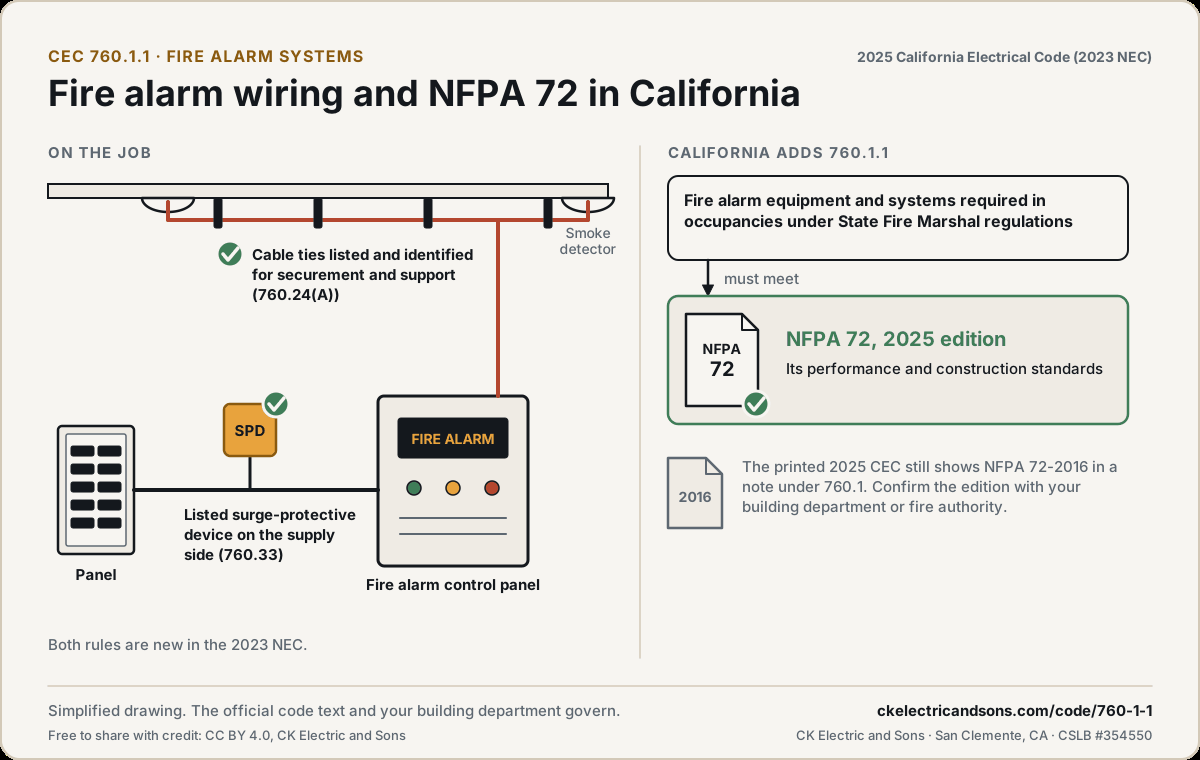
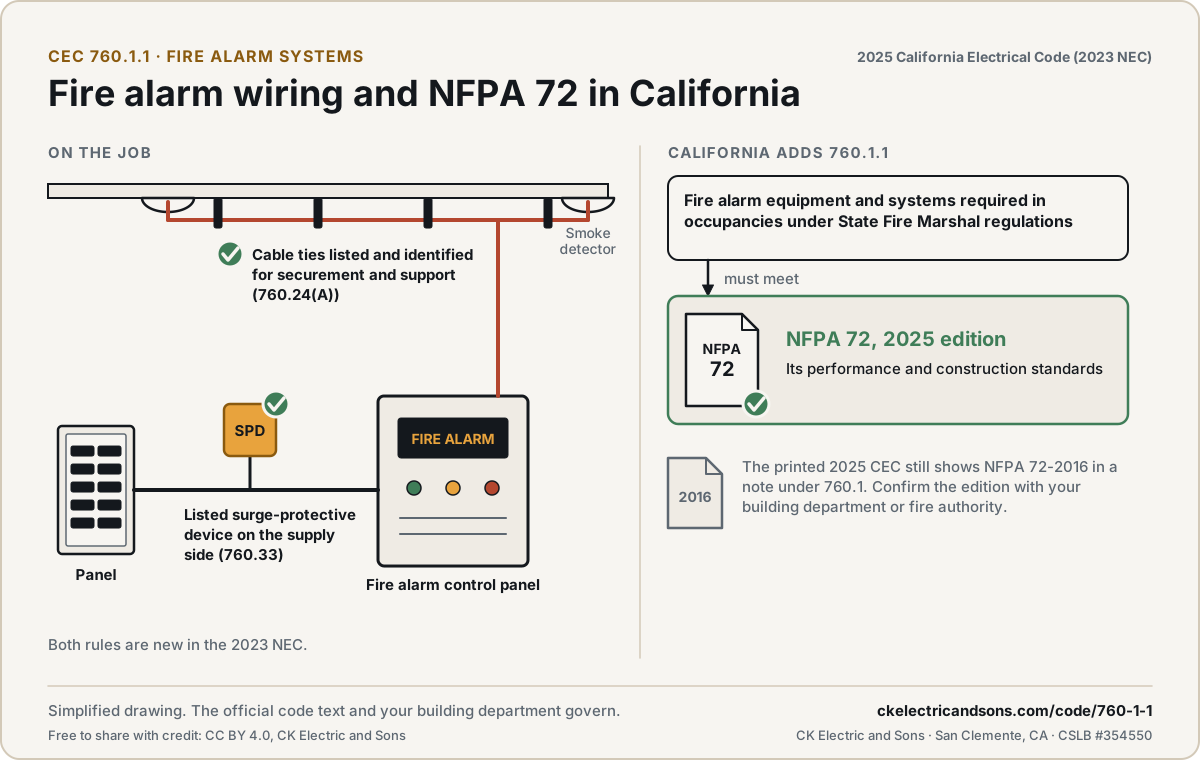 CEC 760.1.1: Fire alarm wiring and NFPA 72 in CaliforniaRead the sectionSVGPNG
Tables
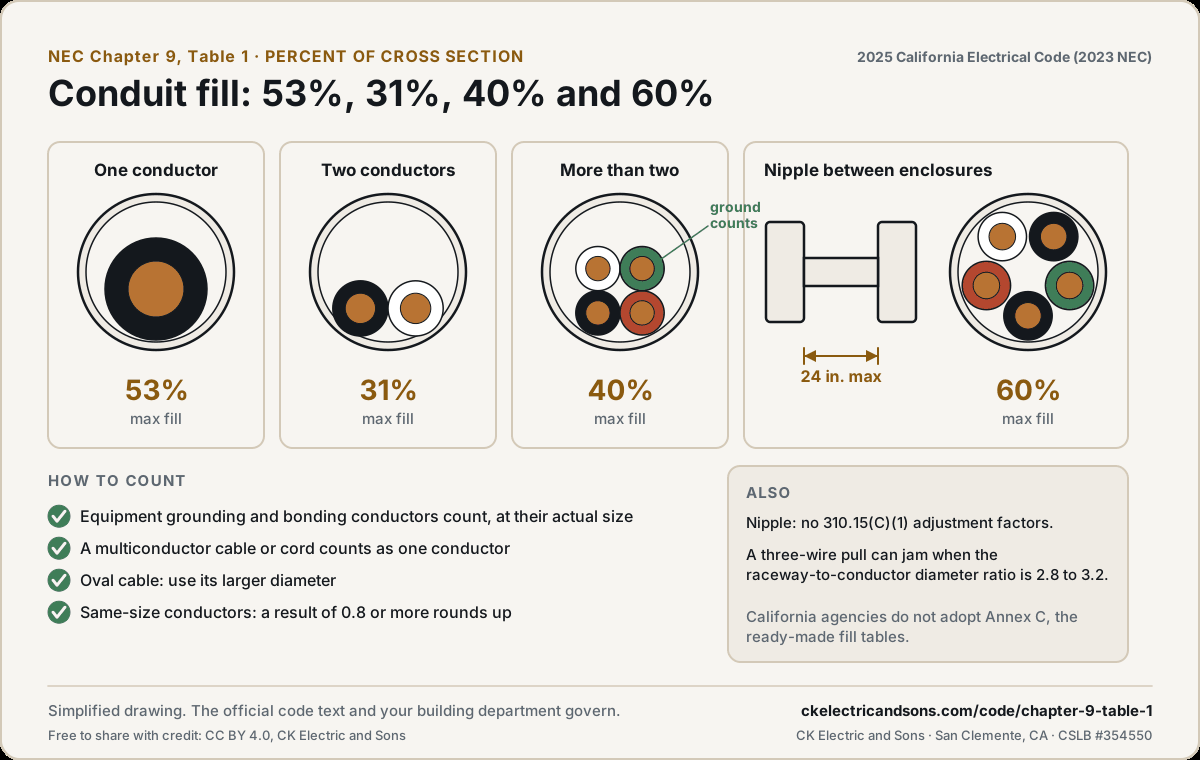
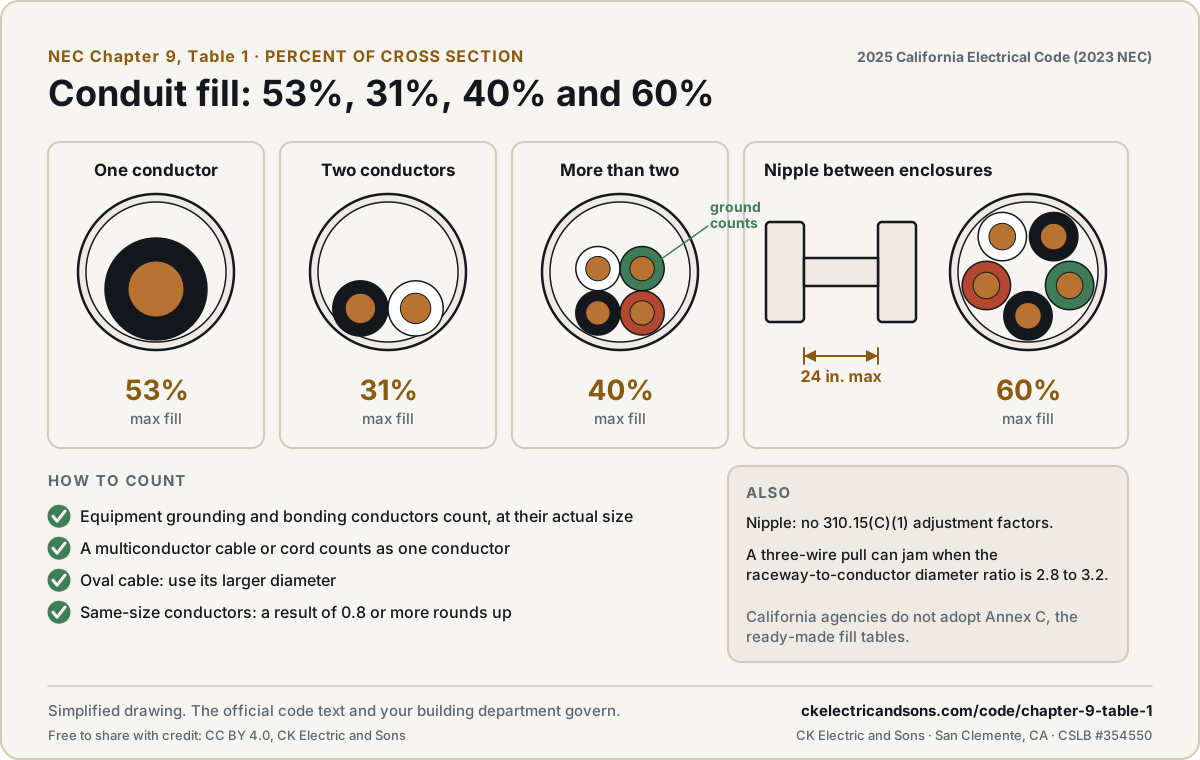 NEC Chapter 9, Table 1: Conduit fill: 53%, 31%, 40% and 60%Read the sectionSVGPNG
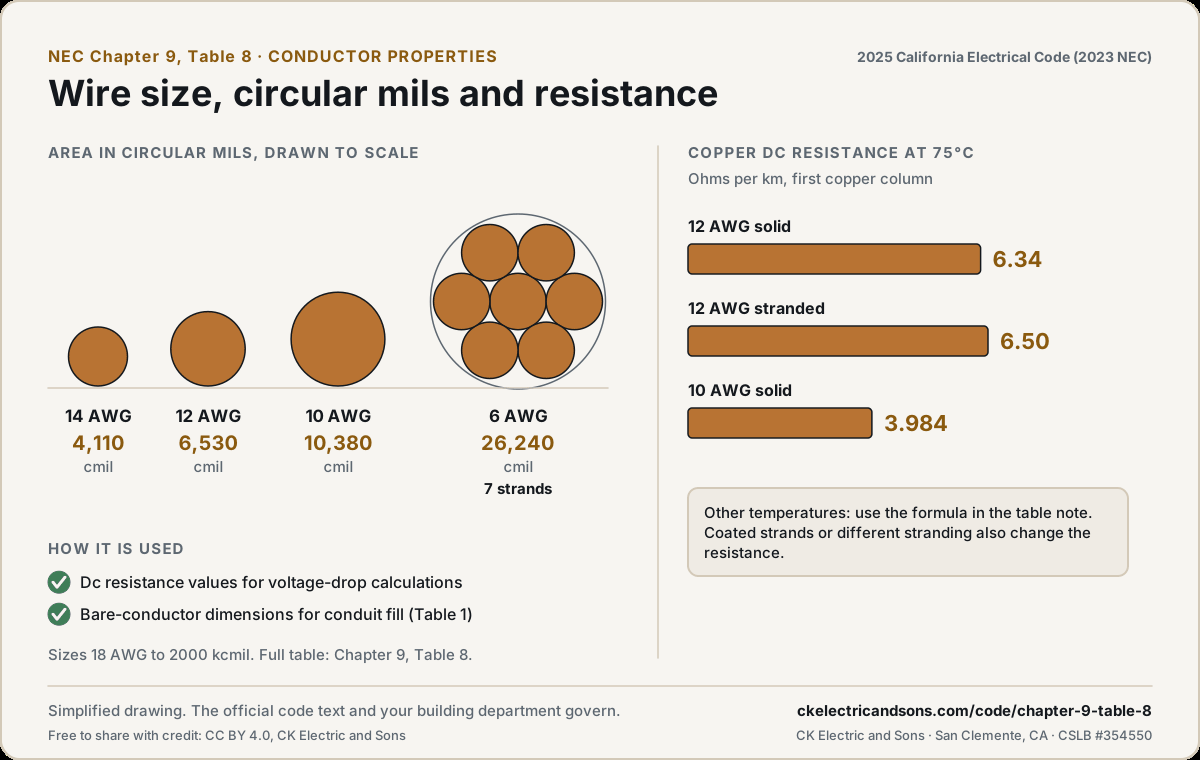
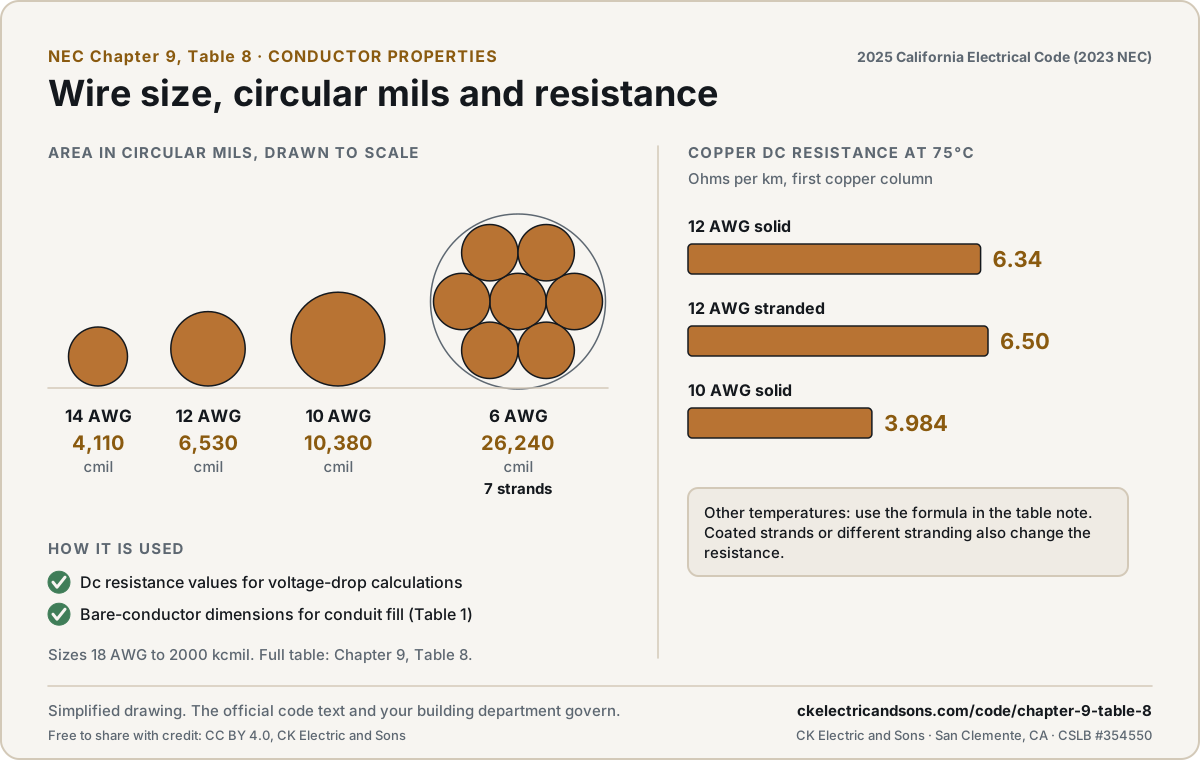 NEC Chapter 9, Table 8: Wire size, circular mils and resistanceRead the sectionSVGPNG
Send a photo. Get a real answer.
Text is fastest, and a photo quote is free. Call if it is urgent, if you smell something burning, or if a breaker will not reset.
CSLB #354550 · C-10 Electrical · Licensed since 1978 · $25,000 contractor's bond