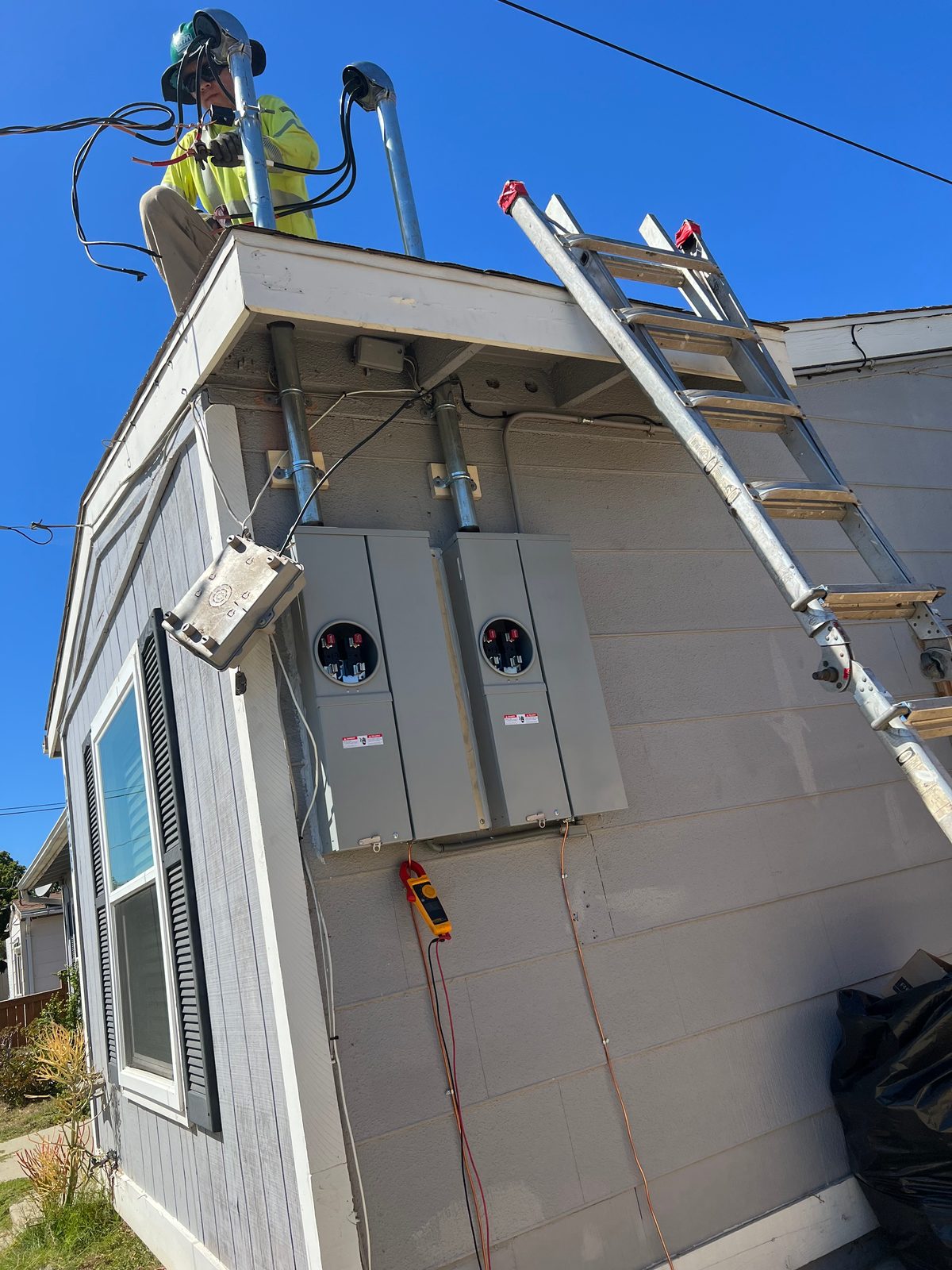
Do you need a panel upgrade at all?
There are two kinds of reasons, and they lead to different jobs. The first is capacity: the NEC load calculation for everything in the house plus the new EV charger, heat pump, induction range or ADU comes out larger than the service rating. The second is the panel itself. That covers Federal Pacific Stab-Lok and Zinsco panels, which insurers recommend replacing no matter how lightly they’re loaded, plus corrosion, heat, scorch marks, or a panel with no main breaker.
The signs worth acting on:
- A load calculation over the rating. Our panel load calculator does the 220.83 and 220.87 math and prints every line.
- A flagged brand. The problem panel checker shows what the evidence is for each one, and what kind of evidence it is.
- Rust or water stains on the panel or meter, a breaker that’s warm, or a buzz. Those are urgent.
- No main breaker. The 2020 NEC stopped allowing new service panels without one; an existing split-bus panel is legal but due a look when you’re adding load.
- No room for the breakers the new work needs. Sometimes a sub-panel solves that without a new service.
What isn’t a sign on its own: a panel that’s old but dry, tight and correctly sized, or a “100 A is too small” rule of thumb. The Redwood Energy all-electric retrofit guide argues a 100 A panel can serve full electrification of a 3,000 ft² house with efficient equipment. That’s a published position, not a code rule, but it shows why the calculation matters more than the number on the main.
What does going from 100 A to 200 A involve?
A service upgrade replaces the equipment between the utility’s wires and your breakers, and the utility has to take part because its meter comes out. Where the meter and the main breaker share one enclosure on the outside wall, “upgrading the panel” means a new meter/main combination plus whatever interior panel it feeds.
Laguna Niguel’s handout for meter-panel replacements is a good picture of what an inspector checks. It asks for a clear working space 36 inches deep and 30 inches wide in front of the equipment, a meter between 4 ft 6 in. and 6 ft 3 in. above finished grade, a grounding conductor sized to the new panel rating, bonds to the water and gas piping, and a Ufer or ground-rod clamp that’s secure and accessible. That handout cites an older code edition, so read it as one city’s checklist rather than the current code text.
The order of a residential service upgrade| Step | Who | What happens |
|---|
| 1. Load calculation | Electrician | Adds up the house plus what you’re adding under NEC 220.83, or uses 12 months of utility data under 220.87. This decides whether you need 200 A at all. |
|---|
| 2. Utility request | Electrician or owner, with the utility | SDG&E’s online form asks for the current and proposed panel size and the added loads. SCE requests go through its project request portal. |
|---|
| 3. Permit | City building department | Laguna Niguel, for one, won’t issue the permit until it has a copy of the SDG&E or SCE service order. |
|---|
| 4. Disconnect | Utility | Scheduled with the utility’s planner. The house is without power until the reconnect. |
|---|
| 5. Install | Electrician | New meter/main or panel, grounding sized to the new rating, bonds to the water and gas pipes, and the required clear working space in front of it. |
|---|
| 6. Inspection | City inspector | The city inspects before the meter is released back to the utility. |
|---|
| 7. Reconnect | Utility | The utility sets the meter and restores power. |
|---|
We do the load calculation, pull the permit, coordinate the utility and do the installation, so the utility and the inspector deal with us rather than you.
How do SDG&E and SCE handle a service upgrade?
Both utilities want to know what you have now and what you’re going to. SDG&E’s service request form asks for the service address, property type, owner information, the services requested and, for electric work, “current and proposed panel size and additional loads.” SDG&E’s own page says the process “can take several weeks depending on the complexity of required changes.”
SCE routes requests through its project request portal, where you pick a project type and it tells you what documents to attach, such as equipment load requirements. For a same-size panel replacement it has a separate request type to remove and reinstall the meter’s lock ring. SCE doesn’t publish a residential timeline on those pages, so we won’t guess one.
Not sure which one serves your street? The utility finder sorts it out by town. Because Laguna Niguel won’t issue a permit without the utility’s service order, the utility request goes in first.
Is a permit required for a panel upgrade?
Yes. Laguna Niguel’s handout for meter-panel replacements says it plainly: an electrical permit is required, the inspection card gets posted on site, and a copy of the SDG&E or SCE service order is required before the permit is issued. The inspection happens before the meter is released back to the utility, so the utility won’t reconnect uninspected work.
The code behind it is the 2025 California Electrical Code, Title 24 Part 3, effective January 1, 2026 and based on the 2023 NEC. Your city adopts it and its inspector has the final word on how it applies. The permit checker shows what your city asks for.
What can you try before paying for a bigger service?
Start with the calculation, then work down this list. Each step is cheaper and quicker than new service equipment, and any one of them can be enough.
- Run 220.83 properly. It counts 3 VA per square foot, 1,500 VA per kitchen and laundry circuit and each electric appliance’s nameplate, then takes everything past the first 8,000 VA at 40 %. It’s the number an inspector will ask for anyway.
- Use your utility data (220.87). If a year of peak-demand data is available, the code lets you use the highest demand × 125 % instead of the estimate. Your SDG&E or SCE Green Button download is where it comes from. This one doesn’t suit houses with solar, since the meter sees net flow.
- Manage the EV load. NEC 625.42 lets an energy management system throttle a charger when the house is busy, and lets a charger’s maximum be set lower with restricted access, say 32 A on a 40 A circuit instead of 48 A on a 60 A.
- Cap the whole service. Under NEC 220.70, a listed energy management system that limits the service lets the calculation use its setpoint. Smart panels and load controllers that are listed for this fall here. Ask whether your inspector has accepted one before you buy.
- Share a circuit. Circuit-sharing devices let two 240 V loads, like a dryer and a charger, use one circuit by never running both at once.
- Pick lighter equipment. Redwood Energy lists a 120 V plug-in heat pump water heater at 900 W, a fraction of a resistance tank.
When none of that closes the gap, the upgrade is the right answer, and it’s better done once, sized for what’s coming next, than twice.
What does solar have to do with your panel?
A lot. When solar or a battery connects on the load side of the main breaker, the panel’s busbar can be fed from both ends. The 120 % rule in NEC 705.12 limits that: 125 % of the inverter’s output current plus the main breaker can’t exceed 120 % of the busbar rating. On a 200 A busbar with a 200 A main, that’s 240 A − 200 A = 40 A of backfeed breaker, or 32 A of inverter output.
A 100 A busbar with a 100 A main leaves 120 A − 100 A = 20 A of backfeed breaker, or 16 A of inverter output, which is why a panel upgrade shows up in so many solar proposals. It isn’t the only fix; alternatives include a smaller main breaker (if the load calculation allows it) and a supply-side connection. The solar panel capacity checker runs those numbers. We do the electrical side alongside your solar installer.
How much does it cost, and how long does it take?
We don’t publish prices, because the variables that drive a panel upgrade (where the meter is, what the utility needs to change, how much of the house wiring has to be reconnected, whether there’s stucco to open) are different at every address. Text a photo of the panel and the meter and you’ll get a real number.
On timing, the only published figure we found is SDG&E’s: several weeks, depending on the complexity of the changes. The installation day itself is scheduled around the utility’s disconnect and the city’s inspection, and the house is without power between the disconnect and the reconnect. If you’re planning an EV purchase or a heat pump around the upgrade, file early.