Why does the year your house was built matter?
Electrical work is inspected to the code in force when it was permitted, and nobody goes back to update it. So a house’s build year tells you which protections it was born with and which ones it didn’t get. The national model is the NEC, published by NFPA every three years. California adopts it as Part 3 of Title 24, the California Electrical Code, and that step adds a lag.
The state’s own record shows it. The 1999 NEC became the 2001 CEC, effective November 1, 2002. The 2002 NEC became the 2004 CEC, effective August 1, 2005. The 2008 NEC became the 2010 CEC, effective January 1, 2011. Today’s 2025 CEC is based on the 2023 NEC and took effect January 1, 2026. The Building Standards Commission’s history doesn’t go back before 1995. Every edition it does list took effect here about three years after the NEC edition year, so for 1960s to 1980s houses read the NEC year below as the earliest a feature could have shown up, not the date it did.
One more point from the code itself: old wiring doesn’t become illegal when the code moves on, but new work does have to meet the current edition. Since the 1993 NEC a replacement receptacle has to have GFCI protection where GFCI is now required, and the 2011 NEC applied the same idea to AFCI.
When were South County’s towns built?
The master-planned towns went up in waves, and each city’s own history pins the start. These are the dates the cities (and, for Ladera Ranch, the Urban Land Institute) publish.
When South Orange County's planned communities started building| Town | Building started | What that means for the housing |
|---|
| Laguna Niguel | Planning company formed 1959; first land sales 1961 (Monarch Bay, Laguna Terrace) | Avco took over the master plan in 1971. Incorporated December 1, 1989. |
|---|
| Mission Viejo | First homes offered 1965; first families moved in 1966 | Population nearly quadrupled in the 1970s, from 13,000 to 49,230, so a large share of the houses are 1970s construction. Incorporated March 31, 1988. |
|---|
| Aliso Viejo | First units offered March 1982; residents about eight months later | Land bought by the Mission Viejo Company in 1976. Incorporated July 1, 2001. |
|---|
| Rancho Santa Margarita | First homes in the planned community sold 1986 | Incorporated January 1, 2000. |
|---|
| Ladera Ranch | Started 1998; substantially complete 2006 | About 8,100 homes whose build years straddle California’s first AFCI rule (November 1, 2002). |
|---|
| Lake Forest | Incorporated December 20, 1991 | The city merged the El Toro area and Foothill Ranch, so check your own tract’s build year. |
|---|
Inside any town the houses span decades, and plenty have been remodeled since. Treat the town as a first guess and the permit history or the panel label as the real answer.
What does a 1960s or 1970s house usually have?
There are three things you’ll want to know about, in order of importance: the panel brand, aluminum branch wiring, and thin GFCI coverage. Laguna Niguel’s first land sales (1961) and Mission Viejo’s first homes (1966) are from this era, and so is a large share of Mission Viejo.
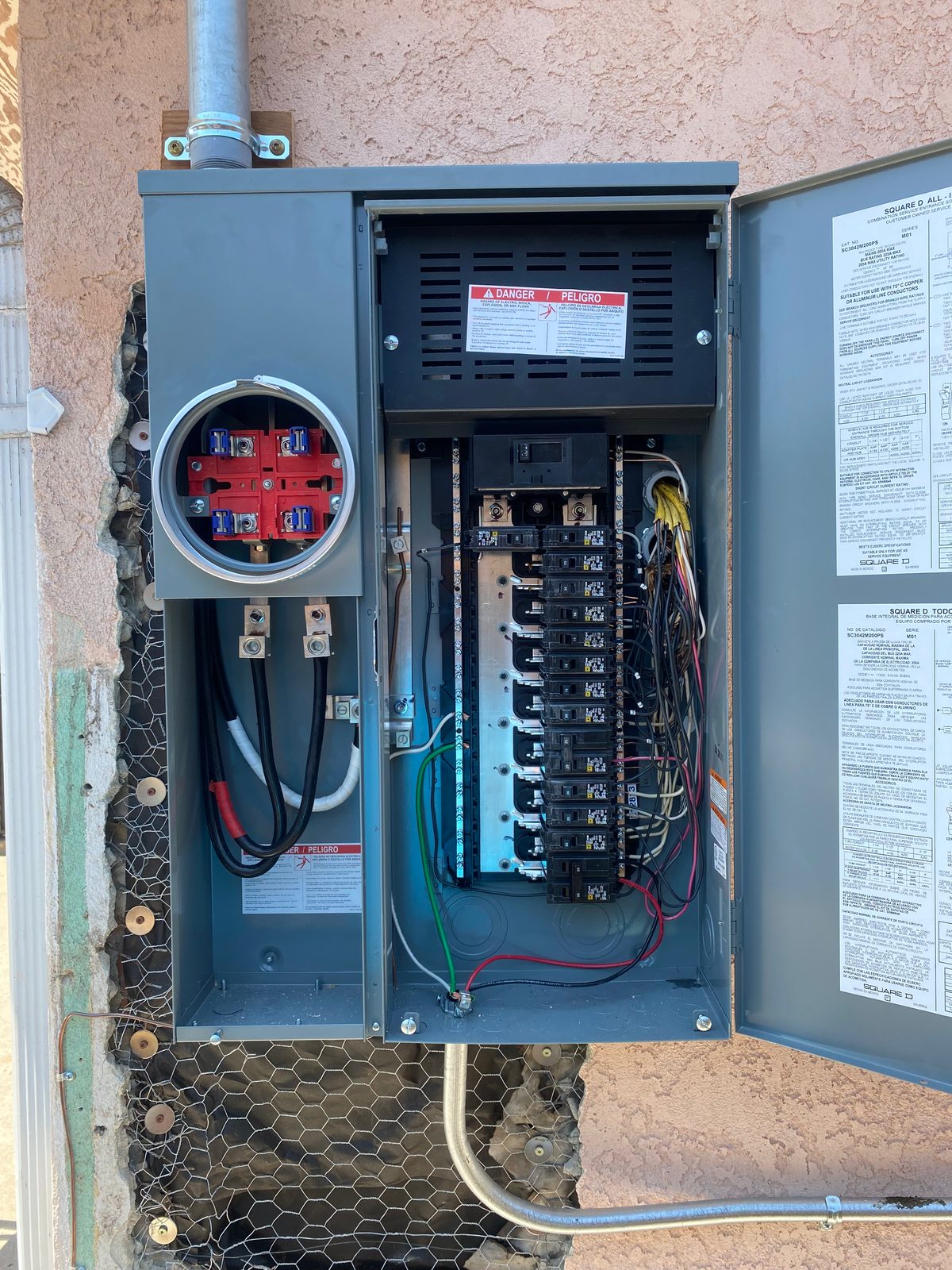
Panels from these decades include brands that insurers flag. The Hanover says Federal Pacific Stab-Lok went into homes from 1950 to 1985, and Great American says Zinsco was common through the 1970s, especially in the West. Pushmatic panels mostly date from the 1950s and 60s, and split-bus panels with no main breaker were allowed as new service panels until the 2020 NEC. The problem panel checker sorts out which one you have from the label on the door.
Aluminum branch wiring is the other one. The CPSC dates it in new homes from 1965 to the mid-1970s, and says aluminum-wired homes built before 1972 are 55 times more likely than copper-wired homes to have a connection reach fire-hazard conditions. You’ll sometimes see “AL” or “ALUMINUM” printed on cable jackets in an unfinished garage or attic. The CPSC’s permanent fixes are a copper rewire, COPALUM crimp connectors or AlumiConn connectors, and that’s rewire work for a licensed electrician.
GFCI protection arrived a room at a time. Going by NEC editions: outdoors and near pools in 1971, bathrooms in 1975, garages in 1978. Kitchens got nothing until 1987. On grounding, electricians quoting old code books point to the 1962 NEC for requiring a grounding conductor on receptacle circuits, with some citing 1959 or 1965, so an early-60s house could still have two-prong outlets. That’s fixable: a GFCI receptacle labeled “No Equipment Ground” is a code-recognized replacement where there’s no ground wire.
What changed in 1980s houses?
By the 1980s the aluminum window had closed, so you’d expect copper branch wiring. That’s the decade Aliso Viejo’s first residents arrived (1982) and Rancho Santa Margarita’s first homes sold (1986).
GFCI kept spreading: spas and hot tubs in the 1981 NEC, then kitchen countertop receptacles within 6 feet of the sink in 1987. Challenger equipment was in production then, and the one CPSC action on it was a November 12, 1988 replacement program for about 9,000 Challenger HAGF-15 and HAGF-20 GFCI breakers made between February 22 and April 29, 1988, whose ground-fault feature could stop working. Recalled units have a yellow test button and a white 15 or 20 on the handle, and you can check that with the panel door open and the cover on.
The practical question for most 1980s houses is capacity for newer loads like an EV charger, a heat pump or an induction range. The panel load calculator shows whether the existing service can take one.
What about 1990s and 2000s houses?
They’re the first houses with protection close to today’s. The 1996 NEC required GFCI on every receptacle serving a kitchen countertop, not only those near the sink, and the 1990 and 1993 editions added crawl spaces and wet bars.
Arc-fault protection is the dividing line. The 1999 NEC required AFCIs on bedroom receptacle circuits from January 1, 2002, and the 2001 CEC brought that to California on November 1, 2002. The 2002 NEC widened it to every outlet in a bedroom, and the 2005 NEC required combination-type AFCIs from January 1, 2008. Ladera Ranch, built from 1998 to 2006, spans the switch: the earliest phases may predate AFCI entirely.
If an AFCI breaker in one of these houses trips repeatedly, don’t just keep resetting it. The breaker trip troubleshooter walks through the likely causes, and troubleshooting is the service when it doesn’t settle.
Is a house built after 2011 different again?
Yes, in two ways. The 2008 NEC required tamper-resistant receptacles in dwelling units, marked “TR” or “Tamper Resistant,” and expanded AFCI to family rooms, dining rooms, living rooms, dens, closets, hallways and similar rooms. California adopted that edition as the 2010 CEC, effective January 1, 2011. The 2014 NEC then added kitchens and laundry areas to the AFCI list.
For these houses, the questions that’ll come up are about capacity: an EV charger, a heat pump, induction cooking, solar or a battery.
What should you check for your decade?
Start with what you can see without opening anything: the label inside the panel door, the main breaker rating, the receptacles, and cable jackets in unfinished spaces. Never take the cover (the dead-front) off the panel.
Decade by decade: what to expect and what to check| Built | What to expect | What to check |
|---|
| 1960s | Grounding conductors in receptacle circuits by the early 1960s NEC; GFCI only near pools (1968) and outdoors (1971). Aluminum branch wiring starts in 1965. Federal Pacific, Pushmatic and no-main split-bus panels all possible. | The panel label. Two-prong receptacles. “AL” on cable jackets you can see in the attic or garage. Any GFCI protection in baths and outside. |
|---|
| 1970s | Aluminum branch wiring until the mid-1970s. Zinsco and Federal Pacific panels. GFCI for bathrooms (1975 NEC) and garages (1978 NEC), none in kitchens. | Panel brand first. Aluminum wiring if the house is 1965 to the mid-1970s. GFCI at kitchen counters, baths, garage and outdoors. Whether the original service can take an EV charger. |
|---|
| 1980s | Copper wiring. GFCI at kitchen counters within 6 ft of the sink (1987 NEC), spas (1981). Challenger panels, including GFCI breakers recalled in 1988. | Challenger GFCI breakers with a yellow test button and white 15/20 on the handle. Full kitchen-counter GFCI. Service capacity. |
|---|
| 1990s | GFCI in crawl spaces (1990), at wet bars (1993) and at every kitchen counter receptacle (1996 NEC). No arc-fault protection yet. | Service capacity for a charger or heat pump. AFCI protection when bedrooms or living areas are remodeled. |
|---|
| 2000s | AFCI on bedroom circuits: the 1999 NEC rule reached California in the 2001 CEC, effective November 1, 2002. Combination-type AFCIs from the 2005 NEC. | AFCI breakers that trip often, which need a diagnosis rather than a reset. Room in the panel for new circuits. |
|---|
| 2011 on | Tamper-resistant receptacles and AFCI in family, dining and living rooms, dens, closets and hallways (2008 NEC, in California from January 1, 2011). Kitchens and laundry areas added in the 2014 NEC. | Mostly capacity questions: EV charging, heat pumps, induction, solar and batteries. |
|---|
If the panel label turns up a flagged brand, or the service is too small for what you’re planning, that’s a panel upgrade, and we handle the permit and the utility. Aluminum wiring, two-prong circuits and missing GFCI or AFCI protection fall under rewires and remodels. A burning smell, a warm panel or scorch marks skip the list: shut off that breaker and call.